Classic potato salad gets its place at the table when the potatoes stay tender, the eggs hold their shape, and the dressing clings without turning gluey or thin. The best versions taste balanced from the first bite: creamy, tangy, a little sharp from onion and mustard, with enough texture left in the potatoes to keep each spoonful interesting.
This version leans on russet potatoes for a soft, fluffy interior that absorbs the dressing instead of fighting it. The vinegar and mustard keep the mayonnaise from tasting flat, and the chopped eggs add richness without making the salad heavy. Cooling the potatoes before mixing matters here; warm potatoes drink up the dressing in the best way, but they still need that chill time so the final bowl sets up properly.
Below, I’ve included the small details that make a big difference, from how to keep the potatoes from breaking apart to the one chilling step that keeps the salad tasting clean instead of muddy. If you’ve ever had potato salad that turned watery after sitting, this version will help you avoid that.
The potatoes held their shape and the dressing set up beautifully after chilling. I loved that the eggs stayed distinct instead of disappearing into the mix, and the mustard gave it that classic picnic flavor.
Love the creamy texture and classic egg-and-potato balance? Save this potato salad with eggs for your next cookout or potluck.
The Potato Texture Mistake That Makes the Salad Go Mushy
The biggest problem with potato salad is overcooking the potatoes until the cubes collapse as soon as the dressing hits them. Russets are soft by nature, so the goal is tender all the way through, but still intact enough to hold a clean edge when you fold everything together. Drain them well and let the steam escape before you mix; trapped moisture is what waters down the dressing and makes the whole bowl taste bland.
The other thing that trips people up is stirring too aggressively. Potato salad should be folded, not beaten. If you mash the potatoes while they’re still warm, you’ll end up with a pasty texture instead of a creamy one with actual bite.
- Boiling time — Start checking early. A fork should slide in without resistance, but the cubes shouldn’t fall apart when you lift them.
- Cooling — Let the potatoes sit in the colander a few minutes before mixing so excess moisture can drip off.
- Gentle folding — Use a wide spoon or spatula and turn the mixture over from the bottom. That keeps the eggs and potatoes distinct.
What the Mustard, Vinegar, and Eggs Are Really Doing Here

The mayo gives the salad body, but the mustard and vinegar keep it from tasting heavy. Yellow mustard brings that familiar picnic flavor and a little color; white vinegar sharpens the dressing so every bite tastes seasoned instead of flat. Sugar rounds off the edges without making it sweet.
Eggs matter here more than people think. They add richness and help the salad feel complete, but they also work as texture contrast against the soft potatoes. If your eggs are overcooked and gray around the yolk, the salad can taste sulfurous, so boil them until just set and cool them promptly.
- Russet potatoes — These break down just enough to soak up dressing, which is why the salad tastes creamy instead of slippery. Yukon Golds work too, but they’ll give you a firmer, waxier bite.
- Mayonnaise — Use a brand you actually like eating straight from the jar. This is the main flavor base, so a flat mayo makes a flat salad.
- Yellow mustard — This is the classic choice for a reason. Dijon will work, but it shifts the salad toward a sharper, more grown-up flavor.
- White vinegar — A small amount wakes everything up. Lemon juice can work in a pinch, but it reads brighter and less traditional.
- Celery and onion — They bring crunch and bite. Dice them small so they disappear into the salad instead of taking over each forkful.
How to Build the Bowl So It Tastes Better After Chilling
Cooking the Potatoes Just Past Fork-Tender
Start the potatoes in cold water, then bring them up to a boil so the outside doesn’t overcook before the center catches up. You want them tender, not crumbly. When a knife slides through with no resistance, drain them right away. If they stay in the hot water too long, they’ll absorb more water and turn soft in the bowl later.
Mixing the Dressing Before It Meets the Potatoes
Stir the mayonnaise, mustard, vinegar, sugar, salt, and pepper together first so the seasoning is evenly distributed. If you add those ingredients one at a time over the potatoes, you’ll chase pockets of sharp mustard or bland mayo around the bowl. The dressing should taste a little stronger than you want in the final salad because the potatoes will mellow it as they sit.
Folding in the Eggs Without Smearing Them
Add the potatoes, eggs, celery, and onion to a large bowl before the dressing goes in. That gives you room to fold instead of crush. Once the dressing is added, turn the mixture a few times just until everything is coated. Stop as soon as the potatoes look dressed; overmixing turns the salad heavy and pasty.
Chilling Until the Flavors Settle
Cover the bowl and refrigerate it for at least two hours. That resting time is where the salad stops tasting like separate ingredients and starts tasting like one dish. If it seems a little tight after chilling, stir in a spoonful of mayonnaise before serving rather than extra vinegar, which can make it taste sharp instead of balanced.
How to Adapt This for Different Tables and Different Diets
Use Yukon Golds for a firmer, less fluffy salad
Swap in Yukon Gold potatoes if you want the cubes to hold their shape more firmly. The result is a creamier bite with less natural break-down, which some people prefer for potlucks where the salad sits out a while.
Make it dairy-free without changing the texture
This recipe is already dairy-free as written, so there’s nothing to replace. Just check your mayonnaise label if you’re serving someone with a strict allergen concern, since some brands include unexpected additives.
Add pickle relish for a sharper deli-style version
A spoonful of sweet or dill relish adds more tang and a little crunch. It changes the salad from classic picnic-style to deli-style, so use it when you want a brighter, punchier finish.
Lighten the dressing with half yogurt and half mayo
Use plain Greek yogurt for half the mayonnaise if you want a tangier, lighter salad. It won’t taste exactly classic anymore, and the dressing will be a little less silky, but the eggs and mustard keep it grounded.
Storage and Reheating
- Refrigerator: Store covered for up to 4 days. The potatoes soften a little as it sits, but the flavor improves by day two.
- Freezer: Don’t freeze this salad. Mayonnaise and cooked potatoes both break down after thawing, and the texture turns grainy and watery.
- Reheating: Serve it cold. If it’s been in the fridge a while, let it sit at room temperature for 15 to 20 minutes so the dressing loosens. Don’t microwave it; the mayo can separate and the eggs turn rubbery.
Answers to the Questions Worth Asking
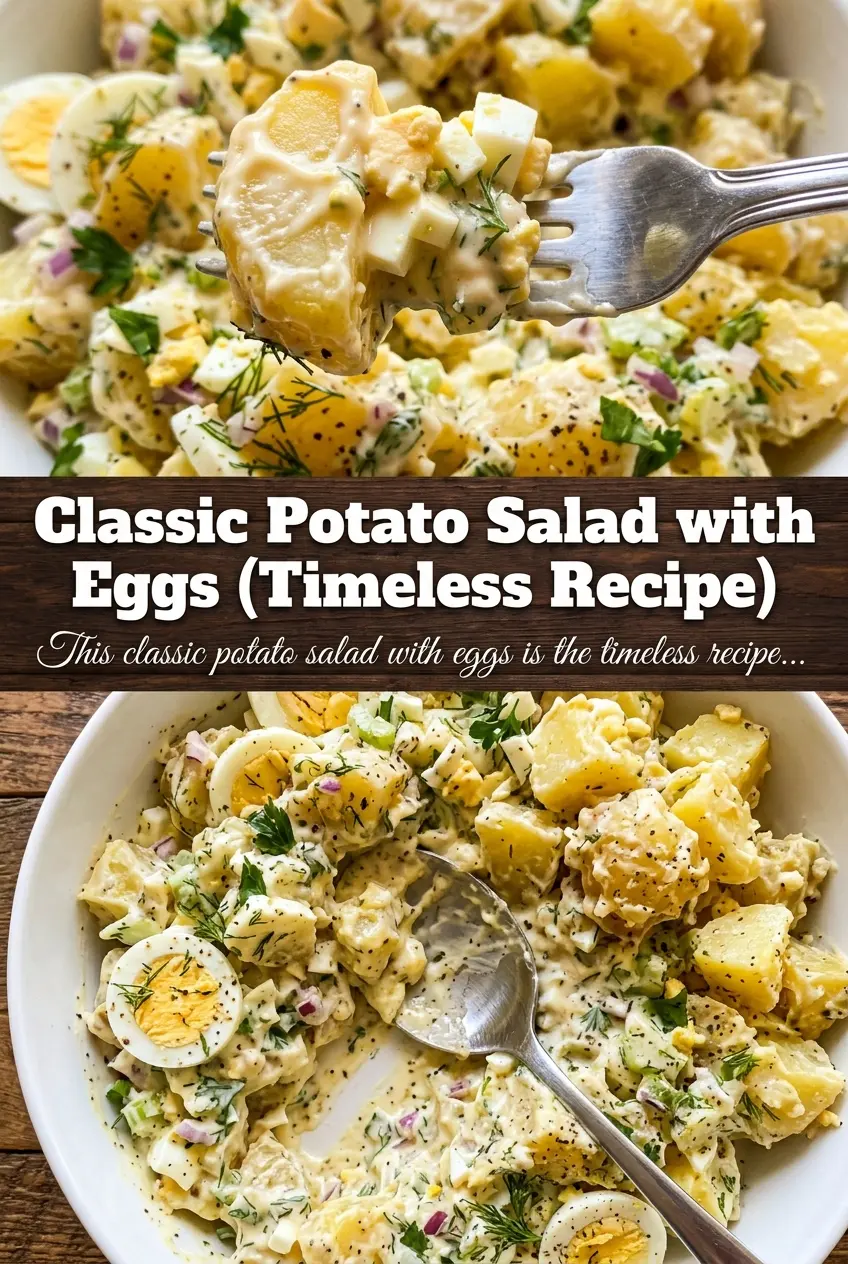
Classic Potato Salad with Eggs
Ingredients
Method
- Boil the russet potatoes in water until tender, about 15 minutes, then drain and cool until no longer steaming.
- Combine the potatoes, chopped hard-boiled eggs, diced celery, and finely diced onion in a large bowl and stir to distribute evenly.
- Mix the mayonnaise, yellow mustard, white vinegar, sugar, salt, and pepper in a separate bowl until smooth and creamy.
- Pour the dressing over the potato mixture and fold gently just until everything is coated.
- Refrigerate the salad for at least 2 hours so the flavors meld and the texture becomes thick and cohesive.
- Garnish with paprika before serving for visible color on top.