Loaded baked potato salad takes everything people love about a fully loaded baked potato and turns it into a cold, creamy side that holds its own next to anything hot off the grill. The potatoes stay hearty instead of turning mushy, the bacon stays crisp enough to give each bite a little snap, and the cheddar and sour cream bring that familiar baked-potato comfort without making the whole bowl heavy.
The trick is starting with baked russet potatoes instead of boiled ones. Baking keeps the pieces drier and a little fluffier at the center, which means they soak up the dressing without collapsing. I also keep the dressing simple: sour cream for tang, a little mayonnaise for body, and chives plus green onion for sharpness. That balance is what makes this taste like a loaded potato, not just potato salad with toppings scattered on top.
Below, you’ll find the easiest way to keep the potatoes intact, how to keep the bacon from losing its crunch, and a few smart swaps if you need to adapt the bowl for a crowd.
The potatoes stayed in nice chunks and the dressing clung to everything without turning runny. I made it the night before and the bacon still had enough crunch after chilling.
Loaded baked potato salad with crispy bacon, sharp cheddar, and a cool sour cream dressing deserves a spot in your picnic rotation.
The Key to Keeping the Potatoes Chunky, Not Mealy
The biggest mistake with potato salad starts before the dressing even goes in: overcooked potatoes. Russets need to be baked until tender, but not collapsing, so they hold their shape after cubing. If they steam too long after baking or get handled too roughly, the edges break down and the salad turns pasty instead of creamy with distinct bites.
Let the potatoes cool enough to handle, then cube them with the skin on. That skin does more than add texture; it helps the pieces stay intact when you fold in the dressing. Gentle mixing matters here. Stir like you’re turning over the potatoes, not beating them around the bowl.
- Russet potatoes — These are the right choice because they bake up fluffy inside and absorb the dressing without turning waxy. Yukon Golds will work, but the result is denser and less like a classic loaded baked potato.
- Bacon — Cook it until crisp, then drain it well before crumbling. Soft bacon disappears into the salad; you want little salty, crunchy bits that stay noticeable after chilling.
- Sharp cheddar — Mild cheddar gets lost. Sharp cheddar gives the salad that unmistakable loaded-potato bite, and shredding it yourself helps it blend better than the pre-shredded bagged kind.
- Sour cream and mayonnaise — Sour cream brings the tang, while mayonnaise gives the dressing enough body to coat the potatoes. If you skip the mayo entirely, the salad tastes thinner and less balanced.
What Each Part of the Dressing Is Doing
The dressing isn’t just there to make the bowl creamy. Sour cream gives the salad that cool, tangy baked-potato flavor, and mayonnaise smooths it out so it clings instead of pooling at the bottom of the bowl. The green onions and chives aren’t garnish here; they cut through the richness and keep each bite from tasting flat.

If you want the cleanest texture, stir the dressing together before it touches the potatoes. That way the sour cream and mayonnaise are fully blended, and the herbs distribute evenly instead of clumping in one corner of the bowl. Salt and pepper should go in at the end, after the potatoes and bacon are combined, because the cheese and bacon both bring their own saltiness.
- Sour cream — This is the backbone of the dressing. It gives the salad the tang you expect from a loaded baked potato and keeps the flavor bright after chilling.
- Mayonnaise — Use a standard mayo, not a light one. The fat content helps the dressing stay smooth and coat the potatoes instead of soaking in and disappearing.
- Green onions and chives — Green onions bring a sharper bite, while chives give a softer onion flavor. Together they make the salad taste finished, not just rich.
- Freshly shredded cheese — Pre-shredded cheese works in a pinch, but it often has anti-caking starch that can make the salad a little dusty. Freshly shredded cheddar melts into the warm potatoes more naturally.
Folding It Together Without Breaking the Potatoes
Building the Base
Start with the baked, cooled potato cubes in the largest bowl you own. Add the bacon and cheddar first so they distribute before the dressing goes in. If the potatoes are still too warm, the cheddar will soften too much and the dressing can loosen, so room-temperature potatoes are the sweet spot.
Mixing the Dressing
Stir the sour cream, mayonnaise, green onions, chives, salt, and pepper together until the mixture looks smooth and speckled with herbs. The goal is a thick, spoonable dressing, not a pourable one. If it seems too loose, it usually means the potatoes are still hot or the mayo-to-sour-cream ratio got tipped too far toward sour cream.
Bringing the Bowl Together
Fold the dressing into the potato mixture with a spatula, moving from the bottom of the bowl up and over. Stop as soon as everything is coated. Overmixing crushes the potatoes and turns the salad dense. Once it’s combined, chill it for at least an hour so the flavors settle and the texture firms up.
How I Change This for Different Tables
Dairy-Free Version
Use a dairy-free sour cream and a good vegan mayo, then replace the cheddar with a dairy-free shredded cheese if you want that loaded-potato feel. The flavor stays in the same lane, but the texture is a little softer and the cheese won’t melt into the potatoes the same way.
Make-Ahead Picnic Version
Mix everything except half the bacon and a small handful of chives, then fold those in right before serving. That keeps the top layer looking fresh and gives you some crisp bacon on the finish instead of all of it softening in the fridge.
Lighter Potato Salad
Swap half the mayonnaise for plain Greek yogurt. You keep the creamy texture and tang, but the salad tastes sharper and a little leaner. Go all-yogurt and the dressing can turn too tart, especially after chilling.
Storage and Reheating
- Refrigerator: Store covered for up to 4 days. The potatoes will absorb some dressing over time, so it gets a little thicker on day two.
- Freezer: Don’t freeze this salad. The sour cream and mayonnaise separate, and the potatoes turn grainy after thawing.
- Reheating: This salad is meant to be served cold or cool. If it comes straight from the fridge, let it sit 15 to 20 minutes so the bacon and cheese don’t taste muted.
Answers to the Questions Worth Asking
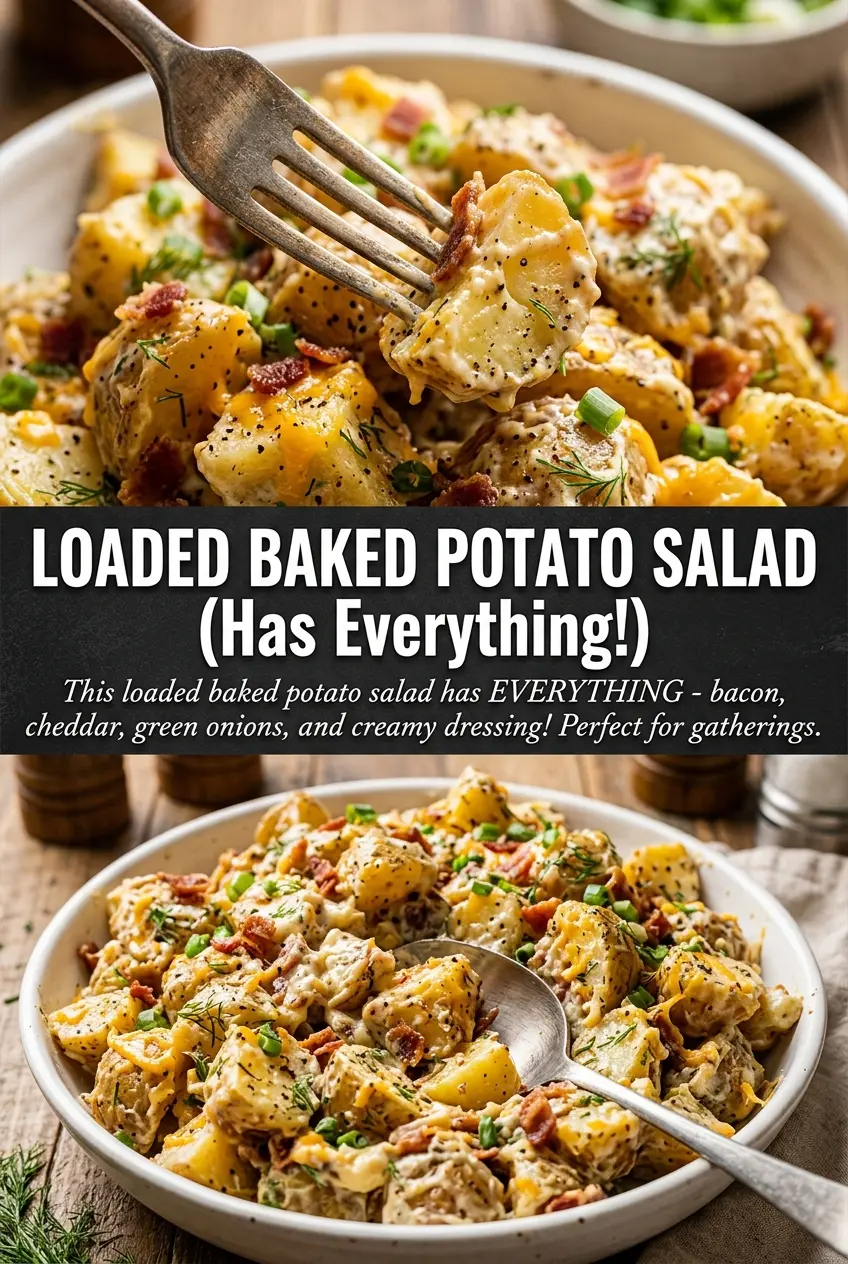
Loaded Baked Potato Salad
Ingredients
Equipment
Method
- Preheat the oven to 400°F and bake the russet potatoes on a sheet pan for 40 minutes, until tender when pierced. Let them cool completely, about 1 hour, so they cube cleanly without steaming the salad.
- Once cooled, cut the baked potatoes into cubes and leave the skin on for extra texture.
- Cook the bacon until crispy, then drain and crumble it into bite-size pieces.
- In a large bowl, combine the cubed potatoes, crumbled bacon, and shredded sharp cheddar cheese.
- In a separate bowl, mix the sour cream, mayonnaise, green onions, fresh chives, salt, and pepper.
- Gently fold the dressing into the potato mixture until evenly coated, taking care not to break up the cubes.
- Refrigerate the loaded potato salad for at least 1 hour before serving for the flavors to meld and the texture to set.