Greek salad skewers bring all the best parts of a classic salad onto a party platter: juicy tomatoes, crisp cucumber, briny olives, and creamy feta in one neat, hand-held bite. They look bright and generous on the table, and they disappear fast because every skewer gives you a little crunch, a little salt, and a little tang in the same bite.
The trick is keeping the ingredients cut large enough to stay on the skewer and small enough to eat comfortably in one or two bites. Thick cucumber slices hold up better than thin ones, and pairing each cucumber with tomato on both sides helps the skewer feel balanced instead of overloaded with cheese. The quick olive oil and red wine vinegar dressing matters too. It gives the skewers the same punch a bowl of Greek salad gets, but without making the vegetables soggy before they hit the table.
Below, I’ll walk through the tiny details that keep these skewers tidy and flavorful, plus a few ways to adapt them for different diets or make them ahead for a crowd.
I made these for a book club snack board and they held up beautifully for over an hour. The cucumbers stayed crisp, the feta didn’t crumble, and the little drizzle of oregano dressing made them taste like actual Greek salad on a stick.
Pin these Greek Salad Skewers for the next party when you want a fresh appetizer that looks polished with almost no work.
The Small Cut That Keeps These Skewers Crisp, Not Watery
The biggest mistake with salad skewers is cutting everything too small. Tiny cucumber pieces slide around the skewer and give off water fast, which turns the platter messy and the feta slick. Thick cucumber slices and firm cherry tomatoes hold their shape, and the order matters too: putting tomato on both ends helps anchor the softer middle ingredients.
Another detail that matters here is timing. The olive oil and vinegar dressing is for right before serving, not an early marinade. If it sits too long, the tomatoes lose their snap and the cucumbers start tasting diluted instead of fresh. These skewers should taste clean and bright, with just enough salt from the feta and olives to carry the whole bite.
What Each Ingredient Is Actually Doing in These Greek Salad Skewers

- Cherry tomatoes — These give you the juicy burst that makes the skewer feel like salad, not just a cheese-and-veg snack. Pick firm tomatoes with a deep red color so they don’t collapse when pierced.
- Cucumbers — Thick slices are the difference between a tidy skewer and one that spins around on the stick. English cucumbers work well because they’re less seedy, but any cucumber is fine if you cut out the watery center.
- Kalamata olives — This is the salty, briny note that gives the whole bite its Greek-salad character. Don’t swap in mild green olives unless that’s all you have; you’ll lose some of the depth and the balance against the feta.
- Feta — Use a block if you can and cut it into neat cubes. Pre-crumbled feta tends to fracture and fall apart on the skewer, especially once the dressing goes on.
- Olive oil and red wine vinegar — Together they give the skewers a light dressing without drowning them. A decent olive oil matters because it’s a big part of the flavor here, while the vinegar can be a standard pantry bottle.
- Dried oregano — This is the herb that pulls the whole platter into Greek territory. Fresh oregano can work, but use less because it can turn sharp fast.
Assembling the Skewers Without Breaking the Feta
Threading the Ingredients in a Stable Order
Start with a tomato, then cucumber, then olive, then feta, then finish with another tomato. That order gives the skewer enough structure on both ends so the softer feta doesn’t get squeezed and split when you pick it up. If your feta is crumbling, the cubes are too small or the cheese is too soft for skewer work; chill it first so it cuts cleaner. Use small wooden skewers that can hold the weight without splintering.
Whisking the Dressing Until It Tastes Sharp and Clean
Whisk the olive oil, vinegar, oregano, salt, and pepper in a small bowl until the oregano is evenly dispersed and the vinegar no longer sits in a sharp puddle at the bottom. You want a light dressing, not a thick sauce. If it tastes flat, it usually needs another pinch of salt more than another splash of vinegar. The dressing should wake up the vegetables, not cover them.
Drizzling at the Last Minute
Arrange the finished skewers on a platter first, then spoon or drizzle the dressing over the top right before serving. That keeps the cucumbers crisp and the tomatoes glossy instead of soggy. If you’re serving these for a party, keep the dressing nearby and add it in small amounts; the goal is a fresh sheen, not a pooled marinade at the bottom of the plate.
How to Adapt These Skewers for Different Tables
Dairy-Free Greek Salad Skewers
Leave out the feta and add an extra olive or a chunk of avocado if you want more richness. You’ll lose the salty creaminess, so season the dressing a little more assertively and serve the skewers well chilled for the best contrast.
Gluten-Free Party Appetizer
These are naturally gluten-free as written, which is part of why they work so well on a mixed appetizer table. Just double-check that your feta and vinegar are plain and unseasoned if you’re serving someone with a strict sensitivity.
Make-Ahead Party Platter
You can assemble the skewers a few hours ahead and keep them covered in the refrigerator, then add the dressing right before serving. If you dress them too early, the cucumbers soften and the platter starts to look tired. The flavor is still good, but the texture takes the hit.
More Filling Snack-Size Version
Add a folded slice of salami or a small pepperoncini to each skewer if you want these to lean more into snack board territory. That changes the dish from light and fresh to more savory and substantial, which works well for game day or heavier grazing spreads.
Storage and Reheating
- Refrigerator: Store assembled skewers without dressing for up to 1 day. The cucumbers stay crispest if they’re wrapped loosely and kept cold.
- Freezer: Don’t freeze these. The tomatoes and cucumbers turn mushy and the feta loses its texture once thawed.
- Reheating: No reheating needed. If the skewers have been chilled, let them sit out for 10 to 15 minutes before serving so the feta softens slightly and the olive oil doesn’t taste dull.
Answers to the Questions Worth Asking
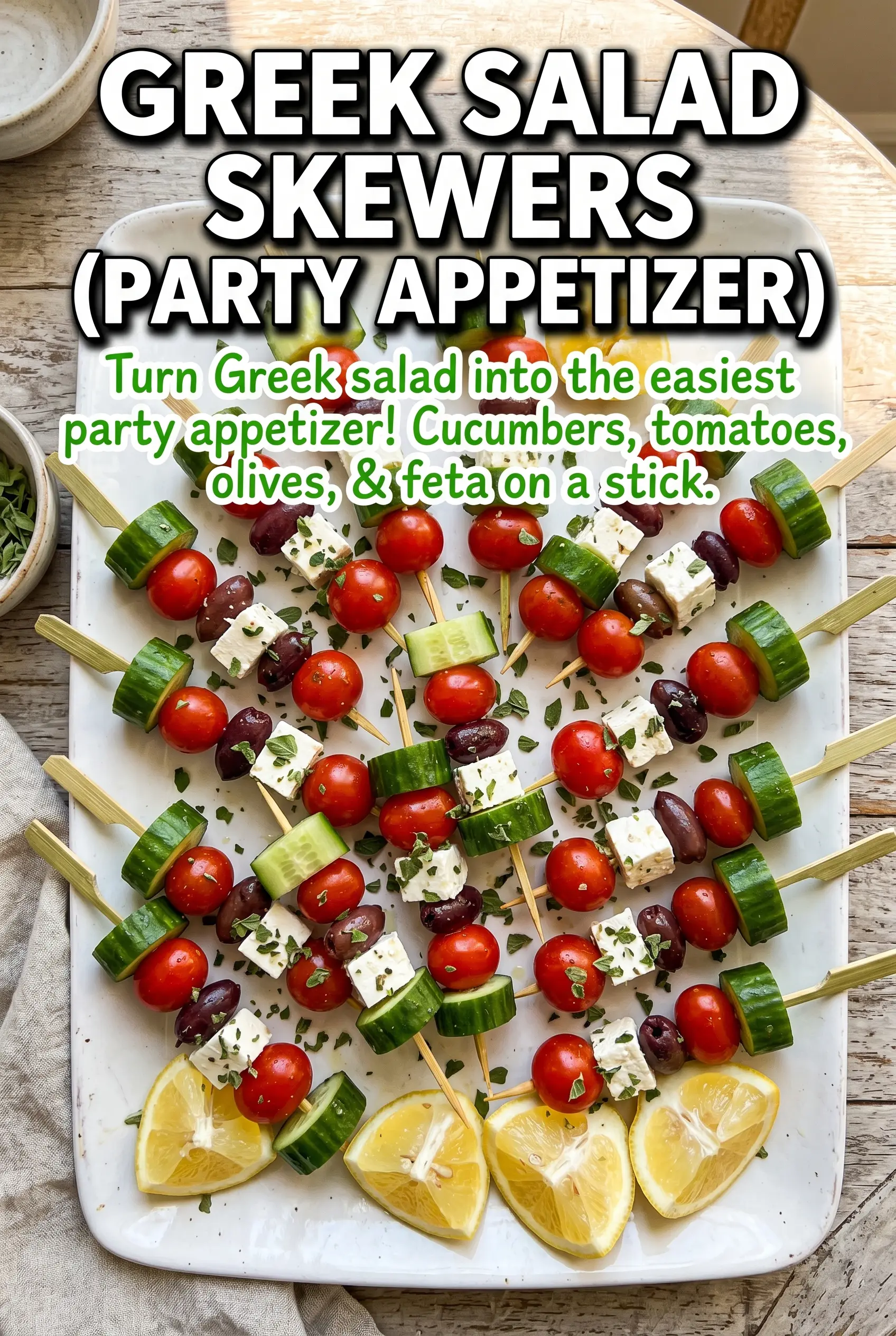
Greek Salad Skewers
Ingredients
Method
- Thread a cherry tomato, a cucumber slice, a Kalamata olive, a feta cube, and another cherry tomato onto each skewer, repeating for all 12 skewers. Arrange each layered skewer so the colors alternate visibly.
- Arrange the skewers on a serving platter in a single layer so they’re easy to pick up. Keep them spaced slightly to show the tomato-cucumber-olive-feta pattern.
- Whisk olive oil, red wine vinegar, dried oregano, salt, and pepper together until evenly combined. The mixture should look uniformly speckled with oregano.
- Drizzle the dressing over the skewers just before serving. Add enough to lightly coat the feta and bring out the tomato juices without soaking the platter.