Kokkinisto turns humble beef chuck into something deeply savory, mellow, and just a little bit fragrant, with a tomato sauce that tastes like it spent all day becoming itself. The beef goes spoon-tender, the onions melt into the sauce, and the cinnamon and allspice stay in the background where they belong, giving the stew a warm edge without making it taste like dessert. Served over orzo or potatoes, it lands in that perfect middle ground between comforting and special enough for company.
The trick here is patience in two places: browning the beef properly in batches, and letting the sauce simmer long enough to thicken around the meat. A crowded pan will steam the beef instead of giving it the dark, savory crust that builds the base of the stew. The tomato paste needs that minute in the pan too; once it darkens slightly, it loses the raw sharpness and gives the sauce more depth.
Below, I’ve included the small details that matter most, including how to keep the sauce balanced and what to do if you want to serve it with potatoes instead of orzo. If you’ve ever had a Greek beef stew that tasted flat or thin, the notes here will help you avoid both problems.
The beef turned out melt-in-your-mouth tender, and the sauce thickened beautifully after the long simmer. I loved how the cinnamon stayed subtle instead of tasting sweet, and the feta on top made it taste finished.
Kokkinisto’s cinnamon-kissed beef and rich tomato sauce are worth saving for a slow Sunday dinner or an easy make-ahead meal.
Why This Stew Needs a Proper Brown on the Beef
The biggest difference between a good kokkinisto and a flat one is the sear. Beef chuck has plenty of connective tissue, which is exactly what makes it rich after a long simmer, but that richness needs a browned surface to start with. If you dump all the meat in at once, the pan cools down and the beef steams. You still get stew, but you lose the deep savory base that makes the sauce taste finished.
The other place this dish can go wrong is the tomato paste. It needs a minute with the onions and garlic to cook out its raw edge and pick up a little color. That short step makes the sauce taste fuller and less tinny, especially once the wine and tomatoes go in.
- Brown in batches — Give each piece space in the pan so it can develop a real crust instead of turning gray.
- Cook the tomato paste briefly — One minute is enough to deepen its flavor without burning it.
- Scrape up the browned bits — The wine loosens all that flavor from the pan and folds it back into the sauce.
What Each Ingredient Is Actually Doing in Kokkinisto
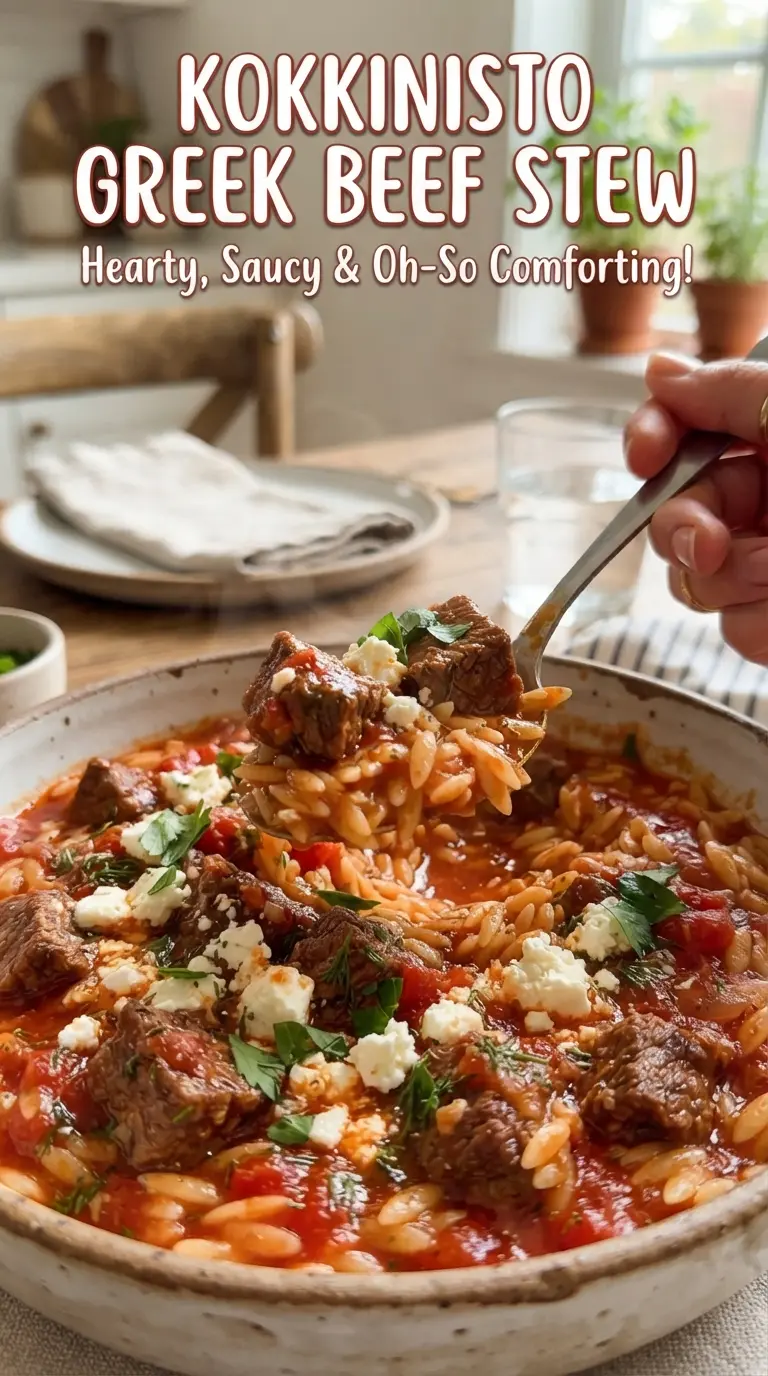
- Beef chuck — This is the right cut because the long simmer breaks down the connective tissue and turns it silky. Leaner beef will dry out before the sauce gets deep and thick.
- Tomato paste and crushed tomatoes — The paste builds concentration, while the crushed tomatoes give the stew its body. If you only use one or the other, the sauce ends up either thin or flat.
- Dry red wine — Wine adds acidity and a little bitterness that keeps the sauce from tasting heavy. If you need a swap, use beef broth plus a splash of red wine vinegar, but the stew will lose some depth.
- Cinnamon stick, allspice, and bay leaves — These are what make kokkinisto taste distinctly Greek. Use whole spices here, not ground, so the sauce stays warm and fragrant instead of muddy.
- Orzo or potatoes — Orzo catches the sauce in every spoonful, while potatoes make the dish feel more rustic and hearty. Both work because they balance the richness of the stew.
Building the Sauce Until the Beef Falls Apart
Searing the Beef Without Crowding the Pan
Pat the beef dry before it hits the oil, then brown it in batches over medium-high heat. You want a dark crust on at least two sides, not a gray exterior. If the pan starts to look wet, stop and let the moisture cook off before adding more meat. That browning is what gives the sauce its backbone, and rushing it is the fastest way to make the stew taste one-note.
Softening the Onions and Toasting the Tomato Paste
Once the beef is out, cook the onions until they’re soft and translucent with a little golden color at the edges. The garlic goes in near the end so it doesn’t scorch, and the tomato paste should cook just long enough to darken slightly. If the paste still tastes sharp after the stew is done, it means it never had that brief time in the pan to mellow out.
Letting the Simmer Do the Real Work
After the wine goes in, scrape the bottom of the pot and let it reduce for a couple of minutes. Then add the tomatoes, water, spices, sugar, and beef, cover the pot, and keep the simmer low and steady. You’re looking for a few lazy bubbles, not a hard boil. If the heat is too high, the beef can tighten up before the collagen has time to soften.
Knowing When It’s Done
The stew is ready when the beef gives easily to a fork and the sauce has thickened enough to coat the back of a spoon. If it still looks loose near the end, uncover the pot for the last 15 to 20 minutes and let some liquid cook off. Pull out the cinnamon stick, bay leaves, and allspice before serving so nobody gets a surprise in their bowl.
How to Adjust Kokkinisto for Different Kitchens and Eaters
Serve It the Traditional Way Over Orzo
Orzo catches the sauce and makes the stew feel a little lighter than potatoes do. Spoon the kokkinisto over freshly cooked orzo so it doesn’t sit and clump, then finish with feta and parsley for salt and brightness.
Use Potatoes for a Heartier Bowl
Waxy potatoes hold their shape best if you want defined pieces in the bowl, while floury potatoes soak up more sauce and start to break down a little. Either way, add them during the simmer so they can absorb the tomato sauce instead of tasting separate from it.
Make It Dairy-Free
Skip the feta garnish and finish with extra parsley or a drizzle of good olive oil. The stew itself is already dairy-free, so this is an easy adjustment that keeps the texture and flavor intact.
Make It Ahead for Better Flavor
Kokkinisto tastes even deeper the next day because the spices and tomato sauce settle in around the beef. Cook it a day ahead, chill it overnight, and reheat it gently before serving so the meat stays tender and the sauce doesn’t scorch.
Storage and Reheating
- Refrigerator: Store for up to 4 days. The sauce thickens as it chills, and the flavor gets even better.
- Freezer: Freezes well for up to 3 months. Cool completely before packing into airtight containers, leaving a little room for expansion.
- Reheating: Reheat gently on the stovetop over low heat with a splash of water if needed. A hard boil can make the beef stringy and can cause the sauce to split around the edges.
Answers to the Questions Worth Asking
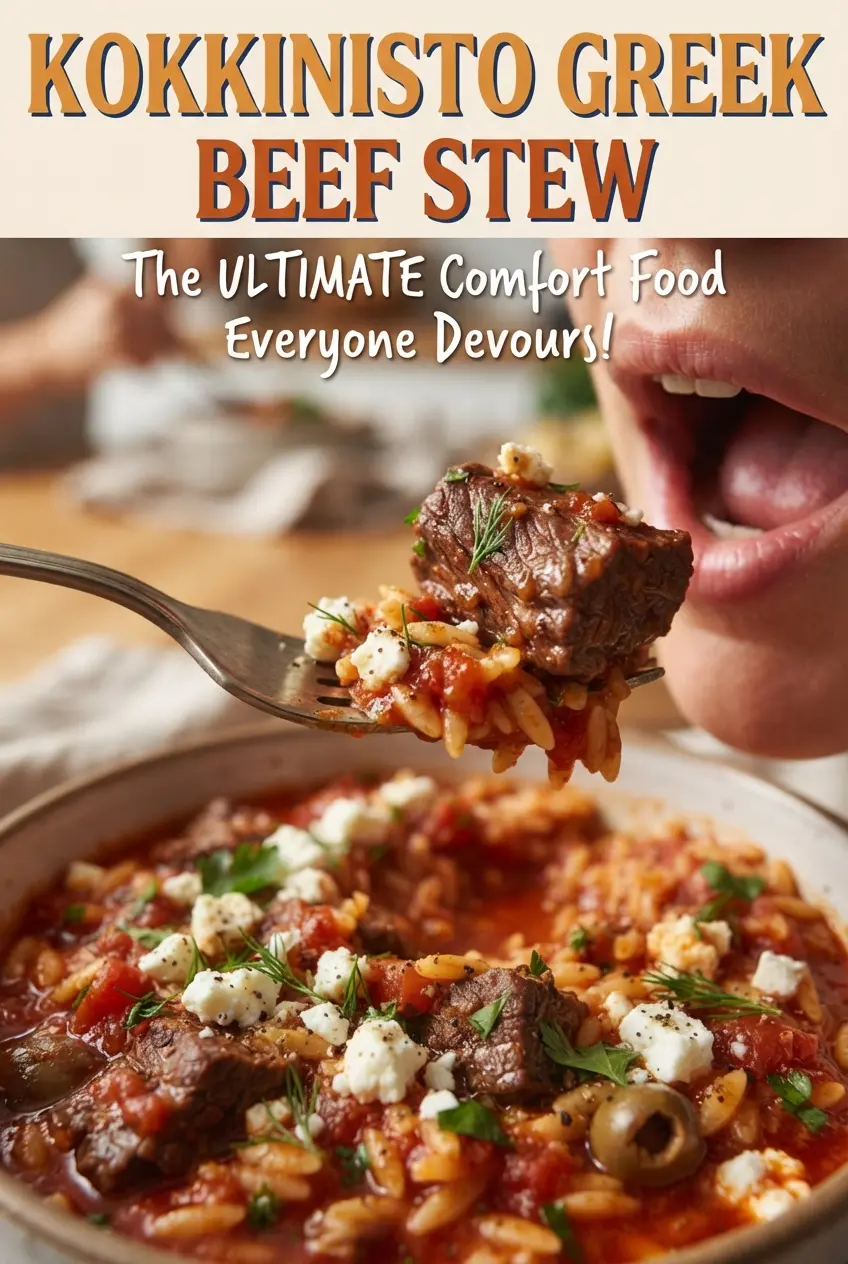
Kokkinisto Greek Beef Stew
Ingredients
Equipment
Method
- Season the beef chuck cubes with salt and black pepper. Brown the beef in batches in olive oil in a Dutch oven until well browned on the outside, then set aside while you cook the aromatics.
- Keep the Dutch oven over medium-high heat as you brown. If the oil looks dry between batches, add a small splash of olive oil so the beef can brown instead of steam.
- Add the finely diced onions to the Dutch oven and cook for 6 minutes until soft. Add the minced garlic and tomato paste, cooking for 1 minute until fragrant.
- Pour in the dry red wine and simmer for 2 minutes, scraping the bottom to loosen browned bits. Let the wine reduce slightly before adding the tomatoes and spices.
- Add the crushed tomatoes, water, cinnamon stick, allspice berries, bay leaves, sugar, and the beef to the pot. Stir well so the beef is coated in the sauce.
- Cover and simmer at a gentle simmer for 1 1/2-2 hours, until the beef is very tender and the sauce is thick. Skim any excess fat if needed and stir occasionally to prevent sticking.
- Remove the whole spices from the stew, including the cinnamon stick and bay leaves. Serve hot over cooked orzo or potatoes.
- Top each bowl with crumbled feta and parsley. Let it rest for 5 minutes after simmering so the sauce clings to the beef and orzo.


