Creamy Japanese potato salad lands somewhere between a classic picnic side and a proper comfort dish. The potatoes are soft and lightly mashed, the cucumber stays crisp after its salt treatment, and the carrots and egg give each bite a little contrast instead of turning the whole bowl heavy. It’s the kind of side dish that disappears fast because it tastes familiar and new at the same time.
What makes this version work is the balance of texture and moisture. The potatoes need to be warm enough to absorb the dressing, but not so wet that they turn gluey. Salting and squeezing the cucumber matters just as much as the mayo, because the salad only stays creamy when the vegetables aren’t watering it down later. A short chill in the fridge pulls everything together and gives the rice vinegar time to soften the richness.
Below, I’ll walk through the one step that keeps the salad from getting soggy, plus a few swaps if you want to adjust the richness or make it ahead for a gathering.
The cucumber stayed crisp even after chilling overnight, and the potatoes held that perfect slightly mashed texture instead of turning into paste. The rice vinegar in the dressing kept it from tasting heavy.
Love the creamy mash and crisp cucumber in this Japanese potato salad? Save it to Pinterest for the kind of side dish that gets even better after chilling.
The Trick Is Keeping the Vegetables Dry Enough to Stay Creamy
The part that trips people up with potato salad is moisture. Warm potatoes are thirsty and will absorb dressing, but cucumbers and even blanched carrots can undo that if they go in wet. Salting the cucumber, waiting a few minutes, and squeezing it dry keeps the salad from turning loose in the fridge. That step matters more here than in a mayonnaise-heavy American-style potato salad because this version is meant to stay fluffy and spoonable, not soupy.
Another important detail is the texture of the potatoes themselves. You want them tender enough to mash easily while still holding a few small chunks. If you boil them until they start falling apart, they’ll drink up too much moisture and the salad can go past creamy into dense. Stop cooking when a knife slides through without resistance, then mash while they’re still warm so the dressing settles in evenly.
What Each Ingredient Is Actually Doing in This Bowl
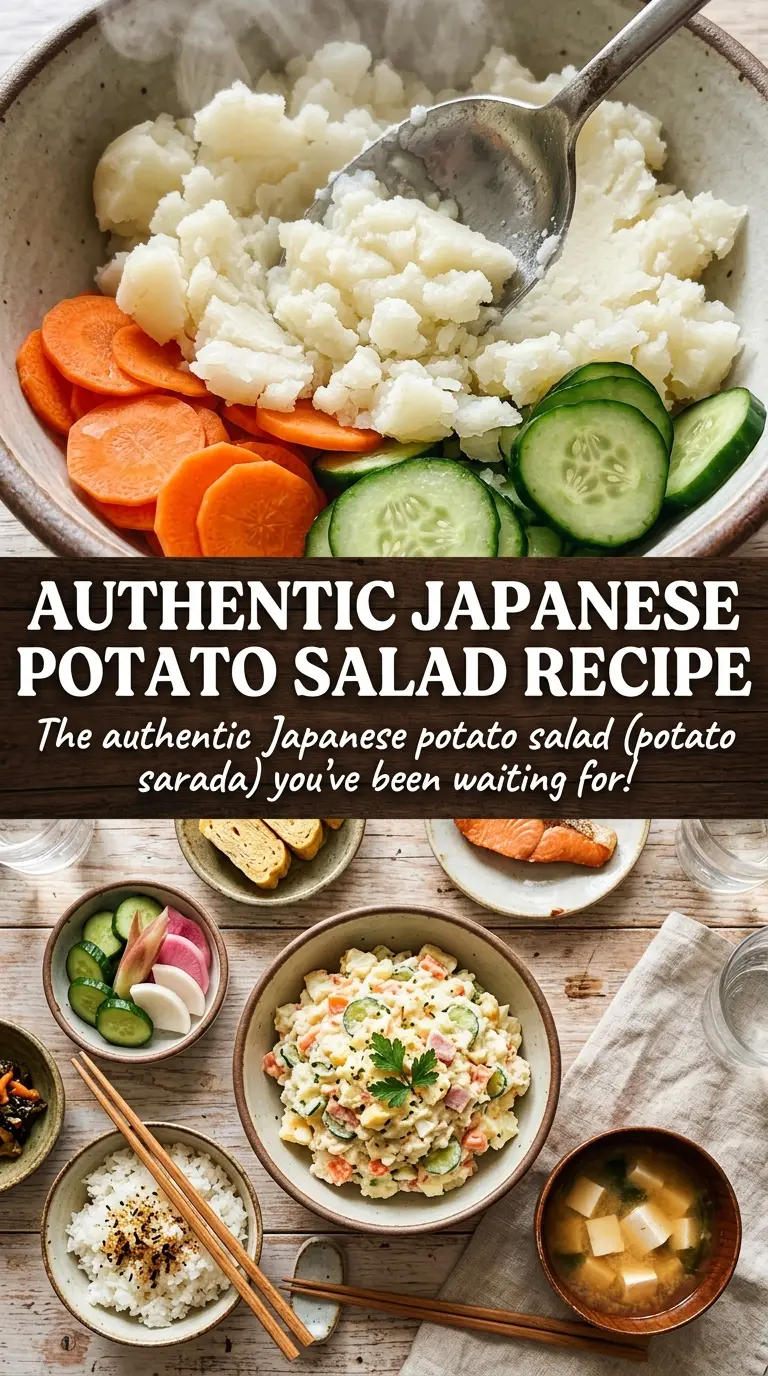
- Russet potatoes — These break down into a soft, fluffy mash that soaks up the dressing without staying waxy. Yukon Golds work in a pinch, but they’ll give you a richer, denser salad with less of that light mashed texture.
- Japanese mayonnaise — This brings a deeper, tangier richness than standard mayo. If you use regular mayonnaise, add the rice vinegar a little more carefully because the dressing can taste flatter without that extra bite.
- Rice vinegar — This sharpens the dressing and keeps the mayo from tasting heavy. Lemon juice will work, but it tastes brighter and less round, so start with a smaller amount and taste as you go.
- Cucumber — The cucumber is there for crunch and freshness, not bulk. Slicing it thin and salting it first is what keeps the texture clean after chilling.
- Corn and carrots — Both add sweetness that plays against the vinegar and mayo. The carrots should be blanched just enough to lose their raw edge; if they stay firm like salad carrots, they’ll feel out of place against the soft potatoes.
- Hard-boiled eggs — The eggs add body and make the salad feel more complete. Chop them finely if you want them to melt into the mix, or leave them a little chunkier for more contrast.
Building the Salad So It Stays Light, Not Gummy
Cooking the Potatoes to the Right Point
Start the potatoes in cold water and bring them up together, which helps them cook evenly instead of turning the outside mushy before the centers are done. They’re ready when a knife goes in easily and the cubes just begin to look soft at the edges. Drain them well, then let the steam escape for a minute before mashing. If you rush straight into the dressing with wet potatoes, the salad gets loose and the flavor waters down.
Getting the Cucumber Ready
Sprinkle the cucumber slices with salt and let them sit long enough to release moisture. You’ll see water collect in the bowl, and that’s what you don’t want in the finished salad. Squeeze them gently in your hands or press them in a clean towel until they’re dry but still intact. That one move is what keeps the salad crisp after it chills.
Mixing the Dressing Into Warm Potatoes
Stir the mayonnaise, rice vinegar, sugar, salt, and pepper together first, then fold it into the warm potatoes. Warm potatoes absorb the dressing more evenly than cold ones, so the flavor reaches all the way through instead of sitting on the surface. Fold gently and stop while the mixture still looks a little rough. Overmixing turns the potatoes into paste, and this salad needs that soft, slightly broken texture to feel right.
Letting the Chill Do Its Work
Refrigerate the salad for at least two hours before serving. That resting time softens the sharp edge of the vinegar, gives the mayonnaise time to settle in, and lets the vegetables and potatoes taste like one dish instead of separate parts. If it seems a little firmer after chilling, that’s normal. Stir it once before serving and add a small spoonful of mayo only if it needs loosening.
How to Adapt This Japanese Potato Salad for Your Table
Make it lighter with half yogurt
Swap out half the mayonnaise for plain Greek yogurt if you want a tangier, lighter salad. The result will be a little less rich and a little firmer after chilling, but it still holds the same creamy feel. Keep the rice vinegar, since the yogurt softens the sweetness and gives the salad the bright finish it needs.
Go dairy-free without changing the texture
This recipe is naturally dairy-free as written, so no special substitution is needed. Just check your mayonnaise label if you’re cooking for someone with allergies, since some brands use ingredients that aren’t always obvious at a glance. The texture stays the same as long as you keep the cucumber dry.
Add ham or bacon for a heartier side
A small amount of diced ham or crisp bacon turns this into a more filling side dish without losing the Japanese potato salad character. Add it after the salad has chilled so the meat keeps its texture. Too much will crowd out the vegetables, so treat it like an accent, not the main event.
Skip the corn if you want a more traditional version
The corn adds sweetness and a little pop, but the salad still works without it. Leaving it out makes the flavor more clean and potato-forward, which some people prefer with grilled meat or fried dishes. If you remove the corn, keep the carrot and cucumber so the bowl still has enough contrast.
Storage and Reheating
- Refrigerator: Keep covered for up to 3 days. The cucumbers will soften a bit, but the flavor stays good.
- Freezer: I don’t recommend freezing this salad. The potatoes and mayonnaise separate after thawing, and the vegetables lose their fresh texture.
- Reheating: This salad is meant to be served cold or cool. If it comes straight from the fridge and seems too firm, let it sit at room temperature for 10 to 15 minutes and stir before serving instead of heating it.
Answers to the Questions Worth Asking
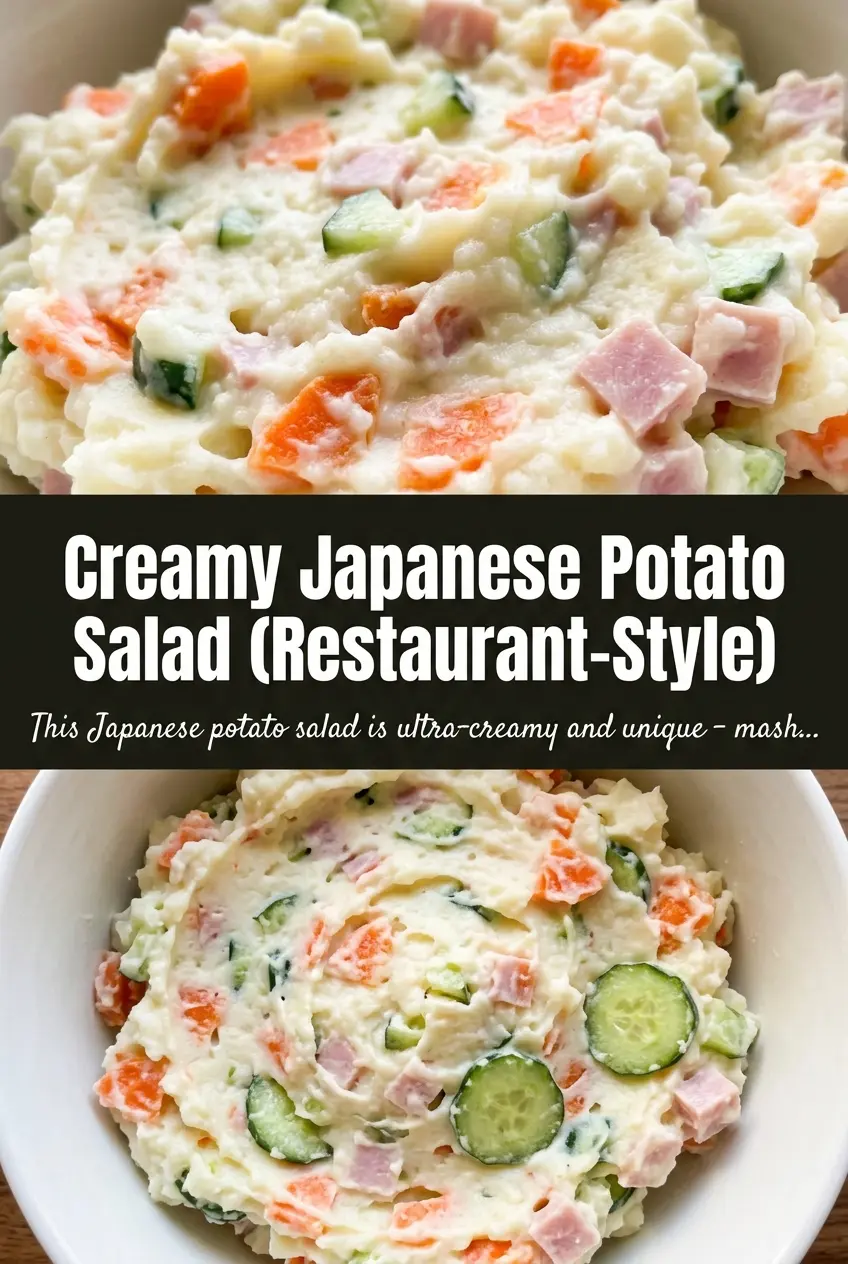
Japanese Potato Salad
Ingredients
Equipment
Method
- Boil the russet potatoes in a large pot of water until very tender, then drain. Keep an eye out for a fork sliding in with no resistance.
- Mash the potatoes while still warm, leaving some chunks for a slightly mashed texture. Stop mashing when you still see small pieces.
- Blanch the carrots for 2 minutes, then drain. They should turn brighter in color but stay crisp-tender.
- Salt the cucumber slices and let them sit for 10 minutes, then squeeze out the liquid. The slices should look a little less wet after squeezing.
- Combine the mashed potatoes, carrots, cucumber, corn, and chopped hard-boiled eggs. Stir until the mix is evenly distributed with visible vegetable pieces.
- Mix the Japanese mayonnaise, rice vinegar, sugar, salt, and pepper until smooth. The dressing should look glossy and fully blended.
- Fold the dressing into the potato mixture. Mix gently so the salad stays creamy with a slightly chunky texture.
- Refrigerate the salad for at least 2 hours before serving. Chilling should make it thicker and help the flavors come together.