Warm German potato salad lands on the table with the kind of balance that makes people go back for a second scoop before they’ve finished the first. The potatoes stay tender without turning mushy, the bacon adds salt and crunch, and the vinegar dressing sinks in just enough to coat every slice without making the dish heavy. It’s the side I reach for when I want something sturdy, bright, and unmistakably old-school in the best way.
The trick is using waxy potatoes and dressing them while they’re still warm. That’s what lets the broth-vinegar mixture soak in instead of sliding off the surface. Reserving a little bacon drippings for the onions gives the dressing a deeper base, and the mustard helps the whole thing emulsify just enough to cling to the potatoes.
Below you’ll find the small details that keep the salad from going flat or watery, plus a few ways to adapt it without losing the character of the dish.
The potatoes soaked up the dressing beautifully and the bacon stayed crisp enough to give every bite texture. I served it warm with pork chops and the bowl was scraped clean.
Like this warm German potato salad? Save it to Pinterest for the bacon vinaigrette, tender Yukon gold potatoes, and classic no-mayo comfort.
The Reason This Salad Stays Creamy Without Any Mayo
The texture comes from timing more than trickery. Hot potatoes absorb the dressing; cooled potatoes repel it. That’s why this salad tastes layered instead of sharply sour and why the broth, vinegar, and mustard settle into the slices instead of pooling at the bottom of the bowl.
Yukon golds matter here because they hold their shape while still going tender at the edges. Russets break down too easily and turn the salad starchy. If the potatoes are overboiled, the dressing can’t save them. They need to be tender enough to pierce cleanly, but still firm enough to toss without collapsing.
- Warm potatoes — They absorb the vinegar dressing while their surface is still open. Letting them cool first gives you a much flatter, less seasoned salad.
- Bacon drippings — A few tablespoons carry the smoky flavor into the onions and dressing. If you skip them, the salad still works, but it loses depth.
- Dijon mustard — It sharpens the dressing and helps it cling lightly to the potatoes. Yellow mustard can work in a pinch, but it tastes harsher and less rounded.
- Chicken broth — This softens the vinegar and keeps the dressing from tasting thin or one-note. Water won’t give you the same body.
What Each Ingredient Is Actually Doing In This Dish

- Yukon gold potatoes — These hold together after boiling and give the salad a naturally buttery texture. Slice them evenly so they cook at the same rate; uneven pieces lead to a mix of mushy and underdone bites.
- Bacon — It’s not just garnish. The bacon gives you both crisp bits for texture and drippings for the onion base, which is part of what makes the dressing taste traditional.
- Onion — Cooking it in the drippings softens the bite and folds it into the dressing instead of leaving it sharp and raw. Dice it small so it disappears into the salad instead of dominating each forkful.
- White wine vinegar — This is the backbone of the salad’s tang. Apple cider vinegar can stand in, but it brings a softer, fruitier edge that tastes a little less classic.
- Sugar and Dijon — Together they smooth out the acidity and give the dressing enough body to coat the potatoes. Don’t leave both out unless you want the salad aggressively sharp.
- Parsley — Add it at the end for freshness and color. If it goes in too early, it loses its clean finish and gets lost in the warm dressing.
Keeping the Potatoes Intact While the Dressing Goes In
Boiling Until Just Tender
Cook the sliced potatoes in salted water until a knife slips in with little resistance, about 15 minutes depending on thickness. They should be cooked through but not falling apart at the edges. If they’re overcooked, they’ll break when tossed and the salad turns gluey instead of tidy. Drain them well, then let the steam escape for a minute so the dressing doesn’t dilute on contact.
Building the Bacon Base
Cook the bacon until crisp, then reserve about 3 tablespoons of drippings before moving on. That fat carries the onion flavor and gives the dressing its backbone. If the pan is overcrowded or the bacon is cooked too fast, you won’t get clean drippings and the onion will steam instead of softening. Keep the heat at medium so the drippings stay usable and don’t scorch.
Finishing the Dressing and Tossing Gently
Sauté the onion in the drippings until soft and translucent, then add broth, vinegar, sugar, mustard, and caraway if you’re using it. Bring it just to a simmer so the sugar dissolves and the flavors come together without reducing the liquid too much. Pour the hot dressing over the potatoes and crumbled bacon, then fold it with a broad spoon or spatula. The goal is to coat, not mash; if you stir aggressively, the slices break and the texture goes soft fast.
How to Adapt This for Different Tables
Dairy-Free and Naturally No-Mayo
This recipe already fits a dairy-free, mayo-free table without any changes. The broth and bacon drippings give it richness, so you don’t need cream or sour cream to make the dressing feel complete.
Make It Vegetarian
Swap the bacon for smoked salt or a little smoked paprika and use vegetable broth instead of chicken broth. You’ll lose the meaty drippings, so add a tablespoon of olive oil for the onion and expect a lighter, cleaner-tasting salad.
Swap the Vinegar If That’s What You Have
Apple cider vinegar works well if white wine vinegar isn’t in the pantry. The salad will taste a little softer and less sharp, which some people prefer, but it won’t have the same clean German-style tang.
Hold It for a Potluck
This salad can be made a few hours ahead and held warm or served at room temperature. If it sits, stir in a splash of broth before serving to loosen the dressing, since the potatoes keep drinking it up as they rest.
Storage and Reheating
- Refrigerator: Keep leftovers in a covered container for up to 4 days. The potatoes firm up as they chill, and the dressing will look tighter the next day.
- Freezer: This doesn’t freeze well. The potatoes turn mealy once thawed and the dressing loses its clean texture.
- Reheating: Warm it gently on the stove over low heat or in short bursts in the microwave, stirring once or twice. Don’t blast it on high heat or the potatoes can split and the bacon turns leathery.
Answers to the Questions Worth Asking
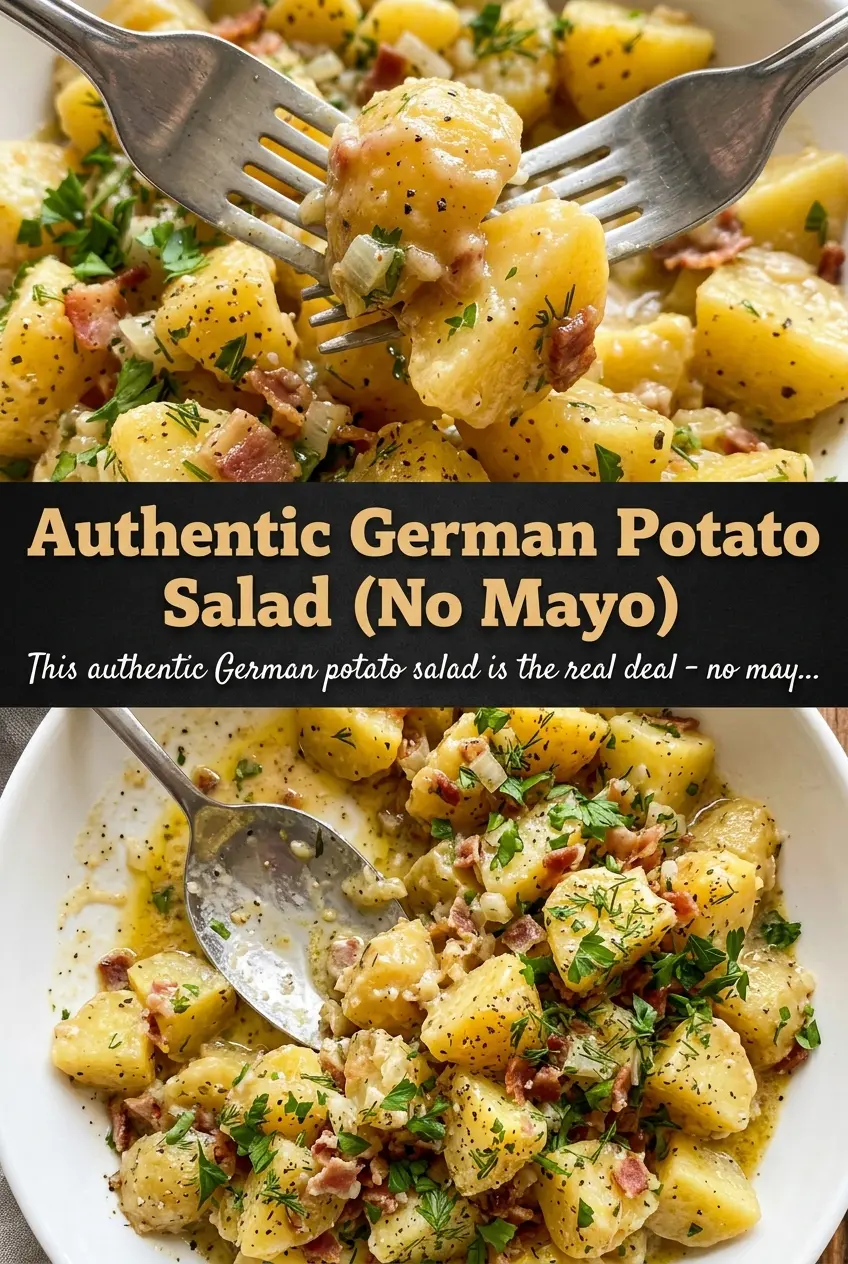
Authentic German Potato Salad
Ingredients
Equipment
Method
- Bring water to a boil in a Dutch oven and add the sliced Yukon gold potatoes; boil until tender, about 15 minutes. Watch for the slices to yield easily when pierced with a fork.
- Drain the potatoes well and set them aside in the Dutch oven. Keep the pot nearby for finishing with the dressing.
- Cook the bacon in a cast iron skillet over medium heat until crispy, about 8 to 12 minutes, then transfer to a plate. Reserve 3 tablespoons of drippings in the skillet for the onion and dressing.
- Sauté the diced onion in the reserved bacon drippings until soft, about 4 to 6 minutes. Stir often so the onion turns translucent and fragrant.
- Add chicken broth, white wine vinegar, sugar, Dijon mustard, and caraway seeds (if using) to the skillet and bring to a simmer over medium-high heat, about 3 to 5 minutes. Look for small bubbles around the edges and a slightly reduced, glossy sauce.
- Crumble the crispy bacon and add it to the drained potatoes. Toss just enough to distribute the bacon through the warm slices.
- Pour the hot dressing over the potatoes and bacon, then toss gently to coat. The potatoes should look evenly glazed with a vinegar sheen.
- Add chopped fresh parsley and season with salt and pepper to taste. Stir and serve warm immediately.