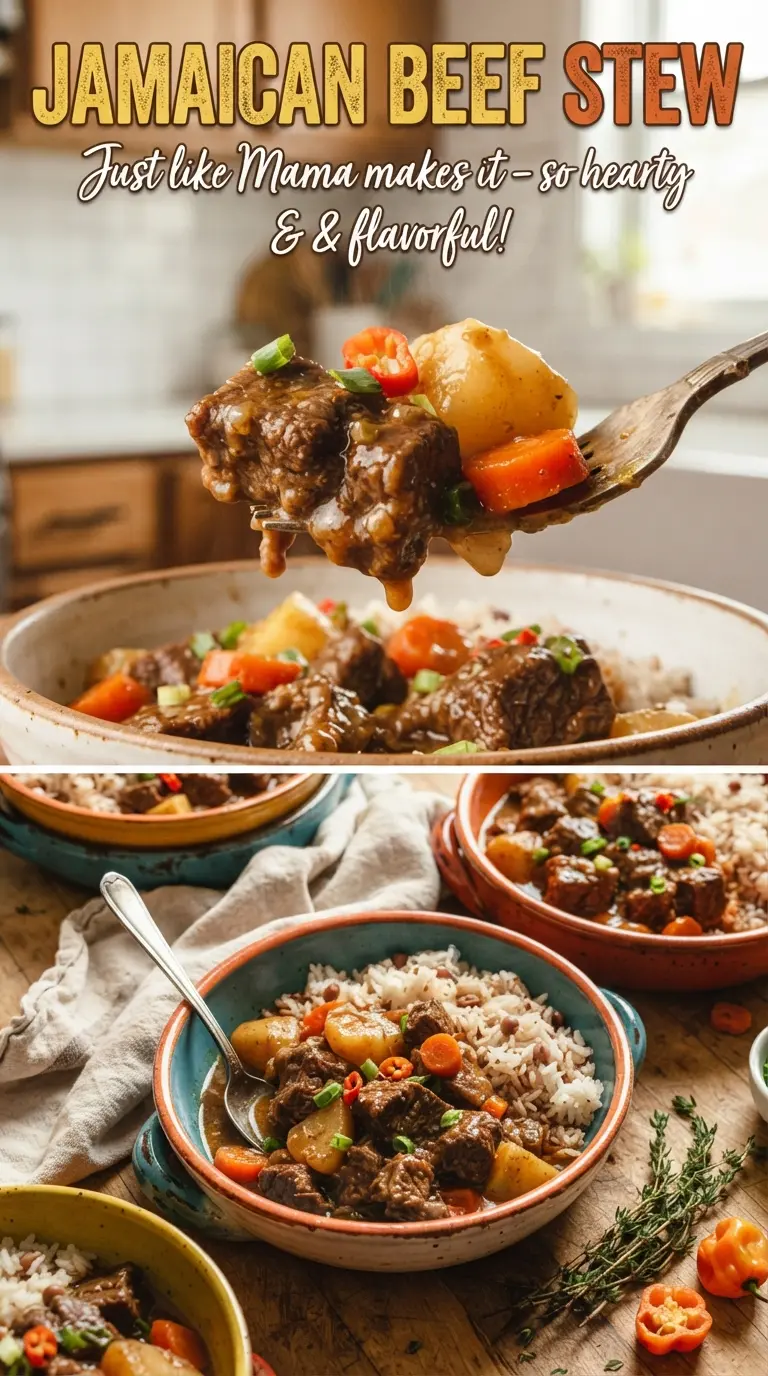
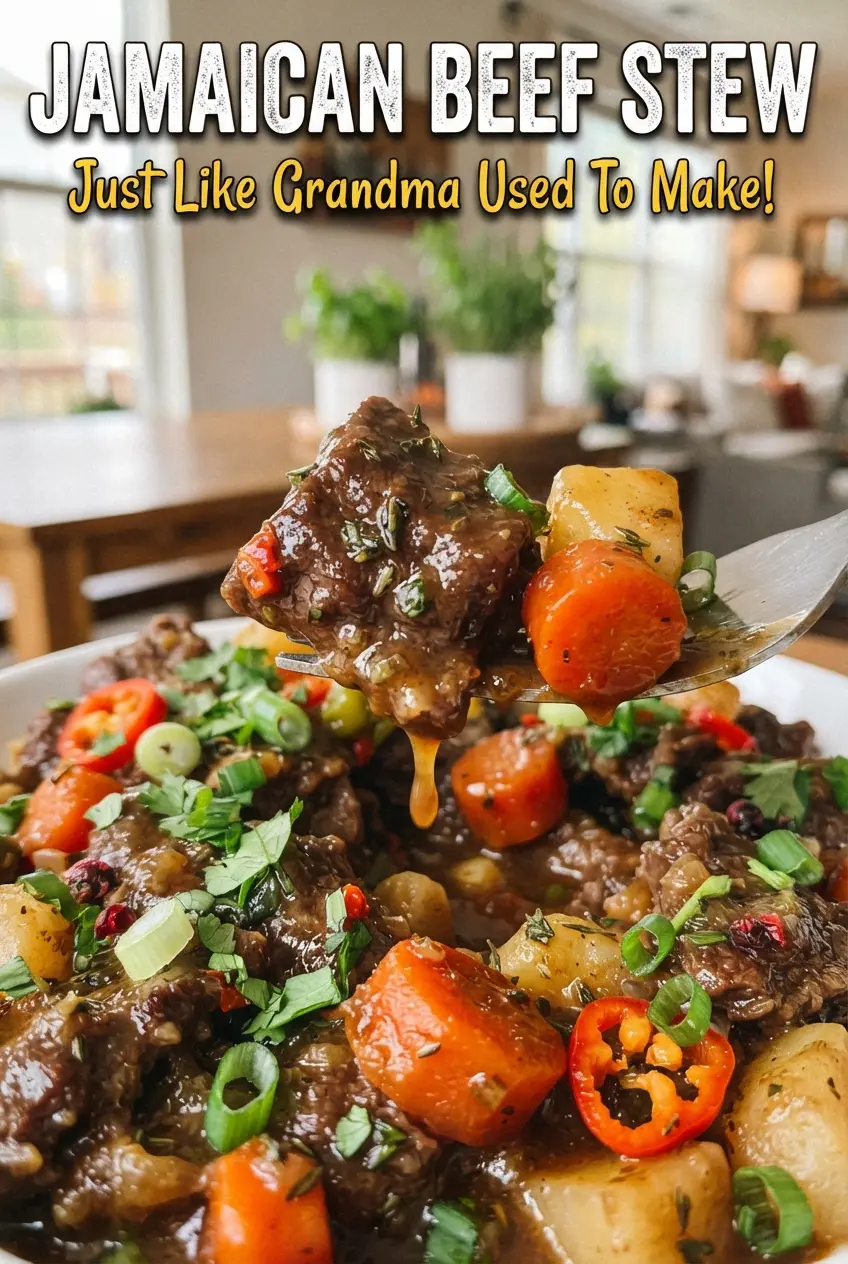
Deep brown Jamaican beef stew has the kind of rich, layered gravy that clings to rice and coats every cube of beef with bold, savory heat. The beef turns tender without falling apart, the potatoes soften into the broth, and the butter beans round everything out with a creamy finish that makes each bite feel complete. It’s the sort of pot that tastes even better the next day, when the ginger, thyme, allspice, and browned beef have had time to settle into each other.
What sets this version apart is the way the beef gets seasoned early and then seared in darkened sugar before the liquid goes in. That step gives the stew its deep color and a subtle caramel note that plain simmering can’t build on its own. The scotch bonnet stays whole, so it perfumes the pot without turning the stew into a fire alarm, and the vegetables go in late enough to hold their shape.
Below, I’ve laid out the part that matters most: how to keep the sear dark without burning the sugar, what the scotch bonnet is actually doing in the pot, and how to adapt the stew if you need to work around what’s in your pantry.
The gravy turned dark and glossy just like the bowl at my favorite Jamaican spot, and the beef was fork-tender after the full simmer. I kept the scotch bonnet whole like you said, and it gave the stew a gentle heat instead of overpowering it.
Save this Jamaican beef stew for a rich, slow-simmered dinner with glossy gravy, tender beef, and just enough scotch bonnet heat.
The Browning Step Is What Gives This Stew Its Depth
The biggest mistake people make with beef stew like this is rushing past the browning stage and treating it like a regular braise. Here, the browned sugar and browning sauce work together to create the stew’s dark color and that savory-sweet edge that reads as classic Jamaican comfort, not plain beef in gravy. If the sugar gets too far, it goes bitter fast, so the goal is a deep amber color, not a black one.
The beef also needs room in the pot when it sears. If the pieces are crowded, they steam and the surface stays pale, which leaves you with a thinner-tasting stew. Build that first dark layer patiently and the rest of the pot has a stronger base to stand on.
- Beef chuck — This cut has enough connective tissue to turn tender during the long simmer. Leaner stew meat can work, but it won’t give you the same silky bite.
- Browning sauce — This is what pushes the stew into that deep mahogany color quickly. You can’t fully replace it with soy sauce alone; if you must skip it, use a little extra dark soy or a touch more caramelized sugar, but the flavor will be less rounded.
- Scotch bonnet pepper — Keep it whole so it perfumes the pot instead of disappearing into the gravy. If you want less heat, leave it intact and remove it early, but don’t cut it open unless you want real fire in the stew.
- Butter beans — They thicken the broth slightly and add a soft, creamy contrast at the end. Canned beans are fine here because they’re added late and only need warming through.
What Each Ingredient Is Doing Once the Pot Starts Simmering
- Soy sauce, Worcestershire, and browning sauce build the salty, savory backbone. Together they give the broth a deeper color and more complexity than salt alone.
- Allspice, thyme, ginger, and green onions are the seasoning signature of the dish. Fresh thyme matters most here; dried thyme can work in a pinch, but use less because it concentrates quickly.
- Brown sugar and ketchup round out the acidity and help the broth turn glossy. The ketchup won’t taste like ketchup in the finished stew; it just adds body and a little sweetness.
- Carrots and potatoes go in after the beef has mostly softened so they hold their shape. Add them too early and they’ll break down before the meat is ready.
- Beef broth carries everything and keeps the stew from becoming overly salty. Use a low-sodium broth if your browning sauce and Worcestershire are on the salty side.
Building the Pot So the Beef Turns Tender, Not Tough
Marinating the Beef
Start by coating the beef with the browning sauce, soy sauce, Worcestershire, seasoning, allspice, onion, garlic, ginger, and green onions. An hour is enough for the surface to pick up flavor without turning the meat mushy. Don’t skip the reserved aromatics; they go back into the pot later and keep the stew tasting layered instead of one-note.
Darkening the Sugar and Searing the Meat
Heat the oil and brown sugar together until the sugar turns noticeably darker and looks loose in the pan. This is a short window, and it can burn in seconds, so keep the heat steady and your eyes on the color. Add the beef and let it sear until the outside is deeply colored; if you stir constantly, you’ll lose the crust and the stew won’t develop the same depth.
The Long Simmer
Once the aromatics, ketchup, broth, thyme, and whole scotch bonnet are in, bring the pot to a gentle simmer and cover it. You want a lazy bubble, not a hard boil. A hard boil tightens the beef and makes the broth cloudy, while a steady simmer gives the connective tissue time to relax.
Finishing With the Vegetables and Beans
Add the carrots and potatoes when the beef is nearly tender, then cook until the vegetables are soft at the edges and the broth has thickened slightly. Stir in the butter beans at the end so they stay intact. Pull out the scotch bonnet and thyme stems before serving, then spoon the stew over rice while it’s hot and glossy.
How to Adapt This Pot for Different Pans and Different Heat Levels
Milder Heat Without Losing the Jamaican Character
Leave the scotch bonnet whole and remove it after the first 30 to 40 minutes of simmering if you want just a whisper of heat. The stew still keeps its signature aroma from thyme, allspice, ginger, and browning sauce, but the burn stays in check.
Gluten-Free Adjustments That Still Taste Right
Use a gluten-free Worcestershire sauce and a gluten-free all-purpose seasoning blend. The stew itself doesn’t rely on flour to thicken, so the texture stays the same as long as your broth and sauces are certified gluten-free.
Making It Ahead for Better Flavor
This stew tastes even better after a night in the fridge because the broth settles and the beef absorbs more of the seasoning. Rewarm it gently so the potatoes stay intact and the beef doesn’t seize up from aggressive boiling.
Freezing the Stew for Later
The stew freezes well, but the potatoes can soften a little after thawing. If you know you’re freezing part of it, undercook the potatoes slightly and cool the stew before packing it into airtight containers.
Storage and Reheating
- Refrigerator: Store for up to 4 days. The gravy thickens as it chills, and the flavor deepens.
- Freezer: Freeze for up to 3 months in airtight containers. The potatoes may soften a bit, but the stew still reheats well.
- Reheating: Warm gently on the stove over low heat with a splash of broth or water. Don’t boil it hard, or the beef can dry out and the potatoes can break apart.
Answers to the Questions Worth Asking
Jamaican Beef Stew
Ingredients
Equipment
Method
- Combine the beef with browning sauce, soy sauce, Worcestershire sauce, all-purpose seasoning, allspice, onion, garlic, ginger, and green onions in a bowl. Marinate for 1 hour for the flavors to soak in, turning once if possible.
- Heat the vegetable oil in a Dutch oven over medium heat and stir in the brown sugar until it darkens. The sugar should look deeper brown with a glossy tint, about 1-2 minutes.
- Add the marinated beef (reserving the aromatics) and sear until well browned, 6-8 minutes, turning to get color on multiple sides. Let the beef develop a dark crust before reducing heat.
- Stir in the reserved aromatics along with ketchup, beef broth, fresh thyme, and the whole scotch bonnet pepper. Scrape up any browned bits from the bottom so they dissolve into the sauce.
- Cover the Dutch oven and simmer gently until the beef is nearly tender, about 1 1/2 hours. Keep the surface at a steady, low bubble so the gravy stays glossy.
- Uncover and add the carrots and potatoes, then simmer until the vegetables are tender, 30-40 minutes. Stir occasionally so potatoes don’t stick and the broth thickens slightly.
- Stir in the butter beans and simmer for 10 minutes to heat through. The stew should look cohesive and thick enough to coat the beef.
- Remove the scotch bonnet pepper and thyme stems, then serve the stew over rice. Check seasoning once more and discard the pepper and stems.


