Honey baked ham comes out with that unmistakable sticky-sweet crust: crackly on the outside, glossy where the sugar melts into the honey, and still juicy all the way to the bone. The spiral slices pull apart easily, which means every piece gets coated in the glaze instead of leaving a sugary shell on the outside of the roast. When it’s done right, the edges caramelize into a lacquered crust while the inside stays tender enough to fan open on the platter.
The part that makes this version work is the layered glaze. Honey and butter give you shine and help the sugar cling, while the mix of white sugar, brown sugar, and warm spices builds that classic bakery-style crust. The ham is already cooked, so the goal isn’t to “finish” it from raw — it’s to warm it gently first, then push the outside with short bursts of high heat until the sugar turns deep golden without scorching.
Below, I’ve laid out the timing that keeps the ham moist, the trick for getting the crust to set instead of sliding off, and a few ways to adapt it if you need to change the spice profile.
The glaze set up with a real crackly crust, and the ham stayed juicy all the way through. Brushing on the honey butter three times made a huge difference.
Save this honey baked ham for the holidays or any dinner where you want a crackly spiced crust and juicy spiral slices.
The Trick to a Crust That Stays on the Ham
Honey baked ham fails when the sugar goes on too early or the oven stays too hot for too long. The glaze needs a warm, tacky surface to cling to, which is why the ham gets heated first under foil. That initial covered bake keeps the meat moist and gives the fat time to soften before the crust goes on.
The other mistake is rushing the final stage. Sugar needs short, intense heat to caramelize, but if you park it in a hot oven for too long, it can slide off, melt into syrup, or burn before the ham is heated through. The repeated brush-and-bake cycle builds the crust in thin layers, and that’s what gives you those crisp edges instead of a thick, brittle cap.
What the Honey, Butter, and Spices Are Doing Here
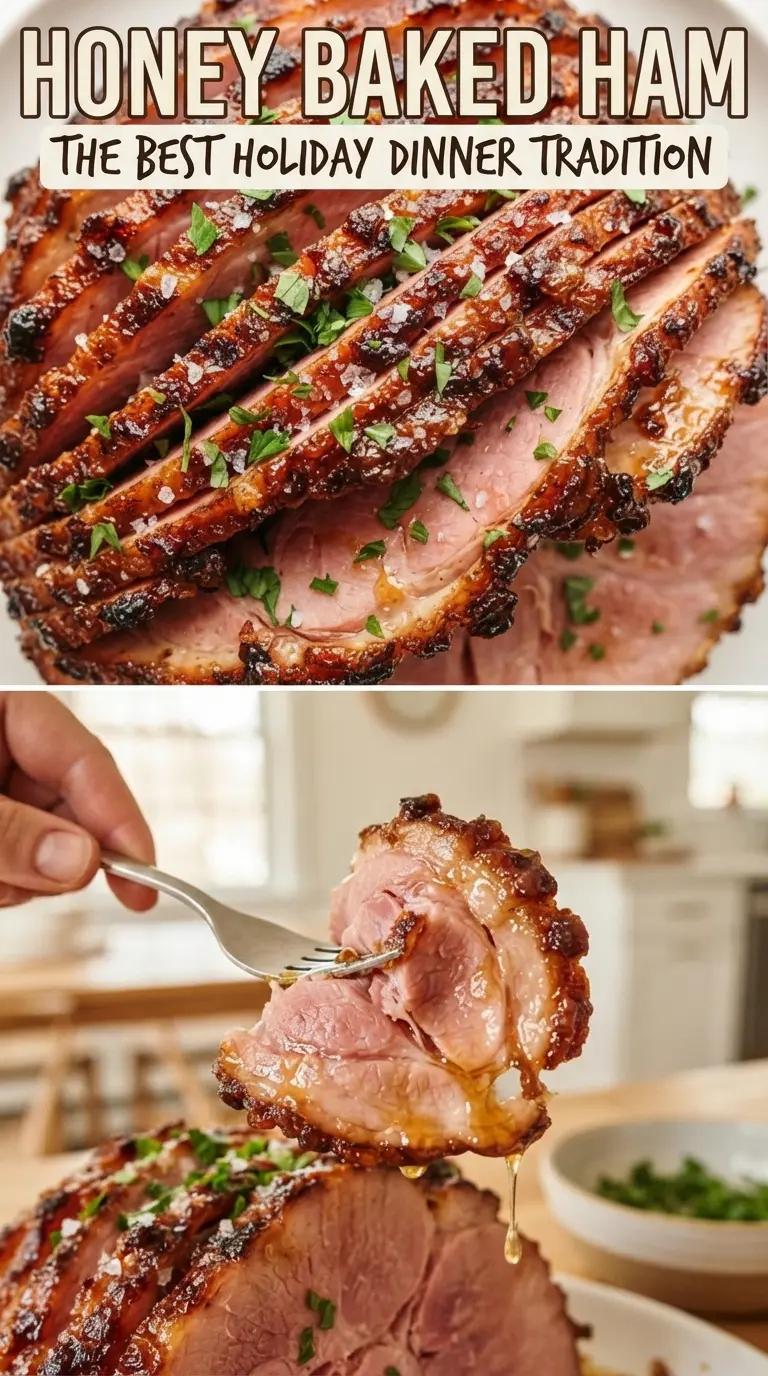
- Honey — This gives the glaze its shine and helps the sugar melt into a sticky coating. Maple syrup can work in a pinch, but it reads darker and less classic. Honey is the flavor that makes this taste like honey baked ham instead of just glazed ham.
- Butter — Butter helps the honey brush on evenly and adds enough fat to keep the sugar from drying out too fast. Don’t swap in oil here; you’ll lose the creamy richness that helps the glaze cling.
- Brown sugar and granulated sugar — The white sugar gives that crisp crackly finish, while brown sugar adds depth and a slightly softer melt. Using only brown sugar makes the crust wetter and less snappy.
- Spices — Cinnamon, cloves, ginger, nutmeg, allspice, and paprika build the warm, old-fashioned glaze flavor. The cloves and ginger can take over fast, so keep the measurements tight unless you want the glaze leaning heavily spiced.
- Spiral-sliced bone-in ham — The cut edges catch the glaze in every layer, and the bone helps the ham stay juicy as it reheats. A boneless ham works too, but you’ll lose some of that dramatic sliced presentation and a little flavor from the bone.
How to Warm It Through Without Drying Out the Ham
Covered Heat First
Set the ham cut-side down in the roasting pan and cover it tightly with foil before it goes into the oven. That first covered bake warms the meat evenly and protects the exposed slices from drying out. Pull the foil tight around the pan so steam stays trapped inside. If the foil is loose, the top edges can dry before the center reaches temperature.
Building the Glaze in Thin Layers
Melt the honey and butter together, then mix the sugars and spices in a separate bowl so the dry coating is evenly distributed. Brush on the honey butter, then pat the sugar mixture over the surface instead of dumping it on. The glaze looks better and stays put when it’s added in thin layers. If you pile it on all at once, it tends to melt into a grainy syrup instead of forming a crust.
The Final Blast of Heat
Raise the oven to 400F and return the ham for just a few minutes at a time, repeating the brushing and sugaring twice more. Watch for the crust to turn deep golden and crackly, not dark brown and black at the edges. The ham is ready when the inside hits 140F and the glaze has set hard enough to look lacquered. Rest it for 15 minutes before carving so the juices stay in the slices instead of flooding the board.
How to Adapt the Glaze Without Losing the Point of the Recipe
Less-Spiced, More Honey-Forward
Cut the cloves and ginger in half if you want the glaze to taste softer and more honey-centered. The ham will still caramelize beautifully, but the crust will lean sweeter and less bakery-spiced. This is the best path if you’re serving people who like a gentler holiday ham.
Gluten-Free by Default
This recipe is naturally gluten-free as written, as long as your spices are certified gluten-free and your ham doesn’t come with a seasoning packet that contains fillers. The technique doesn’t change at all, and that’s one reason this dish works so well for mixed holiday tables.
Using a Boneless Ham
A boneless ham can be used, but it won’t baste itself with the same richness as a bone-in roast. Keep an eye on the timing, since boneless cuts often heat a little faster and can dry out at the edges if they stay in too long. The glaze still works, but the presentation won’t have the same carved, spiral-slice effect.
Storage and Reheating
- Refrigerator: Store leftovers in an airtight container for up to 4 days. The crust softens in the fridge, but the flavor stays great.
- Freezer: Slice and wrap portions tightly before freezing for up to 2 months. Freeze the ham with a little of the pan juices if you have them so the meat reheats more evenly.
- Reheating: Reheat covered at 300F with a splash of juices or water until just warmed through. Don’t blast it at high heat or the slices will dry out before the center is hot.
Answers to the Questions Worth Asking
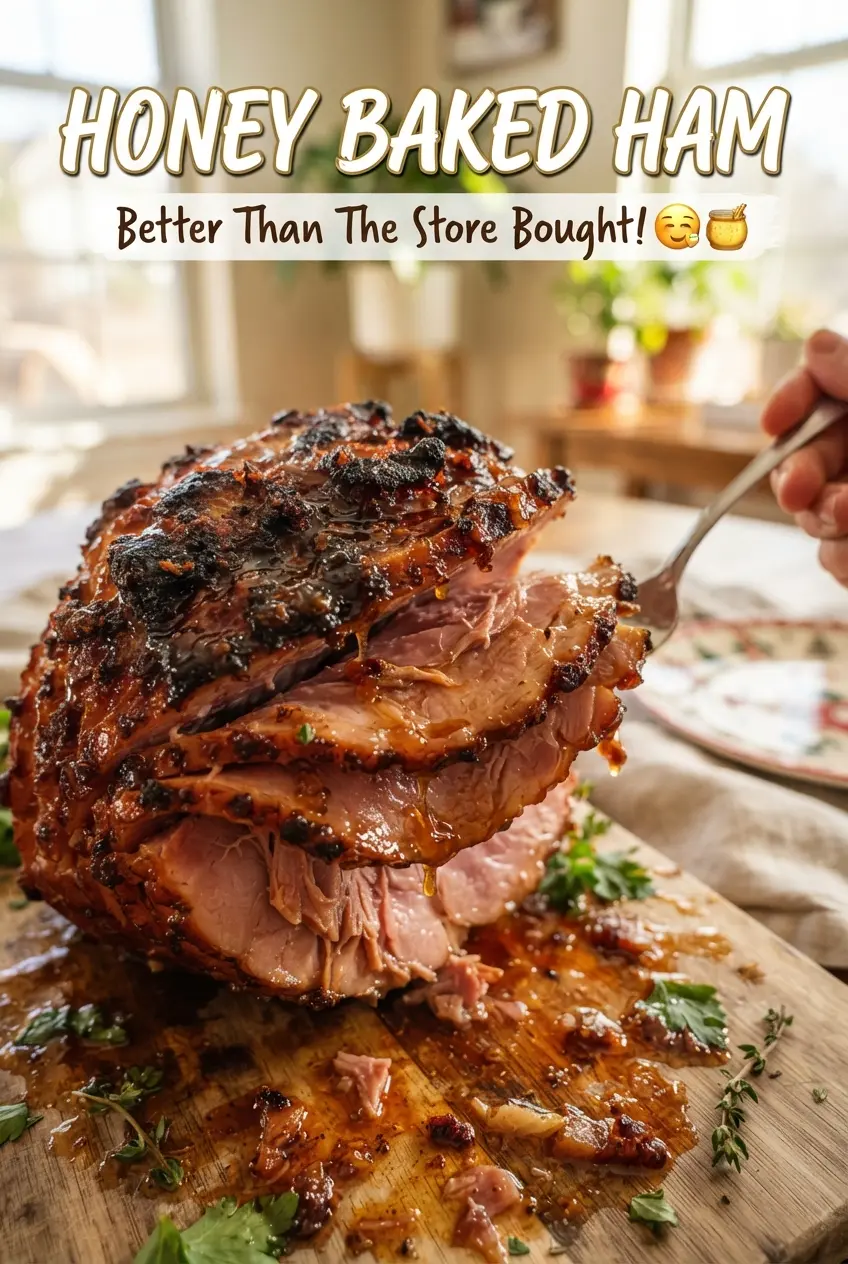
Honey Baked Ham
Ingredients
Equipment
Method
- Preheat the oven to 325°F, then place the ham cut-side down in a roasting pan and cover tightly with foil. Keep the ham sealed under foil so it stays moist while it warms through.
- Bake at 325°F for 12-14 minutes per pound, until the center reaches 120°F. If the ham is browning too fast under the foil, loosely re-cover without lifting the ham.
- Melt the honey and butter together. In a separate bowl, mix granulated sugar and brown sugar with cinnamon, cloves, ginger, nutmeg, allspice, and paprika until evenly combined.
- Remove the foil, brush the ham generously with the honey butter, and pat on a full layer of the spiced sugar mixture. Let the surface look evenly coated so it bakes into a textured crust.
- Raise the oven to 400°F and bake for 5 minutes, until the sugar begins to set and darken. Repeat brushing with remaining honey butter and patting on spiced sugar two more times, baking 5 minutes each cycle.
- Bake until the crust is deep golden and crackly and the ham reaches 140°F. Remove from the oven and rest for 15 minutes before serving so the juices settle.


