Gyoza soup lands in that sweet spot between comforting and light. The dumplings stay tender, the broth takes on garlic, ginger, and soy depth, and the bok choy keeps the bowl from feeling heavy. It eats like a full meal, but it still feels clean and balanced enough that you want a second bowl.
What makes this version work is the order. The broth gets seasoned first so the flavor is built before the dumplings go in, which keeps the potsticker wrappers from soaking up bland liquid. The mushrooms simmer just long enough to give the broth a deeper, savory edge, while the bok choy goes in at the end so it stays crisp-tender instead of collapsing into the pot.
Below, you’ll find the small details that matter here: when to add the sesame oil, how to keep frozen gyoza from sticking, and what to swap if you want a vegetarian bowl or a little extra heat.
The broth had such a clean ginger-garlic flavor, and the gyoza held together perfectly instead of falling apart. I added the chili oil at the table and it made the whole bowl taste like takeout in the best way.
Save this gyoza soup for the nights when you want a fast broth with tender dumplings, mushrooms, and bok choy.
The Broth Needs Seasoning Before the Dumplings Go In
The biggest mistake with dumpling soup is treating the broth like an afterthought. If the liquid starts out flat, the gyoza will cook beautifully and still taste underseasoned. Build the broth first with soy sauce, mirin, ginger, garlic, and rice vinegar, then let it simmer long enough for the aromatics to mellow and blend.
This also protects the dumplings. Frozen gyoza cool the pot down fast, and if your broth is barely hot, they can get gummy before they cook through. Keep the broth at a steady simmer, not a hard boil, so the wrappers stay intact and the filling warms evenly.
What Each Ingredient Is Actually Doing in This Bowl
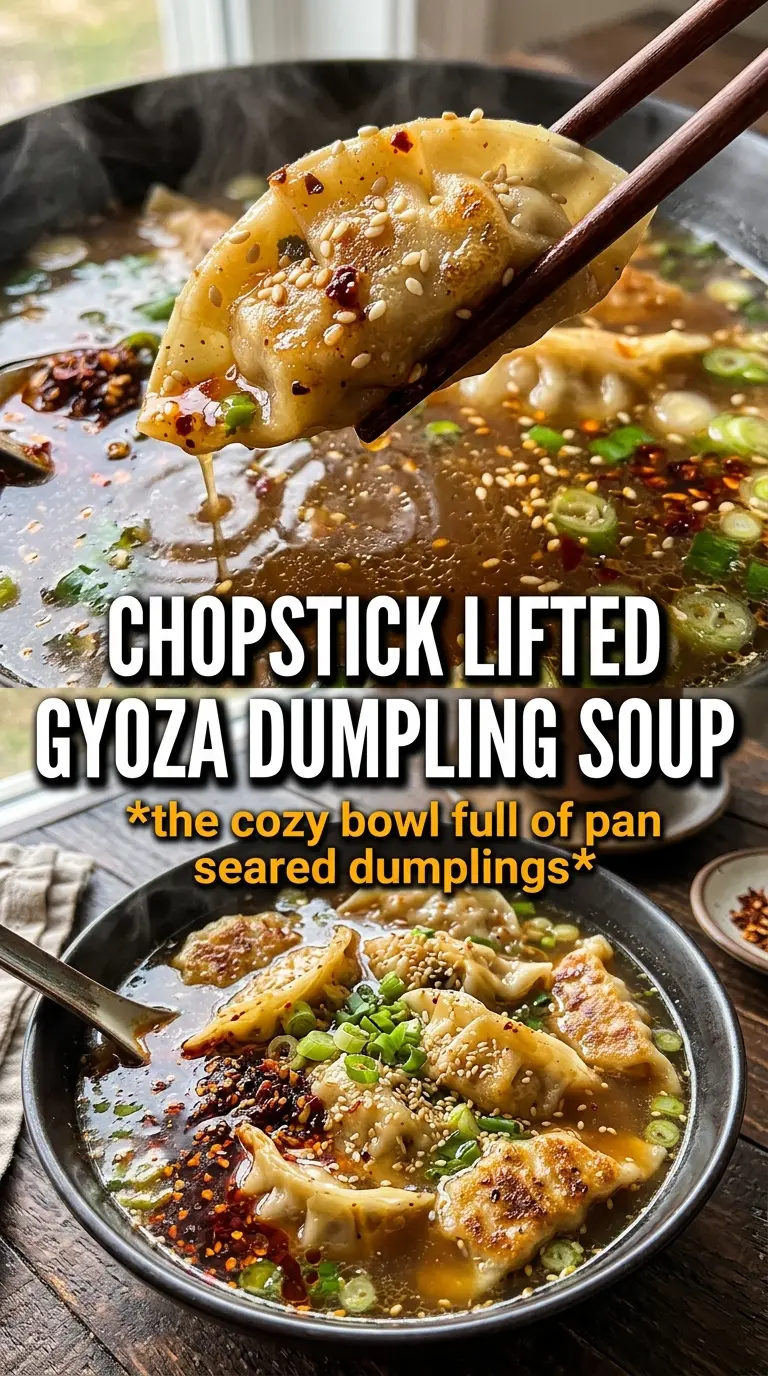
- Gyoza or potsticker dumplings — These are the heart of the soup, so use a brand you like on its own. Frozen dumplings work perfectly here; there’s no need to thaw them first, and adding them straight to the broth helps them hold their shape better.
- Chicken broth — This gives the soup its base, but it needs help from the aromatics and seasonings. A good store-bought broth is fine, especially since soy sauce and mirin add depth, but a weak broth will stay weak.
- Bok choy — This adds fresh crunch and a mild, clean flavor that cuts through the savory broth. Chop it into bite-size pieces so the stems and leaves finish around the same time.
- Shiitake mushrooms — They bring the earthy backbone that makes the broth taste fuller. Fresh shiitakes give the best texture, but sliced cremini can stand in if that’s what you have.
- Sesame oil — Stir it in at the end so the aroma stays bright. If you add it early, much of that toasted sesame flavor cooks off.
- Mirin and rice vinegar — Mirin rounds out the saltiness and gives the broth a gentle sweetness, while rice vinegar keeps the bowl from tasting one-note. Don’t swap in regular vinegar without reducing it; it’s sharper and can take over fast.
How to Keep the Dumplings Tender and the Greens Bright
Starting the Broth
Bring the broth to a steady simmer first, then stir in the garlic, ginger, soy sauce, mirin, and rice vinegar. You want the pot fragrant and slightly deeper in color, not aggressively boiling. If you rush this stage, the aromatics stay sharp and the finished soup tastes thin.
Softening the Mushrooms
Add the shiitakes and let them simmer for 3 to 4 minutes. They should soften and darken, and the broth will pick up a more savory edge. If the slices are crowded in the pot, give them a stir so they cook evenly instead of sitting on top of each other.
Cooking the Gyoza
Drop the dumplings straight into the simmering broth and cook them according to the package directions, usually 5 to 7 minutes. Keep the heat gentle so the wrappers don’t tear and the filling cooks through before the outside gets mushy. If they start sticking to the bottom, nudge them loose once or twice with a spoon rather than stirring hard.
Finishing with Bok Choy and Sesame Oil
Add the bok choy near the end and cook just until the stems turn tender-crisp and the leaves wilt. Pull the pot off the heat, stir in the sesame oil, then taste and add salt only if the broth needs it. The final bowl should taste layered and clean, with the sesame oil sitting on top of the steam instead of disappearing into it.
How to Adjust This Soup Without Losing What Makes It Work
Make It Vegetarian
Use vegetable broth and choose vegetable gyoza. The soup stays satisfying because the mushrooms still build depth, but you’ll want to taste carefully at the end since veggie broth can be milder than chicken broth.
Make It Gluten-Free
Use gluten-free dumplings and swap the soy sauce for tamari or a certified gluten-free soy sauce. The broth still tastes balanced, but check the dumpling package carefully because the wrapper is where gluten usually hides.
Add More Heat
Stir chili oil into the bowl at the end or add a small spoonful of chili crisp just before serving. Adding heat too early can muddy the broth, while finishing with it keeps the aroma sharp and gives each spoonful a little kick.
Use What Greens You Have
Baby spinach, napa cabbage, or chopped choy sum all work here. Just add delicate greens at the very end, and give sturdier greens a minute or two longer so they soften without turning limp.
Storage and Reheating
- Refrigerator: Store leftovers for up to 3 days. The dumplings will soften a little as they sit, but the soup still reheats well.
- Freezer: Freeze the broth and vegetables separately if you can. Dumplings don’t freeze well once they’ve been cooked in the soup, because the wrappers turn soft after thawing.
- Reheating: Warm gently on the stove over medium-low heat until steaming. Don’t boil it hard or the dumplings can split and the greens will lose their texture.
Questions I Get Asked About This Recipe
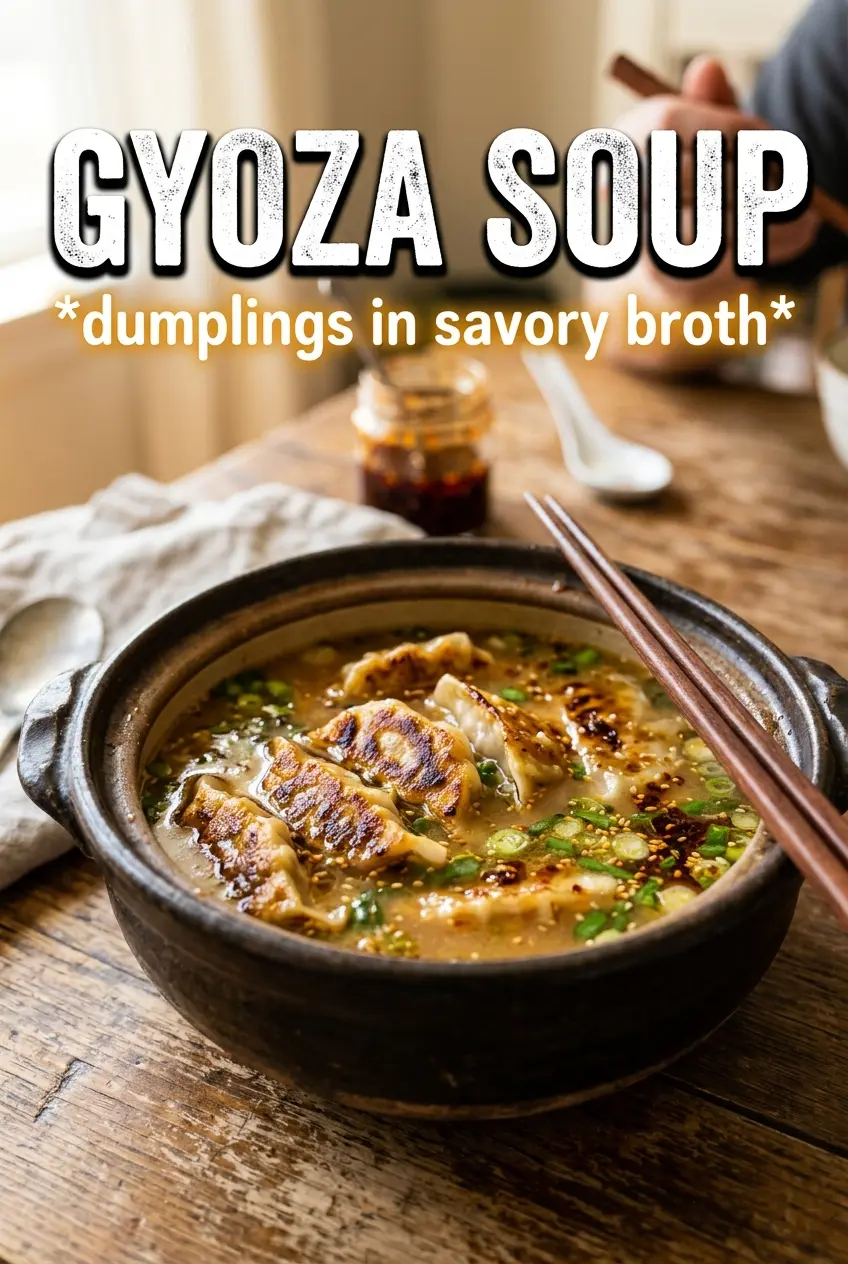
Gyoza Soup
Ingredients
Equipment
Method
- Bring the chicken broth to a simmer in a large pot, then add the minced garlic, grated ginger, soy sauce, mirin, and rice vinegar. Keep the broth at a steady simmer so the flavors start blending right away.
- Simmer the broth for 5 minutes, stirring once or twice, until it smells fragrant and lightly golden. Visual cue: small bubbles should break at the edges of the pot.
- Add the sliced shiitake mushrooms and simmer for 3 to 4 minutes. Cook until the mushrooms soften and release their aroma.
- Add the gyoza dumplings directly to the simmering broth and cook per package directions, usually 5 to 7 minutes, until cooked through. Visual cue: dumplings puff slightly and the filling is hot when pierced.
- Add the chopped bok choy and simmer for 2 to 3 minutes until wilted. Visual cue: bok choy turns bright green and becomes tender-crisp.
- Stir in the sesame oil and taste the broth, then season with salt to taste. Visual cue: the surface looks glossy.
- Serve hot, topped with sliced green onions, sesame seeds, and chili oil. Visual cue: green onions sit on top and chili oil pools slightly before mixing in.


