Guinness beef stew settles into the kind of deep, glossy richness that makes a bowl feel like a full meal. The beef turns tender without falling apart, the broth picks up the dark malt edge of the stout, and the vegetables hold their shape just enough to give every spoonful some texture. It’s hearty in the best way: thick, savory, and layered, with nothing muddy or one-note about it.
The key is building the flavor in stages. Browning the beef first gives the stew its backbone, and the tomato paste cooks long enough to lose any raw taste before the Guinness goes in. That little pause matters. The stout loosens the browned bits on the bottom of the pot, which is where a lot of the depth comes from, and then the stew simmers long and slow until the chuck softens and the broth thickens naturally.
Below, you’ll find the small decisions that make this stew work, from when to add the root vegetables to how to keep the broth from turning flat. If you’ve ever had beef stew taste thin, this version fixes that.
The gravy turned out deep and silky, and the beef was fork-tender after the full simmer. I loved that the carrots and potatoes held their shape instead of turning mushy.
Save this Guinness beef stew for the nights when you want tender chuck, dark gravy, and a proper Irish-style dinner in one pot.
The Step That Keeps the Stew from Tasting Flat
Most beef stews go wrong before the liquid even goes in. If the beef never browns well, the stew can taste boiled instead of braised, and if the tomato paste doesn’t cook for a full minute, it can leave the broth sharp and tinny. This recipe leans on both of those steps to build a base that tastes slow-cooked from the start.
The other thing that matters here is deglazing the pot with Guinness after the onions and tomato paste have softened. That lets the stout pick up every browned bit from the pan, which is where a lot of the stew’s depth lives. Keep the heat steady, not aggressive. A hard boil can make the beef tighten up before it has time to relax into tenderness.
What the Guinness, Flour, and Root Vegetables Are Doing Here
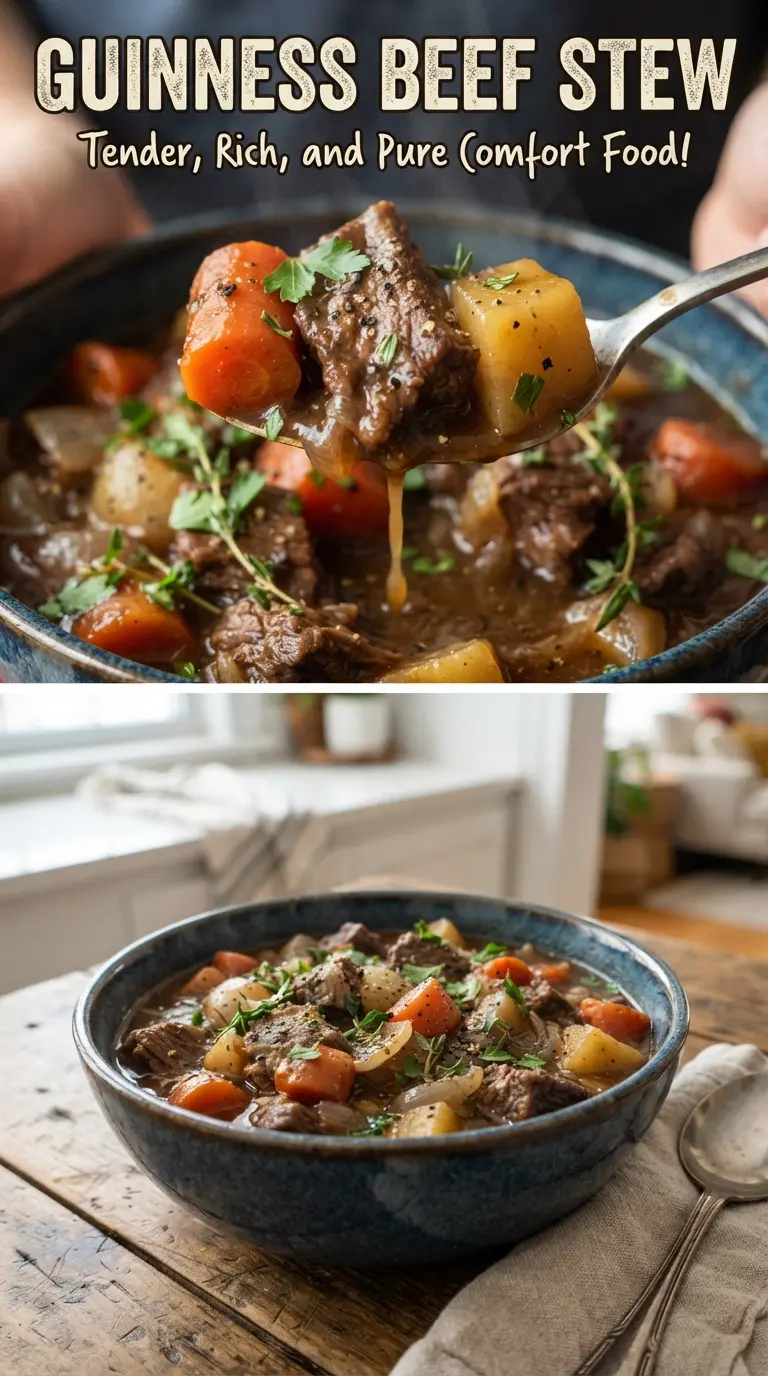
- Beef chuck — Chuck has enough fat and connective tissue to turn tender during the long simmer. Leaner beef goes stringy or dry before the vegetables are even added.
- Guinness stout — This gives the stew its deep color and malty backbone. You can use another stout in a pinch, but a light beer won’t give the same depth.
- Flour — Tossing the beef in flour helps the stew thicken as it cooks and gives the browned crust something to cling to. If you need a gluten-free version, use a 1:1 gluten-free flour blend and brown the beef the same way.
- Parsnips and potatoes — These soften late so they keep their shape and sweeten the broth without turning the whole pot into mush. Add them too early and they disappear into the sauce.
- Brown sugar and Worcestershire sauce — These round out the bitterness of the stout and sharpen the savory edge. Skip neither; together they keep the broth balanced instead of bitter.
How to Build the Pot so the Beef Turns Tender and the Broth Stays Deep
Browning the Beef in Batches
Season the beef, toss it with flour, and brown it in a hot layer of oil without crowding the pot. You want a dark crust on the outside, not gray meat steaming in its own liquid. If the pieces touch too much, the pan cools down and you lose that seared flavor, which is hard to get back later.
Cooking Down the Onion Base
Once the beef comes out, cook the onions until they soften and start to pick up color from the bottom of the pot. Add the garlic and tomato paste for just a minute so the paste darkens slightly and loses its raw edge. If the garlic starts to brown hard, the base turns bitter, so keep it moving and lower the heat if needed.
Deglazing with Guinness
Pour in the Guinness and scrape the bottom until the pan is clean. That’s where the flavor is. Let it bubble for a minute or two before adding the broth, Worcestershire, brown sugar, thyme, and bay leaves so the stout mellows a little and the sharpness cooks off. The liquid should smell malty and savory, not harsh.
Slow Simmering the Beef
Return the beef, cover the pot, and let it simmer gently for about 2 hours. You want a lazy bubble, not a rolling boil. If the heat is too high, the beef gets tight before the collagen has time to soften. Stir every so often and check that there’s still enough liquid around the meat.
Adding the Vegetables at the End
Stir in the carrots, parsnips, and potatoes during the last 45 to 60 minutes. This keeps them intact and lets the stew thicken around them instead of dissolving them into the broth. They’re done when a knife slides in easily but the pieces still hold their shape. Pull out the bay leaves before serving and finish with parsley for a fresh edge.
How to Adapt This for a Lighter Pot, a Make-Ahead Dinner, or a Gluten-Free Version
Gluten-Free Guinness Stew
Swap the all-purpose flour for a 1:1 gluten-free flour blend and use a gluten-free stout if needed. The stew will still thicken as it simmers, but the texture may be slightly less silky than the wheat-flour version. Brown the beef the same way so you keep the same depth.
No Guinness, Same Braised Beef Style
Use an extra cup of beef broth plus 1 tablespoon balsamic vinegar or red wine vinegar to replace the stout’s bite. You’ll lose the malt sweetness and the nearly black color, but the stew will still have a rich, savory base. This is the best move when you want the texture of the dish without the beer.
Make It Ahead for Better Flavor
This stew tastes even better the next day after the broth has had time to settle and the beef reabsorbs some of the sauce. Cool it completely before refrigerating so the vegetables don’t turn mushy from trapped steam. If the stew thickens too much after chilling, loosen it with a splash of broth while reheating.
Freezer-Friendly Portions
Guinness beef stew freezes well, especially if you portion it before freezing. The potatoes can soften a little after thawing, but the flavor stays strong. Freeze in airtight containers for up to 3 months, then thaw overnight in the refrigerator before reheating gently on the stove.
Storage and Reheating
- Refrigerator: Store covered for up to 4 days. The broth will thicken as it chills.
- Freezer: Freeze for up to 3 months in airtight containers. The potatoes may soften slightly, but the stew holds up well.
- Reheating: Warm it slowly on the stove over low heat, stirring often and adding a splash of broth if needed. Don’t boil it hard or the beef can tighten and the vegetables can break apart.
Answers to the Questions Worth Asking
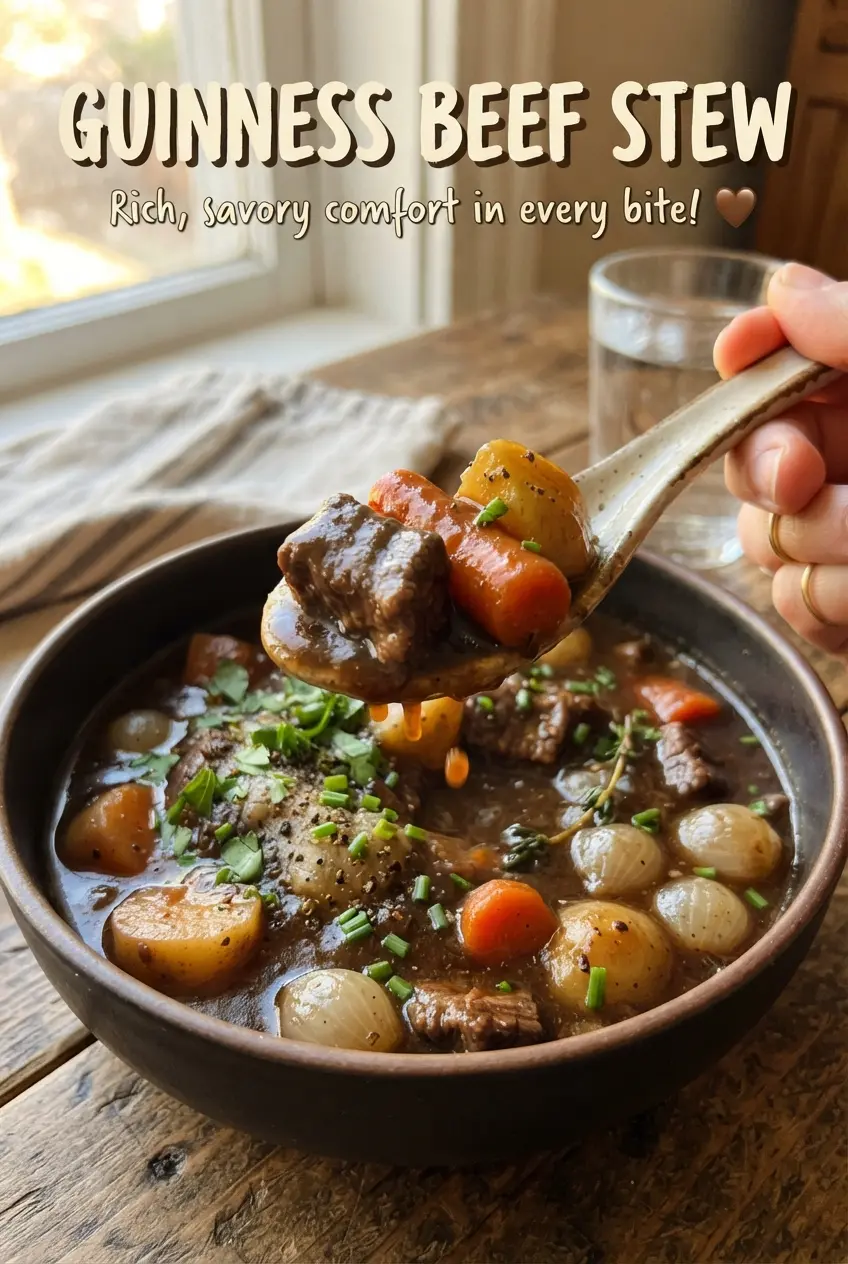
Guinness Beef Stew
Ingredients
Equipment
Method
- Season the beef chuck cubes with salt and black pepper, then toss with the flour until evenly coated.
- Heat the vegetable oil in a Dutch oven over hot heat, then brown the beef in batches for good color; transfer to a plate as you finish.
- Add the onions to the Dutch oven and cook for 5 minutes until softened, then stir in the garlic and tomato paste for 1 minute.
- Pour in the Guinness stout and scrape the bottom to loosen browned bits, creating a dark, glossy base.
- Add the beef broth, Worcestershire sauce, brown sugar, dried thyme, and bay leaves; stir to combine.
- Return the browned beef to the pot, cover, and simmer gently for 2 hours until the meat is tender.
- Stir in the carrots, parsnips, and cubed potatoes, then simmer for 45-60 minutes until tender and thickened.
- Remove the bay leaves and sprinkle with chopped fresh parsley just before serving.


