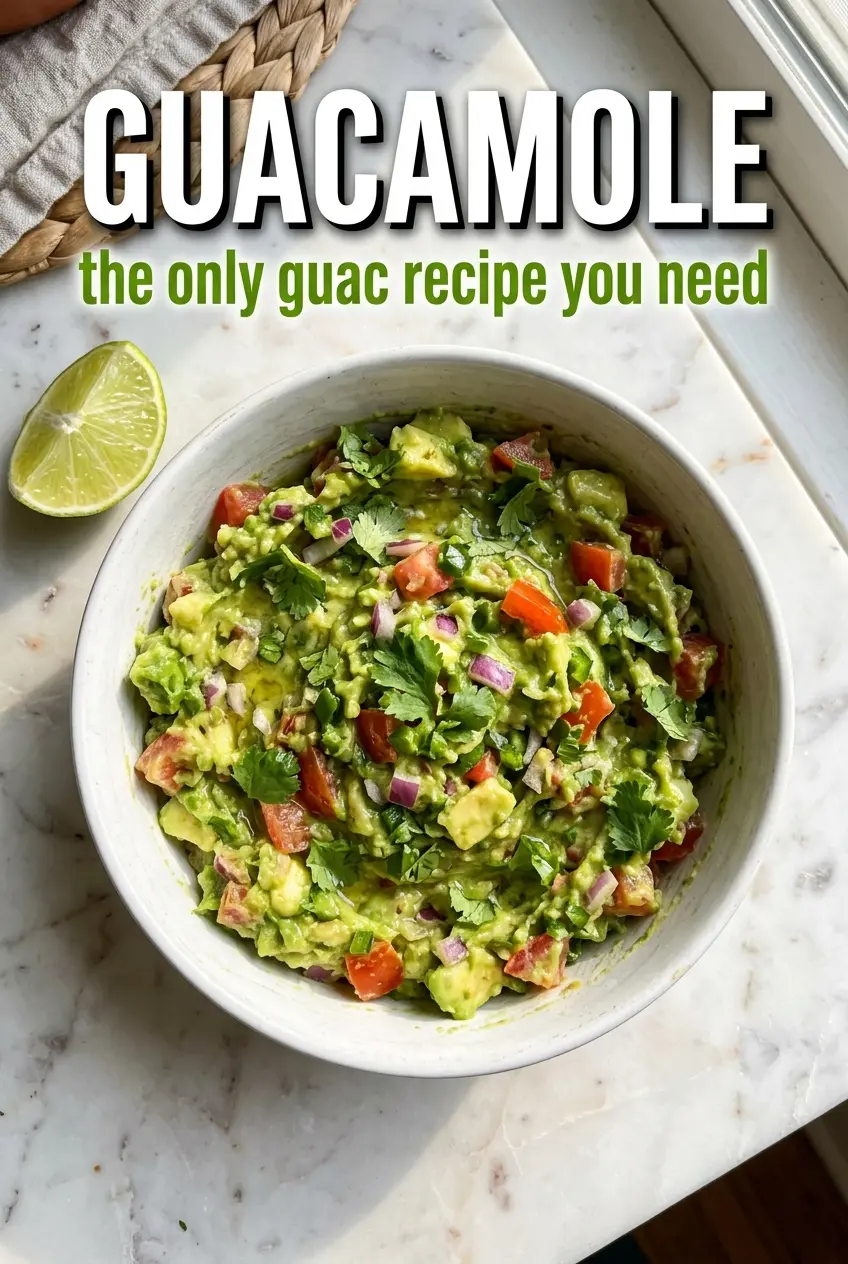
Guacamole lives or dies on texture, and the best bowls strike that perfect middle ground: creamy enough to scoop, chunky enough to feel fresh, and bright enough that the lime and jalapeño still show up after the first chip. When the avocado is ripe and the seasoning is balanced, it tastes clean, rich, and a little addictive in the way only a good dip can be.
The trick is keeping the avocado from turning into paste before the rest of the ingredients go in. I like to mash it first, then fold in the onion, jalapeño, cilantro, and tomato so each bite still has definition. Lime juice does more than add flavor here; it keeps the avocado tasting lively and slows the browning just enough to buy you a little time at the table.
Below, I’ll walk through the one mistake that makes guacamole taste flat, plus the small changes that make it taste like it came from a kitchen that knows what it’s doing.
The texture was spot on — creamy with little chunks left, and the lime kept it bright even after sitting out through dinner. I also liked that the onion mellowed just enough without getting lost.
Save this guacamole for the kind of chip-and-dip night where you want creamy avocado, fresh lime, and just enough jalapeño heat.
The Fastest Way to Ruin Guacamole Is Overmashing the Avocados
Guacamole gets flat fast when the avocado is turned into a uniform puree before the add-ins go in. You want enough mash to hold the bowl together, but not so much that every spoonful tastes identical. Those little pockets of avocado are what keep the dip feeling fresh instead of heavy.
Salt matters more here than people expect. Avocado tastes soft and almost bland until the salt goes in, and the lime only works if the seasoning is already awake. If your guacamole tastes dull, it usually needs more salt before it needs more lime. Add both in small amounts and taste after each one; the right bowl tastes balanced, not sharp.
- Chunky mash gives you better texture and helps the onion, tomato, and cilantro stay distinct.
- Lime juice brightens the avocado and slows browning, but it can’t fix underseasoning.
- Roma tomatoes are sturdier than juicy slicers, so the guacamole doesn’t turn watery.
- Finely diced onion spreads flavor through the dip without dropping in harsh bites.
What Each Ingredient Is Actually Doing in This Bowl
Avocados are the base, and ripe ones matter more than anything else here. They should yield to gentle pressure without feeling mushy or stringy inside. If they’re underripe, the guacamole tastes starchy and takes too much lime to wake up; if they’re overripe, the texture goes greasy and brown. Good avocados do the heavy lifting, so this is the one place not to compromise.
The white onion brings sharpness, jalapeño adds heat, cilantro adds a fresh green note, and tomato gives the dip a little sweetness and color. If you want to swap the onion, red onion works fine, but it brings a stronger bite. For the jalapeño, removing the seeds cuts the heat without changing the fresh pepper flavor. The lime should be fresh, not bottled, because bottled juice tastes flat and can make the whole bowl feel tired.
- Avocados — Use ripe ones with just a little give. If they’re firm, they won’t mash smoothly; if they’re too soft, the guacamole loses its clean, buttery texture.
- White onion — This gives the guacamole its bite. Soaking the diced onion in cold water for 5 minutes takes the edge off if you want a milder bowl.
- Jalapeño — Mince it finely so the heat spreads evenly. Leave the seeds in for more kick, or remove them for a softer finish.
- Cilantro — Use fresh leaves and tender stems; they carry more flavor than the thicker stems. If you’re one of the people who tastes cilantro as soap, parsley can step in for freshness, though the result will be less classic.
- Roma tomato — This variety stays firmer and leaks less liquid than many others. If your tomatoes are especially juicy, scoop out some seeds before dicing.
- Lime juice — Fresh juice keeps the flavor bright and balanced. Add it gradually so the guacamole doesn’t turn sour before it tastes seasoned.
Building the Bowl in the Right Order
Mashing the Avocado First
Scoop the avocado into a medium bowl and mash it with a fork until it looks the way you want it to eat. Stop early if you like some texture; keep going only if you want a smoother dip. The mistake here is mashing after the mix-ins go in, which crushes the onion and tomato and turns the whole bowl muddy. A few intentional lumps are a good thing.
Folding in the Fresh Ingredients
Add the onion, jalapeño, cilantro, and tomato after the avocado is mostly mashed. Fold gently instead of stirring hard so the tomato stays intact and the herbs don’t disappear into the base. If the bowl starts looking wet, the tomatoes were probably too juicy or overmixed. At that point, stop and season before it gets looser.
Seasoning Until It Tastes Awake
Add the lime juice, then salt and pepper a little at a time. Taste after each addition. The finished guacamole should taste bright first, then creamy, then lightly sharp from the onion and jalapeño. If it tastes like avocado with ingredients in it, it needs more salt. If it tastes sour but still flat, it needs salt more than more lime.
Serving Before Browning Starts
Transfer the guacamole to a serving bowl and serve it right away with warm tortilla chips. If it has to wait, press plastic wrap directly onto the surface so air doesn’t reach the top. The top layer turns brown because avocado reacts fast with oxygen, and that color change starts sooner than most people expect. A tight seal is the difference between fresh-looking guacamole and a dull top crust.
How to Adjust This Guacamole Without Losing What Makes It Good
Make It Milder for a Crowd
Use half the jalapeño and rinse the diced onion in cold water before adding it. You’ll still get fresh flavor, but the heat and sharpness will soften enough for people who want a gentler dip. This is the easiest way to keep the bowl balanced without making it bland.
Dairy-Free and Naturally Gluten-Free
This guacamole already fits both of those needs as written. The only thing to watch is what you serve with it — choose tortilla chips that are labeled gluten-free if that matters for your table. The dip itself stays unchanged, which is part of why it works so well.
Skip the Tomato When You Want a Thicker Dip
Leaving out the tomato gives you a denser, more avocado-forward guacamole that holds up better if it has to sit for a little while. You lose some color and sweetness, but you also lose the extra moisture that can make the bowl loosen up too fast. I use this version when I want a sturdier dip for chips or tacos.
Make It Ahead Without Letting It Turn Gray
If you need to prep it in advance, press the guacamole into a bowl and smooth the top flat before covering it tightly with plastic wrap directly on the surface. The lime helps, but the real protection is blocking air. It’ll still be best the day it’s made, but this keeps it in good shape for a few hours.
Storage and Reheating
- Refrigerator: Store for up to 2 days with plastic wrap pressed directly onto the surface. The top layer may still darken a bit, but the dip underneath should stay usable.
- Freezer: Freezing isn’t ideal. Avocado turns soft and a little watery after thawing, so the texture won’t be the same.
- Reheating: No reheating needed. This is best served cold or at cool room temperature, and warming it will make the avocado taste dull and the texture loosen up.
Questions I Get Asked About This Recipe
Guacamole
Ingredients
Equipment
Method
- Scoop the ripe avocado flesh into a medium bowl and discard the pits. Use a fork to start mashing while the avocado is fresh.
- Mash the avocado with a fork until you reach your preferred consistency, leaving some texture if you want it chunky. Stop when it looks vibrantly green with visible lumps.
- Fold in the diced white onion, minced jalapeño, chopped cilantro, and diced Roma tomato. Stir gently just until the red tomato pieces and green cilantro are evenly distributed.
- Add the fresh lime juice and gently toss to combine. Mix until the avocado looks glossy and the mixture tastes bright.
- Season with salt and pepper to taste and stir once more. Adjust gradually so the flavor pops without overpowering the avocado.
- Transfer the guacamole to a serving bowl and serve immediately with warm tortilla chips. Keep it at the center of the bowl with visible tomato and cilantro flecks.
- If not serving right away, place plastic wrap directly on the surface of the guacamole to prevent browning. Press the wrap lightly so it touches the top layer.