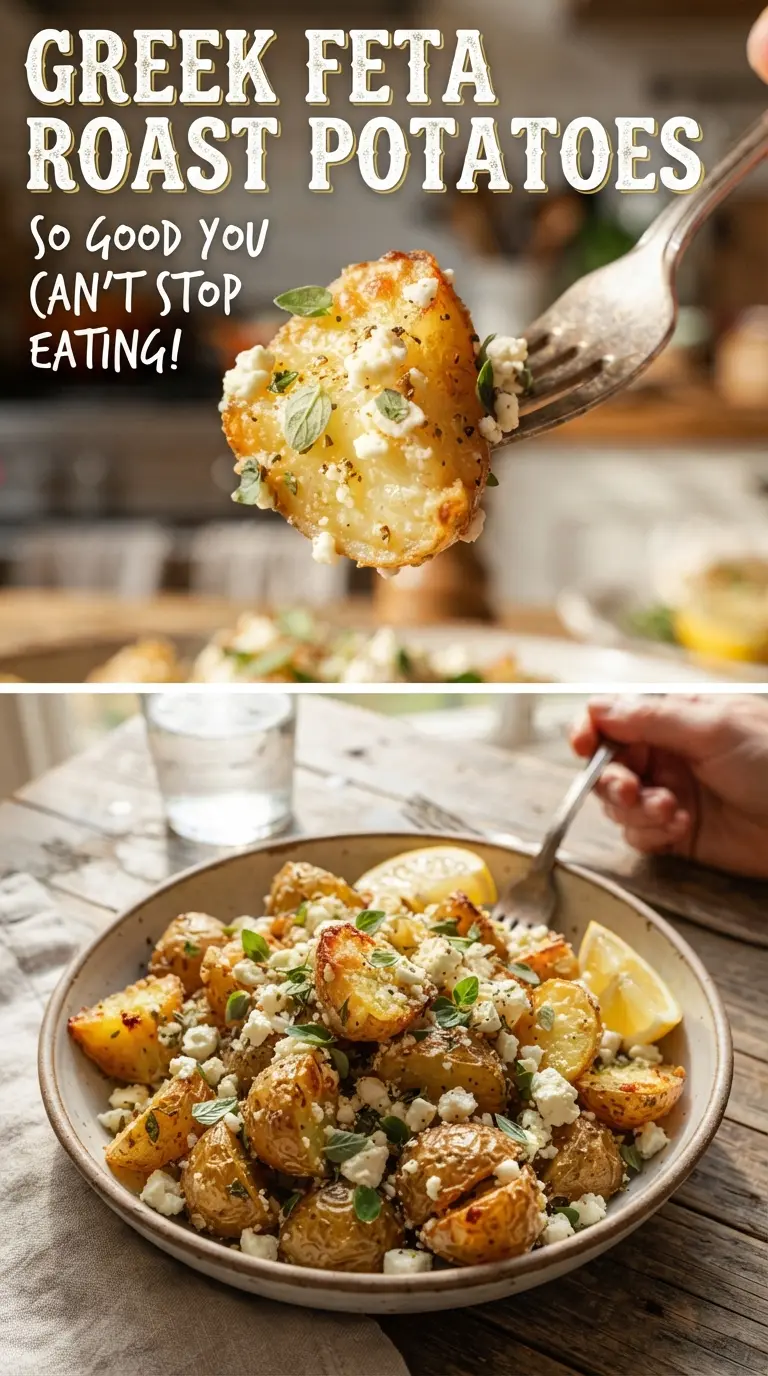
These Greek feta roast potatoes come out with crisp, browned edges, soft centers, and the kind of lemony pan sauce that clings to every wedge instead of pooling at the bottom of the pan. The feta goes on at the end, so it stays crumbly and salty rather than melting away into the potatoes. It’s the sort of side dish that disappears fast because every bite hits sharp lemon, garlic, oregano, and enough olive oil to carry the flavor all the way through.
What makes this version work is the roasting pan itself. The potatoes start in a mixture of olive oil, lemon juice, broth, garlic, and oregano, then roast uncovered until the liquid cooks off and the edges can actually brown. That balance matters: too much liquid and the potatoes steam; too little and they dry out before they turn tender. Yukon golds are the right pick here because they hold their shape and turn creamy inside without falling apart.
Below, I’ll show you the small details that make the difference, including why the pan shouldn’t be crowded and when the feta should go on so it keeps its texture. There’s also a note on the best potato swap if Yukon golds aren’t what you have.
The lemon reduced beautifully and the potatoes came out crisp on the edges but still creamy inside. I loved that the feta stayed crumbly on top instead of disappearing into the pan.
Like these lemon-oregano feta roast potatoes? Save them for the next time you need a crisp-edged Greek side dish with almost no cleanup.
The Secret to Crisp Edges Without Drying Out the Potatoes
The mistake most people make with roast potatoes like these is treating the liquid like a sauce instead of a roasting medium. The broth and lemon juice don’t just flavor the potatoes; they help soften the wedges at the start so the inside turns tender before the outside over-browns. Once the liquid is absorbed, the pan dries out enough for the oil to do its job and give you those crisp, bronzed edges.
Spacing matters more than people expect. If the wedges are piled up, they steam, and you lose the roasted texture that makes this dish worth repeating. A single layer in a wide roasting pan gives the cut sides room to caramelize. Flipping halfway is not busywork here; it exposes the paler sides to the hot pan so the wedges brown evenly.
What the Lemon, Broth, and Feta Are Each Doing Here
- Yukon gold potatoes — These are creamy enough to stay tender inside and sturdy enough to keep their shape through a long roast. Russets will get fluffier and a little more fragile, which can work, but they won’t hold those neat wedges as well.
- Fresh lemon juice — This is the bright, sharp part of the dish. Bottled juice tastes flatter and can read harsh when roasted, so use fresh lemon if you can.
- Chicken broth — The broth keeps the potatoes from drying out before they’re tender and adds savory depth to the pan juices. Vegetable broth works fine if you want a meatless version, though the flavor will be a little lighter.
- Feta — Add it after roasting. If it goes in too early, it softens and melts into the pan instead of staying in salty, crumbly pieces on top.
- Fresh dill or parsley — Dill gives the most Greek-leaning finish, while parsley keeps it clean and green. Use what you have, but add it at the end so it stays fresh.
How to Roast the Potatoes So They Turn Golden Instead of Soggy
Tossing the Pan Sauce First
Mix the potatoes with the oil, lemon juice, broth, garlic, oregano, salt, and pepper directly in the roasting pan so every wedge gets coated. The liquid should look thin and loose at this stage; that’s correct, because it needs time in the oven to reduce. If the potatoes look dry before roasting, the seasoning isn’t distributed evenly and the garlic can scorch in spots.
Roasting Until the Liquid Disappears
Slide the pan into a hot 425°F oven and leave it uncovered. As the potatoes roast, the liquid will shrink down and eventually cling to the wedges rather than sloshing around the pan. That’s the point when browning starts to happen; if there’s still a puddle at the end, keep roasting until the pan looks mostly dry and the edges are deeply golden.
Adding the Feta at the Finish
Scatter the feta and herbs over the hot potatoes right before serving. The residual heat softens the cheese just enough without turning it pasty, and the fresh dill or parsley wakes up the whole dish. If you add the feta too early, it disappears into the pan and you lose the contrast between crisp potato and salty topping.
Three Ways to Make These Greek Roast Potatoes Work for Your Table
Vegetarian Version with Vegetable Broth
Swap the chicken broth for vegetable broth and the dish stays fully vegetarian without changing the method. Choose a broth with enough body to taste savory after roasting; a very thin broth can leave the potatoes tasting flat.
Larger, More Garlicky Pan
Add an extra clove or two of garlic if you want a bolder finish, but keep the pieces minced fine so they don’t burn on the pan surface. More garlic means a deeper savory edge, but it also means you need enough liquid in the pan to keep it from turning bitter.
Russet Potato Swap
Russets can stand in if that’s what you have, but cut them into thicker wedges so they don’t collapse while roasting. They’ll give you a fluffier interior and a slightly rougher edge, which some people love, but they won’t be as naturally creamy as Yukon golds.
Storage and Reheating
- Refrigerator: Store leftovers in an airtight container for up to 4 days. The potatoes soften a little, but the flavor holds well.
- Freezer: They freeze, but the texture changes and the edges won’t stay crisp. Freeze only if you’re fine with softer potatoes; thaw in the refrigerator before reheating.
- Reheating: Reheat on a sheet pan in a 400°F oven until hot and the edges start to crisp again. The biggest mistake is microwaving them, which makes the potatoes turn limp and the feta wet.
Answers to the Questions Worth Asking

Greek Feta Roast Potatoes
Ingredients
Equipment
Method
- Preheat the oven to 425F. This sets the stage for crisp, golden edges.
- Toss the Yukon gold potatoes with olive oil, fresh lemon juice, chicken broth, minced garlic, dried oregano, salt, and black pepper in a roasting pan. Make sure every wedge is coated.
- Spread the potatoes in a single layer on a sheet pan. Leave space so they roast instead of steam.
- Roast for 45-50 minutes, flipping halfway, until the liquid is absorbed and the edges are crispy and golden. Look for browned edges and a dry, sizzling look in the pan.
- Top the hot roasted potatoes with crumbled feta and fresh dill or parsley. Let the feta sit just long enough to soften slightly while the potatoes are still steaming.
- Serve hot. The contrast of crunchy wedges and soft, tangy feta is best right away.


