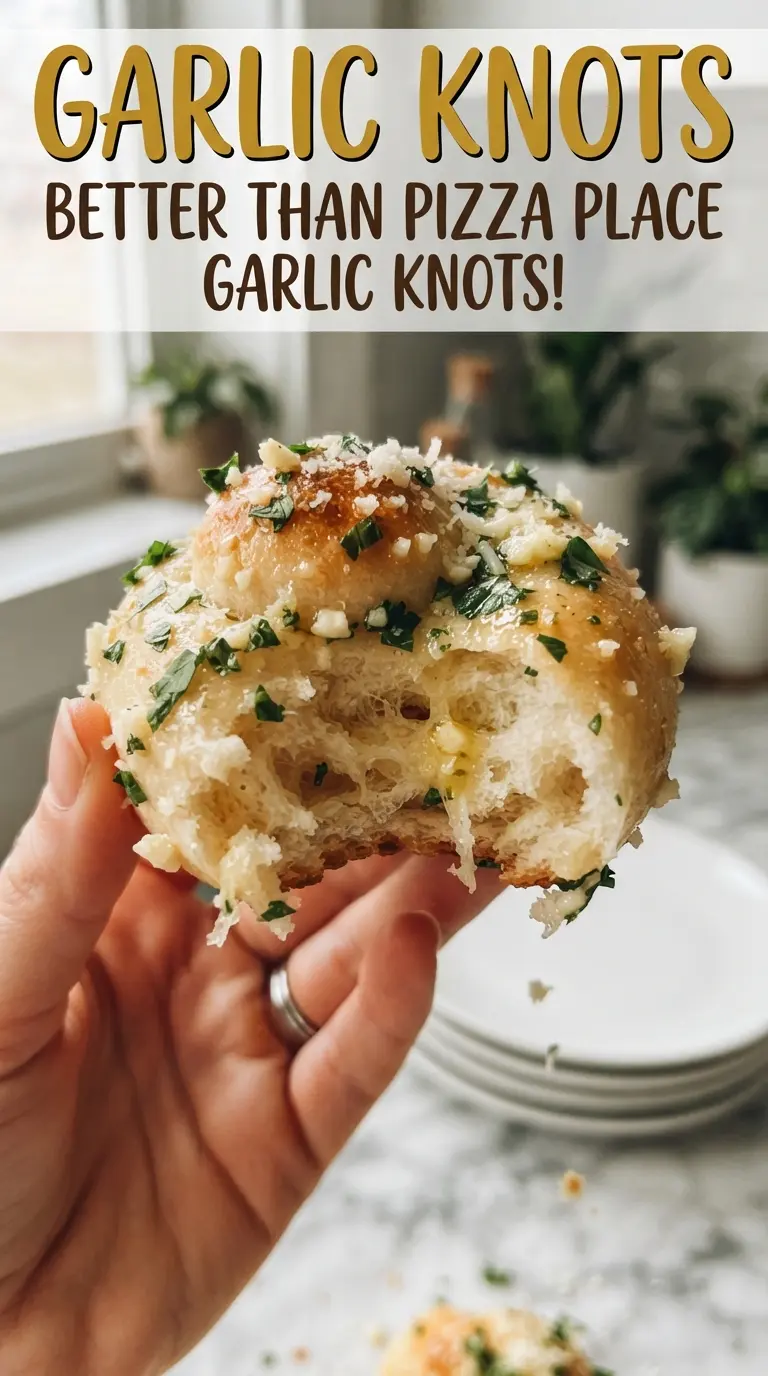
Golden garlic knots come out of the oven with crisp edges, a soft pull-apart center, and just enough buttery garlic coating to soak into every crease. The best ones don’t taste like plain dough with topping on top; they taste seasoned all the way through, with the garlic butter catching in the twists and the Parmesan melting into the surface while they’re still hot.
The trick here is simple: the knots get a light butter coat before baking, then the garlicky butter goes on after they’re done. That two-stage approach keeps the garlic from burning and lets the butter flavor sink into the bread instead of disappearing on the parchment. Room-temperature dough also matters, because cold dough fights back when you try to roll and tie it, and tight little knots bake up more evenly than loose ones.
Below, you’ll find the small details that make these worth repeating, including how to keep the knots soft inside while still getting that deep golden finish. There’s also a good way to handle the garlic so it tastes fresh and bold instead of harsh.
The knots baked up with crisp tops and a soft center, and the garlic butter soaked into every twist without making them greasy. I served them with marinara for pasta night and they disappeared before dinner was on the table.
These garlic knots are at their best fresh from the oven, with the butter soaking into the twists and the Parmesan still warm on top.
The Two-Bake Trick That Keeps the Garlic From Turning Bitter
The biggest mistake with garlic knots is putting raw garlic on the dough before it bakes. Garlic burns fast in a hot oven, and once it does, the flavor turns sharp and bitter. The fix is to brush the knots lightly with plain melted butter first, bake them until they’re golden, then hit them with the garlic-parsley butter while they’re still steaming hot.
That second brushing matters because the bread is hot enough to melt the butter straight into the crust. You get a stronger garlic aroma, a softer top, and none of the harshness that comes from baking garlic too long. If you want the knots to look bakery-style, space them apart on the sheet so they brown instead of steaming into one another.
What the Dough and Butter Are Really Doing Here
- Refrigerated pizza dough — This gives you a reliable chew and enough structure to hold the knot shape. Let it come to room temperature first or it’ll spring back while you’re rolling. Homemade dough works too, but the timing changes a little because softer dough needs a gentler hand.
- Butter — Melted butter is what gives the knots their glossy finish and helps the garlic and Parmesan cling. Use real butter here; margarine won’t give the same rich coating or browning.
- Garlic — Fresh minced garlic is the point of the recipe. Garlic powder won’t give you the same punch or aroma. Keep it for the post-bake butter so it stays fragrant, not scorched.
- Parmesan — Finely grated Parmesan melts into the hot butter and adds a salty, nutty finish. A wedge you grate yourself tastes better and melts more smoothly than the shelf-stable kind, which can stay a little dusty.
- Parsley — Fresh parsley cuts through the butter and gives the knots that classic garlic-bread look. Dried parsley works in a pinch, but the flavor and color both land flatter.
Shaping and Baking the Knots Without Losing the Texture
Cutting and Rolling the Dough
Divide the dough into 16 even pieces so the knots bake at the same rate. Roll each piece into a rope about 7 inches long, then tie it into a loose knot; if you pull the dough too tight, the center can stay doughy while the ends overbake. If the dough keeps shrinking back, let it rest for a few minutes and try again.
Getting the First Butter Layer On
Place the knots on parchment and brush them lightly with melted butter before they go into the oven. This helps the surface turn golden instead of dry and pale. Don’t drown them at this stage or the butter can pool underneath and make the bottoms greasy instead of crisp.
Knowing When They’re Done
Bake until the tops are deep golden and the knots feel set when you lift one gently. The ideal texture is soft inside with a little resistance on the outside. If they still look pale, give them another minute or two; underbaked dough will feel heavy instead of airy once you bite in.
Finishing While They’re Hot
Stir the garlic, parsley, and salt into the remaining butter, then brush it over the knots right out of the oven. This is when the flavor goes from good to impossible to ignore. Finish with Parmesan while the surface is hot enough to catch it, then serve with marinara before the crust has a chance to soften.
Three Ways to Change the Knots Without Losing What Makes Them Good
Dairy-Free Garlic Knots
Swap the butter for a good olive-oil-based spread or melted plant butter. Olive oil gives a sharper, more savory finish and won’t coat quite as luxuriously, but it still carries the garlic well. Skip the Parmesan or use a dairy-free hard cheese substitute if you want the same salty finish.
Extra-Garlicky Knots
If you want a bigger garlic hit, add an extra clove to the finishing butter, not the baking butter. That keeps the garlic bright instead of bitter and gives a stronger aroma when the knots are served warm. If you prefer a mellow result, use one clove and let it sit in the butter for a few minutes before brushing.
Gluten-Free Version
Use a gluten-free pizza dough that’s meant for shaping, not a batter-style dough. The texture will be a little more tender and less stretchy, so handle it gently and expect a shorter rope when rolling. Bake until the tops are golden and set, since gluten-free dough can look done before the center has fully cooked.
Storage and Reheating
- Refrigerator: Store in an airtight container for up to 3 days. They’ll soften a bit as they sit, but the flavor stays good.
- Freezer: Freeze baked knots without the final Parmesan for up to 2 months. Thaw at room temperature, then reheat before adding a little more butter and cheese.
- Reheating: Warm in a 350F oven for 6-8 minutes. The biggest mistake is microwaving them too long, which makes the dough rubbery and wipes out the crisp edges.
Answers to the Questions Worth Asking

Garlic Knots
Ingredients
Equipment
Method
- Preheat oven to 400F and line a baking sheet with parchment so the knots bake evenly without sticking.
- Cut the room-temperature pizza dough into 16 pieces, then roll each piece into a 7-inch rope.
- Tie each rope into a knot and place the knots on the prepared baking sheet.
- Brush the tops lightly with the melted butter to help them brown.
- Bake for 13-15 minutes at 400F until golden brown for a crisp, lightly chewy exterior.
- Stir the remaining butter with minced garlic, chopped fresh parsley, and salt until evenly combined.
- Brush the hot knots with the garlic-parsley butter so it soaks into the creases while they’re still warm.
- Sprinkle the knots with grated Parmesan right after brushing so it clings and melts slightly.
- Serve immediately with marinara sauce for dipping.


