Baked chicken breasts turn out a lot better when they’re treated like the main event, not an afterthought. This version stays juicy under a glossy garlic herb butter that seeps into the chicken as it bakes, then settles into the pan juices you’ll want to spoon over every slice. The top gets lightly browned, the edges pick up a little color, and the whole dish smells like dinner is already halfway done before it hits the table.
The trick is using enough butter to baste the chicken as it cooks, plus a hot oven that helps the surface set before the meat has time to dry out. Garlic powder in the seasoning layer gives the chicken a deeper savory base, while fresh garlic in the butter brings the finish. Lemon juice keeps the butter from tasting heavy and sharpens all the herbs without turning the dish into lemon chicken.
Below, you’ll find the small details that keep chicken breasts tender instead of stringy, plus a few easy swaps if you need to work with what’s already in the kitchen.
The butter sauce was perfect and the chicken stayed juicy all the way through. I basted at the halfway point like suggested and the top turned golden without drying out.
Save these garlic butter baked chicken breasts for the nights when you want juicy chicken and a pan sauce without a long ingredient list.
The Reason Chicken Breasts Dry Out Before They Brown
Chicken breasts are lean, so they punish even small mistakes. If the oven is too low, they sit in their own juices and turn pale instead of developing any color. If the oven is too hot for too long, the outside goes chalky before the center has a chance to finish. The goal here is a hot oven, a butter coating that protects the surface, and a short rest so the juices stay in the meat instead of flooding the cutting board.
Another common problem is uneven thickness. A thick end and a thin end never finish at the same time, which means one side is overcooked by the time the other side is safe. Pounding the breasts lightly to an even thickness solves that without making them flat or fussy. It’s the simplest way to get the same doneness from edge to edge.
What the Butter, Garlic, and Herbs Are Each Doing
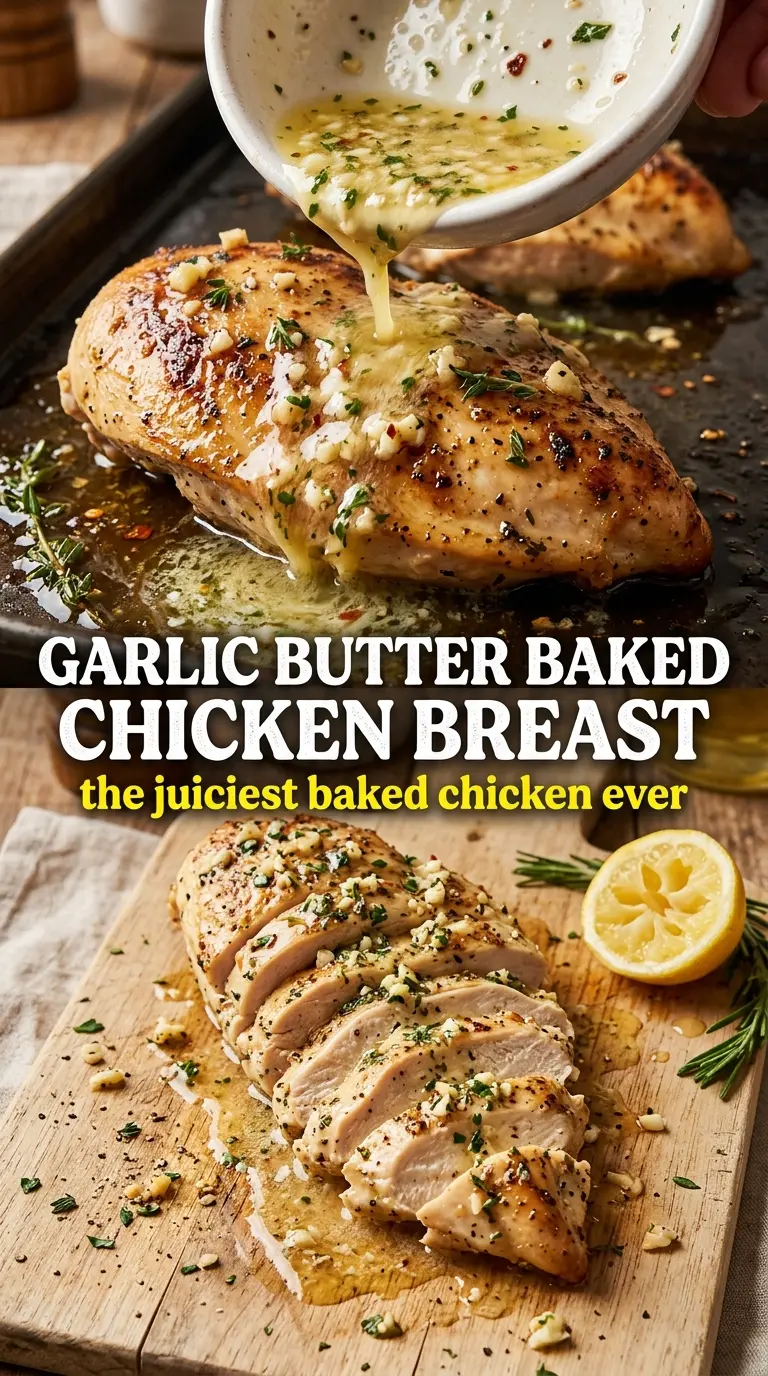
- Butter — This is the coating that carries the garlic and herbs and helps the chicken brown. Olive oil can work in a pinch, but it won’t give you the same rich pan juices at the end. Melt it first so it mixes evenly and clings to every breast.
- Fresh garlic — Fresh minced garlic perfumes the butter and gives the dish its main character. Garlic powder alone won’t taste the same here because it doesn’t soften into the butter the same way. If you use pre-minced garlic from a jar, expect a flatter flavor.
- Fresh parsley, thyme, and rosemary — The fresh herbs keep the butter from tasting one-note. Dried herbs can stand in, but use less because they’re stronger and less delicate. Rosemary should be minced finely so you don’t get woody bites.
- Lemon juice — A small amount wakes up the butter and keeps the finished dish from tasting heavy. Bottled lemon juice works if that’s what you have, though fresh tastes cleaner. Don’t skip it unless you’re replacing it with another bright acid like a little white wine or a splash of vinegar.
How to Keep the Chicken Juicy While the Top Turns Golden
Season the Chicken First
Pat the chicken dry, then season both sides well with salt, pepper, garlic powder, and smoked paprika. Dry surface plus seasoning gives the butter something to grip, and that’s what helps the top color instead of steaming. If the breasts are cold from the fridge and very thick, let them sit on the counter for about 15 minutes while the oven heats so they cook more evenly.
Mix the Garlic Herb Butter
Stir the minced garlic, herbs, and lemon juice into the melted butter until everything looks evenly speckled. You want the garlic distributed through the butter, not sitting in clumps that burn in one spot and stay raw in another. If the butter starts to firm up while you’re assembling, warm it just enough to loosen it again.
Baste, Bake, and Watch the Center
Arrange the chicken in a lightly greased baking dish and pour the butter over the top, then spoon it back over the breasts so every bit of surface gets coated. Bake at 425°F and baste with the pan juices halfway through; that middle basting is what keeps the top glossy. Pull the chicken when it reaches 165°F at the thickest part, because even a few extra minutes can push it from juicy to dry.
Rest Before Serving
Let the chicken rest for 5 minutes before slicing. That short pause lets the juices settle back into the meat instead of spilling out the second you cut in. Spoon the pan juices over the top and serve with lemon wedges so each plate gets a little extra brightness.
How to Change It Without Losing the Garlic Butter Character
Swap in chicken thighs for a richer result
Boneless skinless thighs stay juicier and forgive a little extra time in the oven, but they won’t give you the same lean, sliceable presentation. Bake until they’re cooked through and the juices run clear, then spoon the butter sauce over the top just like you would with breasts.
Use dried herbs when that’s what you have
Dried parsley, thyme, and rosemary work fine, but use about one-third of the fresh amount because dried herbs are more concentrated. Crumble the rosemary between your fingers before adding it so it doesn’t bake up hard and poky.
Make it dairy-free with olive oil and extra lemon
A good olive oil can replace the butter if you need a dairy-free version, though the sauce will be lighter and less silky. Add a little extra lemon juice and a pinch more salt so the finish still tastes bright and balanced.
Store leftovers for quick lunches
Leftover chicken keeps well for a few days and slices neatly once chilled. Reheat it gently with a spoonful of the pan juices or a splash of water so the meat doesn’t dry out in the microwave.
Questions I Get Asked About This Recipe
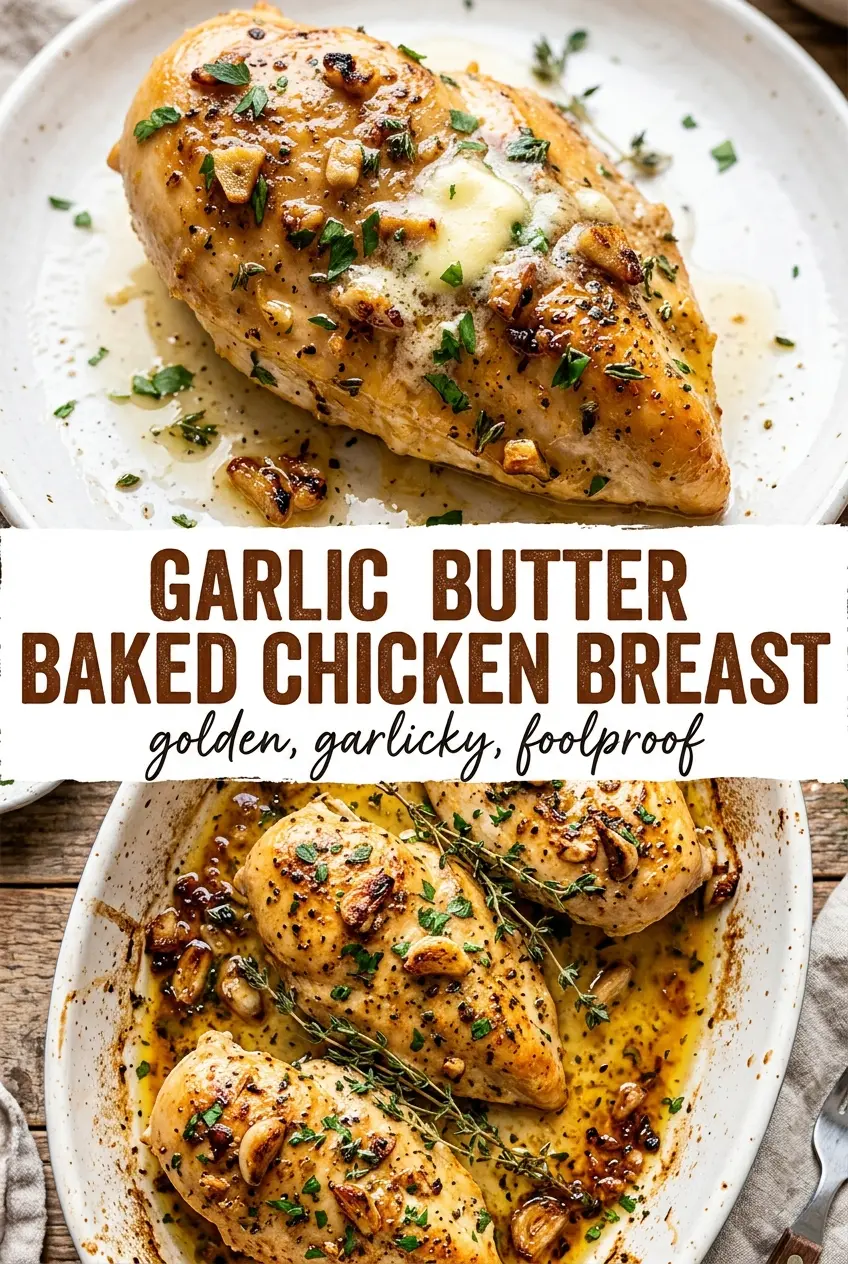
Garlic Butter Baked Chicken Breast
Ingredients
Equipment
Method
- Preheat the oven to 425°F and lightly grease a baking dish or sheet pan for easy release.
- Pat the chicken breasts dry, then season both sides with salt, pepper, garlic powder, and smoked paprika.
- Melt the butter, then stir in the minced garlic, parsley, thyme, rosemary, and lemon juice until combined and fragrant.
- Place the chicken in the prepared dish and pour the garlic herb butter over each breast, coating thoroughly so it pools at the base.
- Bake for 20 to 25 minutes, basting with the pan juices once at the halfway point, until the internal temperature reaches 165°F.
- Rest the chicken for 5 minutes so the juices redistribute and the center stays tender.
- Serve with the pan juices spooned over each breast and lemon wedges on the side.


