Bright cranberry sauce with orange cuts through the table like a reset button. It lands tart first, then finishes with a clean citrus sweetness and little pockets of juicy orange that keep each spoonful from feeling flat. The texture matters here: enough berries burst to thicken the sauce, but a few stay whole so it still looks and tastes fresh.
The trick is starting with orange juice instead of water. That gives the cranberries immediate flavor as they soften, and the sugar balances the sharp edge without turning the sauce cloying. Orange zest goes in off the heat so it stays fragrant, and the orange segments get folded in at the end so they keep their shape instead of dissolving into the pot.
Below, I’ve included the small details that keep this sauce bright instead of muddy, plus a few ways to adapt it if you want it smoother, sweeter, or make-ahead friendly.
The sauce thickened in about 10 minutes and the orange segments stayed bright instead of breaking apart. I served it chilled the next day and it was even better.
Save this fresh cranberry orange sauce for the holiday meal where you want tart berries, bright citrus, and a glossy finish.
The Cranberries Need Enough Heat to Burst, Not Enough to Turn Jammy
The biggest mistake with cranberry sauce is treating it like a reduction. If the pot boils hard the whole time, the berries collapse too fast and the sauce turns dense before the sugar has a chance to balance the tartness. A steady simmer gives you control: most berries burst, some stay intact, and the sauce thickens naturally as the pectin releases.
That texture shift happens fast near the end, which is why the last few minutes matter most. Pull it from the heat when it still looks a touch loose; cranberry sauce thickens a lot as it cools. If it looks finished in the pan, it will likely set up too stiff in the fridge.
What the Orange Is Doing Here Matters More Than You Think
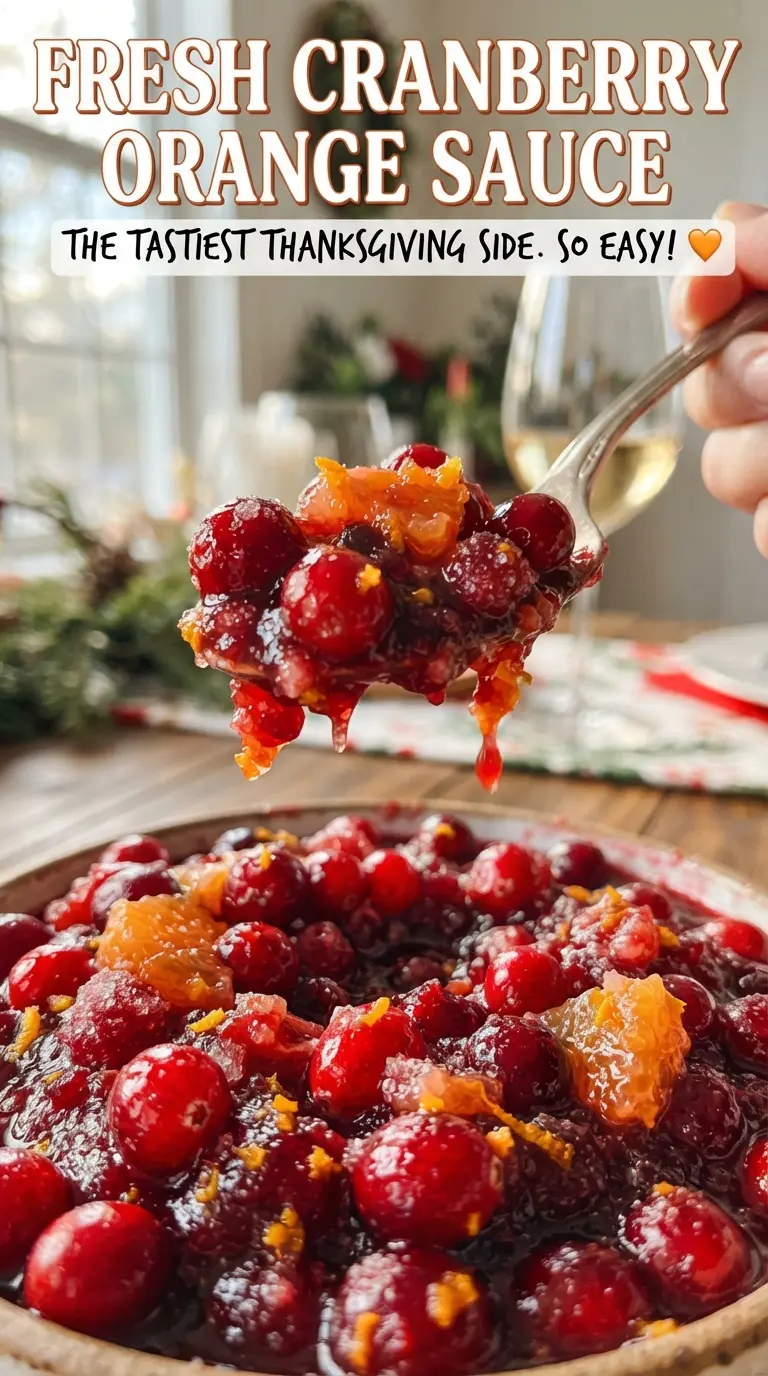
- Fresh cranberries — These are nonnegotiable. Frozen cranberries also work without thawing, but dried cranberries won’t give you the same pop or natural thickening.
- Fresh orange juice — This is the flavor base, not just a liquid. Bottled juice tastes flatter and often more acidic, so fresh juice gives the sauce a brighter, cleaner finish.
- Orange zest — Add it after cooking so the oils stay fragrant. If it goes in early, the flavor gets cooked off and loses that sharp citrus edge.
- Orange segments — Fold them in gently once the sauce comes off the heat. They add fresh texture, but if you stir them through while the sauce is boiling, they break down and disappear.
- Sugar — It doesn’t make the sauce sweet in a candy-like way; it rounds out the tart berries and helps the sauce set. Cutting it much lower changes both the flavor and the texture.
Building the Sauce So the Fruit Stays Bright
Starting the Syrup Base
Bring the orange juice and sugar to a full boil before the cranberries go in. That first boil dissolves the sugar completely, so you don’t end up with gritty sauce or uneven sweetness. Once the sugar is dissolved, add the cranberries and salt and drop the heat to a steady simmer.
Letting the Berries Burst on Their Own
Stir occasionally and listen for the berries to pop. You’re looking for most of them to split open while a few still hold their shape. If the pan is too hot, the bottom will catch and the sauce can taste scorched before the berries have time to soften evenly.
Finishing with Zest and Orange Segments
Take the pan off the heat before adding the zest. The residual warmth is enough to release the oils without dulling them. Let the sauce cool for a few minutes, then fold in the orange segments gently so they stay whole and juicy instead of turning the whole pot cloudy.
How to Adapt This for a Smoother Sauce or a Bigger Crowd
For a smoother cranberry sauce
Simmer a few minutes longer and mash the berries lightly with the back of a spoon. You can also blend part of the sauce after it cools if you want a more polished texture, but that will soften the fresh fruit look and make the orange segments less distinct.
For a less sweet version
Reduce the sugar slightly, but don’t cut it too aggressively or the sauce will taste sharp instead of balanced. Cranberries need enough sweetness to taste like a finished condiment, not just tart fruit in syrup.
For a vegan, gluten-free holiday side
This recipe is already naturally vegan and gluten-free, which makes it an easy side dish for mixed tables. Just check that your sugar brand fits your dietary preferences if that matters to you.
Storage and Reheating
- Refrigerator: Store covered for up to 1 week. It thickens as it chills, so the texture will be firmer the next day.
- Freezer: It freezes well for up to 2 months. Cool completely first, then pack it in an airtight container with a little room at the top for expansion.
- Reheating: Warm it gently on the stove over low heat if you want it looser for serving. Don’t boil it hard or the orange pieces will break down and the sauce can turn sticky.
Answers to the Questions Worth Asking
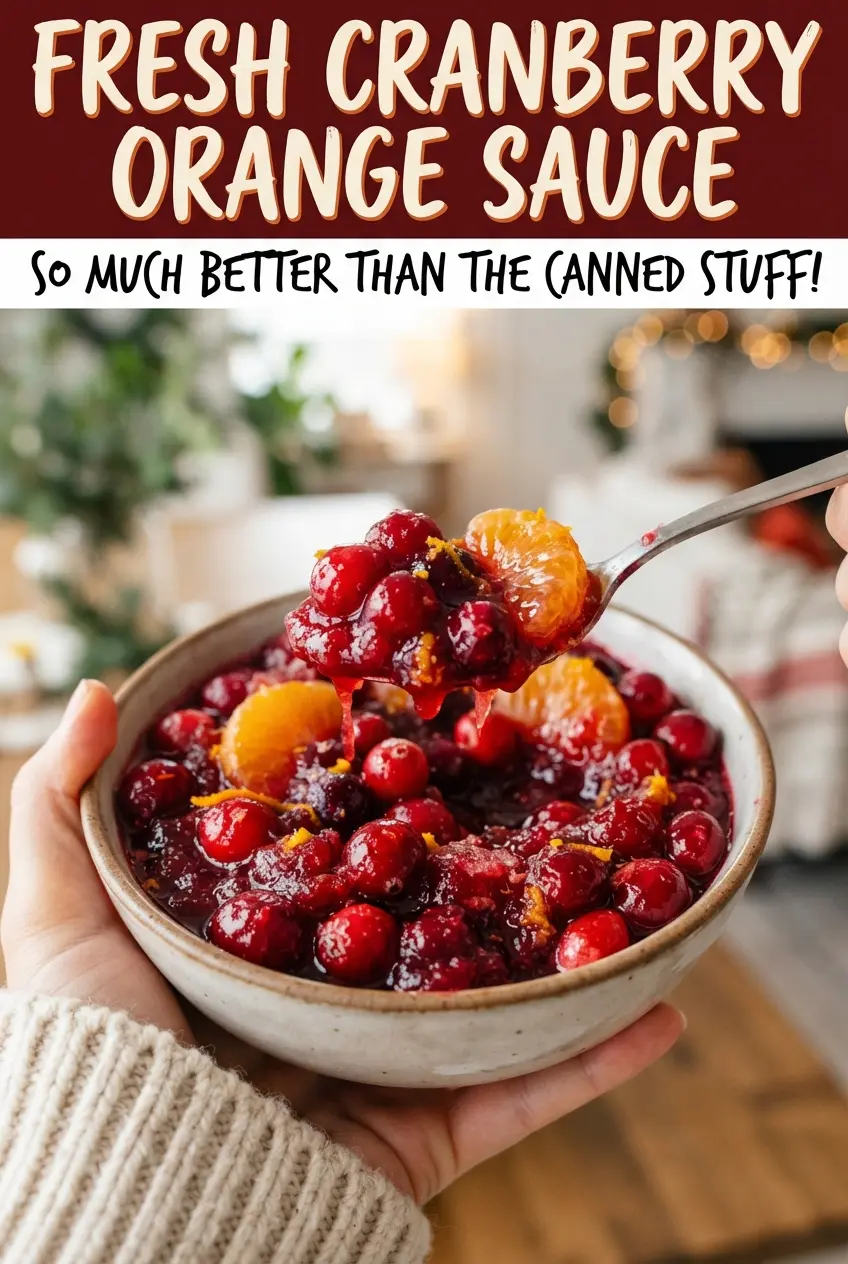
Fresh Cranberry Orange Sauce
Ingredients
Equipment
Method
- Bring the sugar and fresh orange juice to a boil in a saucepan over medium-high heat, stirring until the sugar dissolves and you see rolling bubbles. Visual cue: the liquid looks clear at first, then rapidly bubbles.
- Add the fresh cranberries and the pinch of salt, then return to a boil. Visual cue: cranberries begin to float and the mixture turns glossy.
- Reduce to a simmer and cook for 10 minutes until most of the berries burst, stirring occasionally to prevent sticking. Visual cue: you’ll see burst skins and a thickening sauce.
- Remove the saucepan from the heat and stir in the orange zest. Visual cue: the sauce turns more fragrant and slightly brighter.
- Cool slightly, then gently fold in the peeled and segmented orange so the segments stay intact. Visual cue: orange pieces remain visible throughout without breaking.
- Chill the sauce until serving. Visual cue: it firms slightly and holds spoon lines when you serve it cold.


