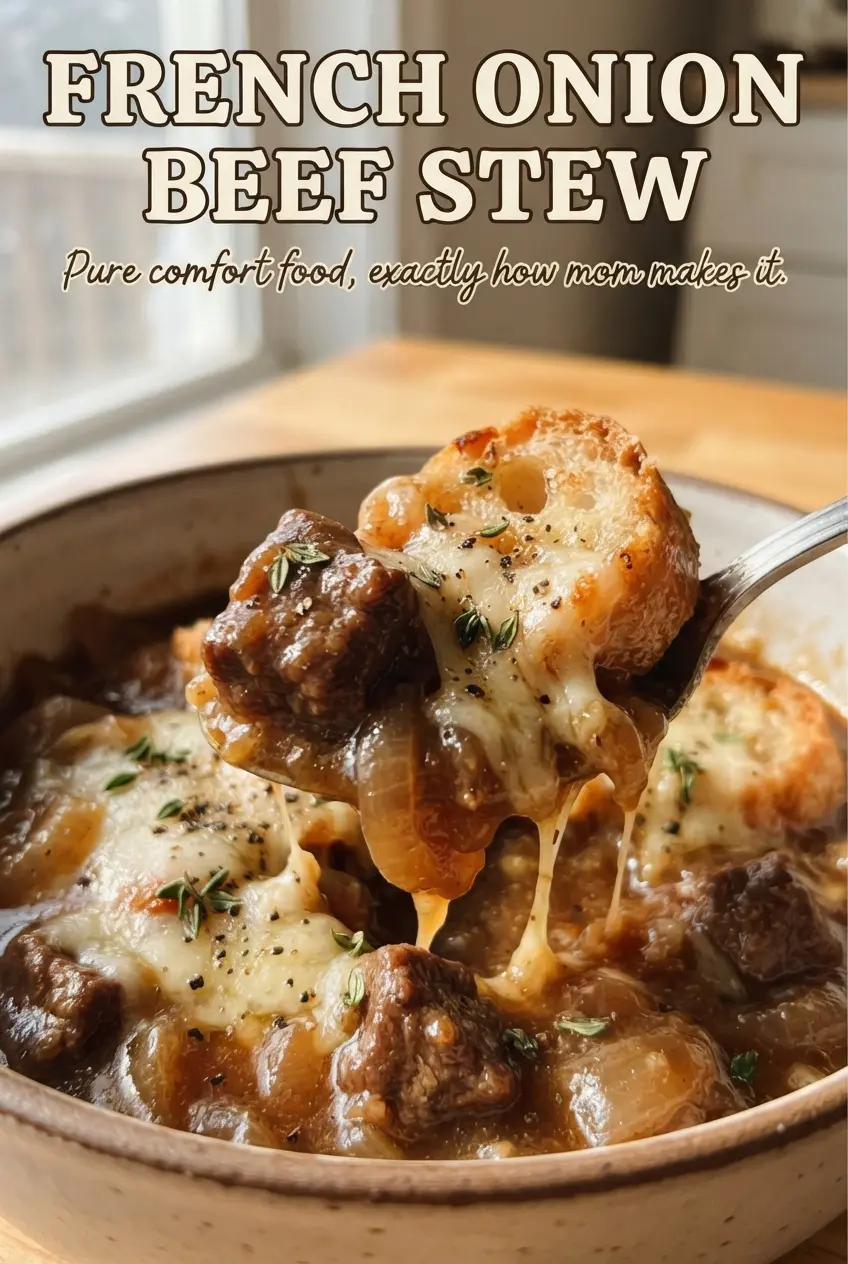
Deeply browned onions, tender chunks of beef, and a bubbling cap of Gruyere turn this French onion beef stew into the kind of dinner that gets quiet at the table. It has the savory richness of classic French onion soup, but with enough body to eat like a full meal. The broth clings a little to the beef, the onions melt into the sauce, and the toasted baguette on top softens just enough under the cheese to catch every bit of flavor.
The onions matter most here. They need time to go from sharp and watery to mahogany-colored and sweet, and that slow transformation is what gives the stew its signature depth. Browning the beef in batches builds a base that tastes cooked, not rushed, while the splash of white wine loosens every caramelized bit stuck to the pan. That’s where a lot of the flavor lives.
Below, I’ve included the small details that keep the onions from scorching, the broth from tasting flat, and the cheese topping from turning greasy instead of bronzed. If you’ve ever wanted French onion soup to eat like a stew, this is the version worth making.
The onions took a while, but they turned out dark and jammy instead of burnt, and the Gruyere topping bubbled up beautifully under the broiler. My husband went back for seconds and wanted the recipe the same night.
Save this French Onion Beef Stew for the night you want caramelized onions, tender beef, and a Gruyere-topped finish that feels straight from a bistro kitchen.
The part that keeps the onions sweet instead of scorched
The long onion cook is what makes this stew taste like French onion soup instead of beef in brown broth. If you rush it, the onions stay sharp and the finished pot tastes flat. The goal is deep golden color and a jammy texture, not a quick collapse. Stir often, scrape up anything that wants to stick, and lower the heat if the pan starts to catch before the onions have softened through.
The flour goes in after the garlic for a minute, just long enough to lose its raw taste and coat the onions. That tiny step helps the broth thicken enough to support the beef without turning the stew pasty. The wine then does the important work of deglazing the pan, lifting the browned bits left from the meat and onions into the liquid where they belong.
What the beef, onions, and cheese are each doing here
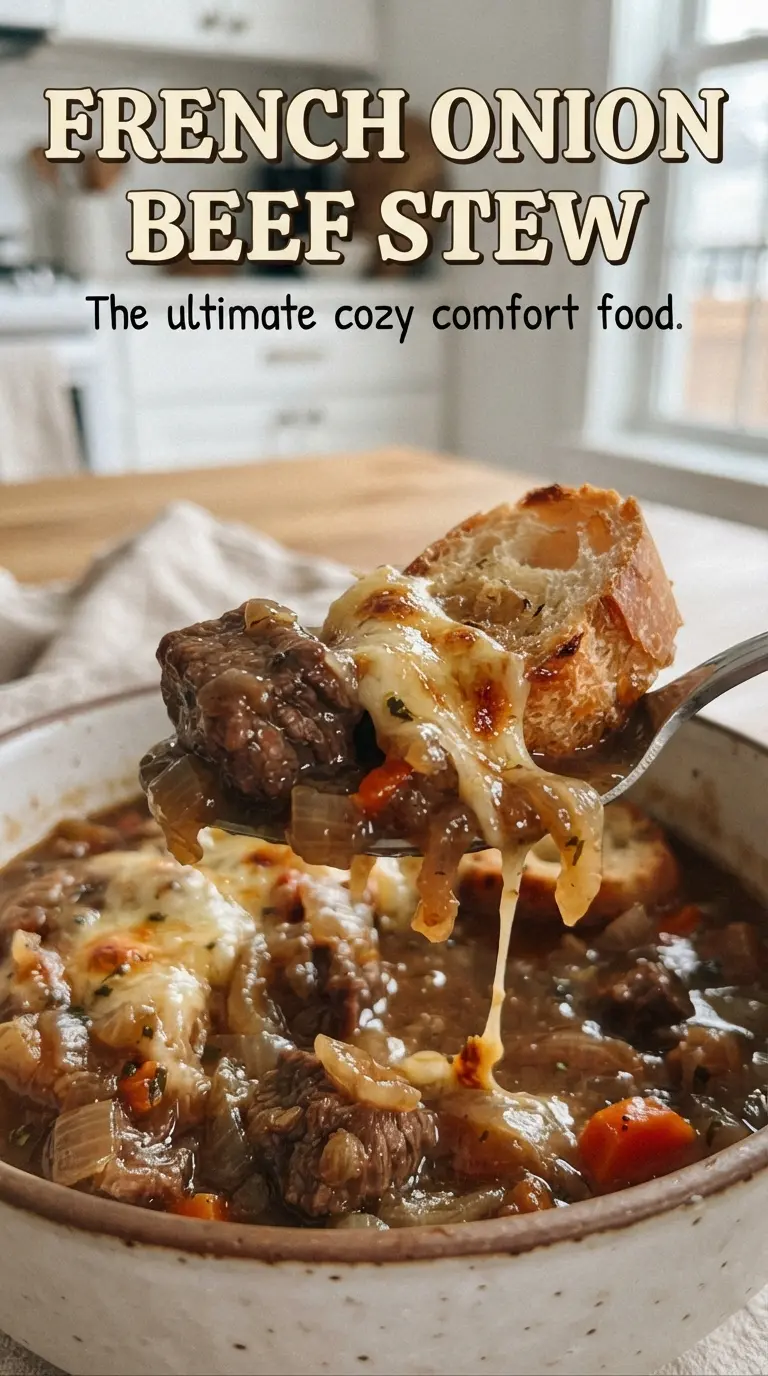
- Beef chuck — This cut needs time, but it pays you back with meat that turns spoon-tender instead of stringy. Chuck has enough fat and connective tissue to enrich the broth as it simmers. A leaner stew meat can work, but it won’t give the same plush texture.
- Yellow onions — These are the whole point of the dish. They cook down sweet and silky, and that sweetness balances the beef broth and Gruyere. White onions stay sharper; red onions can muddy the flavor.
- Dry white wine — The wine brings brightness and helps lift the browned bits from the pot. Use one you’d drink, since the flavor stays in the stew. If you’d rather skip it, add a splash of broth plus a teaspoon of lemon juice at the end for a little lift, though it won’t taste quite as layered.
- Gruyere — Gruyere melts smoothly and browns with that nutty, almost toasted edge that makes French onion anything work. Swiss cheese can stand in if needed, but it’s milder and less complex. Pre-shredded cheese works in a pinch, though freshly grated melts more cleanly.
Building the broth so the finish stays brothy, not muddy
Browning the beef in batches
Season the beef first, then brown it in a single layer so the pieces actually sear instead of steam. Crowding the pan is the fastest way to lose that deep meaty flavor, and the stew will taste boiled even if the liquid is perfect. You want dark, stuck-on fond in the pot, because that’s what the wine and broth will pull up into the sauce later.
Caramelizing the onions the long way
Once the butter goes in, the onions need steady heat and patience. They should soften first, then start to turn gold, then finally collapse into a glossy brown mass. If the pan looks dry before they’re done, add a small splash of water to loosen the fond rather than raising the heat and risking a burnt batch.
Simmering until the beef gives in
After the broth, Worcestershire, thyme, bay leaf, and beef go in, keep the simmer gentle. A hard boil tightens the meat and can make the broth greasy. You’re looking for small bubbles breaking the surface and beef that yields easily when pressed with a spoon after about 2 hours.
Broiling the bread and cheese on top
Ladle the stew into oven-safe bowls and top each one with toasted baguette and Gruyere right before broiling. The bread should already be crisp, or it can go soggy before the cheese melts. Broil close to the heat source and watch it the whole time; the difference between bronzed and burned is usually less than a minute.
How to adapt this stew without losing the onion-soup feel
Dairy-free version
Use olive oil instead of butter and skip the Gruyere topping, then finish each bowl with a little olive oil brushed over the bread before broiling. You’ll lose the classic cheesy cap, but the onions and beef still carry the dish. If you want a little richness back, stir in a spoonful of dairy-free butter near the end.
Gluten-free swap
Replace the all-purpose flour with a gluten-free flour blend that thickens well, or use 1 teaspoon cornstarch mixed with 1 tablespoon cold broth and add it near the end. Use gluten-free bread for the topping, or serve the stew with plain broiled cheese over the top if you want to skip bread entirely.
No-wine option
Replace the wine with an equal amount of beef broth plus 1 teaspoon red wine vinegar or lemon juice. That keeps the pan deglazed and gives the stew a little brightness so the onions don’t taste heavy. The flavor will be a touch less rounded, but it still works.
Make it ahead for better flavor
This stew gets even better after a night in the fridge because the onion sweetness settles into the broth. Cook it through the simmering stage, chill it, then reheat gently and add the baguette and cheese just before serving. The topping should always be fresh so it stays crisp enough to support the cheese.
Storage and Reheating
- Refrigerator: Store the stew without the bread and cheese for up to 4 days. The flavor deepens as it sits, and the onions will make the broth taste even richer.
- Freezer: The stew base freezes well for up to 3 months. Freeze it before adding the baguette and Gruyere, since dairy-topped bowls don’t reheat as nicely after freezing.
- Reheating: Warm it slowly on the stove over medium-low heat until hot. If it boils hard, the beef can toughen and the fat can separate. Add fresh toasted bread and cheese only after the stew is steaming and ready to serve.
Questions I Get Asked About This Recipe
French Onion Beef Stew
Ingredients
Equipment
Method
- Season the beef chuck cubes with salt and black pepper. Brown them in batches in olive oil in a Dutch oven, then set aside.
- Melt the butter in the Dutch oven, then cook the thinly sliced yellow onions with sugar, stirring often for 30-35 minutes, until deep golden. Keep the heat steady so the onions caramelize rather than burn.
- Add the minced garlic and all-purpose flour and cook for 1 minute. Pour in the dry white wine and scrape the bottom of the pot to release browned bits.
- Add the beef broth, Worcestershire sauce, fresh thyme sprigs, bay leaf, and the reserved beef, then cover. Simmer for 2 hours until the beef is tender.
- Ladle the stew into oven-safe bowls and top each with a toasted baguette slice and shredded Gruyere. Broil for 2-3 minutes until the cheese is bubbly and browned.


