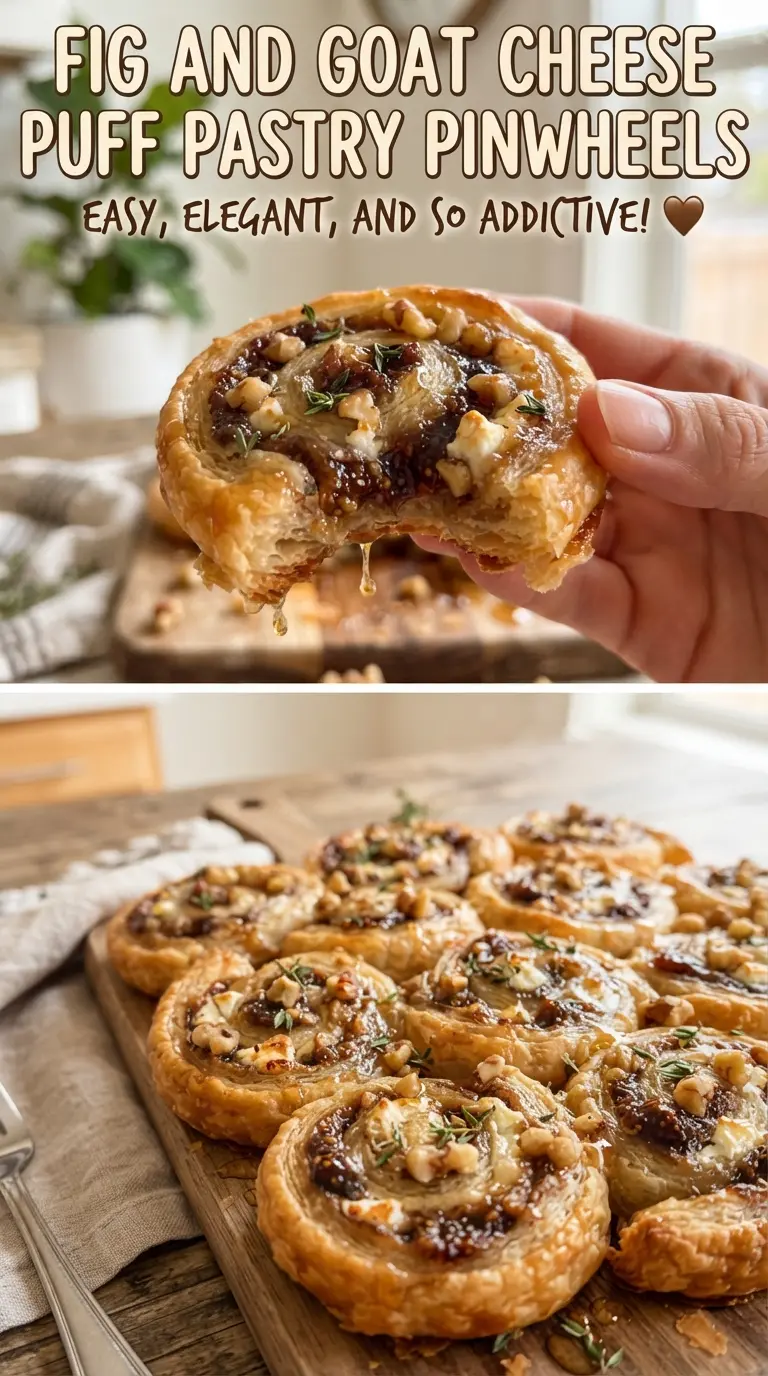
Flaky, crisp puff pastry wrapped around sweet fig jam and tangy goat cheese is one of those appetizers that disappears before the tray even cools. The edges bake up deeply golden, the centers stay soft and savory, and the walnuts add just enough crunch to keep each bite interesting. A little honey at the end ties everything together without making the pinwheels sticky or heavy.
This version works because the fillings are kept restrained and layered in the right order. The jam goes down first so it melts into the pastry instead of clumping in one spot, and the goat cheese stays crumbled rather than smeared, which helps each swirl bake through cleanly. Chilling the log before slicing matters too; it gives you neat rounds instead of squashed spirals.
Below, you’ll find the small details that keep the pastry crisp, the filling balanced, and the slices tidy. If you’ve ever had puff pastry pinwheels leak, unravel, or bake unevenly, the notes in this post will help fix that fast.
The spiral held its shape beautifully, and the fig jam stayed right where it should instead of leaking out. I chilled the roll for the full 15 minutes and got perfect slices with crisp edges and a creamy center.
Golden fig and goat cheese pinwheels with crisp puff pastry and a honey finish are perfect for the appetizer tray.
The Part That Keeps Puff Pastry from Going Soggy
Puff pastry only gives you those crisp, defined layers if the filling stays controlled. The two biggest problems are too much jam and warm dough. A thick layer of fig jam looks generous, but if it pools, the pastry underneath turns damp and the spirals slide apart as they bake.
Cold pastry also matters more than most people think. Once puff pastry warms up, the butter starts softening before it hits the oven, and that means less lift. If the dough feels sticky or soft while you’re rolling, pause and chill it. Five extra minutes can be the difference between tall, flaky pinwheels and flat ones.
- Fig jam — Choose a thick jam rather than a loose preserve. If yours is very soft, spread it a little thinner and leave the edges clean so the roll seals better.
- Goat cheese — Crumbled goat cheese gives you pockets of tang instead of one dense layer. If you need a swap, use feta for a saltier result or cream cheese for a milder one, but both will change the flavor and soften the bite.
- Walnuts — Finely chopped walnuts add crunch and help balance the sweetness. Toast them first if you want a deeper nutty note, but don’t chop them too large or they’ll tear the dough when you roll it.
- Fresh thyme — Fresh thyme keeps the filling from tasting one-note. Dried thyme works in a pinch, but use less because it reads stronger and can turn dusty against the jam.
What Each Ingredient Is Actually Doing in This Recipe
- Primary ingredient (the star) — Quality matters most. Choose the best you can find.
- Cooking medium (oil, butter, or broth) — This carries flavors and prevents dryness.
- Seasonings (salt, pepper, spices, herbs) — Layer flavors so nothing overpowers. Build depth gradually.
- Aromatics (garlic, onion, herbs) — Cook with fat to bloom flavors. Become the foundation.
- Supporting ingredients — Complement the main ingredient without overpowering it.
- Sauce or liquid (if applicable) — Brings flavors together. Balance richness with acid.
- Acid (lemon, vinegar, wine, or other) — Brightens and prevents flat-tasting results.
- Final finish (garnish, glaze, or sauce) — Prevents one-dimensional taste and adds visual appeal.
How to Roll, Chill, and Slice for Clean Spirals
Building the Filling Layer
Roll the thawed pastry into a 10×12-inch rectangle and spread the fig jam all the way to the edges in a thin, even layer. The goal is coverage, not thickness. If you pile the jam on, it squeezes out during rolling and burns on the pan before the pastry finishes baking.
Scatter the goat cheese, walnuts, and thyme evenly over the jam. Pressing them down gently helps the filling stay in place as you roll, but don’t mash it flat. You want distinct layers so the pinwheels show a clear swirl after baking.
Rolling the Log Tight
Start from the long side and roll firmly so the log holds its shape. Loose rolling leaves gaps, and those gaps usually collapse in the oven. If a little jam squeezes out, stop and wipe it away before it seals to the outside of the dough.
Once rolled, chill the log for 15 minutes. That short rest firms the pastry and makes the cut edges cleaner. Skipping this step is the quickest way to get flattened rounds instead of neat spirals.
Slicing and Baking Until Puffy
Cut the chilled log into 20 rounds with a sharp knife. Use a gentle sawing motion instead of pressing straight down, which can squash the swirl. Arrange the rounds cut-side up on parchment so they have room to puff without sticking together.
Brush with egg wash right before baking. It gives the pastry that deep golden color and helps the edges brown evenly. Bake until the pinwheels are puffed, set, and golden at the edges; if they look pale in the center, give them another minute or two rather than pulling them early.
Finish with a light drizzle of honey while they’re still warm. That last touch should read as gloss and sweetness, not syrup. Serve them warm so the pastry stays crisp and the goat cheese softens slightly in the center.
How to Adapt These Pinwheels for Different Tables
Make Them More Savory
Cut the honey drizzle and add a pinch of black pepper or a few extra thyme leaves. The result is less dessert-like and a little sharper, which works well if you’re serving these alongside olives, cured meats, or a cheese board.
Gluten-Free Puff Pastry Swap
Use a gluten-free puff pastry sheet that bakes from chilled dough, and handle it gently because it tends to crack faster when rolled. The flavor stays close to the original, but the pastry may brown a little faster, so start checking a few minutes early.
Dairy-Free Version
Swap the goat cheese for a dairy-free herb spread or a firm vegan cheese that crumbles cleanly. You lose some of the tang that makes these pinwheels pop, so add a tiny pinch of salt or a few drops of lemon juice to keep the filling bright.
Storage and Reheating
- Refrigerator: Store leftovers in an airtight container for up to 3 days. The pastry softens a bit, but it still tastes good.
- Freezer: Freeze the unbaked sliced pinwheels on a tray, then move them to a bag once solid. Bake from frozen, adding a few extra minutes; baked pinwheels can be frozen, but the pastry won’t stay as crisp.
- Reheating: Warm in a 350F oven or toaster oven for 5 to 8 minutes. Skip the microwave, which turns the pastry limp and chewy instead of flaky.
Answers to the Questions Worth Asking
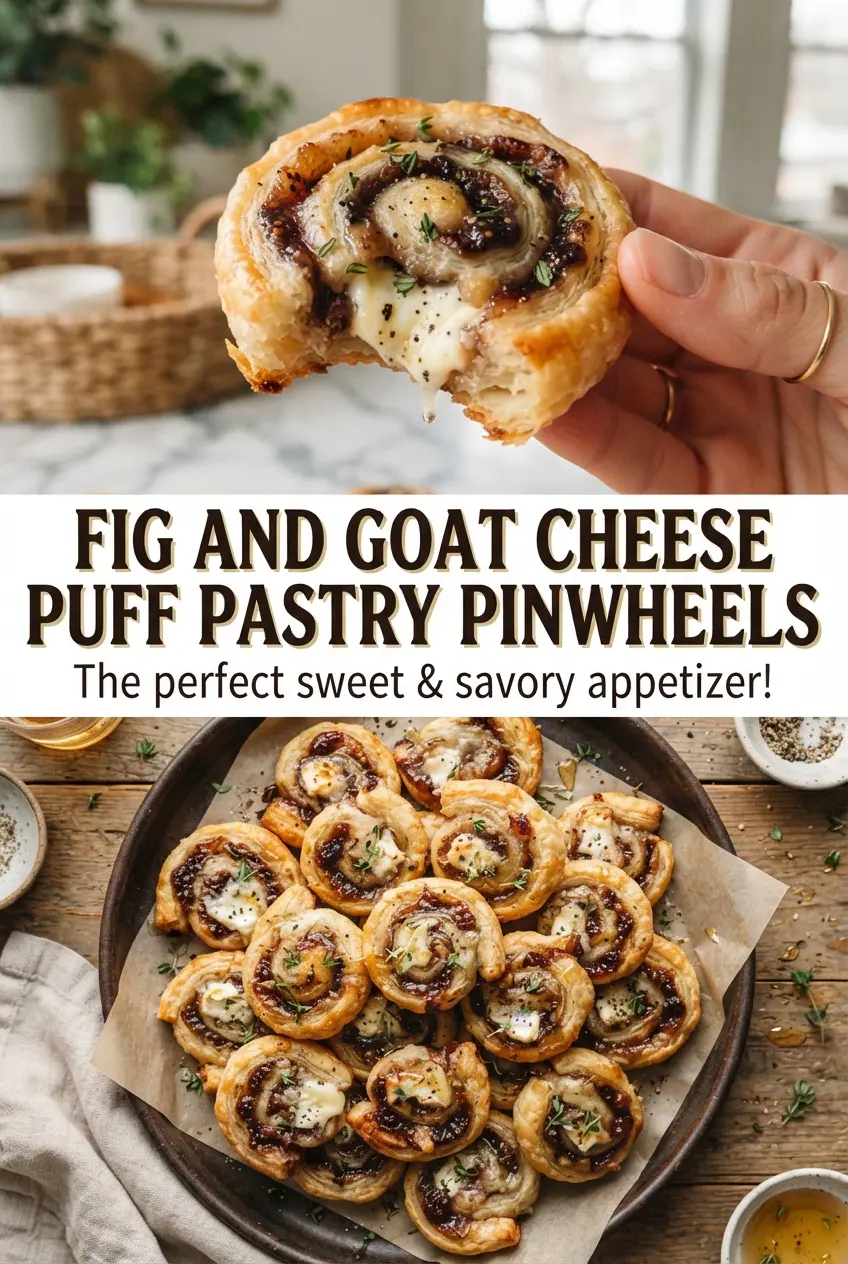
Fig and Goat Cheese Puff Pastry Pinwheels
Ingredients
Equipment
Method
- Preheat oven to 400F and line a baking sheet with parchment to prevent sticking (visual cue: parchment covers the full surface).
- Roll puff pastry into a 10x12-inch rectangle and spread fig jam evenly to the edges (visual cue: jam reaches all corners without gaps).
- Sprinkle goat cheese, walnuts, and thyme over the jam (visual cue: toppings form an even layer over the jam).
- Roll up tightly from the long side to create a compact log (visual cue: the seam side stays underneath).
- Chill the log for 15 minutes for clean slicing (visual cue: firm dough, less squishy when pressed).
- Slice into 20 rounds and arrange on the baking sheet, leaving space between each (visual cue: visible spiral faces upward on each round).
- Brush the tops with egg wash to help browning (visual cue: a light glossy layer covers each pinwheel).
- Bake 16-18 minutes at 400F until puffed and golden (visual cue: pinwheels visibly expand and the edges darken slightly).
- Drizzle with honey and serve warm (visual cue: honey glistens in thin lines over the golden spirals).


