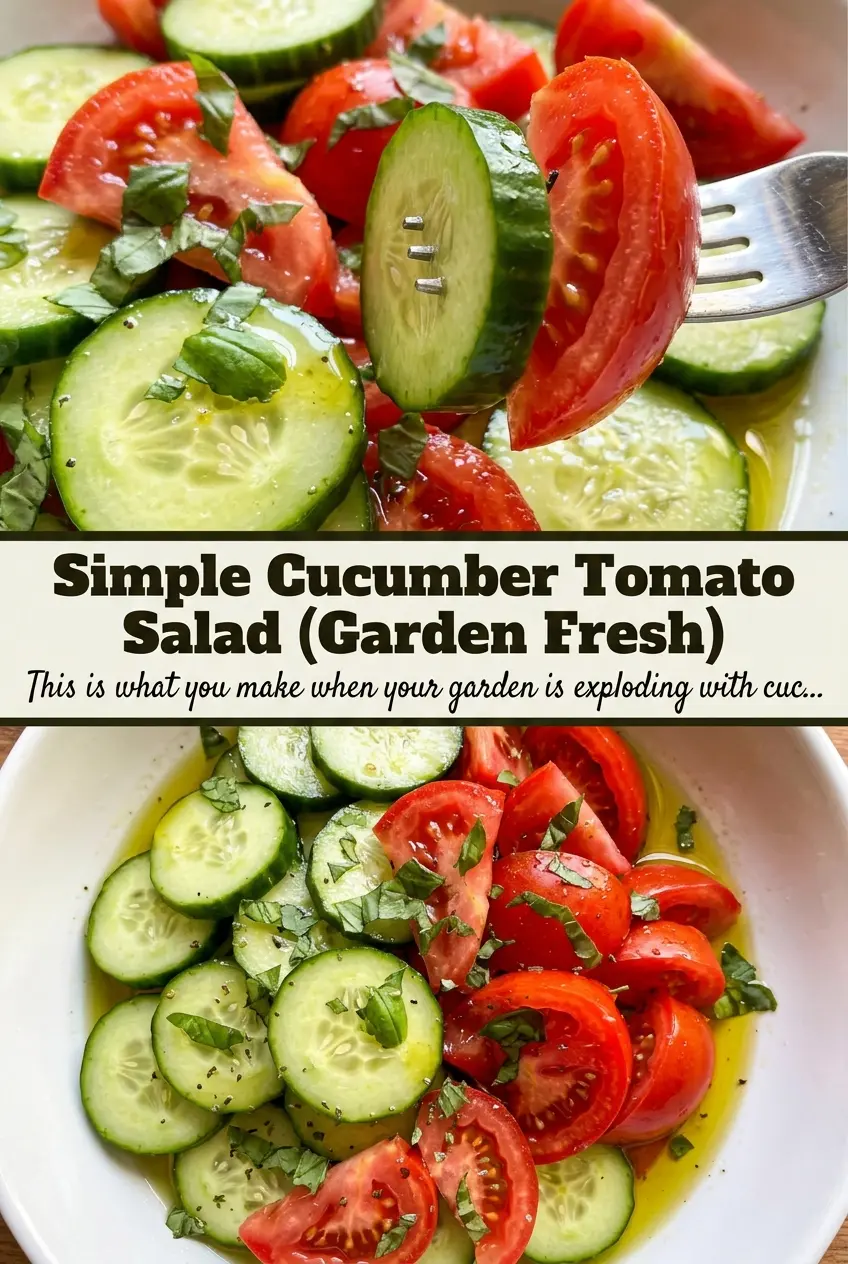
Crunchy cucumbers, juicy tomatoes, and thin slices of red onion come together here in a tangy dressing that tastes clean and bright, not watery or dull. The 30-minute rest turns the vegetables into something better than a tossed salad: the cucumbers stay crisp, the tomatoes loosen just enough to give you a little juice in the bowl, and the dill pulls everything into one refreshing bite.
The trick is balance. Red wine vinegar gives the salad its sharp edge, but a little sugar softens that bite so the vegetables taste seasoned instead of pickled. Olive oil rounds out the dressing, and the salt does the quiet work of drawing out just enough moisture to season the whole bowl without turning it soggy. If you skip the rest time, the flavor stays flat. If you let it marinate, the vegetables start to taste like they belong together.
Below, I’ve included the small details that keep this salad crisp and flavorful, plus a few smart variations if you want to swap the herbs, adjust the onion, or make it fit what’s in your fridge.
The cucumbers stayed crisp after the 30-minute chill, and the dressing coated everything without pooling at the bottom. I used garden tomatoes and the dill made it taste fresh and bright.
Save this cucumber tomato salad for a crisp, tangy side that gets better after a short marinate.
The Step That Keeps Cucumber Salad Crisp Instead of Watery
The biggest mistake with cucumber tomato salad is dressing it and serving it immediately, then wondering why the bowl turns soupy. Salt pulls moisture out of the cucumbers and tomatoes, which is helpful for flavor but not if you rush it. The 30-minute rest gives that liquid time to mingle with the vinegar and oil, so the dressing tastes integrated instead of thin.
Thin slices matter here. Thick cucumber rounds stay awkwardly firm in some bites and under-seasoned in others, while thin slices pick up the dressing and still hold their crunch. If your cucumbers are especially seedy, scoop out the center before slicing; that cuts down on excess water without changing the fresh, cool bite of the salad.
What the Vinegar, Dill, and Onion Are Each Doing
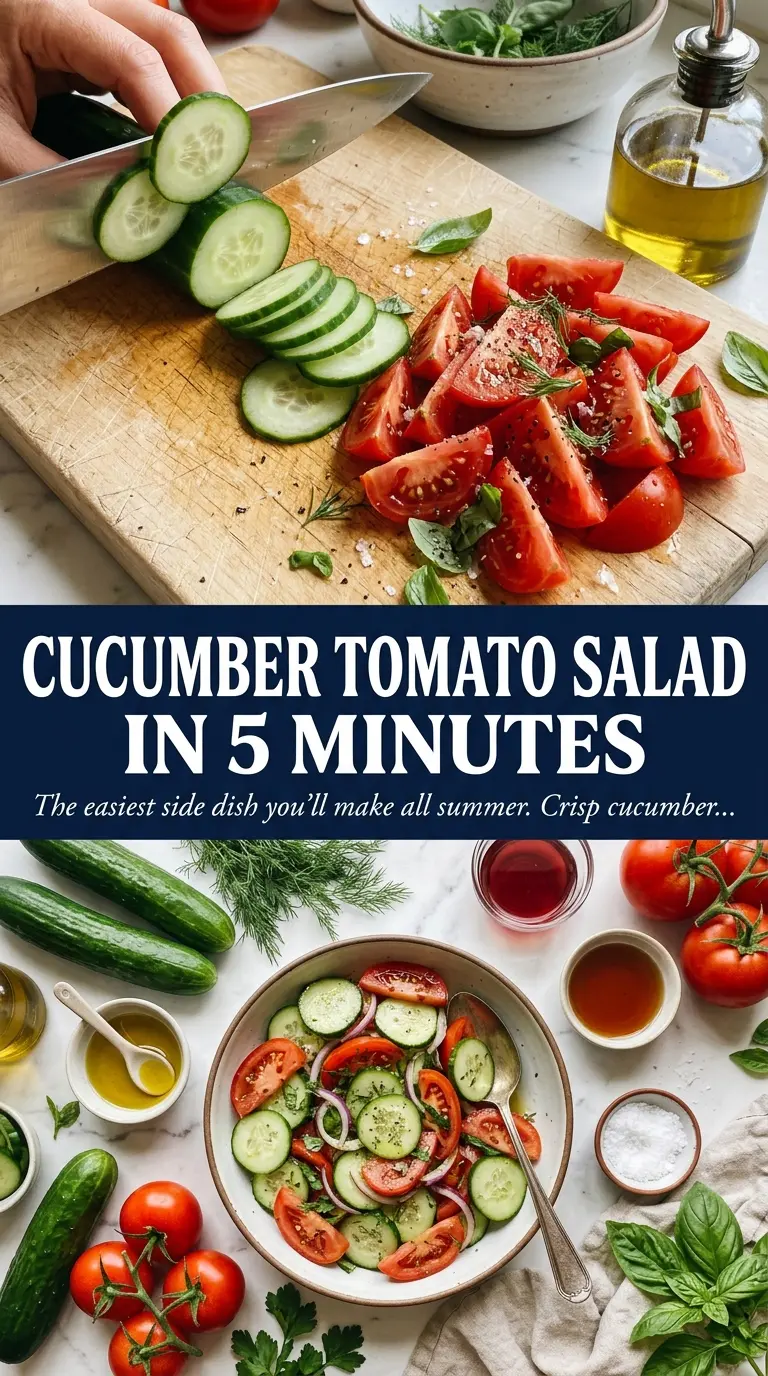
- Cucumbers — These carry the crunch, so use firm cucumbers with tight skin. If the peel is thick or waxy, a quick peel in stripes leaves some texture while keeping the salad tender enough to eat easily.
- Cherry tomatoes — Cherry tomatoes hold their shape better than larger slicing tomatoes and release just enough juice to help the dressing cling. If your tomatoes are very ripe, halve them right before mixing so they don’t collapse in the bowl.
- Red onion — Thin slices are important because raw onion can take over fast. If yours is sharp, soak the slices in cold water for 10 minutes, then drain well; that keeps the onion from overpowering the salad while still giving it bite.
- Red wine vinegar — This brings the clean tang that makes the whole bowl taste awake. Lemon juice works in a pinch, but it changes the profile into something brighter and less rounded.
- Fresh dill — Dill is the herb that makes this salad taste like more than vegetables in dressing. Dried dill won’t give the same fresh edge, so if you substitute, use a smaller amount and expect a softer, less vivid result.
- Olive oil and sugar — The oil smooths out the vinegar, and the sugar keeps the dressing from tasting harsh. Honey can stand in for sugar, but keep the amount modest or the salad will taste glazed instead of crisp and savory.
How to Marinate the Salad Without Losing the Crunch
Building the Bowl
Start with the cucumbers, tomatoes, and onion in a large bowl so there’s room to toss without crushing the tomatoes. If the bowl is too small, you’ll bruise the vegetables before they ever get to marinate. A wide bowl also helps the dressing coat everything more evenly.
Whisking the Dressing Until It Clings
Whisk the vinegar, olive oil, sugar, dill, salt, and pepper until the sugar is dissolved and the dressing looks slightly glossy. If you can still see sugar granules, keep whisking for another few seconds; undissolved sugar settles at the bottom and leaves the first bites sharp while the last bites taste bland. The dressing should smell tangy and herbaceous before it ever touches the vegetables.
Letting the Flavor Settle In
Pour the dressing over the vegetables and toss gently, lifting from the bottom so the cucumbers and tomatoes stay intact. Then refrigerate for 30 minutes. This is the part that matters most. Shorter than that and the flavor stays on the surface; much longer and the cucumbers soften more than you want. Toss again right before serving so the juices redistribute through the bowl.
Three Smart Ways to Adjust This Salad
Make It Dairy-Free Without Changing the Texture
This salad is naturally dairy-free as written, which is part of why it works so well on a mixed table. Keep it that way by using the olive-oil vinaigrette base and leaning on fresh dill for body instead of creamy add-ins. The result stays light, crisp, and bright.
Swap the Dill for What’s in Your Herb Garden
Parsley gives a cleaner, greener finish, while basil makes the salad taste softer and a little sweeter. Mint works too, but use it sparingly or it will take over the tomatoes. Each herb changes the personality of the salad more than the method, so keep the vinegar and salt steady.
Use English Cucumbers for a Less Seedy Salad
English cucumbers have thinner skins and fewer seeds, so they give you a cleaner crunch and less liquid in the bottom of the bowl. If that’s what you have, you can skip peeling and seeding. The salad will still need the rest time, but it’ll hold its texture a little better.
Storage and Reheating
- Refrigerator: Store leftovers in an airtight container for up to 2 days. The cucumbers soften over time, but the flavor stays good.
- Freezer: This salad doesn’t freeze well. The cucumbers and tomatoes turn mushy when thawed, and the dressing loses its fresh texture.
- Reheating: No reheating needed. Serve it cold straight from the fridge, and give it a quick toss before serving to bring the dressing back up from the bottom.