Crunchy candied pecans hit that sweet spot between snack and garnish: glossy, crisp, and just sweet enough to keep you reaching back into the bowl. The coating bakes onto the nuts in a thin shell that crackles when you bite it, and the cinnamon keeps the sugar from tasting one-note. They’re the kind of thing that disappears fast whether you put them out for guests or keep them tucked on the counter for nibbling.
What makes this version work is the low oven and the repeated stirring. A 250°F bake gives the sugar time to dry and cling instead of melting into a sticky mess, and the egg white creates just enough structure for the sugar mixture to grip every pecan half. The vanilla adds warmth, but the real key is patience at the end: the coating won’t turn crisp until the pecans cool completely on the pan.
If you’ve ever ended up with clumpy sugar or pecans that stayed tacky, the notes below will help. I’m also sharing the texture cue I watch for in the oven, plus a couple of useful swaps if you need to adjust the spices or make a bigger batch.
The coating baked on evenly and turned perfectly crisp after cooling — I stirred every 15 minutes like you said, and they came out glossy instead of sticky.
Like these candied pecans? Save them to Pinterest for crunchy snacking, holiday trays, and salad toppers.
The Reason Candied Pecans Turn Sticky Instead of Crunchy
The difference between crisp candied pecans and a chewy mess comes down to moisture control. The egg white helps the sugar mixture cling to the nuts, but it also needs time in a low oven so the coating can dry out slowly. If the heat runs too high, the sugar can scorch before the center of the coating sets, which leaves you with a dark shell that still feels tacky.
Stirring every 15 minutes matters because it redistributes the sugar as it melts and keeps the pecans from baking into one giant sheet. You’re looking for a dry, sandy-looking coating near the end of the bake, not a wet glaze. Once the nuts cool, that matte coating turns into the crisp shell you want.
What Each Ingredient Is Actually Doing In This Batch
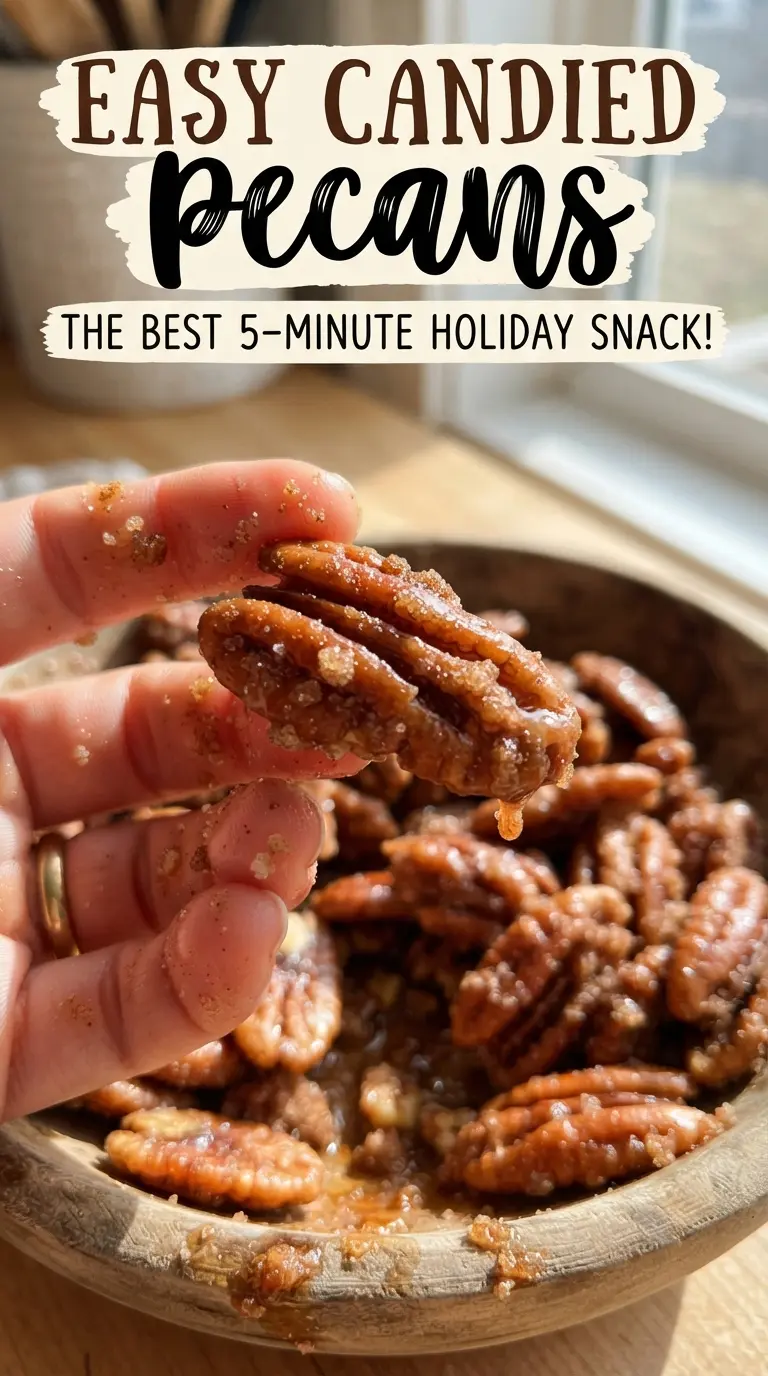
- Pecan halves — Use halves if you want the best crunch and the most even coating. Pieces work in a pinch, but they brown faster and break apart more easily as you stir.
- Egg white — This is what gives the sugar something to grip. Whisk it until frothy, not stiff; you want foam, not meringue, or the coating gets uneven and clumpy.
- Water — Just enough to loosen the egg white so it coats the nuts in a thin layer. Skip it and the white can go on too thick, which leaves gummy spots after baking.
- Sugar, cinnamon, and salt — Sugar builds the crisp shell, cinnamon adds warmth, and salt keeps the sweetness from turning flat. The salt matters more than people expect; it makes the pecans taste roasted instead of candy-like.
- Vanilla extract — Vanilla softens the sharpness of the sugar and gives the coating a deeper, rounder aroma. It’s worth using a real extract here because there isn’t much else in the ingredient list to carry flavor.
Getting the Coating Dry, Even, and Craggy
Frothing the Binder
Whisk the egg white, water, and vanilla until the mixture looks foamy and loose, with tiny bubbles across the top. That froth helps it coat every pecan without turning into a heavy layer. If you stop whisking too soon, the vanilla and water can sit at the bottom of the bowl and leave the first nuts under-seasoned.
Coating the Pecans
Toss the pecans in the egg white until every surface looks lightly slick. Then add the sugar mixture and keep tossing until the nuts look evenly dusty with no dry pockets. If the bowl seems crowded, use a bigger one; cramped nuts drag the coating off each other and you’ll get patchy spots.
Low-and-Slow Baking
Spread the nuts in a single layer on parchment and bake at 250°F, stirring every 15 minutes. The coating will look wet at first, then grainy, then dry and sandy as it cooks. If you see the sugar melting into puddles, the pan is too crowded or the oven is running hot.
Cooling to the Crunch
Pull the pan when the pecans smell toasted and the coating looks dry, even if they still seem a little soft. They crisp as they cool. Leave them on the pan until they’re completely at room temperature, because moving them early traps steam and softens the shell.
Maple Cinnamon Candied Pecans
Swap 2 tablespoons of the sugar for maple syrup if you want a deeper, woodsy sweetness. The coating will be a little more rustic and slightly less glassy, but the flavor leans warmer and works especially well on salads or cheese boards.
Peppery Party Pecans
Add 1/4 teaspoon cayenne or a few cracks of black pepper to the sugar mixture. You still get the sweet crunch, but the heat cuts through the richness and makes the pecans better for appetizers instead of just snacking.
Dairy-Free and Gluten-Free by Default
This recipe already fits both diets as written, since the coating relies on egg white instead of butter or flour. Just check your cinnamon and vanilla for clean labels if you’re serving someone with strict dietary needs.
Storage and Reheating
- Refrigerator: Store in an airtight container at room temperature for up to 2 weeks. The coating stays crisp if you keep out humidity.
- Freezer: They freeze well for up to 2 months in a sealed container. Thaw uncovered at room temperature so condensation doesn’t soften the sugar shell.
- Reheating: You usually don’t need to reheat them. If they soften, spread them on a baking sheet and warm in a 250°F oven for 5 to 8 minutes, then cool completely again before storing.
Answers to the Questions Worth Asking
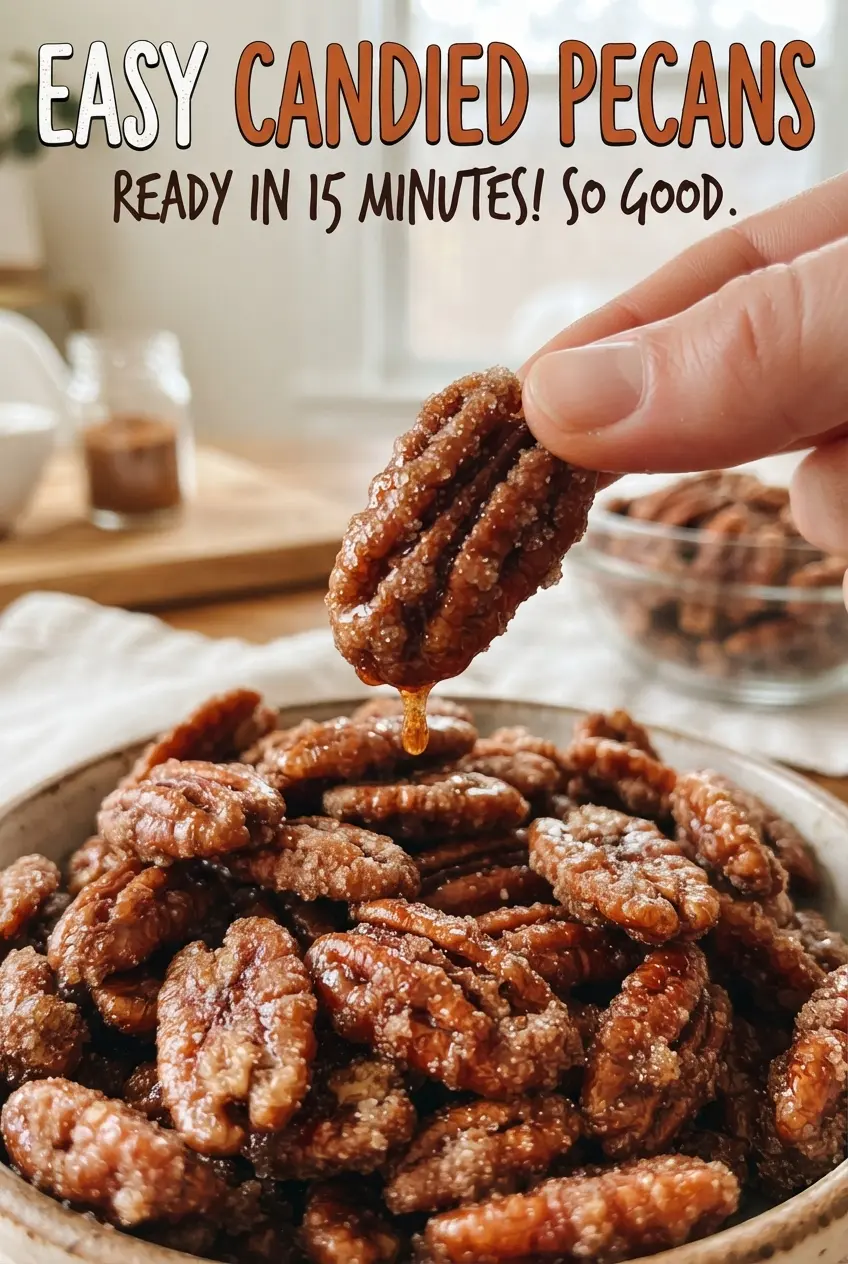
Easy Candied Pecans
Ingredients
Equipment
Method
- Preheat oven to 250°F and line a sheet pan with parchment for easy release.
- Whisk the egg white, water, and vanilla extract until frothy, using a light and bubbly texture as the cue.
- Toss the pecan halves in the egg-white mixture until evenly coated so every surface looks glossy.
- Mix the sugar, ground cinnamon, and salt, then toss with the pecans until the coating looks sandy and thoroughly covered.
- Spread the pecans in a single layer and bake at 250°F for 1 hour, stirring every 15 minutes for even crackling.
- Cool completely on the pan until crunchy, then break apart and store airtight.


