Golden streusel, tender spiced apples, and a flaky bottom crust make Dutch apple pie the kind of dessert people remember after the plates are cleared. The topping bakes into thick, buttery crumbles with crisp edges, while the filling softens underneath without turning soupy. Every slice lands with that contrast of textures that keeps one piece from feeling like enough.
The trick is in the balance. Cold butter stays in the crust and the streusel long enough to create structure, and cornstarch gives the apple filling enough body to set without becoming gummy. A mix of Granny Smith and Honeycrisp keeps the flavor bright and the texture layered: one tart apple for backbone, one sweeter apple for depth.
Below, I’ve included the timing that keeps the topping from overbrowning before the apples are cooked through, plus the small handling details that make the crust slice cleanly instead of collapsing on the first cut.
The streusel stayed crisp on top and the apples baked down into a perfect sliceable filling. I used Granny Smith and Honeycrisp like you suggested, and the flavor was spot on without being too sweet.
Save this Dutch Apple Pie for the dessert nights when you want a thick streusel crown and clean slices of cinnamon-spiced apples.
The Streusel Works Because It Bakes on Top, Not Into the Filling
With Dutch apple pie, the topping has to stay distinct long enough to brown while the apples underneath soften. If the streusel is packed too finely or the butter gets warm before baking, it melts into a sandy layer instead of forming those big, craggy crumbs people want from this pie. Cold butter and a light hand are what keep the texture sharp.
The other place this pie goes wrong is the filling. Apples release a lot of juice as they bake, and without enough thickener, the bottom crust gets soggy before the center sets. Cornstarch gives you a clean slice after cooling, but only if the pie bakes until you see the filling actively bubbling at the edges.
What Each Ingredient Is Actually Doing in This Pie
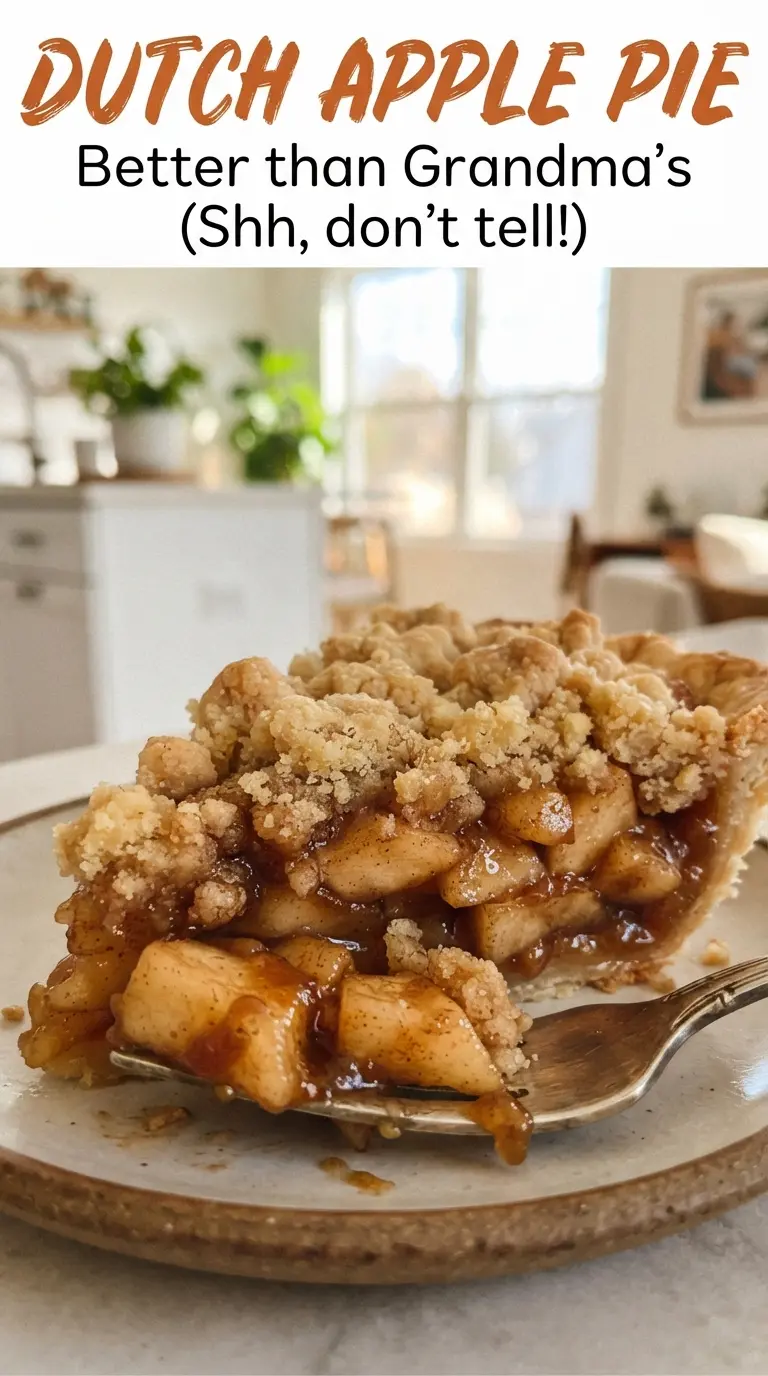
- Granny Smith apples — These hold their shape and keep the pie from tasting flat. You can swap in another firm tart apple, but soft apples turn to mush before the streusel finishes baking.
- Honeycrisp apples — They bring sweetness and juiciness, which balances the tart apples and gives the filling a fuller flavor. If you use all Granny Smith, add a little extra sugar; if you use all sweet apples, the pie can taste one-note.
- Cornstarch — This is what turns the apple juices into a glossy, sliceable filling. Flour can work in a pinch, but it leaves the filling a little cloudier and takes a longer bake to thicken properly.
- Cold butter for the crust and streusel — Cold butter creates both flake and crumble. Once it softens, the crust gets tougher and the streusel loses those big clusters that make Dutch apple pie special.
- Brown sugar in the streusel — It melts into the butter and gives the topping a deeper caramel note. White sugar won’t give you the same warmth or the same crisp finish.
Building the Crust, Filling, and Topping So They Finish Together
Mixing the Single Crust
Start with the flour, salt, and sugar, then cut in the cold butter until the mixture looks like coarse crumbs with a few pea-size bits still visible. Those larger pieces are what create a flaky crust instead of a dense one. Add ice water one tablespoon at a time and stop as soon as the dough holds together when pressed; if it feels wet or sticky, it will shrink and toughen in the oven. Chill it for 30 minutes so the butter firms back up before it goes into the pie dish.
Preparing the Apple Filling
Toss the sliced apples with sugar, cinnamon, nutmeg, cornstarch, and lemon juice until every slice is lightly coated. The cornstarch needs to be distributed evenly or you’ll get thin pockets of juice at the bottom of the pie. Pile the apples into the unbaked crust and mound them slightly in the center, because they settle as they bake. If the filling looks too shallow, the pie will bake flat instead of giving you a full, generous slice.
Making the Streusel
Combine the flour, brown sugar, and cinnamon, then cut in the cold butter until the mixture forms large clumps. Don’t chase a fine sand texture here; bigger crumbs bake into that thick, bakery-style crown. If the butter softens too much, the topping spreads instead of crumbling, so work quickly and stop as soon as the mixture holds together when squeezed. Pile it over every inch of the apples, all the way to the edges.
Baking Until the Filling Bubbles
Bake at 375°F until the streusel is deep golden and the filling is bubbling around the edges, usually 55 to 65 minutes. That bubbling matters more than the clock because it tells you the cornstarch has fully thickened the juices. If the topping is browning too fast, tent it loosely with foil after about 30 minutes. Cool the pie at least an hour before slicing; cut it early and the filling will slide apart.
Three Ways to Keep This Pie Working for Different Kitchens
Make It Gluten-Free
Use a 1:1 gluten-free flour blend in both the crust and streusel. The texture will be a little more delicate and less flaky, but the pie still bakes up cleanly if you keep the butter cold and avoid overworking the dough.
All Granny Smith Apples for a Tart Finish
If you like a sharper apple pie, use six Granny Smith apples and keep the sugar as written. The filling will taste brighter and less sweet, but the slices will still hold because Granny Smiths stay firm during baking.
Dairy-Free Version
Swap the butter in both the crust and streusel for a firm plant-based baking stick, not soft tub margarine. The pie will still brown and hold together, but the flavor is a little less rich and the streusel tends to bake up slightly less crumbly.
Storage and Reheating
- Refrigerator: Keep covered for up to 4 days. The streusel softens a little in the fridge, but the flavor stays excellent.
- Freezer: Freeze baked slices wrapped tightly, or freeze the whole pie once fully cooled. The topping won’t stay quite as crisp after thawing, but the filling freezes well.
- Reheating: Warm slices in a 325°F oven until heated through, about 10 to 15 minutes. Skip the microwave if you want the streusel to stay crisp; it turns the topping soft and the crust chewy.
Answers to the Questions Worth Asking
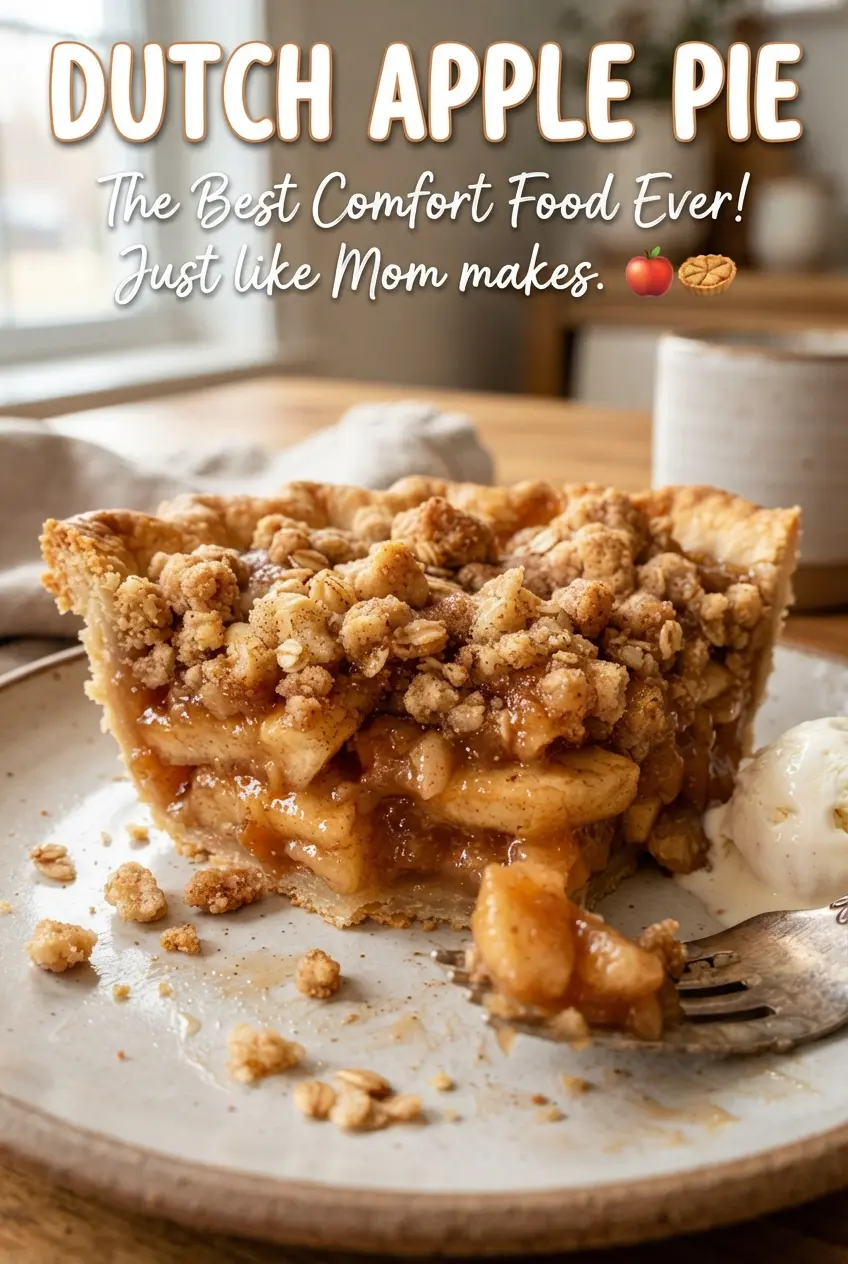
Dutch Apple Pie
Ingredients
Equipment
Method
- In a bowl, mix all-purpose flour, salt, and sugar. Cut in cold unsalted butter until crumbly.
- Drizzle in ice water 1 tablespoon at a time, stirring just until dough forms. Press the dough into a 9-inch pie dish.
- Chill the crust for 30 minutes in the refrigerator. This helps the dough hold its shape while baking.
- Toss sliced apples with granulated sugar, cinnamon, nutmeg, cornstarch, and lemon juice until evenly coated. Pile the apples into the unbaked shell.
- For streusel, combine all-purpose flour, brown sugar, and cinnamon. Cut in cold unsalted butter until large clumps form.
- Pile the streusel thickly over the apples, covering every inch. Make sure the top is evenly covered for a full crumble crown.
- Bake at 375F for 55-65 minutes until the streusel is golden and the filling bubbles around the edges. Tent loosely with foil after 30 minutes if the streusel browns too quickly.
- Cool the pie at least 1 hour before slicing. Wait for the filling to set so the first slice doesn’t run.


