Dumpling ramen bowl lands in that sweet spot between comforting and fast, with a broth that tastes layered enough to feel like it took all afternoon but comes together in one pot. The dumplings give you something plump and satisfying to bite into, the ramen keeps it slurpy and light, and the soft-boiled egg pulls the whole bowl into something you’d happily make again tomorrow.
The trick is building the broth gently. White miso goes in off a low simmer so it stays smooth and keeps its mellow depth instead of turning grainy or flat. I also cook the ramen noodles separately, which keeps the broth clear and prevents the noodles from drinking up all the seasoning before the bowls hit the table. That small extra step makes the difference between a bowl that feels composed and one that turns muddy.
Below, you’ll find the little details that matter most: when to add the dumplings so they stay tender, how to get the bok choy just wilted, and a few swaps that make this bowl work with what you already have in the fridge.
The broth tasted like it had been simmering for hours, and the dumplings stayed tender instead of falling apart. I followed the 7-minute egg timing exactly and the yolk was perfect over the noodles.
Like this dumpling ramen bowl? Save it to Pinterest for the nights when you want a rich miso broth, tender dumplings, and a runny egg over noodles.
The Reason the Broth Stays Clean Instead of Cloudy
The broth in a dumpling ramen bowl can go wrong fast if it gets boiled hard after the miso goes in. Miso has a gentle, rounded flavor, and high heat muddies it, both in taste and in texture. Keeping the pot at a low simmer preserves the clean soy-miso base and lets the dumplings cook through without tearing open.
Another common failure is crowding the pot with noodles. Ramen releases starch quickly, and if you cook it straight in the broth, the whole bowl turns heavy before you even serve it. Cooking the noodles separately keeps the soup bright and gives you full control over the final texture.
- Low simmer after adding miso — This keeps the broth smooth and prevents that scorched, flat taste you get from hard boiling.
- Separate noodle cooking — The broth stays clear and seasoned instead of starchy and dull.
- Brief dumpling simmer — Frozen dumplings need time to heat through, but a long boil makes the wrappers split.
What Each Ingredient Is Actually Doing in This Bowl
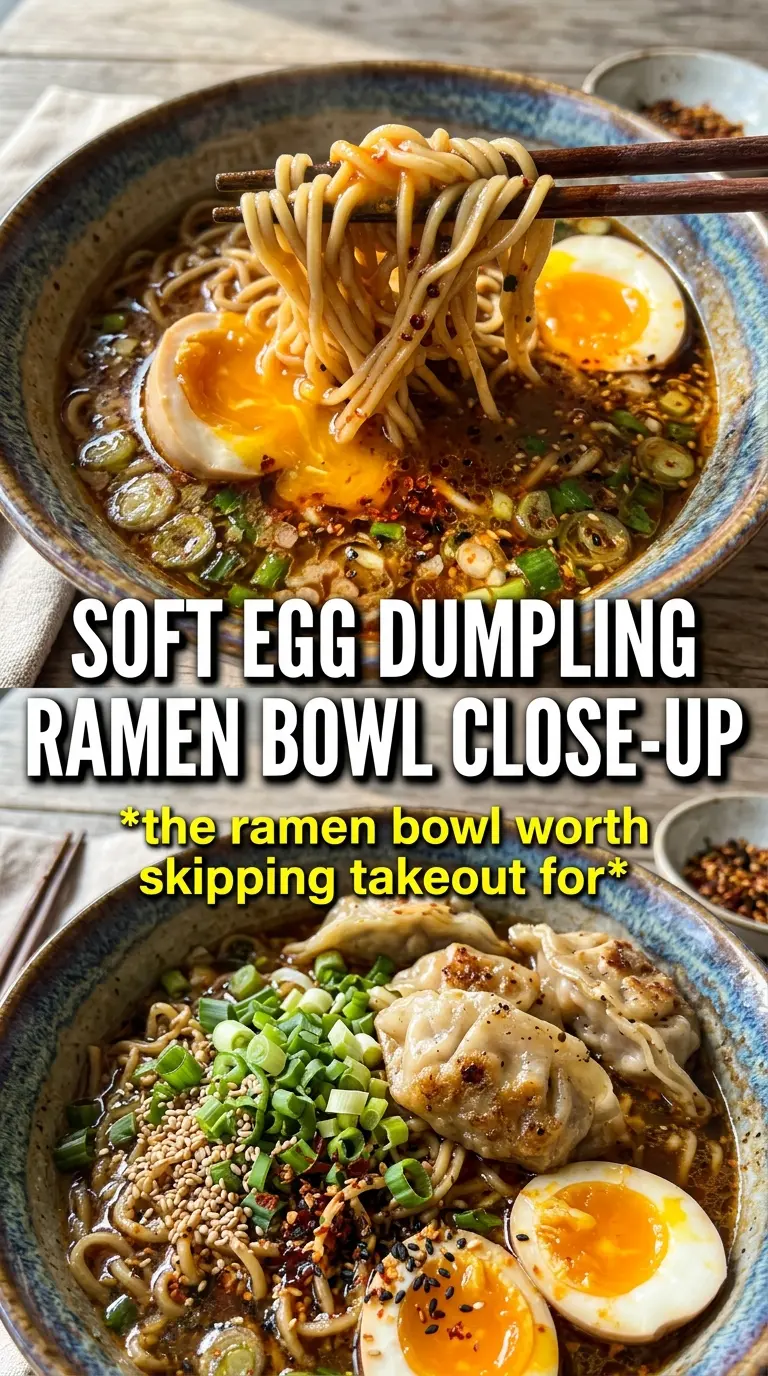
- Frozen dumplings — These are the shortcut that make the bowl feel substantial. Pork gives a richer finish, chicken stays a little lighter, and both work well straight from frozen as long as you simmer them gently.
- White miso paste — This is the backbone of the broth. White miso is mild and slightly sweet, which fits this bowl better than darker miso, and it dissolves best when whisked in off heat or over low heat.
- Fresh ramen noodles — Fresh noodles give you spring and chew that dried noodles can’t match. If you need to swap, use instant ramen noodles and discard the seasoning packet, but don’t overcook them or they go soft fast.
- Soft-boiled eggs — The yolk turns the broth silky as it runs into the noodles. The 7-minute timing matters; any longer and you lose that soft center.
- Bok choy and corn — Bok choy adds crunch and a green, clean bite, while corn brings sweetness that balances the salty broth. Frozen corn works fine here.
- Sesame oil, chili oil, and nori — Sesame oil rounds out the broth, chili oil adds heat at the end, and nori gives the bowl that savory, sea-bright finish. Add these at serving so they stay aromatic.
How to Build the Bowl So Nothing Turns Mushy
Start the Broth Gently
Bring the chicken broth to a simmer, then whisk in the miso, soy sauce, mirin, and sesame oil. You want the liquid hot and steamy, not boiling hard, because aggressive heat can make the miso taste dull and rough. Stir until the paste disappears completely and the broth looks smooth before the dumplings go in.
Cook the Dumplings Without Breaking Them
Add the frozen dumplings directly to the broth and let them cook until they’re heated through and floating, usually 5 to 7 minutes. If the broth is at a wild boil, the wrappers can split before the centers are hot. Keep the bubbles small and steady, and use a spoon to nudge them loose if they stick together.
Wilt the Greens at the End
Drop in the bok choy during the last 2 to 3 minutes. The stems should lose their raw crunch, but the leaves should stay bright and just tender. If you cook it too long, the greens fade and the bowl loses that fresh contrast against the rich broth.
Assemble Fast and Serve Hot
Drain the ramen noodles and divide them among the bowls right away. Ladle the broth and dumplings over the top, then finish with the egg, corn, green onions, nori, sesame seeds, and chili oil. The noodles keep their best texture when they hit the bowl just before serving, so don’t let them sit in the colander while you finish the toppings.
How to Adjust This Bowl When You Need a Different Shortcut
Make It Vegetarian
Swap the chicken broth for a good vegetable broth and use vegetable dumplings. The broth will be a little lighter, so keep the miso and soy sauce in place for depth. You still get that same satisfying bowl format without losing the savory backbone.
Make It Gluten-Free
Use gluten-free dumplings, gluten-free tamari, and rice noodles instead of ramen. The texture changes a bit because rice noodles are softer and less springy, but the broth still carries the bowl. Check the miso label too, since some brands include barley.
Make It Spicier
Stir a little chili crisp into the broth or finish each bowl with extra chili oil. Add heat at the table instead of simmering it in the pot, because that keeps the base balanced for everyone and lets the spice stay sharp.
Storage and Reheating
- Refrigerator: Store broth, dumplings, and toppings separately for up to 3 days. The noodles soften fast, so keep them apart if you can.
- Freezer: The broth and dumplings freeze well for up to 2 months, but the noodles and egg don’t. Freeze the soup base in airtight containers and add fresh noodles when you reheat.
- Reheating: Warm the broth gently on the stove until steaming, then add the dumplings just long enough to heat through. Reheat noodles separately or they turn gummy in the broth.
Answers to the Questions Worth Asking
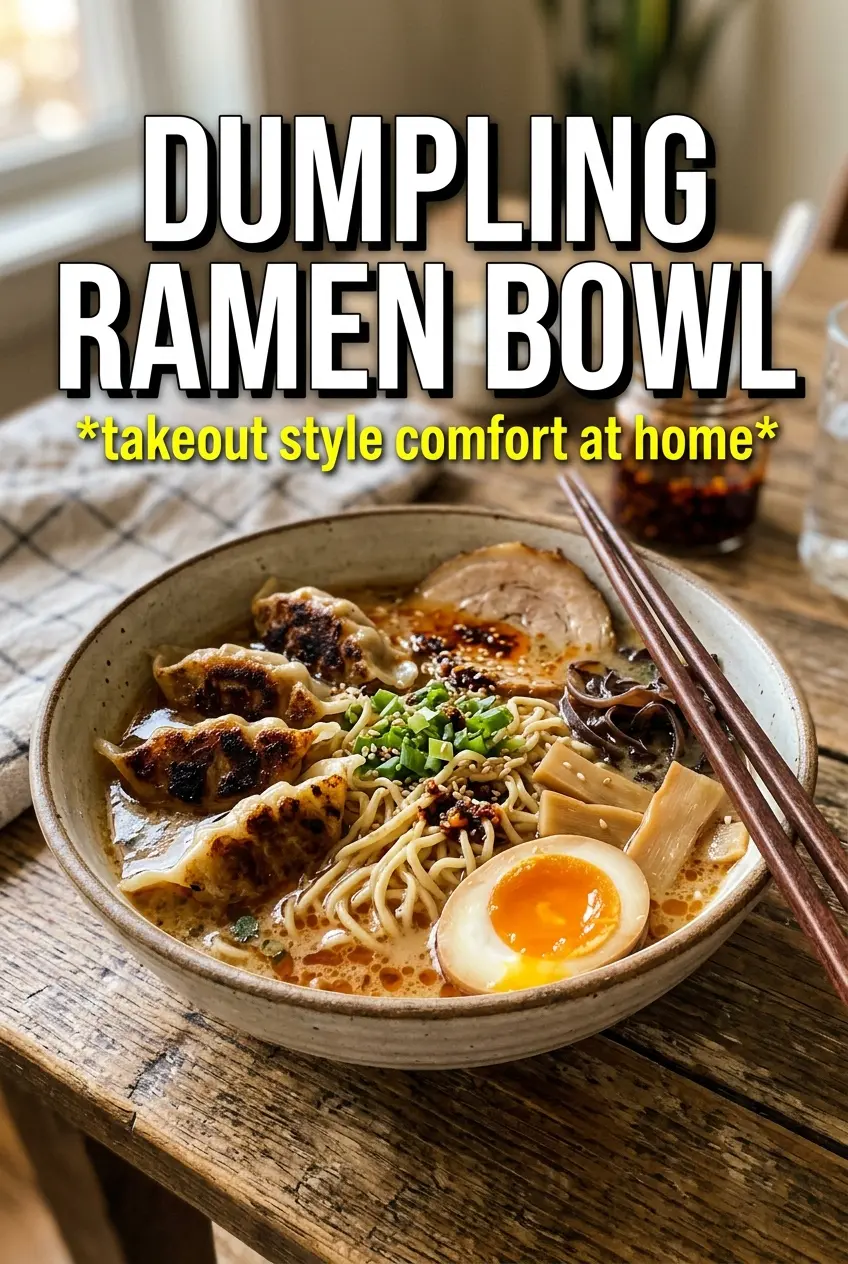
Dumpling Ramen Bowl
Ingredients
Equipment
Method
- Bring the chicken broth to a simmer over medium-high heat, then whisk in the white miso paste, soy sauce, mirin, and sesame oil until smooth.
- Keep the broth at a gentle simmer so it stays hot and ready for dumplings, with visible steam but no hard rolling boil.
- Add frozen pork or chicken dumplings to the simmering broth and cook for 5–7 minutes, until cooked through.
- Add the halved bok choy and cook for 2–3 minutes, until wilted and bright green at the edges.
- Cook the fresh ramen noodles separately according to package instructions, then drain well.
- Set the drained noodles aside so they don’t over-soak before assembling the bowls.
- Divide the noodles between 4 bowls.
- Ladle the broth with dumplings and bok choy over the noodles in each bowl.
- Top each bowl with halved soft-boiled eggs (runny yolk), corn kernels, sliced green onions, nori, sesame seeds, and chili oil.


