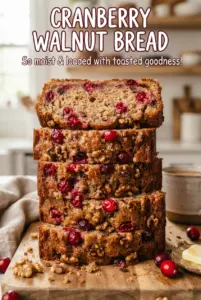
Craggy, tender cranberry walnut bread has a way of disappearing fast, especially when the slices are still slightly warm and the cranberries have turned jammy in the crumb. The loaf bakes up with a golden top, a soft orange-scented interior, and little pockets of tart fruit and toasted nuts in every bite. It’s the kind of quick bread that feels just as right with coffee in the morning as it does sliced beside a pat of butter in the afternoon.
The part that makes this loaf work is the balance. Orange juice and zest brighten the batter so the cranberries don’t taste sharp or one-note, and the melted butter keeps the texture moist without making it heavy. The walnuts need a quick toast first; that extra minute of effort gives the bread a deeper, nuttier finish and keeps the nuts from tasting flat after baking. The other big key is not overmixing. Quick bread batter should look a little rough when it goes into the pan.
Below, I’ve included the small details that keep this loaf from turning dense or gummy, plus the best swaps if you’re baking with frozen cranberries or need to work around the nuts.
I chopped the cranberries a little smaller and the loaf baked up with tart little bursts instead of big wet pockets. The top turned a beautiful gold at 58 minutes, and the walnuts stayed crunchy after cooling.
Save this cranberry walnut bread for the mornings when you want a soft orange-scented loaf with tart fruit and toasted walnut crunch.
The One Thing That Keeps Cranberry Bread from Turning Dense
Quick bread lives or dies by the mixing. Once the wet ingredients hit the dry, the batter only needs a few turns with a spoon or spatula until the flour disappears. If you keep stirring after that, the loaf tightens up and bakes like a brick instead of a tender sliceable bread. The batter can look a little lumpy. That’s fine. It should look like something you could barely spread, not a smooth cake batter.
The other common trap is fruit distribution. Cranberries are heavy and like to sink if the batter is overworked or too loose. Roughly chopping them helps the pieces stay suspended through the loaf, and folding in the walnuts at the very end keeps them from breaking down and tinting the batter. If your cranberries are frozen, use them straight from the freezer so they don’t bleed too much color into the batter.
What Each Ingredient Is Actually Doing in This Loaf
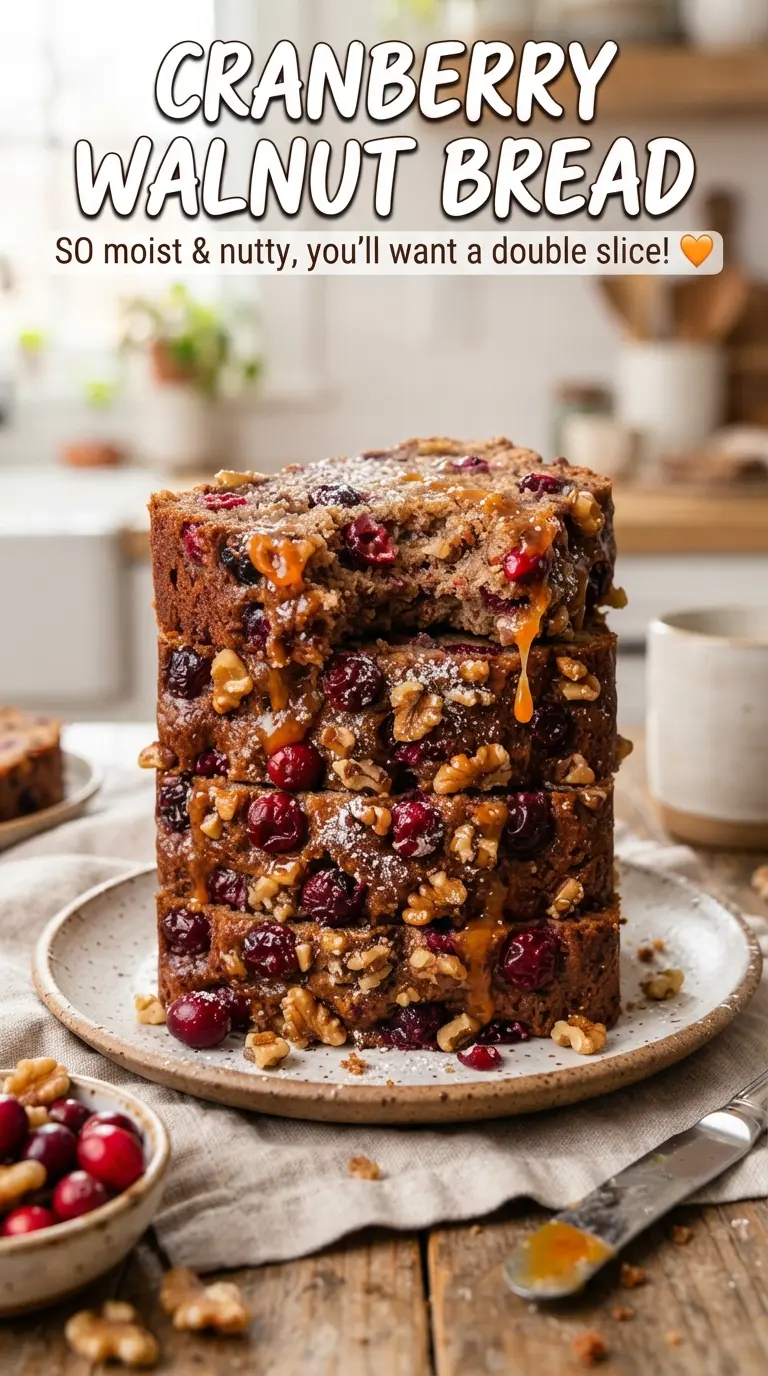
- Orange zest and orange juice — This is what gives the bread lift and keeps the cranberries from tasting too sharp. The zest carries the strongest citrus flavor, so don’t skip it. If you need to substitute, use lemon juice and zest for a brighter, more tart loaf, but the result will taste less rounded.
- Melted butter — Melted butter gives the loaf a moist, dense-crumb tenderness that oil doesn’t quite match. It also helps the bread taste rich without feeling heavy. If you only have neutral oil, the bread will still work, but it loses that bakery-style flavor.
- Fresh or frozen cranberries — Either one works here. Fresh berries give clean tart bursts, while frozen cranberries are a little softer and can bleed color into the crumb if they thaw first. Chop them roughly so each slice gets even fruit without giant wet pockets.
- Toasted walnuts — Toasting wakes up the nut flavor and keeps the walnuts from tasting bland against the sweet batter. Raw walnuts will work in a pinch, but the bread tastes flatter. If you need a nut-free loaf, use an equal amount of extra cranberries or add chopped dried cranberries for more chew.
- Egg — The egg binds everything together and helps the loaf rise with a finer crumb. There isn’t a perfect egg replacement for this style of quick bread, but a flax egg can work if needed; expect a slightly more fragile texture.
How to Mix and Bake It So the Center Sets Cleanly
Mixing the Dry Base
Start by whisking the flour, sugar, baking powder, baking soda, salt, and orange zest together until the zest looks evenly scattered through the flour. That rubbing motion helps release the oils from the zest so the loaf smells like citrus from the first slice. If you see clumps of zest, break them up now rather than trying to fix them later in the wet batter.
Combining the Wet Ingredients
Whisk the orange juice, egg, melted butter, and vanilla until the mixture looks glossy and fully blended. The butter can be warm, but it shouldn’t be hot enough to scramble the egg. If the butter starts to separate after you add it, keep whisking for another few seconds; it will come together once the liquid ingredients emulsify.
Folding in the Fruit and Nuts
Stir the wet mixture into the dry just until the flour disappears, then fold in the cranberries and walnuts. A few streaks of flour are better than an overmixed batter. Transfer the batter to the pan and spread it into the corners without pressing it down hard, or you’ll pack out the air pockets that give the loaf its lighter texture.
Knowing When It’s Done
Bake at 350°F until the top is deep golden and a toothpick in the center comes out clean or with only a few moist crumbs. If the top browns too fast before the center is done, lay a loose piece of foil over the loaf for the last 10 to 15 minutes. Let it rest in the pan for 10 minutes before turning it out, then cool it completely on a rack so the crumb sets instead of turning gummy when you slice it.
Three Useful Ways to Adjust This Cranberry Walnut Bread
Gluten-Free Version
Use a 1:1 gluten-free baking flour that includes xanthan gum. The loaf will still slice well, but it may be a touch more delicate, so let it cool fully before cutting. Don’t swap in almond flour alone here; it won’t give the structure this quick bread needs.
Dairy-Free Version
Replace the melted butter with an equal amount of neutral oil or melted plant butter. Oil gives the softest crumb and keeps the loaf moist for days, while plant butter brings a little more richness. Either one works cleanly because the batter already has plenty of flavor from the orange and cranberries.
Nut-Free Loaf
Leave out the walnuts and replace them with extra cranberries or chopped dried cranberries for more chew. You’ll lose the toasted, buttery crunch, but the bread will still have good contrast from the tart fruit. If you want a little texture back, sunflower seeds are the closest swap, though they bring a slightly earthier flavor.
How to Store It
- Refrigerator: Store tightly wrapped for up to 5 days. The crumb firms up in the fridge, so the slices taste best once they’ve had a few minutes at room temperature.
- Freezer: This bread freezes well. Wrap the cooled loaf or individual slices in plastic, then tuck them into a freezer bag for up to 3 months.
- Reheating: Warm slices in a toaster oven or low oven until just heated through. Avoid blasting it in the microwave, which makes the crumb rubbery and dulls the walnut texture.
Answers to the Questions Worth Asking
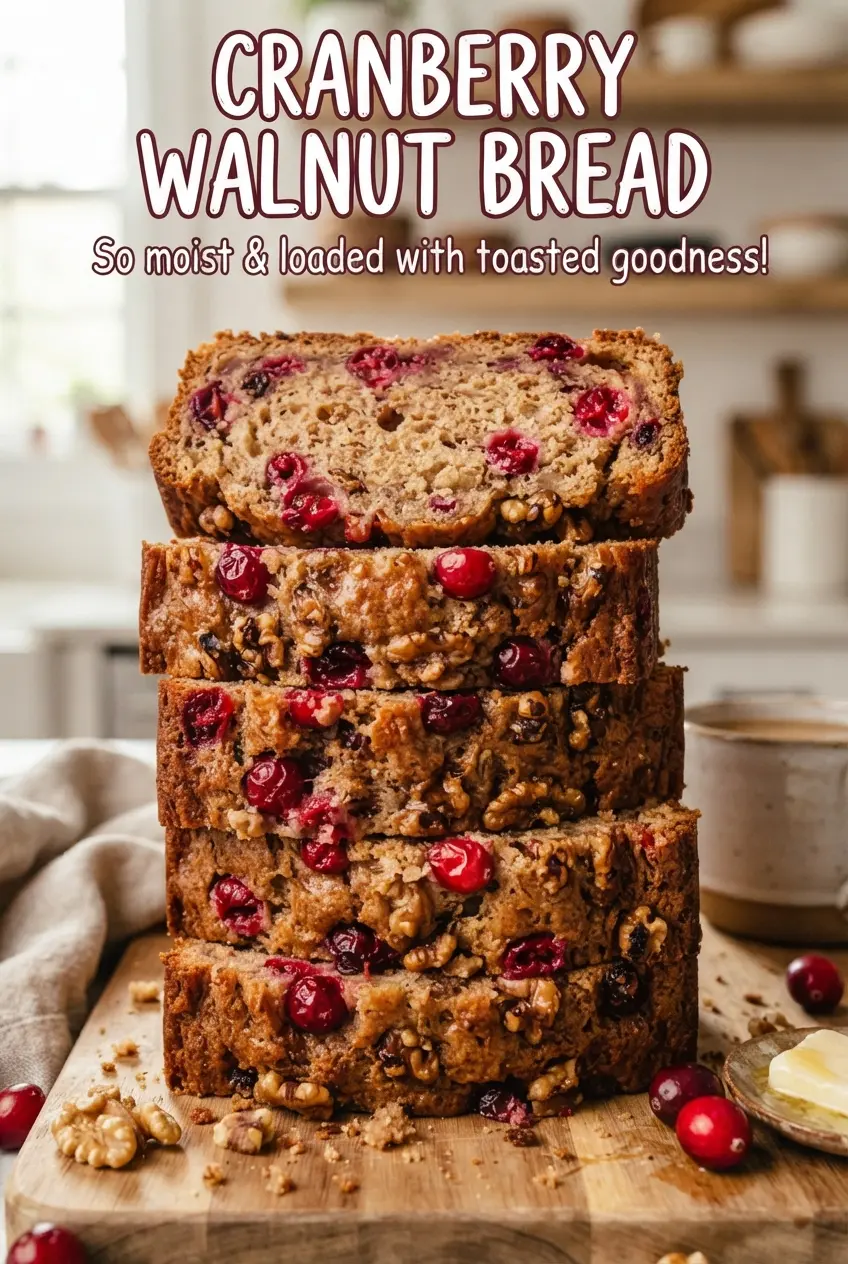
Cranberry Walnut Bread
Ingredients
Equipment
Method
- Preheat oven to 350F and grease and line a 9x5-inch loaf pan.
- Whisk all-purpose flour, sugar, baking powder, baking soda, salt, and orange zest in a bowl until evenly combined.
- Whisk orange juice, egg, melted butter, and vanilla in a separate bowl until smooth and fully blended.
- Stir the wet ingredients into the dry just until moistened, stopping as soon as no dry streaks remain.
- Fold in cranberries and walnuts, then spread the thick batter into the prepared loaf pan.
- Bake at 350F for 55-60 minutes, until golden and a toothpick comes out clean.
- Cool the loaf in the pan for 10 minutes, then transfer to a rack to cool fully before slicing.