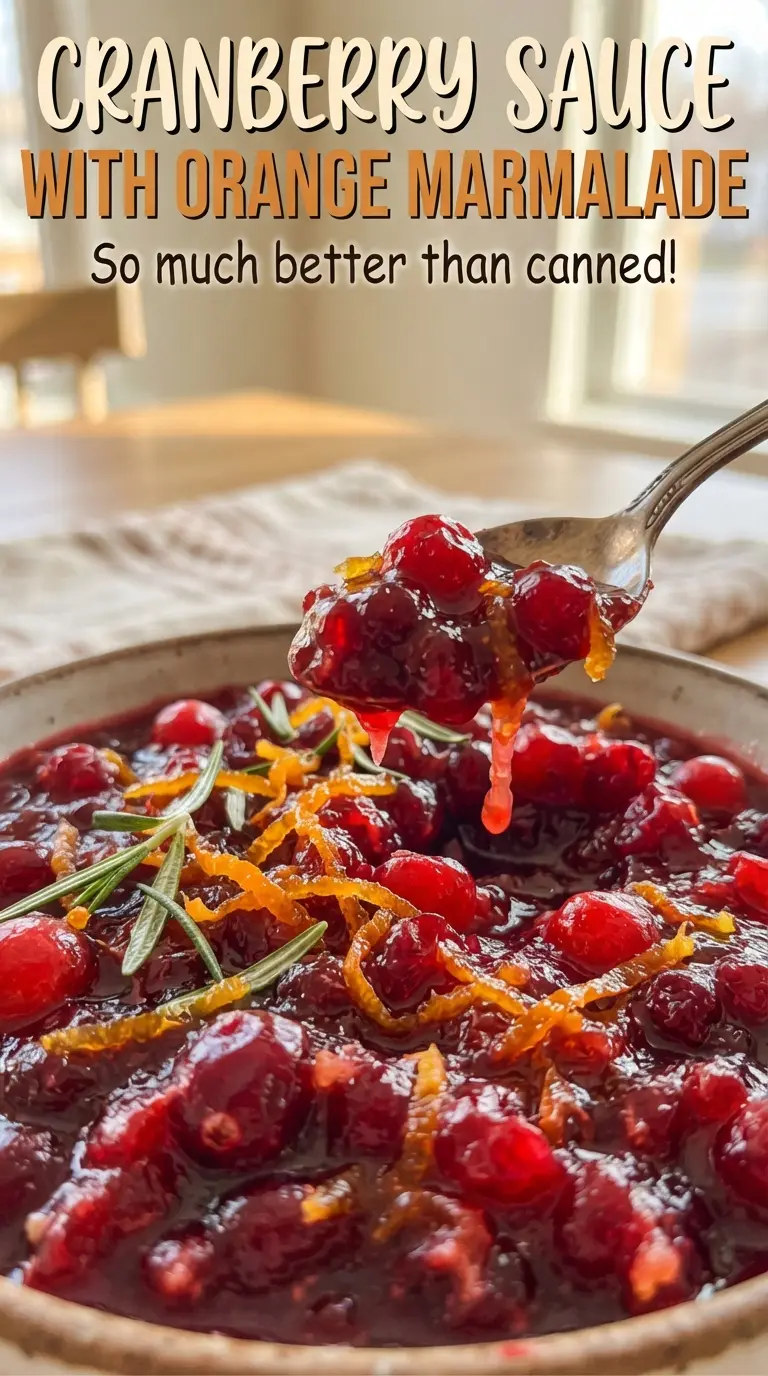
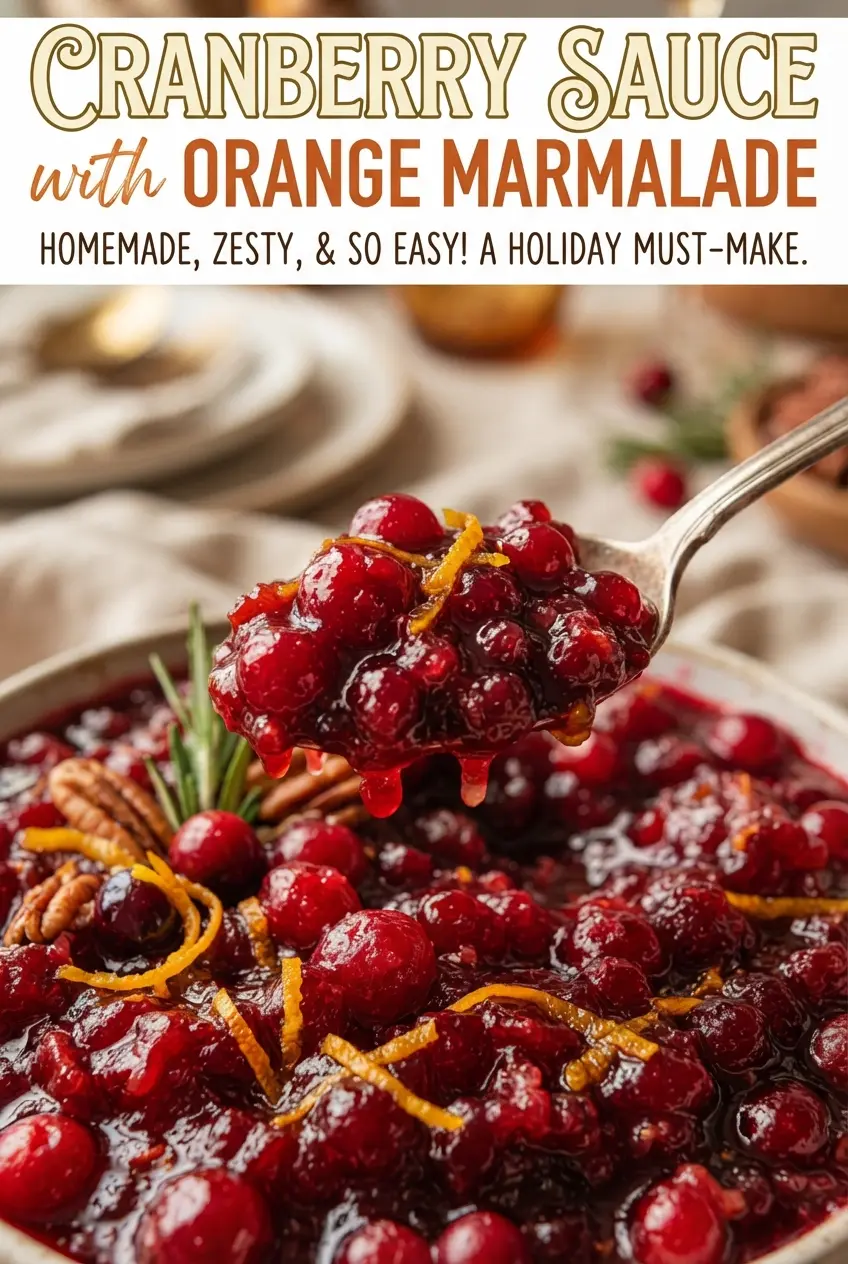
Glossy cranberry sauce with orange marmalade turns the usual tart-sweet side into something brighter, silkier, and a little more interesting on the plate. The cranberries still bring that pop of sharp fruit, but the marmalade rounds the edges with orange peel, a gentle bitterness, and a shine that feels finished instead of just cooked down.
The trick is timing. The berries need a short simmer just until they burst, then the marmalade goes in at the end so its peel stays lively instead of dissolving into the pot. A little lemon juice keeps the sauce from leaning too sweet, and the final chill gives it the thick, spoonable texture people expect from a good cranberry sauce.
Below you’ll find the small details that make this version work: when to stop simmering, how to tell if it needs another minute, and a few smart ways to adapt it if you’re working with what’s already in the pantry.
The marmalade gave it this glossy finish and little bits of orange peel that made the whole sauce taste fresh, not just sweet. It set up beautifully after chilling.
Save this cranberry sauce with orange marmalade for a glossy, bright-tasting side with real citrus peel and no canned-sauce texture.
The Part That Keeps Cranberry Sauce From Turning Watery
Cranberries carry their own pectin, which is why this sauce sets up after it cools, but that only happens when you cook long enough for the berries to burst and the liquid to reduce a little. If you pull it too soon, you get tart berry soup instead of a sauce that holds its shape on a spoon.
The marmalade matters here because it adds sweetness and texture at the same time, but it also brings extra moisture. That’s why it goes in after the cranberries have already started to break down. Stir it in at the end, let it bubble for a minute or two, and stop once the sauce looks glossy and slightly thickened. It will tighten more in the fridge.
What the Orange Marmalade Is Doing Here
- Fresh cranberries — These are the backbone of the sauce. You need their natural pectin and sharp flavor for the sauce to set and stay bright. Frozen cranberries work too; use them straight from the freezer and add a minute or two to the simmer.
- Orange marmalade — This gives the sauce its orange peel texture, citrus aroma, and gentle bitterness. A good marmalade with visible peel makes a better result than a smooth orange spread, because the peel stays distinct in the finished sauce.
- Lemon juice — A small amount keeps the sauce from tasting flat or sugary. If your marmalade is very sweet, don’t skip it; the acid sharpens the cranberry flavor and keeps the whole thing lively.
- Sugar — White sugar is the cleanest choice here because it dissolves quickly and lets the cranberry and orange flavors stay front and center. You can reduce it a little if your marmalade is especially sweet, but cutting it too far leaves the sauce aggressively tart.
From Boil to Glossy Finish Without Overcooking It
Starting the Syrup
Bring the sugar and water to a boil first so the berries hit a hot, evenly sweetened base. You’re looking for the sugar to dissolve completely and the liquid to look clear, not cloudy or grainy. If you add the cranberries too early, the sugar can cling unevenly and the sauce cooks less predictably.
Letting the Berries Burst
Add the cranberries and keep the pot at a steady simmer. Within a few minutes, you’ll hear soft pops as the skins split. Stir occasionally and watch for most of the berries to collapse; if the heat is too low, they’ll sit there and wrinkly instead of turning into sauce, and if it’s too high, the bottom can scorch before the fruit breaks down.
Finishing with Marmalade
Stir in the marmalade, lemon juice, and salt once the cranberries have burst. This is the stage that gives the sauce its sheen, so let it cook just 2 to 3 minutes longer until it looks jammy and glossy. Pull it off the heat before it gets too thick, because it sets up a lot more as it cools.
Cooling for the Right Texture
Transfer the sauce to a bowl and let it cool before chilling. It will still look loose when warm, but that’s normal. The texture firms as the pectin sets, and if you serve it straight from the stove it can seem thinner than it really is.
How to Adjust This Sauce Without Losing What Makes It Work
Use frozen cranberries when that’s what you have
Frozen cranberries work without thawing, and they’ll still burst and thicken the sauce properly. Add about 1 to 2 extra minutes to the simmer if needed, but don’t wait for every berry to fully dissolve before adding the marmalade.
Swap in less sugar for a tarter finish
You can reduce the sugar slightly if you like a sharper sauce, but don’t cut it too far or the texture gets looser and the marmalade starts to dominate. The sauce should still taste balanced when warm, because the tartness softens a bit after chilling.
Make it citrus-free if needed
If you don’t have marmalade, use orange zest plus a little extra sugar and simmer it with the cranberries. You’ll lose the peel texture and a bit of that bittersweet edge, but the sauce will still read as bright and fruity.
Storage and Reheating
- Refrigerator: Store in an airtight container for up to 1 week. It thickens as it chills, so expect a firmer spoonable texture the next day.
- Freezer: It freezes well for up to 2 months. Thaw overnight in the fridge and stir well after thawing, since the texture can loosen a little.
- Reheating: Serve it cold or let it come to room temperature. If you warm it, do it gently over low heat just until loosened; boiling it again can make it lose the fresh citrus notes and turn overly soft.
Questions I Get Asked About This Recipe
Cranberry Sauce with Orange Marmalade
Ingredients
Equipment
Method
- Bring the sugar and water to a boil in a saucepan over medium-high heat, stirring until the sugar dissolves and you see an active bubbling surface (about 2-3 minutes). Visually confirm the liquid is clear and rolling with steady bubbles.
- Add the fresh cranberries and reduce to a gentle simmer, then cook for 10 minutes until most berries burst. Watch for popping skins and a thickening purple-red sauce that coats the spoon.
- Stir in the orange marmalade, lemon juice, and salt, mixing until the color turns glossy golden-red with no streaks of marmalade. Keep the heat at a simmer so the mixture loosens and blends smoothly.
- Simmer for 2-3 minutes until glossy and slightly thickened. You should see a smooth, shiny sheen that holds briefly on the surface of the sauce.
- Cool the sauce to room temperature, then cover and chill until set, about 15 minutes. The surface should look thicker and more opaque after chilling.
- Serve chilled. Spoon the sauce into a bowl so the marmalade streaks remain visible on top.


