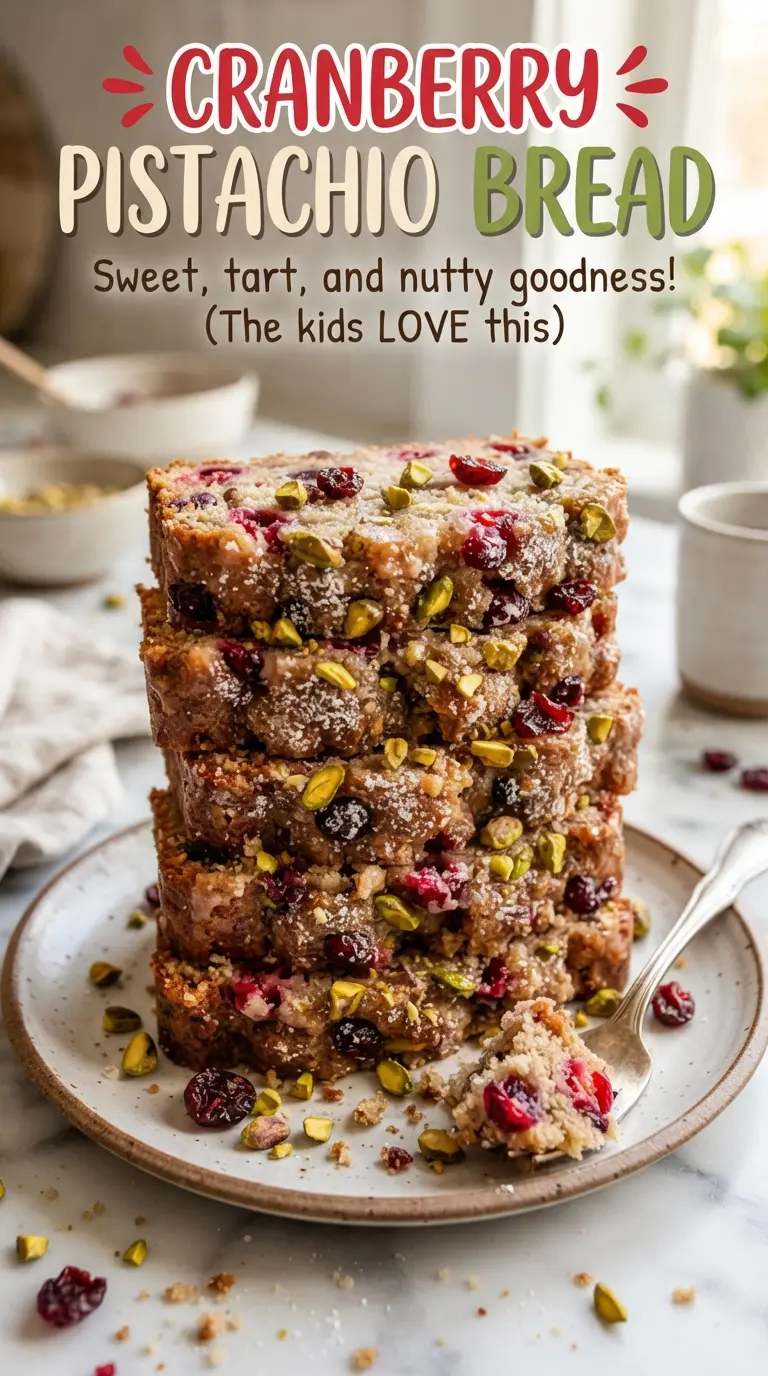
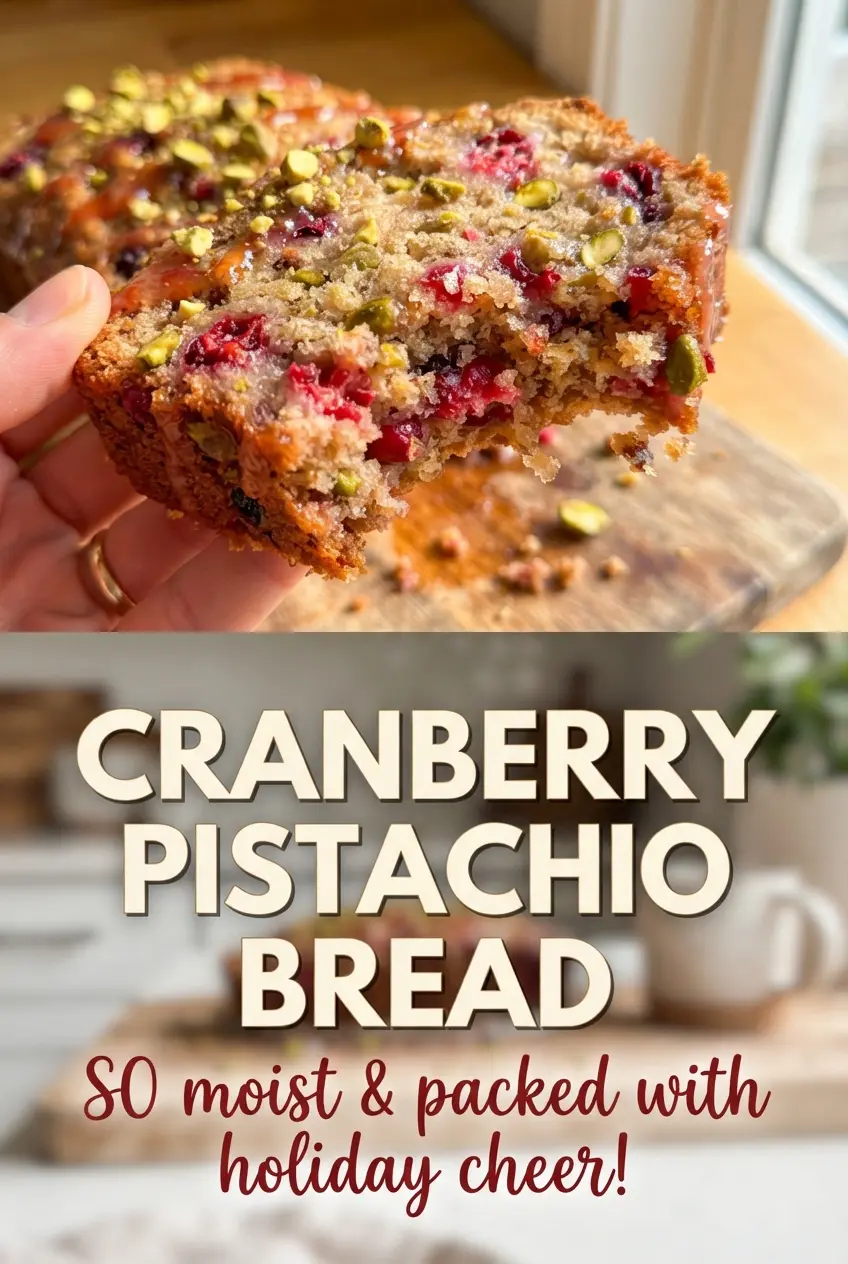
Cranberry pistachio bread is the kind of loaf that disappears fast because it hits three things at once: tender crumb, bright citrus, and little pockets of tart fruit that wake up every bite. The pistachios bring a gentle crunch and a buttery note, while the orange glaze on top gives the loaf a clean finish instead of making it feel heavy.
What makes this version work is the way the sugar and orange zest are rubbed together first. That small step pulls the oils from the zest right into the sugar, so the whole loaf tastes more fragrant without needing extra extract. Yogurt keeps the crumb soft and moist, and the batter stays light because it’s mixed just until the flour disappears. Overmix it, and the loaf turns tight; stop when there are still a few streaks, and it bakes up tender.
Below you’ll find the exact cues I watch for when the loaf is done, plus the swaps I trust when I only have sour cream or frozen cranberries on hand.
The crumb stayed super tender, and the cranberries didn’t sink at all. I loved how the orange glaze cut through the tart fruit and the pistachios stayed crunchy on top.
Save this cranberry pistachio bread for the times you want a soft citrus loaf with tart berries and a crunchy pistachio finish.
The Trick to Keeping the Cranberries Evenly Suspended
The biggest problem with fruit loaf is simple: the add-ins sink, and the bottom turns dense before the center is set. This recipe avoids that by using a batter that’s thick enough to hold the cranberries and pistachios, but still loose enough to spread without smearing. The chopped nuts help with structure, while the yogurt gives the batter enough body that the fruit doesn’t slide to the pan while it bakes.
Fresh or frozen cranberries both work here, but they need to be halved. Whole berries are too heavy for a quick bread batter and can leave large wet pockets. If you’re using frozen cranberries, add them straight from the freezer and fold them in at the very end so they don’t bleed too much color into the batter. That keeps the crumb bright and the fruit distinct.
What Each Ingredient Is Doing in the Loaf
- Orange zest — Rubbing it into the sugar pulls out the oils and makes the loaf taste more intensely orange without adding bitterness. Don’t skip that step; it’s the easiest way to get the most flavor from one fruit.
- Plain yogurt or sour cream — Either one keeps the crumb soft and moist. Yogurt gives a slightly lighter finish, while sour cream makes the loaf a touch richer; both work because the acidity also helps the baking soda do its job.
- Butter, melted — Melted butter gives the loaf a tender, even texture and a clean buttery flavor. Use real butter here instead of oil if you want the pistachios and orange to taste fuller and less flat.
- Cranberries — Fresh cranberries stay bright and tart; frozen cranberries work too if you fold them in at the last second. Halving them matters because it helps the fruit distribute evenly and keeps big pockets of juice from forming.
- Pistachios — They’re not just garnish. They bring crunch and a mild nuttiness that balances the sharp cranberries, and the chopped pieces are small enough to stay suspended through the batter.
- Orange juice in the batter and glaze — In the loaf, it softens the citrus edge and loosens the batter just enough; in the glaze, it keeps the icing from tasting one-dimensional. Fresh juice tastes best here because bottled juice can taste dull after baking.
Mixing the Batter Without Toughening the Crumb
Building the Citrus Base
Start by rubbing the sugar and orange zest together until the sugar looks slightly damp and smells strongly of orange. That’s where the fragrance lives, and it distributes far better than tossing zest into the batter at the end. Whisk in the eggs, yogurt, melted butter, orange juice, and vanilla until the mixture looks smooth and glossy.
Bringing the Dry and Wet Together
Whisk the flour, baking powder, baking soda, and salt in a separate bowl, then add it to the wet mixture in one go. Stir only until the flour disappears and no dry pockets remain. If you keep mixing past that point, the loaf turns chewy instead of tender, and you’ll lose the soft crumb that makes quick bread worth baking.
Folding in Fruit and Nuts
Add the cranberries and half of the pistachios last, folding gently with a spatula so the batter stays thick and airy. The batter should look chunky, not smooth. Scrape it into the pan and level the top without pressing it down; packing it tight makes the center bake up dense and damp.
Knowing When It’s Done
Bake until the top is golden and a toothpick inserted in the center comes out clean or with a few moist crumbs, usually 55 to 60 minutes. If the top browns before the center is set, tent it loosely with foil for the last stretch of baking. Let the loaf cool completely before glazing or it will slide right off and disappear into the crumb.
Ways to Adjust the Loaf Without Losing What Makes It Good
Make It Dairy-Free
Use a thick dairy-free yogurt in place of the plain yogurt or sour cream, then swap the butter for melted coconut oil or a neutral plant butter. The loaf will still be tender, though coconut oil adds a faint flavor that works best if you like a little extra richness.
Swap the Pistachios
Chopped walnuts or pecans can step in for pistachios if that’s what you have. Walnuts taste a little earthier, pecans a little sweeter, but both keep the loaf from feeling soft all the way through and still give you that good top crust after baking.
Use Frozen Cranberries
Frozen cranberries work well here, and there’s no need to thaw them. Fold them in straight from the freezer so they hold their shape and stay from bleeding too much color into the batter. The loaf may need an extra few minutes in the oven if the berries are very cold.
Skip the Glaze for a Less Sweet Slice
Leave the glaze off and finish the cooled loaf with a light sprinkle of chopped pistachios instead. The bread tastes brighter and more breakfast-like without the extra sugar, and the orange in the batter still gives it plenty of character.
Storage and Reheating
- Refrigerator: Store covered for up to 4 days. The crumb stays moist, though the pistachios soften a little after day two.
- Freezer: Freeze the unglazed loaf or individual slices tightly wrapped for up to 2 months. Thaw at room temperature, then glaze after it’s fully defrosted for the cleanest finish.
- Reheating: Warm slices briefly in a toaster oven or low oven. Skip the microwave if you can; it softens the crumb too fast and makes the pistachios lose their crunch.
Answers to the Questions Worth Asking
Cranberry Pistachio Bread
Ingredients
Equipment
Method
- Preheat oven to 350F, then grease and line a 9x5-inch loaf pan.
- Rub sugar and orange zest together until fragrant.
- Whisk in eggs, one at a time, until the mixture looks smooth.
- Whisk in plain yogurt or sour cream, melted butter, orange juice, and vanilla extract until combined.
- Whisk all-purpose flour, baking powder, baking soda, and salt in a separate bowl.
- Fold the dry mixture into the wet mixture just until no dry streaks remain, and stop as soon as it comes together.
- Fold in cranberries and 1/2 cup pistachios, then spread the batter evenly into the prepared loaf pan.
- Bake at 350F for 55-60 minutes, until a toothpick comes out clean.
- Cool the loaf completely before glazing, so the glaze sits on top instead of sinking in.
- Whisk powdered sugar with 2 tablespoons orange juice until smooth and pourable.
- Drizzle the glaze over the cooled loaf, then sprinkle with the remaining pistachios as a final visual cue.


