Cranberry orange relish wakes up a plate in a way cooked sauces can’t. It stays bright, sharp, and a little crunchy, with the cranberry skins giving it a fresh bite instead of turning into a jammy paste. The orange softens the tart edge just enough, and the sugar draws out juices while the mixture chills so everything settles into a glossy, spoonable relish.
The trick is in the texture. Pulse the cranberries and orange just until they’re finely chopped; if you run the food processor too long, you’ll lose the little bits that make this relish feel fresh. Using the orange unpeeled adds aroma and a touch of bitterness from the peel, which keeps the whole bowl from tasting flat. A small splash of orange liqueur deepens the citrus note, but orange juice works well if you want to keep it alcohol-free.
Below you’ll find the exact chop I look for, why the chilling time matters, and a few ways to adjust the sweetness without throwing off the balance.
I chilled it overnight and the texture was perfect — bright, spoonable, and not watery at all. The orange zest came through in every bite, and it was even better the next day after the sugar had fully dissolved.
Save this cranberry orange relish for the bright, crunchy side dish that gets better after a night in the fridge.
The Chill Time Is What Turns Chopped Fruit Into Relish
The biggest mistake with cranberry orange relish is serving it too soon. Right after mixing, the sugar is still sitting on the surface and the fruit tastes a little rough around the edges. After a few hours in the fridge, the cranberries soften just enough to release juice, the orange mellows, and the whole mixture turns glossy instead of grainy.
That resting time also matters for balance. The tart cranberries need time to meet the sugar, and the orange peel needs time to lose its sharpness. If you want a relish that tastes rounded instead of harsh, don’t rush it.
- Pulse, don’t puree. Fine pieces hold their shape and give the relish its fresh texture.
- Seed the orange before chopping. Any seeds left in the bowl can make the relish bitter.
- Use the peel for aroma. The peel adds brightness that orange juice alone can’t match.
- Chill overnight if you can. The flavor gets cleaner and the sugar fully blends in.
What Each Ingredient Is Actually Doing In This Relish
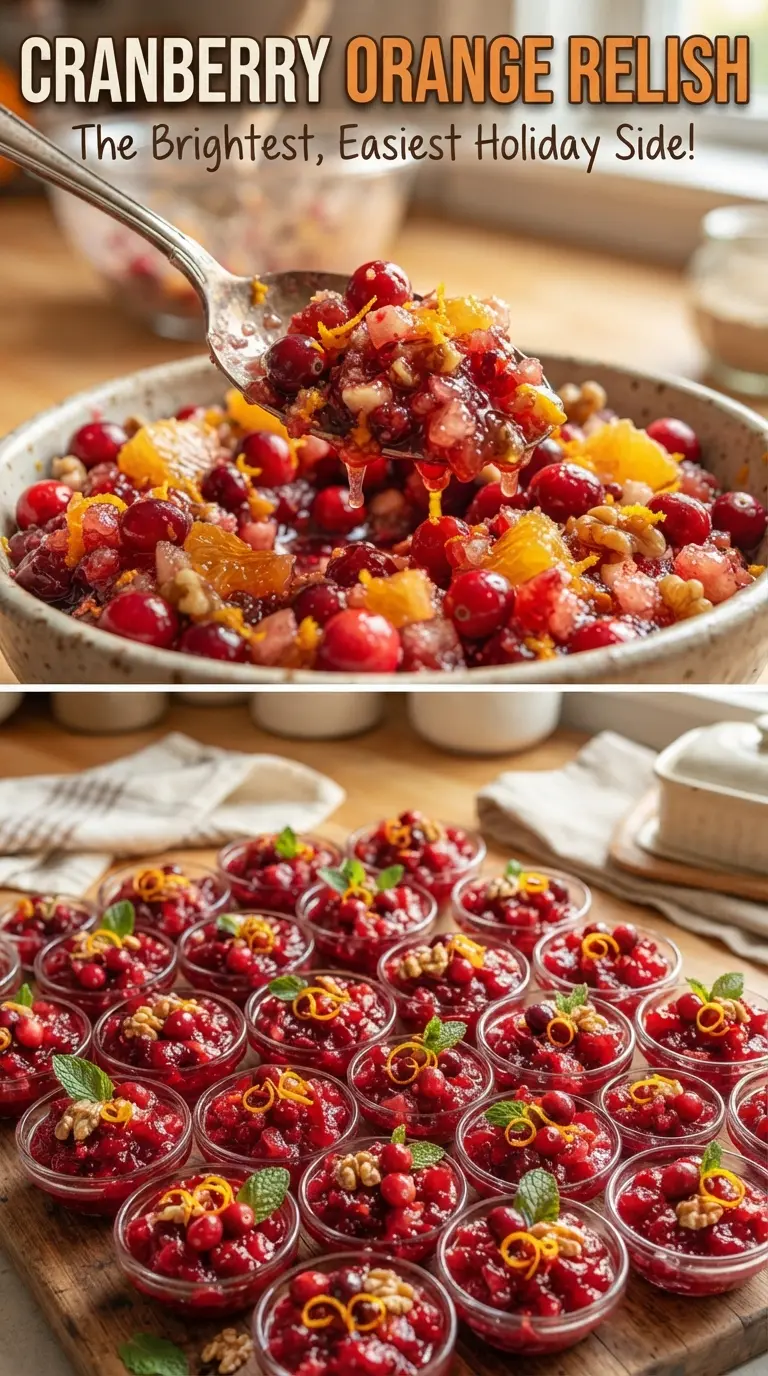
- Fresh cranberries — These bring the tart backbone and the crisp, juicy bite. Frozen cranberries can work in a pinch if they’re thawed and well-drained, but fresh berries hold their shape a little better and give a cleaner texture.
- Navel orange — The whole orange does more than add sweetness. The peel carries essential oils that perfume the relish, and the flesh adds juice and body. Seed it well so you don’t end up blending in bitterness.
- Sugar — This isn’t just for sweetness; it pulls moisture from the fruit and softens the sharp cranberry edge. You can reduce it a little, but don’t cut it too far or the relish will taste lean and aggressive instead of balanced.
- Orange liqueur or orange juice — The liqueur gives a deeper citrus note and a little warmth. Orange juice is the easiest substitute, and it keeps the relish fully family-friendly without changing the texture much.
- Pinch of salt — It doesn’t make the relish salty. It sharpens the fruit and keeps the sweetness from tasting one-note.
How to Pulse, Chill, and Serve It Without Losing the Texture
Getting the Chop Right
Add the cranberries and orange chunks to a food processor and pulse in short bursts until everything is finely chopped but not smooth. You want tiny pieces, not a paste. If the mixture turns mushy, it will release too much liquid and the finished relish will look wet instead of jewel-like.
Mixing in the Sweeteners
Scrape the chopped fruit into a bowl and stir in the sugar, orange liqueur or juice, and salt. The sugar may look like too much at first, but it needs time to dissolve into the fruit juices. Stir thoroughly so there are no dry pockets hiding at the bottom of the bowl.
Letting the Relish Rest
Cover the bowl and chill it for at least 4 hours, though overnight is even better. The mixture will look loose at first, then thicken slightly as the sugar draws out liquid and the flavors blend. If it seems watery when you first stir it, that’s normal; give it more time in the fridge.
Finishing Before Serving
Stir the relish well before spooning it into a serving dish. The juices settle while it chills, and a quick stir brings everything back together. Garnish with fresh mint right at the end so it stays bright and doesn’t wilt into the fruit.
Three Ways to Adjust the Sweetness Without Ruining the Relish
Less sugar, sharper finish
Cut the sugar by 2 to 3 tablespoons if you want a tarter relish. The texture will still work, but the flavor will land more on the bright, puckery side and won’t taste as rounded after chilling.
Orange juice instead of liqueur
Use the same amount of orange juice in place of the liqueur for a fully alcohol-free version. You’ll get a cleaner citrus note and a slightly lighter finish, which works well if the relish is serving alongside richer dishes.
Make it ahead for the table
This relish is one of those dishes that improves as it sits, so making it a day ahead is the best move. The flavors meld, the sugar dissolves fully, and the texture becomes more cohesive without any extra effort.
Storage and Reheating
- Refrigerator: Store covered for up to 1 week. The texture softens slightly as it sits, but the flavor stays bright.
- Freezer: It freezes well for up to 2 months, though the texture gets softer after thawing. Freeze in a sealed container and thaw in the fridge.
- Reheating: No reheating needed. Serve it cold or cool from the fridge; warming it will make it lose the fresh, crisp character that makes it work.
Answers to the Questions Worth Asking
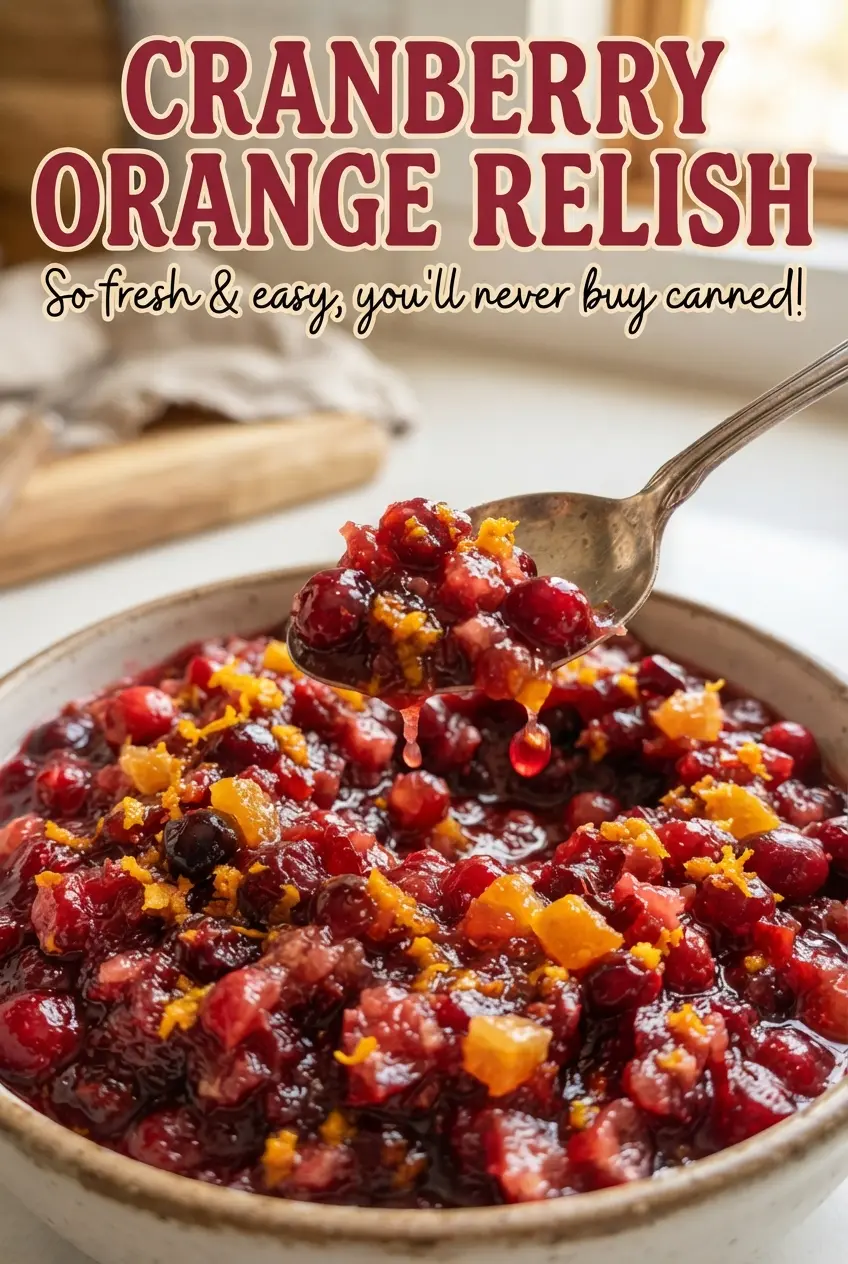
Cranberry Orange Relish
Ingredients
Equipment
Method
- Pulse the cranberries and orange chunks in a food processor until finely chopped but not pureed, scraping down the sides if needed. Stop as soon as the mixture looks like small, even pieces rather than a smooth puree.
- Transfer the chopped mixture to a bowl and stir in the sugar, orange liqueur, and salt until the sugar looks moistened and evenly distributed. No heat is needed—keep the mixture bright and chunky.
- Cover and chill in the refrigerator for at least 4 hours or overnight. You should see it thicken slightly as it chills and the flavors blend.
- Stir well before serving so any liquid is evenly reabsorbed and the relish stays spoonable. Adjust to taste only if you think it needs more sweetness or salt.
- Garnish with fresh mint just before serving for a fresh green aroma and contrast. Serve cold or at cool room temperature.


