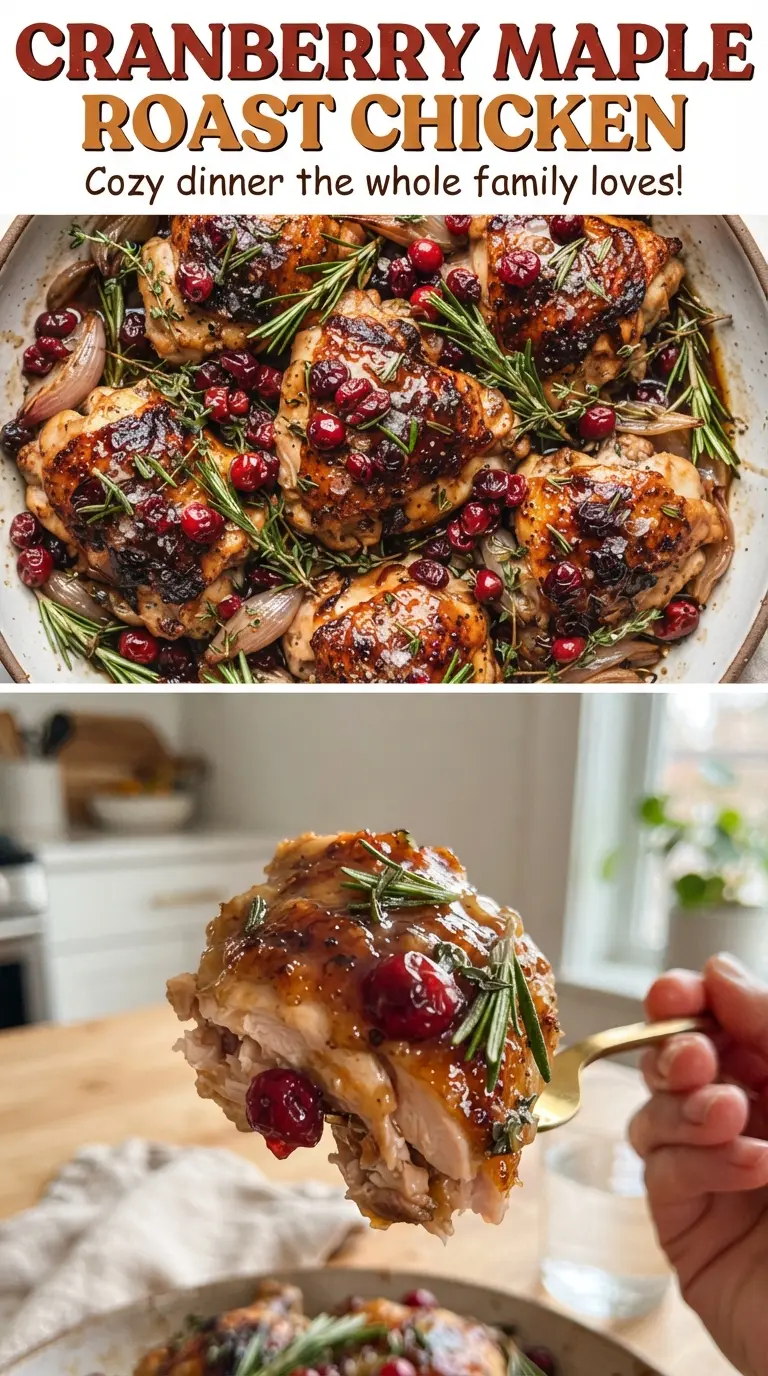
Crackly-skinned roast chicken with a glossy cranberry-maple glaze has a way of making dinner feel settled the second it comes out of the oven. The skin turns deep golden and lacquered, the cranberries burst into a tart little pan sauce, and the onions soften just enough to catch all that drippy sweetness. It looks special, but the method stays straightforward enough for a normal night when you want one pan to do the heavy lifting.
What makes this version work is the layering. Butter and rosemary go under and over the skin so the meat stays seasoned, the orange and garlic perfume the bird from the inside, and the maple-Dijon glaze goes on late so it doesn’t scorch before the chicken is cooked through. The cranberries don’t just decorate the pan; they break down with the broth and chicken drippings into a sauce that cuts through the richness.
Below you’ll find the exact timing that keeps the skin crisp, plus the small resting step that keeps all those juices where they belong. If you’ve ever ended up with pale skin or a sticky glaze that burned before the bird was done, this post walks through the fix.
The glaze thickened right on the chicken and the cranberries turned into the best pan sauce. The skin stayed crisp even after brushing on the maple mix, and the orange with the rosemary made the whole kitchen smell incredible.
Save this cranberry maple roast chicken for the kind of dinner that needs crispy skin, tart cranberries, and a glossy pan sauce in one pan.
The Trick to Keeping the Maple Glaze Glossy Instead of Burnt
The timing matters more than the ingredients here. Maple syrup has enough sugar to brown fast, so it can’t go on at the beginning or it will darken before the chicken reaches temperature. Roasting the bird first lets the skin render and tighten; adding the glaze only in the final stretch gives it time to cling and shine without turning bitter.
There is one more small thing that changes the outcome: the pan needs enough moisture from the broth and cranberry juices to keep the drippings from scorching. The cranberries burst while the chicken finishes, which helps thicken the sauce naturally. If your glaze looks a little loose when it goes into the oven, that is exactly right.
What the Butter, Cranberries, and Dijon Are Each Doing Here
- Butter — Softened butter under the skin helps season the meat all the way through and keeps the breast from drying out before the thighs are done. Cold butter won’t spread evenly, so let it sit out until it’s pliable.
- Fresh rosemary — Fresh rosemary gives the chicken a piney, savory edge that dried rosemary can’t quite match here. Chop it finely so it disappears into the butter instead of clumping on the skin.
- Orange — The orange halves perfume the cavity with acidity and aroma, which keeps the roast from tasting flat. Lemon will work in a pinch, but the orange plays better with maple and cranberry.
- Maple syrup and Dijon — This is the glaze’s backbone. Maple brings the shine and sweetness, while Dijon keeps it from reading like dessert and helps the sauce emulsify a little as it brushes over the skin.
- Cranberries — Fresh cranberries are worth using here because they burst in the oven and turn the pan drippings into a tart sauce. Frozen cranberries can work straight from the freezer; just don’t thaw them first or they’ll break down too early.
- Chicken broth — The broth keeps the bottom of the pan from burning and gives the sauce enough volume to spoon over the carved chicken. Homemade or boxed both work.
Roasting the Chicken in Two Moves So the Skin Stays Crisp
Seasoning Under and Over the Skin
Pat the chicken dry first. That matters more than most people think, because wet skin steams before it browns. Work the butter and chopped rosemary under the skin over the breast and thighs, then season the outside with salt and pepper. If the skin tears a little, don’t worry; just keep the butter in an even layer so the meat still gets that herb-scented richness.
The First Roast Before the Glaze
Set the chicken in the pan with the onion wedges around it and the garlic and orange inside the cavity. Roast it for the first 50 minutes before you touch the glaze. This gives the skin time to start rendering and turning golden, which is why the final brushing sticks instead of sliding off.
Glazing and Finishing Without Overcooking
Whisk the maple syrup and Dijon together, then brush on half of it and add the cranberries and broth to the pan. Roast 25 to 30 minutes more, brushing with the rest of the glaze once the first coat looks set and glossy. Pull the chicken when the thigh reaches 165°F; if the glaze darkens faster than that, lay a loose piece of foil over the top for the last few minutes.
Resting Before You Carve
Rest the chicken for 15 minutes before cutting into it. That pause keeps the juices from running across the cutting board and gives the cranberry pan sauce a minute to settle. Spoon the sauce over the carved meat instead of pouring it on all at once so the skin stays a little crisp.
Three Ways to Adapt This Roast Chicken Without Losing What Makes It Work
Dairy-Free Version
Swap the butter for a good olive oil or a plant-based butter that softens well. You won’t get quite the same rich dairy flavor under the skin, but the rosemary, orange, and cranberry glaze carry enough weight that the chicken still tastes layered and polished.
Using Frozen Cranberries
Frozen cranberries work straight from the bag. Add them in the same moment you’d add fresh ones, and don’t add extra liquid to compensate for them being cold; they release enough juice as they roast and keep the sauce bright instead of watery.
Smaller Chicken or Chicken Pieces
A smaller bird will finish sooner, and bone-in pieces will need less time than a whole chicken. The key is to keep the glaze for the last part of cooking so it doesn’t burn, then cook until the thickest piece hits 165°F. You lose the dramatic carving moment, but you gain easier serving and faster cooking.
Storage and Reheating
- Refrigerator: Store leftovers for up to 4 days. The skin softens, but the meat stays juicy.
- Freezer: Freeze carved chicken and pan sauce separately for up to 2 months. The cranberries thaw best when they’re not packed into the same container as the skin.
- Reheating: Reheat covered at 325°F with a spoonful of broth or sauce to keep the meat from drying out. Skip the microwave if you want the chicken to stay tender; it toughens the breast meat fast.
Answers to the Questions Worth Asking
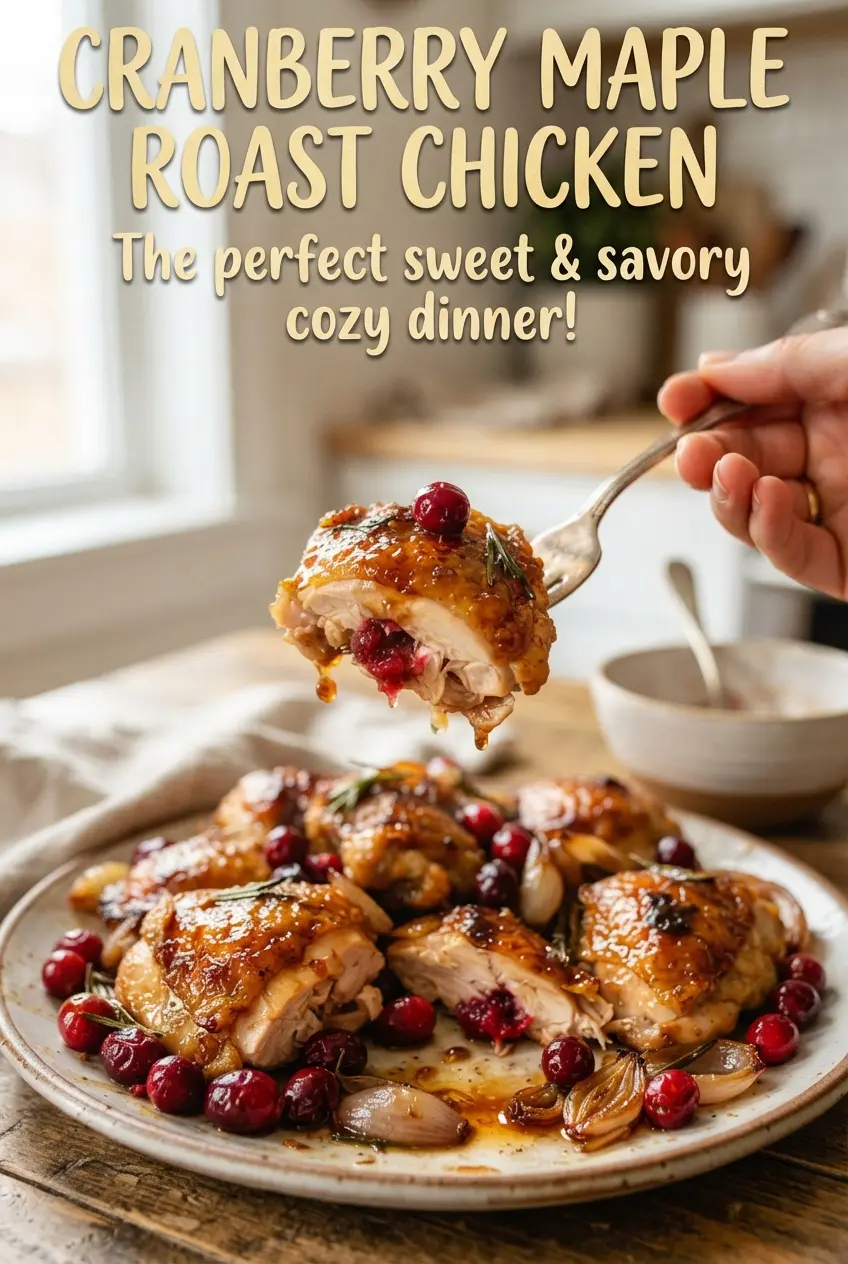
Cranberry Maple Roast Chicken
Ingredients
Equipment
Method
- Preheat the oven to 425F and set a roasting pan on a stable rack. Make sure the oven is fully heated before the chicken goes in so the skin browns quickly.
- Season the chicken inside and out with salt and black pepper. Patting the chicken dry first helps the seasoning and glaze adhere.
- Rub the softened butter mixed with chopped rosemary under and over the skin. Lift the skin gently so the butter spreads evenly for crisp, aromatic browning.
- Stuff the cavity with the orange halves and the garlic halves. This flavors the meat from the inside while the exterior crisps.
- Place the chicken in a roasting pan and tuck the onion wedges around it. Arrange the onion so it sits close to the chicken surface for caramelized pan juices.
- Roast the chicken for 50 minutes at 425F. Keep the pan in the center of the oven for even browning.
- Whisk the maple syrup with the Dijon mustard, then brush half of the glaze over the chicken. Add the cranberries and chicken broth to the pan around the chicken so they roast into the sauce.
- Roast 25-30 minutes more at 425F, brushing with the remaining glaze during the roast. Cook until the thigh reaches 165F; the glaze should look lacquered and deep golden.
- Rest the chicken for 15 minutes before carving. This helps the juices redistribute so the meat stays moist.
- Carve the chicken and spoon the cranberry pan sauce over the top. Serve hot with the roasted onions and cranberries from the pan.


