Golden, fruity, and just sweet enough, caramel apple sangria lands in that sweet spot between easy entertaining and a drink that actually tastes thought through. The apples and pear soften as they sit in the pitcher, the cinnamon pulls everything together, and the caramel gives the wine a round finish instead of a sugary one-note sip. It pours like a fall party in a glass, but it works any time you want something chilled, festive, and low-effort.
The trick is balance. Pinot grigio stays crisp enough to keep the drink from getting heavy, while apple cider gives it body and caramel vodka or caramel sauce adds that dessert-like edge without turning it cloying. Ginger ale goes in at the end so you keep the sparkle. If it sits in the pitcher too long, it loses the lift that makes the first pour so good.
Below, I’ve included the one step that keeps the caramel from clumping, plus a few smart swaps if you want to make this with what’s already in the fridge.
The caramel mixed right into the cider and wine once I whisked it longer, and the fruit picked up so much flavor after chilling. I loved that the ginger ale stayed fizzy when I added it at the end.
Save this caramel apple sangria for the next time you want a chilled pitcher drink with crisp apples, cinnamon, and a caramel rim.
The Secret to Keeping Caramel From Clumping in the Pitcher
The part that trips people up here is the caramel. If you pour thick caramel sauce straight into cold wine, it can seize into little streaks instead of blending. Whisk it with the cider first, or use caramel vodka if you want the smoothest result with the least effort. That gives you a base that disperses evenly before the wine and fruit go in.
Fruit timing matters too. The apples and pear need time to sit in the liquid so they take on flavor, but the ginger ale belongs at the very end. Add it early and the sangria goes flat before it reaches the table. You want the pitcher cold, fragrant, and lightly fizzy when it gets poured.
What Each Ingredient Is Doing in This Sangria
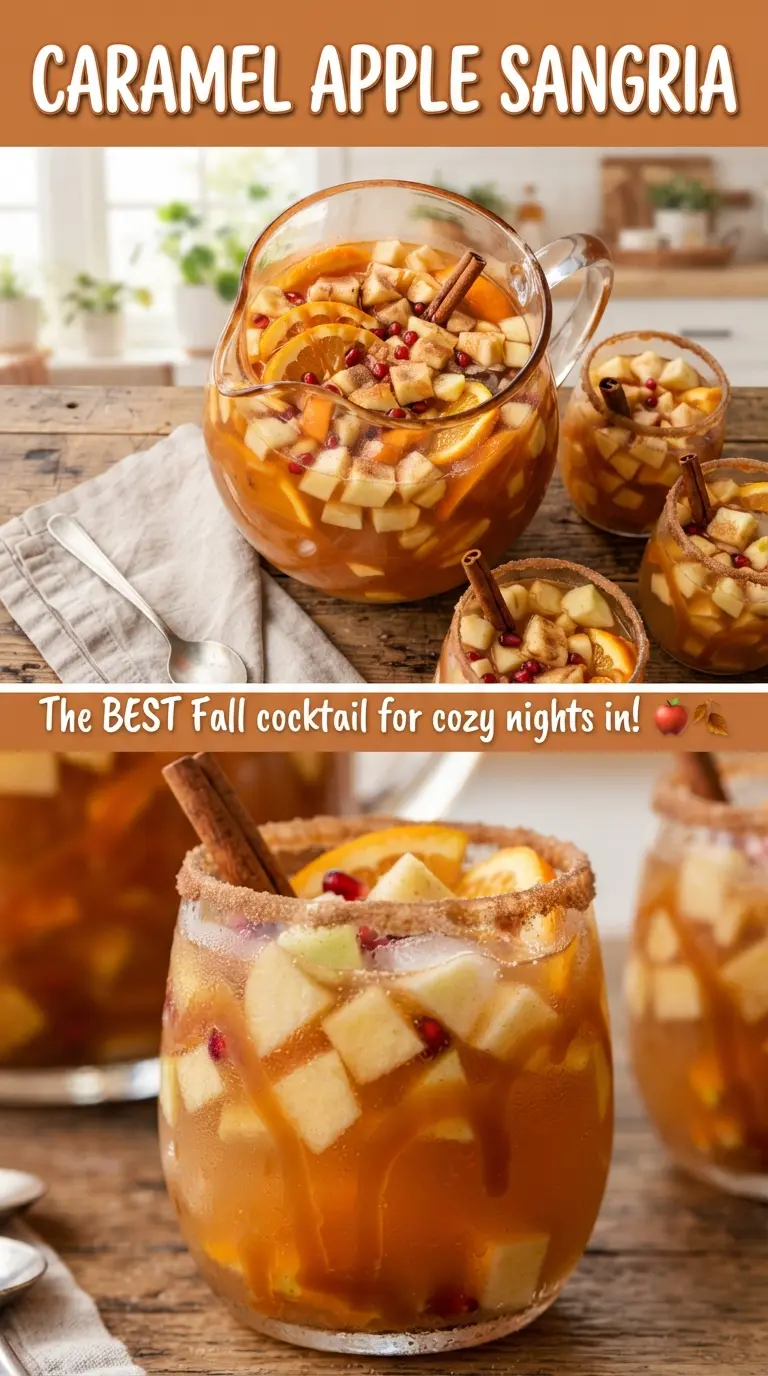
- Pinot grigio — This keeps the sangria bright and clean so the cider and caramel don’t turn it heavy. Any dry, crisp white wine will work, but avoid anything oaky or sweet or the drink starts tasting muddled.
- Apple cider — Use real cider here, not apple juice if you can help it. Cider has a deeper, fresher apple taste and enough texture to carry the caramel.
- Caramel vodka or caramel sauce — Vodka gives you the smoothest blend and the least fuss. If you use sauce, whisk it hard with the cider first so it disperses instead of settling in strings at the bottom.
- Apples and pear — These aren’t just garnish. Thin slices soak up the wine-cider mixture and turn into the best part of the glass after a couple of hours in the fridge.
- Cinnamon sticks — They infuse gently without making the sangria taste dusty or over-spiced. Ground cinnamon clouds the drink, so keep it to sticks.
- Ginger ale or club soda — Ginger ale adds a little sweetness and spice, while club soda keeps the finish cleaner. Either way, it goes in right before serving so the bubbles stay lively.
Building the Pitcher Without Losing the Sparkle
Mix the Base First
Start with the wine, apple cider, and caramel vodka or caramel sauce in a large pitcher. If you’re using sauce, whisk until the liquid looks evenly tinted and you don’t see caramel ribbons at the bottom. That base should smell like crisp apples and soft caramel, not like separated syrup.
Add the Fruit and Cinnamon
Drop in the apple slices, pear slices, and cinnamon sticks, then give everything a gentle stir. Thin slices matter because they soak faster and fit into glasses better. Chill the pitcher for at least 2 hours so the fruit has time to pick up the wine and spice without turning mushy.
Finish With Bubbles and Serve Cold
Right before serving, pour in the chilled ginger ale or club soda and stir once, just enough to combine. Rim the glasses with caramel and coarse sugar, then fill them with ice and a little fruit from the pitcher. If you add the bubbly too soon, it goes flat and the sangria loses the lift that makes it feel fresh.
Use Caramel Vodka for the Smoothest Finish
Caramel vodka blends in cleanly and gives you the most even texture, especially if you’re making this for a crowd. It also keeps the drink from getting too sweet, since the wine and cider stay in charge of the flavor.
Make It Without Alcohol
Replace the wine with more apple cider plus a splash of white grape juice, then use caramel syrup instead of vodka. You’ll still get the apple-caramel-cinnamon combination, just with a softer, juice-forward finish that works well for mixed-age gatherings.
Make It Lighter and More Crisp
Use club soda instead of ginger ale and a dry white wine with higher acidity. The drink will be less sweet and a little sharper, which is a good move if you want the fruit and caramel to stay in the background instead of taking over.
Storage and Batching Ahead
- Refrigerator: Mix the wine, cider, caramel, fruit, and cinnamon up to 24 hours ahead. It gets more flavorful overnight, though the fruit will soften.
- Freezer: Don’t freeze the finished sangria. The wine and carbonation won’t come back in a good way after thawing.
- Reheating: Not applicable. Keep it chilled and add the ginger ale only right before serving so the drink stays bright and fizzy.
Answers to the Questions Worth Asking
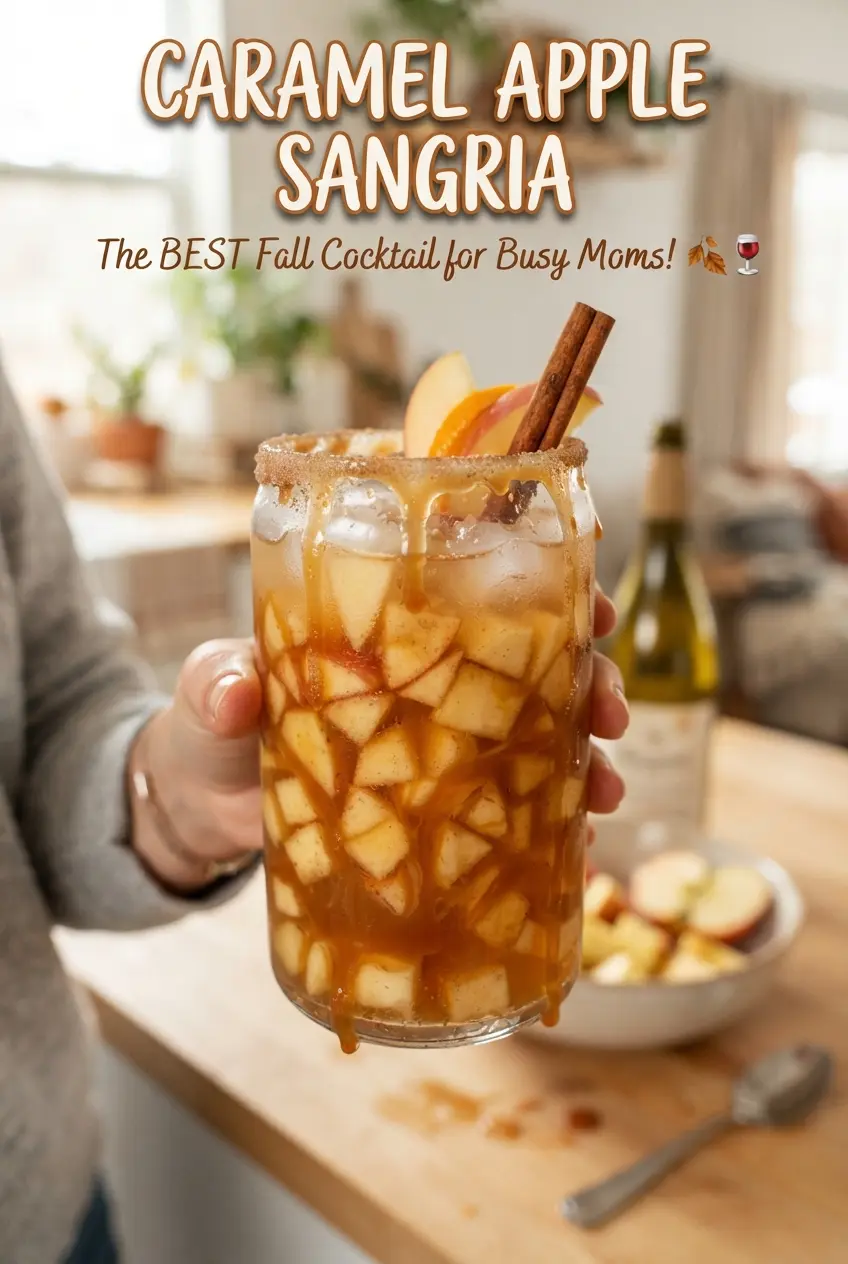
Caramel Apple Sangria
Ingredients
Method
- Combine the pinot grigio, apple cider, and caramel vodka (or caramel sauce) in a large pitcher, whisking well if using caramel sauce.
- Add the thinly sliced apples, pear slices, and cinnamon sticks to the pitcher and stir gently to distribute the fruit.
- Chill the pitcher at least 2 hours, so the fruit soaks up the flavor and the drink turns golden.
- Dip the glass rims in caramel, then in coarse sugar, and set the glasses aside to set.
- Top the pitcher with ginger ale (or club soda) just before serving, then pour over ice with some fruit in each glass.


