Caprese skewers disappear fast because they hit the plate with the best parts of a classic caprese salad in one clean bite: sweet tomatoes, creamy mozzarella, and basil that still tastes fresh instead of wilted. The balsamic glaze pulls everything together without drowning the cheese, so each skewer tastes bright, salty, and balanced.
The trick is keeping the ingredients dry and the basil folded instead of crammed flat against the skewer. Wet tomatoes or watery mozzarella will make the platter slippery and dull the flavor, while a light hand with the glaze keeps the tomatoes from tasting like dessert. I also like serving these at room temperature, since cold cheese mutes the mozzarella and makes the whole thing feel flatter than it should.
Below you’ll find the small details that make these taste like they came from a person who has made them for parties before: how to keep the basil from tearing, when to season, and what to change if you need to prep them ahead.
I was worried the basil would bruise, but folding the leaves before threading them kept the skewers neat, and the balsamic glaze stayed in place instead of sliding off. They were gone in minutes.
Save these Caprese skewers for a bright Italian appetizer with juicy tomatoes, creamy mozzarella, and a balsamic finish that never feels heavy.
The One Thing That Makes Caprese Skewers Taste Fresh Instead of Flat
The mistake people make with caprese skewers is treating them like a salad on a stick and piling everything on straight from the fridge. Cold mozzarella tastes firmer and less milky, and cold tomatoes can lose their sweetness, so the whole skewer reads muted instead of bright. Let the assembled skewers sit for a few minutes before serving, and the flavors wake up fast.
Another small thing matters here: the order of the ingredients. Folding the basil leaf once or twice gives you a neat layer of basil without tearing it, and placing it between the tomato and mozzarella protects it from being crushed by the skewer. That keeps the leaves looking fresh and keeps the basil oils where you want them.
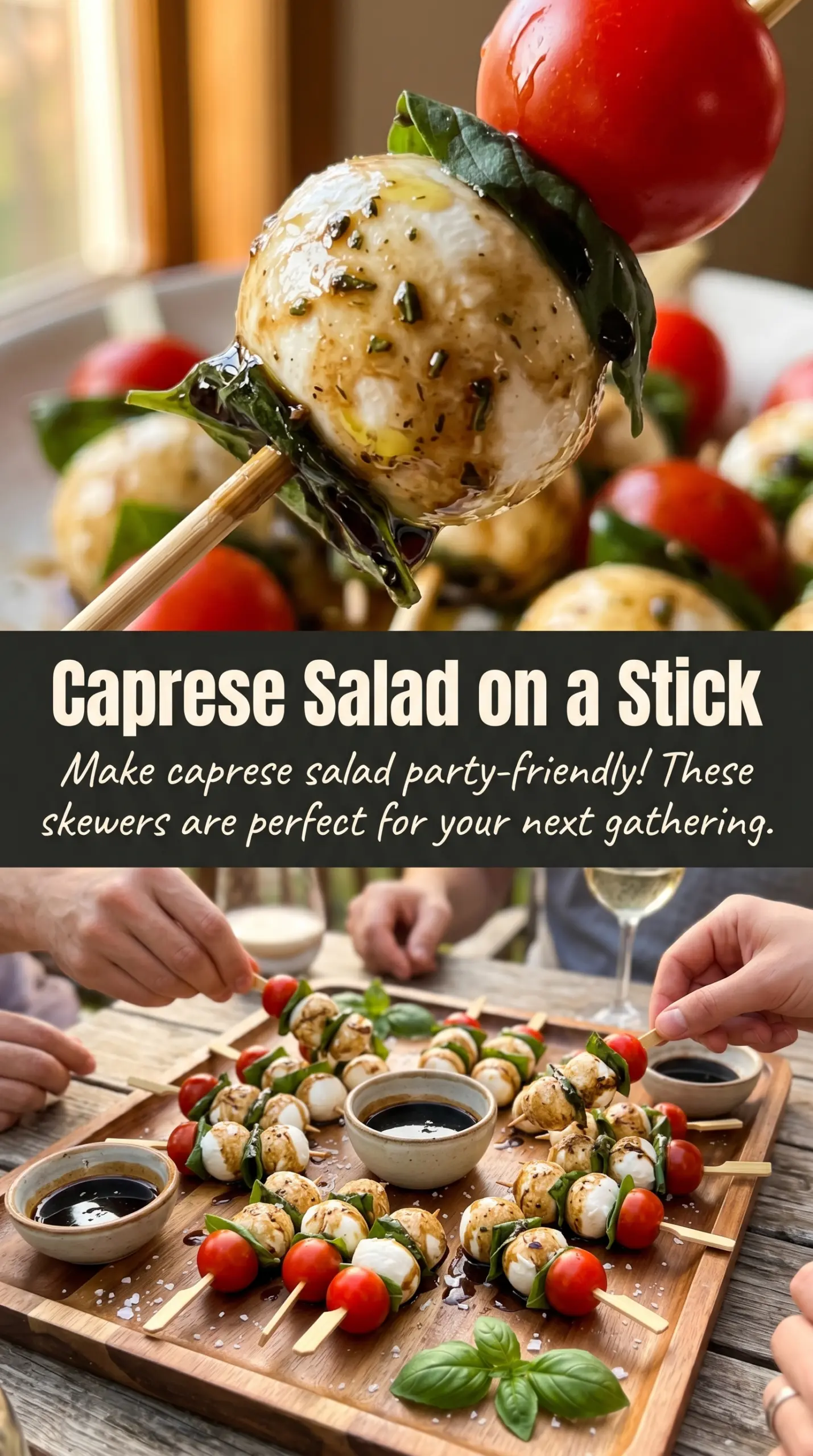
- Cherry tomatoes — Use firm, ripe tomatoes with good sweetness. If they’re bland, the skewers taste bland, and there’s no sauce to hide that. Grape tomatoes work in a pinch, but cherry tomatoes usually give a juicier bite.
- Fresh mozzarella balls — Bocconcini or ciliegine are the right size because they match the tomatoes and stay easy to eat in one bite. If all you have is a larger ball, cut it into even pieces and pat it dry first so the glaze clings instead of sliding off.
- Fresh basil — This is the ingredient that makes the whole dish taste like caprese instead of just cheese and tomato. Buy basil that looks perky and green, not bruised or blackened at the edges, because tired basil turns bitter fast.
- Balsamic glaze — Glaze is thicker than straight balsamic vinegar, so it stays on the skewers instead of pooling on the platter. If you only have vinegar, simmer it down until syrupy before using it.
- Olive oil — A drizzle of good olive oil softens the acidity and gives the tomatoes a little shine. This is one place where a decent bottle matters because the oil is visible in the final bite.
How to Thread Caprese Skewers Without Bruising the Basil
Fold the basil before it goes on the skewer
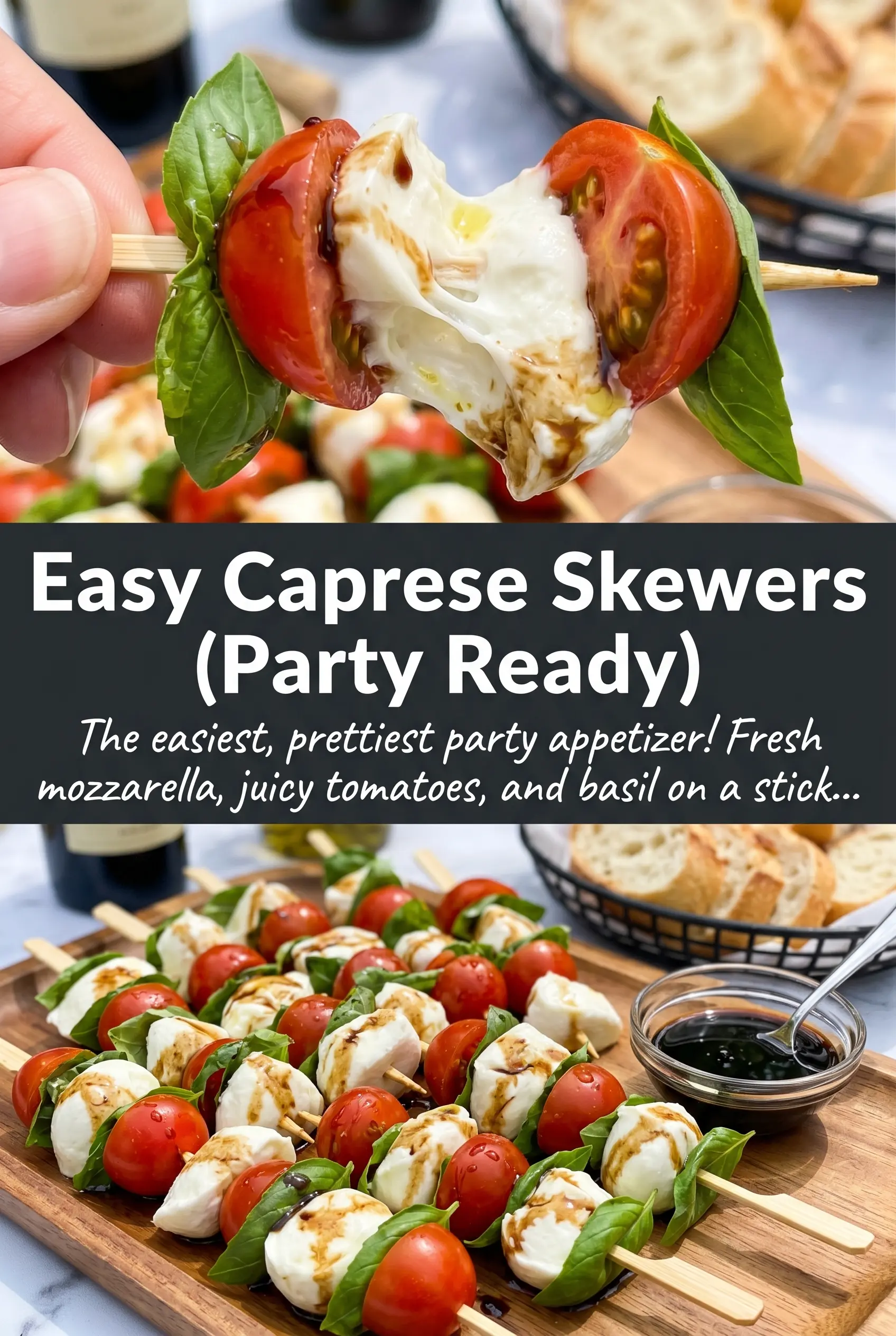
Lay a basil leaf flat, fold it once if it’s large, then slide the skewer through the center so the leaf sits neatly between the tomato and mozzarella. If you try to spear a basil leaf open and flat, it tears and turns ragged almost immediately. The folded leaf also gives you a more balanced bite, with basil in every mouthful instead of one big mouthful of leaf.
Build each skewer in the same order
Thread tomato, basil, mozzarella, then repeat if your skewers are long enough. Keeping the pattern consistent makes the platter look polished and helps the glaze coat evenly. Don’t pack the ingredients too tightly; if they’re squeezed together, the mozzarella can split and the basil gets compressed.
Season after plating, not before
Arrange the finished skewers on a serving platter, then drizzle with olive oil and balsamic glaze. Salt and pepper go on last so the tomatoes don’t start weeping while the skewers sit. A light sprinkle is enough — too much salt will pull moisture out of the tomatoes and leave a puddle under the platter.
Three Small Tweaks That Change the Finish
Make them dairy-free with marinated vegan mozzarella
Use a firm dairy-free mozzarella-style cheese that can be cubed or balled. You’ll lose a little of the milky richness, but the basil and balsamic still carry the dish. Pat the pieces dry before assembling so the glaze sticks.
Turn it into a gluten-free party appetizer board
The skewers are naturally gluten-free as written, so the main adjustment is how you serve them. Pile them on a platter with extra basil and a small bowl of glaze for guests who want more. That keeps the texture crisp and the presentation clean.
Swap in heirloom cherry tomatoes for a sweeter bite
A mix of red, yellow, and orange cherry tomatoes makes the platter look brighter and gives you more sweetness in each bite. Just keep the sizes similar so the skewers stay balanced and easy to eat. Very soft tomatoes are the wrong choice here because they split when threaded.
Prep ahead for a crowd without soggy basil
You can assemble the skewers a few hours ahead and refrigerate them covered, but hold the glaze until just before serving. The basil stays fresher, the cheese stays cleaner, and the platter doesn’t get watery. If you drizzle too early, the glaze slips off and the tomatoes lose their shine.
Caprese Skewers
Ingredients
Equipment
Method
- Thread one cherry tomato, one folded fresh basil leaf, and one mozzarella ball onto a small wooden skewer. Repeat this layering until all skewers are assembled.
- Arrange the skewers on a serving platter in a single layer for even drizzle coverage. Keep them spaced so the tomatoes, basil, and mozzarella are visible.
- Drizzle the olive oil over the skewers in a thin, even stream so every skewer gets shine. Immediately drizzle the balsamic glaze on top in small streaks for color contrast.
- Season with salt and pepper over the entire platter. Add a light touch so the fresh flavors stay forward.
- Serve at room temperature for the best texture and flavor. Let sit briefly on the platter if needed to take the chill off.