Glossy whole berry cranberry sauce has a way of making the pantry feel stocked and calm at the same time. The berries cook down just enough to turn syrupy while still keeping enough shape to look beautiful in the jar, and the orange juice gives the sauce a bright, round sweetness that keeps it from tasting flat. When the jars seal, you get that satisfying little click and a shelf-stable side dish that’s ready for holiday plates, weeknight roast chicken, or a last-minute cheese board.
This version leans on bottled lemon juice for safe acidity and uses orange zest at the end so the citrus stays fresh instead of cooking dull. The sugar-water-orange juice base dissolves first, which helps the cranberries cook evenly and prevents scorching on the bottom of the pot. A 1/4-inch headspace matters here, too, because cranberry sauce expands as the fruit bursts and the liquid thickens in the canner.
Below, I’ve included the small details that keep the sauce glossy and the jars sealing cleanly, plus a few notes on swaps, storage, and the most common canning questions people run into with cranberry sauce.
The sauce thickened up perfectly and the orange flavor stayed bright after processing. I sealed all my jars on the first try, and the berries kept that gorgeous whole-berry texture instead of turning mushy.
Save this canned cranberry sauce for a pantry-friendly holiday side that stays jewel-bright and seals cleanly in the water bath.
The Part That Keeps Cranberry Sauce from Turning to Jam in the Jar
The biggest mistake with canned cranberry sauce is cooking it down too far before it ever reaches the jar. Cranberries keep releasing pectin as they burst, so the sauce thickens again during processing and then firms up as it cools. If it looks a little loose in the pot, that’s fine. If you cook it until it already seems like jam, the finished jars can turn sticky and dense instead of spoonable.
The other thing that matters is acidity. Bottled lemon juice gives you a measured, dependable acid level for canning, while fresh orange juice adds flavor but shouldn’t be the only acid in the recipe. That combination gives the sauce its bright edge without taking the cranberry flavor away. Keep the jars hot, the sauce hot, and the headspace consistent so the lids can seal cleanly.
What the Cranberries, Citrus, and Sugar Are Actually Doing Here
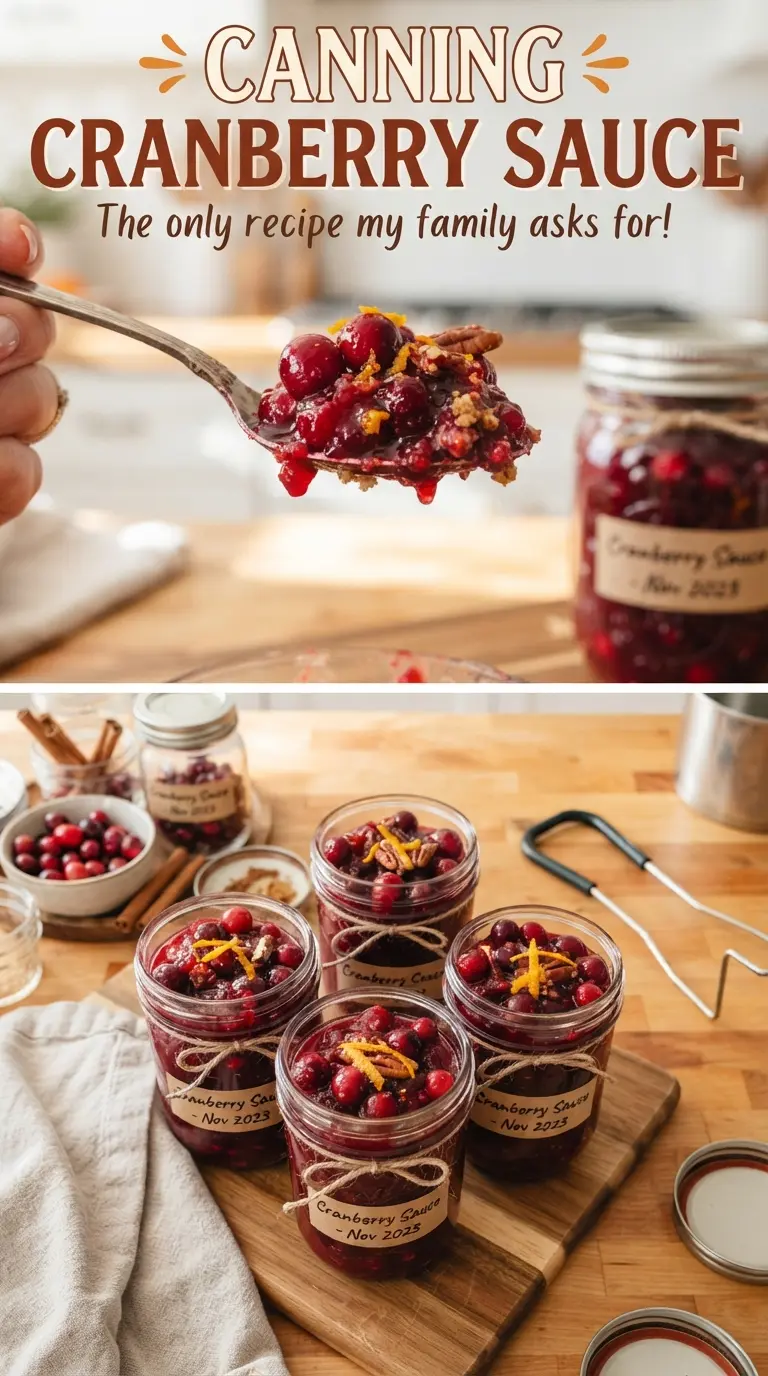
- Fresh cranberries — These give the sauce its body, pectin, and signature whole-berry texture. Frozen cranberries work too, and you don’t need to thaw them first, but use berries that haven’t been freezer-burned or clumped with ice.
- Orange juice — This softens the cranberry tartness and adds natural sweetness, but it’s there for flavor more than safety. Use juice without added pulp if you want a smoother jarred sauce; pulpy juice can make the sauce look cloudy.
- Bottled lemon juice — This is the canning ingredient you don’t swap casually. The bottled version gives consistent acidity, which matters for safe water bath processing. Fresh lemon juice tastes fine on the table, but for canned food, use the bottled kind.
- Orange zest — Add it at the end so the oils stay bright and fragrant. If you put it in too early, the citrus note cooks off and the finished sauce tastes flatter.
- Sugar — This balances the tart berries and helps the sauce set into a glossy spoonable texture. You can reduce it a little for a sharper sauce, but the finished result will be looser and more tart.
Getting the Jars Hot, the Sauce Hot, and the Seal Right
Starting with a clean, hot base
Wash the jars, lids, and bands before you start, then keep the jars in simmering water so they stay hot. A cold jar filled with boiling sauce can crack, and a cooled jar can drop the temperature of the food enough to interfere with sealing. Keep everything ready before the sauce finishes cooking, because cranberry sauce waits for nobody.
Cooking the berries until they just burst
Bring the sugar, water, and orange juice to a boil first so the sugar dissolves completely. Add the cranberries and lemon juice, then cook at a steady, gentle boil until most berries have popped and the liquid looks slightly syrupy, about 10 to 12 minutes. Stir often enough to prevent scorching, but don’t mash the berries unless you want a smoother sauce.
Filling without trapping air
Ladle the sauce into the hot jars and leave exactly 1/4-inch headspace. That small gap matters because the sauce expands in the canner and needs room to vent. Wipe the rims with a clean, damp towel before you add the lids; even a streak of sticky cranberry syrup can stop a seal from forming.
Processing and cooling without rushing it
Process the jars in a boiling water bath for 15 minutes, adjusting for altitude as needed. When the time is up, turn off the heat and let the jars rest in the canner for 5 minutes before lifting them out. After that, leave them undisturbed for 24 hours. If you tighten the bands or move the jars around while they cool, you can break a seal that was just about to set.
How to Adjust This Cranberry Sauce Without Losing the Seal
Make It Sweeter and Softer
Add a little more sugar if you like a sauce that leans dessert-like. The jars will still process the same way, but the finished cranberry sauce will taste rounder and less sharp. Don’t cut the sugar dramatically unless you want a looser, tarter sauce.
Use Frozen Cranberries
Frozen cranberries work well, and you can add them straight to the pot. They may take a minute longer to come back to a boil, but the texture and safety are the same. Don’t thaw them first or you’ll create extra liquid and lose some control over the cooking time.
Make a Lower-Sugar Batch
You can reduce the sugar for a sharper, more tart sauce, but expect a thinner set and a brighter cranberry bite. The canning process stays the same as long as the tested acid balance is maintained. If you want a low-sugar spread, this is better as a refrigerator or freezer recipe than a shelf-stable one.
Storage and Reheating
- Refrigerator: After opening, keep jars chilled and use within 3 weeks. The sauce will thicken a little more as it sits.
- Freezer: Unprocessed cranberry sauce can be frozen in airtight containers for up to 3 months, but fully canned jars are best stored on the shelf instead of frozen.
- Reheating: Spoon into a saucepan over low heat or warm gently in the microwave. Cranberry sauce scorches fast once the sugar is concentrated, so don’t blast it over high heat.
Answers to the Questions Worth Asking
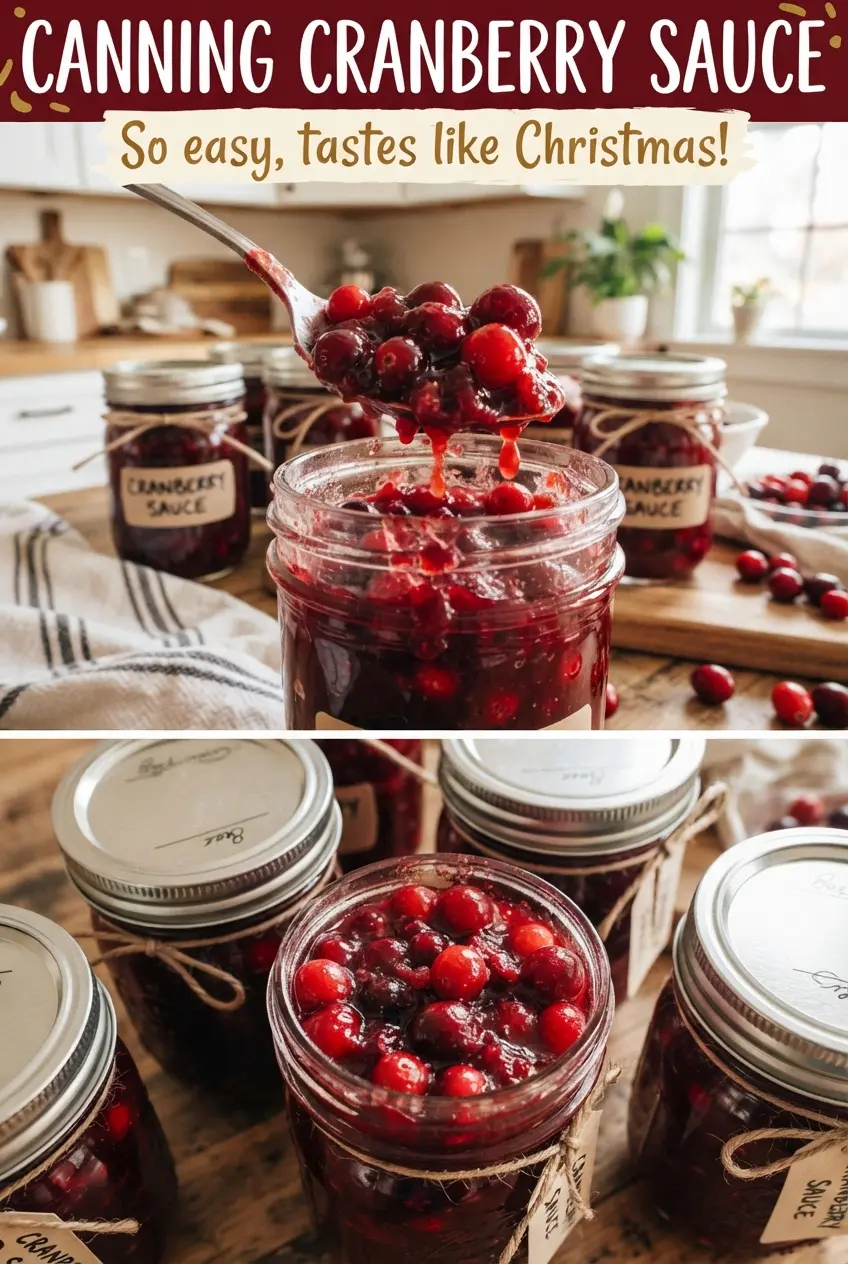
Canning Cranberry Sauce
Ingredients
Equipment
Method
- Wash 12 half-pint jars, lids, and bands, then keep the jars hot in simmering water so they’re ready for filling.
- Bring a large pot of water to simmer for the water-bath canner so it’s ready for processing after the jars are filled.
- Bring sugar, water, and orange juice to a boil in a large pot, stirring until the sugar dissolves completely.
- Add cranberries and bottled lemon juice, then return to a boil and boil gently for 10-12 minutes until the berries burst and the sauce thickens.
- Stir in orange zest and turn off the heat, keeping the sauce hot for filling.
- Ladle hot sauce into the hot jars, leaving 1/4-inch headspace to support proper sealing.
- Wipe the rims clean, then apply lids and bands fingertip tight to prevent leaks while allowing venting during processing.
- Process in a boiling water bath canner for 15 minutes, adjusting time for altitude.
- Turn off heat and rest the jars in the canner for 5 minutes before lifting them out.
- Cool jars undisturbed for 24 hours so the lids seal fully.
- Check that the lids have sealed, then store sealed jars in a cool dark place up to 1 year.


