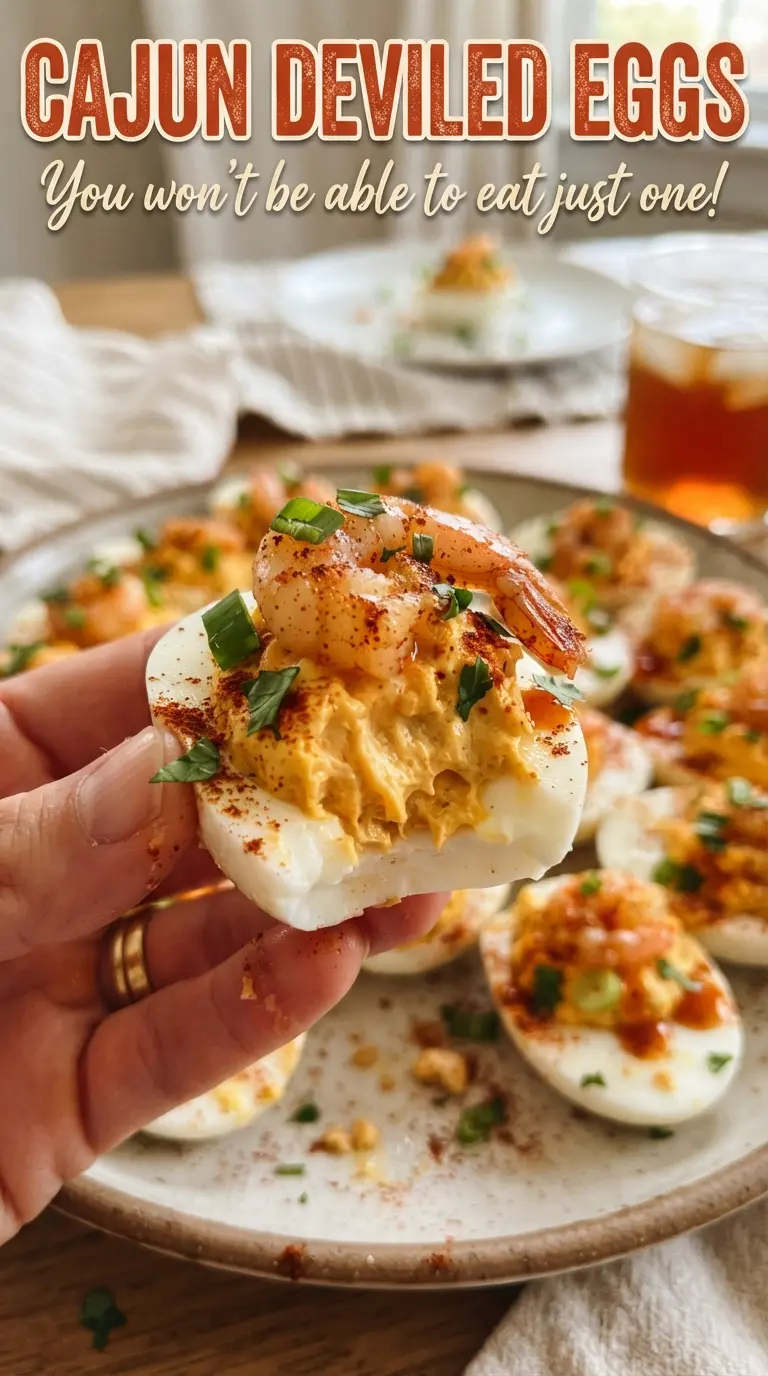
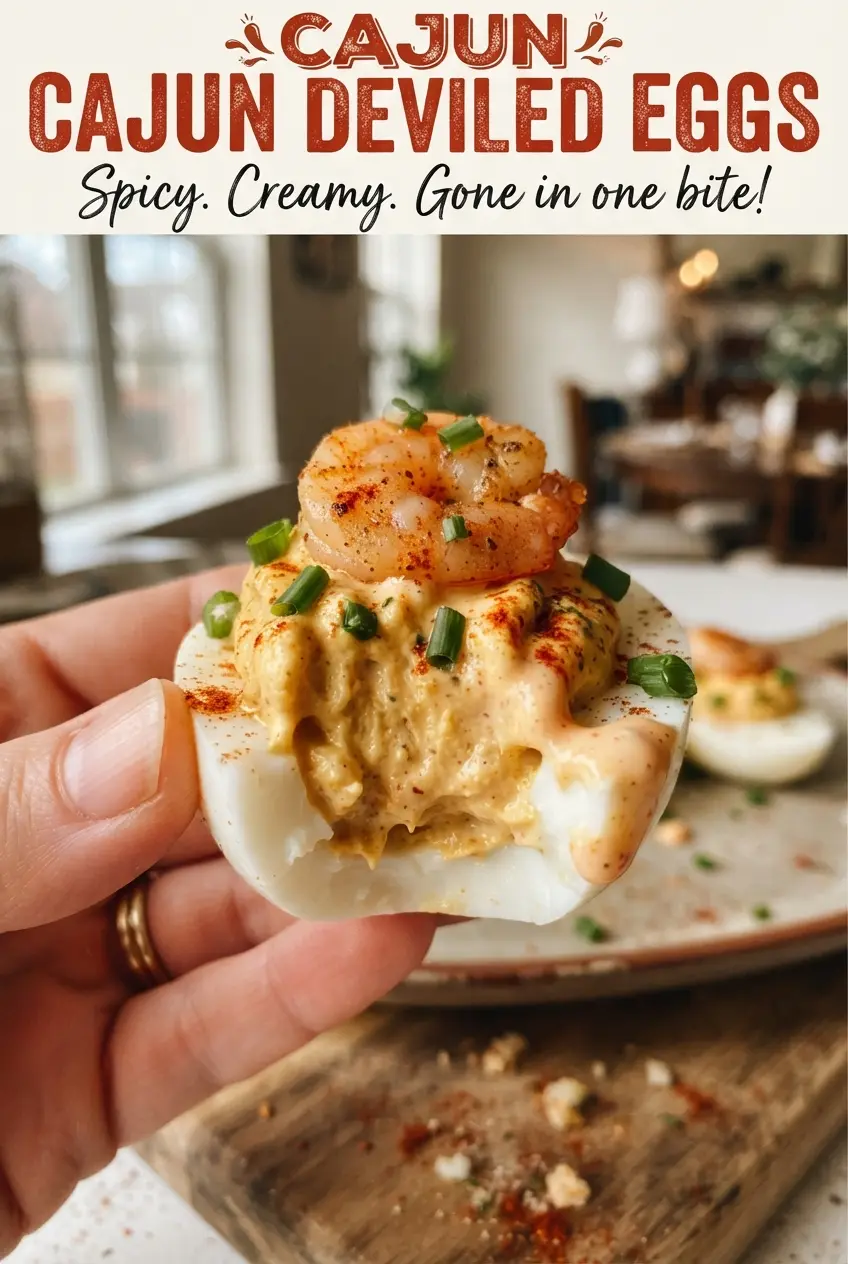
These Cajun deviled eggs land right where a good appetizer should: creamy, punchy, and just a little bit messy in the best way. The filling stays smooth and tangy, the Cajun seasoning gives it a warm kick, and the seared shrimp on top turns a familiar platter into something people actually reach for first.
What makes this version work is the balance. Creole mustard brings sharper bite than plain yellow mustard, sweet pickle relish keeps the filling from tasting flat, and the shrimp get their own quick seasoning before they hit the pan. That last step matters. If you season the shrimp only after cooking, the spice sits on the surface. Tossing them first gives you a cleaner Cajun flavor and better browning in the butter.
Below, I’ve included the one timing detail that keeps the yolks creamy instead of chalky, plus a few smart swaps if you want to adjust the heat or make these without seafood.
The filling was smooth and held its shape, and those little Cajun shrimp on top made them disappear fast at our game-day spread. I liked that the seasoning was in the eggs and on the shrimp, but neither part tasted too salty.
Save these Cajun deviled eggs for a party platter with creamy yolks, seared shrimp, and just enough heat.
The Reason the Yolks Stay Creamy Instead of Dry
The biggest mistake with deviled eggs is overcooking the yolks, which gives you a gray ring and a filling that tastes chalky no matter how much mayonnaise you add. Pulling the pot off the heat and letting the eggs stand in hot water finishes them gently, so the yolks set without turning grainy. The ice bath matters just as much. It stops the cooking fast and makes peeling easier, especially with older eggs that might otherwise cling to the shell.
For the filling, mash the yolks until there are no dry bits left before you add the mayo and mustard. If you start with a lumpy base, the texture stays rustic in a bad way. The relish adds a little sweetness and body, while the hot sauce keeps the richness from feeling heavy. You want the mixture smooth enough to pipe, but not loose enough to slump.
What Each Ingredient Is Doing in These Cajun Deviled Eggs
- Eggs — Large eggs give you enough yolk filling to pipe neatly back into the whites. Very fresh eggs can be harder to peel, so eggs that have had a few days in the fridge usually work better here.
- Mayonnaise — This is what makes the filling plush and pipeable. Use a good one because there’s nowhere for a bland mayo to hide in a simple deviled egg filling.
- Creole mustard — It brings sharpness and texture that regular yellow mustard can’t match. Dijon works in a pinch, but the flavor shifts a little cleaner and less bold.
- Sweet pickle relish — This keeps the filling from tasting one-note and gives a little sweetness against the Cajun spice. Drain it first if yours is especially wet, or the filling can loosen too much.
- Cajun seasoning — Half goes into the filling and half seasons the shrimp. If your blend is very salty, use a lighter hand and taste before adding more.
- Shrimp — Halving them lengthwise gives you the right size for a deviled egg topper and helps them cook in a minute or two. Small shrimp can work, but they won’t perch as cleanly.
- Butter — It helps the shrimp sear fast and adds a little richness. You want the pan hot enough to brown the shrimp edges without overcooking the meat.
Building the Filling and Shrimp So Every Bite Stays Balanced
Cooking the Eggs Gently
Start the eggs in cold water and bring them just to a boil before turning off the heat. That gentle finish is what keeps the yolks tender. Once the 12 minutes are up, move them straight into ice water so the centers stop cooking and the shells release more cleanly. If you skip the chill, the eggs keep carrying over and the whites can turn rubbery.
Mashing the Yolks Until They’re Silky
Crack and peel the eggs, then halve them lengthwise and pop the yolks into a bowl. Mash them first on their own, then stir in the mayonnaise, Creole mustard, hot sauce, relish, and most of the Cajun seasoning. The filling should look smooth and thick enough to hold a swirl. If it seems stiff, add a teaspoon of mayonnaise at a time instead of flooding it.
Searing the Shrimp Fast
Toss the halved shrimp with the remaining seasoning before they go into the butter. You want a quick sear, not a long cook, because shrimp go from tender to tight fast. Watch for them to turn pink and curl slightly, with the edges picking up a little color. Pull them as soon as they’re opaque all the way through; even a minute too long makes them dry on top of the eggs.
Filling and Finishing
Pipe or spoon the yolk mixture back into the egg whites. Top each one with a shrimp half and a few sliced green onions. The green onion is more than garnish here — it cuts through the richness and gives the platter a fresh bite. If you’re serving these on a warm day, keep them chilled until the last minute so the filling stays firm.
Three Ways to Adjust the Heat, the Protein, or the Make-Ahead Plan
Milder Cajun Deviled Eggs
Use a mild Cajun seasoning and cut the hot sauce back to a few dashes. You’ll still get the warm spice and color, but the filling reads creamier and less sharp, which works well if you’re serving a crowd with mixed heat tolerance.
No-Shrimp Version
Skip the shrimp and finish each egg with a little extra Cajun seasoning and green onion, or top with a tiny slice of pickled okra for a Cajun-style bite. You lose the seafood sweetness, but the eggs still keep their punch and look polished on a platter.
Dairy-Free and Gluten-Free Friendly
This recipe is naturally gluten-free as written, and it’s dairy-free if your mayonnaise and Cajun seasoning blend don’t include dairy additives. Check the seasoning label if you’re serving someone with a strict sensitivity, since some blends include milk powder or anti-caking agents.
Make-Ahead Party Platter
You can boil, peel, and halve the eggs a day ahead, then mix the filling and cook the shrimp the day you serve. For the best texture, keep the whites and filling separate until a few hours before serving. That keeps the eggs neat and stops the top from drying out in the fridge.
Storage and Reheating
- Refrigerator: Store assembled eggs in a covered container for up to 2 days. The shrimp are best the day they’re cooked, but the eggs themselves hold well.
- Freezer: Don’t freeze deviled eggs. The whites turn watery and spongy, and the filling breaks after thawing.
- Reheating: These are best served cold or cool. If the shrimp were chilled separately, let them sit just long enough to take the fridge edge off, but don’t warm the assembled eggs or the filling can loosen.
Answers to the Questions Worth Asking
Cajun Deviled Eggs
Ingredients
Equipment
Method
- Place 12 large eggs in a pot, cover with cold water, and bring to a boil over high heat. Cover the pot, remove from heat, and let stand 12 minutes, keeping the eggs fully submerged.
- Chill the eggs in an ice bath for 10 minutes, until they’re cool to the touch. Peel and halve them lengthwise, keeping the yolks intact.
- Mash the yolks with mayonnaise, Creole mustard, hot sauce, sweet pickle relish, and 1 teaspoon Cajun seasoning until smooth. Mix until no yolk lumps remain.
- Toss the halved shrimp with the remaining Cajun seasoning. Heat butter in a cast iron skillet over medium-high heat, then sear shrimp 1-2 minutes per side until pink.
- Pipe the filling into the egg whites, filling each half completely. Use a steady pressure so the tops stay neat.
- Top each deviled egg with a shrimp half and garnish with sliced green onions. Arrange on a platter so the shrimp sits visible on top.


