Butternut squash casserole lands on the table with a creamy middle, a lightly sweet squash base, and a pecan topping that bakes into crisp, buttery crumbles. It’s the kind of side dish that disappears fast because it gives you contrast in every bite: soft and custardy underneath, golden and crunchy on top.
The trick is treating the squash like the main event, not just a filler. Boiling it until it’s fully tender means it mashes smoothly without stubborn chunks, and draining it well keeps the casserole from turning loose or watery in the oven. The eggs and milk set the base just enough to hold together while the brown sugar and cinnamon bring out the squash’s natural sweetness without pushing it into dessert territory.
Below you’ll find the small details that matter most, from getting the squash dry enough after boiling to building a topping that stays crumbly instead of pasty. There’s also a simple make-ahead note and a few smart swaps for when you need to work around what’s already in the pantry.
The squash baked up creamy instead of watery, and that pecan topping stayed crisp all the way through dinner. I loved that the brown sugar didn’t make it taste like dessert.
Save this butternut squash casserole for the holiday table or any night when you want a creamy squash side with a crisp pecan topping.
The Part That Keeps the Casserole Creamy Instead of Soupy
The biggest mistake with butternut squash casserole is skipping the draining step. Boiled squash holds more water than most people realize, and if it goes into the baking dish wet, the center stays loose while the topping browns too fast. Let the squash sit in a colander for a few minutes, then mash it while it’s still warm so excess steam can escape before the eggs go in.
The other thing that matters is texture at the mixing stage. You want the squash mashed smooth, but not whipped into something gluey. Once the eggs are added, stop mashing as soon as everything is combined; overworking it can give the finished casserole a denser, spongier feel instead of that soft, custardy middle.
What Each Ingredient Is Doing in the Pan

- Butternut squash — This is the base of the dish, so pick a squash that feels heavy for its size with firm skin. Fresh squash gives the best texture and a cleaner flavor than frozen puree, which can carry extra water and turn the casserole softer than intended.
- Butter — Butter carries the sweetness and helps the filling feel rich instead of flat. Melted butter also works into the topping better than softened butter, giving you small crumbs that brown instead of a paste.
- Brown sugar — This adds caramel notes that fit squash better than white sugar. If you cut it too far, the casserole tastes more starchy and less rounded.
- Eggs and milk — These set the filling into a tender custard. Whole milk gives the best balance, but you can use 2% if that’s what you have; just don’t go much lighter or the center loses body.
- Pecans — They’re what make the topping worth eating. Chop them by hand so you get a mix of fine bits and larger pieces; the fine pieces help the crumble hold together while the bigger ones toast up with real crunch.
- Flour — This gives the topping structure. If you need a gluten-free version, a 1:1 gluten-free flour blend works better than trying to skip it, because the topping still needs something to bind the butter and sugar into crumbs.
Building the Base and the Crumble Topping
Cooking and Draining the Squash
Boil the cubed squash until a fork slides through with no resistance, then drain it thoroughly. If a little water clings to the pieces, the casserole can still work, but if the squash sits in a puddle, the finished filling turns loose and the topping sinks. Letting the steam off for a minute or two after draining helps more than most recipes mention.
Mashing the Filling
Mash the squash with the butter, brown sugar, eggs, milk, vanilla, cinnamon, and salt until the mixture looks smooth and thick. The color should be a glossy orange and the texture should hold soft ridges for a moment before settling. If you see streaks of egg white, keep mixing just until they disappear; leaving them behind gives you little cooked flecks in the finished casserole.
Mixing the Pecan Streusel
Work the flour, pecans, remaining butter, and remaining brown sugar together until the mixture looks like damp sand with scattered nuggets. Those uneven pieces are what bake into a crunchy top. If it turns into a dough, the butter was too warm or the mixture was overmixed, and you’ll lose the crumbly texture that makes the casserole stand out.
Baking Until the Edges Bubble
Spread the filling into a greased 9×13-inch dish and scatter the topping evenly over the surface. Bake until the streusel is golden and the edges of the casserole are bubbling up from underneath, which tells you the center has heated through and set. Pull it from the oven when the top is toasted, not dark, because the filling keeps firming as it sits.
How to Adjust This Casserole for a Different Table
Make It Ahead for a Holiday Meal
Assemble the filling and topping separately, then keep them chilled until you’re ready to bake. If you top the casserole too early, the pecans can soften before they ever hit the oven. Add the crumble right before baking so it stays crisp.
Gluten-Free Version
Swap the all-purpose flour for a good 1:1 gluten-free flour blend. The filling is naturally gluten-free, so the topping is the only place you need to change anything. The result stays crisp, though the crumble may be a little more delicate once it cools.
Less Sweet, More Savory
Cut the brown sugar in the filling back to 2 tablespoons and keep the cinnamon light. The casserole will taste more like a classic squash side and less like a sweet bake, which works well beside ham, turkey, or roasted chicken.
Dairy-Free Swap
Use a plant-based butter and an unsweetened non-dairy milk with some body, like oat milk. The filling won’t taste exactly the same, but you’ll still get a creamy center and a browned topping. Thin almond milk works in a pinch, though the casserole won’t be quite as rich.
Storage and Reheating
- Refrigerator: Store covered for up to 4 days. The topping softens a bit, but the flavor holds well.
- Freezer: Freeze the baked casserole in portions for up to 2 months. Wrap tightly and thaw in the refrigerator before reheating for the best texture.
- Reheating: Warm in a 325F oven until heated through. A microwave will heat the center faster, but it softens the pecan topping, so the oven is the better choice if you want the crumble to stay crisp.
Answers to the Questions Worth Asking
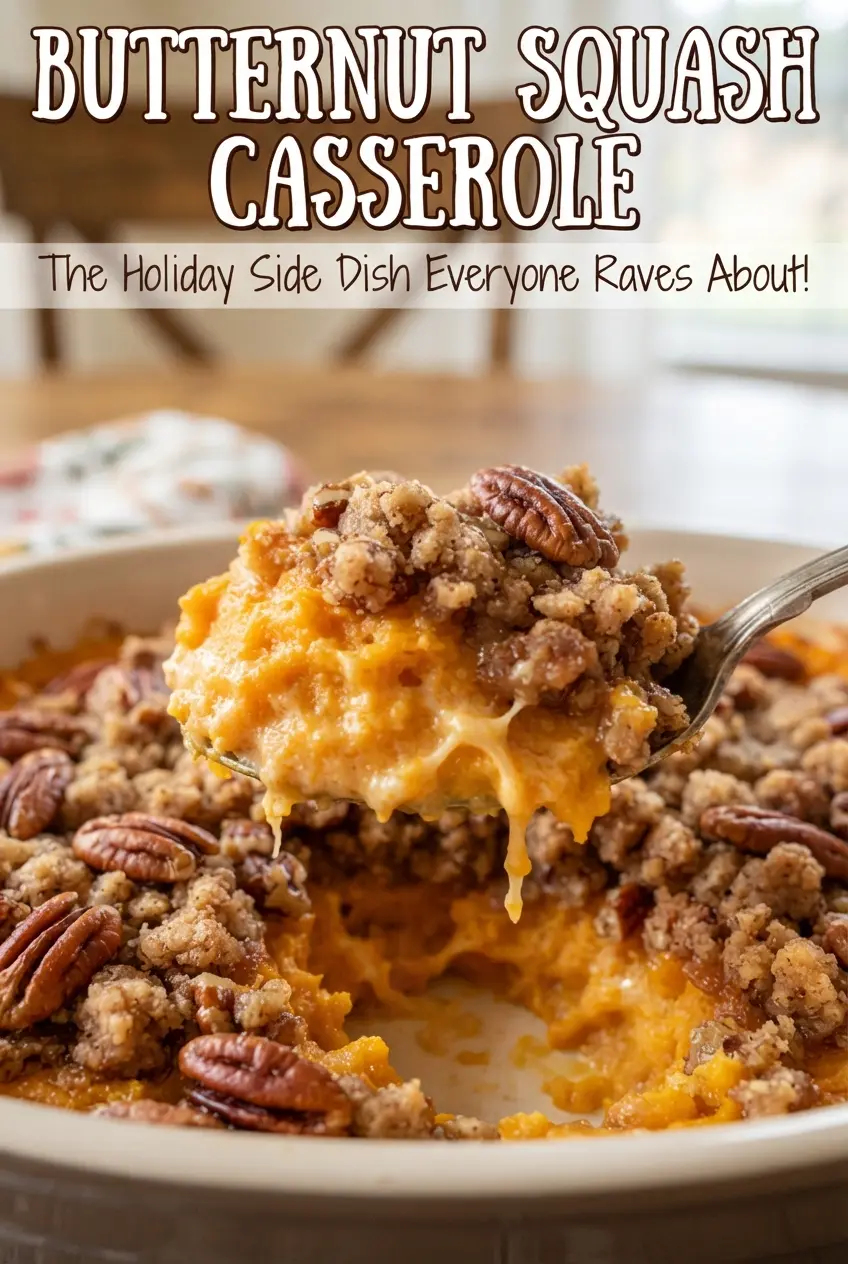
Butternut Squash Casserole
Ingredients
Equipment
Method
- Boil the cubed butternut squash for 15 minutes until very tender, then drain well so no water remains. Keep an eye on softness—chunks should mash easily with light pressure.
- Preheat the oven to 350F and grease a 9x13-inch baking dish. Lightly coat all corners to help the casserole release cleanly.
- Mash the butternut squash with 1/4 cup melted butter, 1/4 cup brown sugar, eggs, milk, vanilla extract, ground cinnamon, and salt until smooth. The mixture should look uniform with no visible squash lumps.
- Spread the smooth squash mixture into the greased baking dish. Aim for an even layer so the edges bubble at the same time.
- Mix all-purpose flour, chopped pecans, the remaining melted butter, and the remaining brown sugar into a crumbly topping. Rub it together until it forms clusters rather than a paste.
- Sprinkle the crumbly topping evenly over the squash. Leave a little coverage so the bake can bubble through at the edges.
- Bake at 350F for 35-40 minutes until the topping is golden and the edges bubble. Let it rest for 5 minutes before scooping to keep the creamy inside intact.


