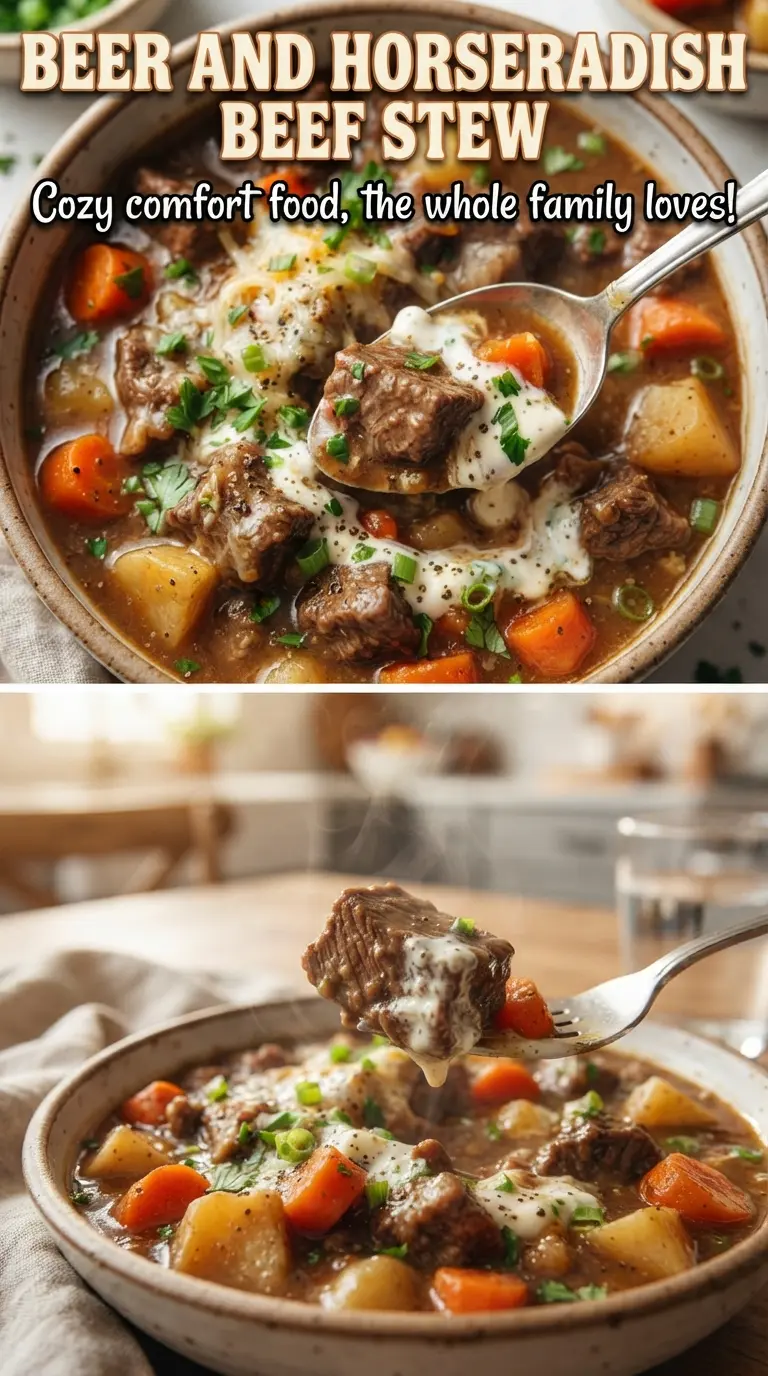
Beer and horseradish beef stew lands with deep, savory warmth and a sharp little finish that wakes up every bite. The beef turns spoon-tender, the broth gets rich without feeling heavy, and the potatoes and carrots soak up just enough of the sauce to taste like they belong there. The horseradish doesn’t take over. It cuts through the richness at the end, which is exactly what keeps this stew from tasting flat.
The trick is building flavor in layers. Browning the beef first gives you those browned bits that turn into the base of the broth, and the tomato paste needs that minute in the pot so it loses its raw edge. The beer adds depth, but it’s the slow simmer that turns the whole pot into something cohesive. I also like keeping some of the horseradish for the sour cream topping instead of stirring it all in at once. That way the stew stays balanced, and each bowl gets a bright, creamy finish.
Below, you’ll find the little details that matter most: how to brown the beef without crowding the pan, why the beer choice changes the flavor, and what to do if you want a thicker stew or a milder horseradish finish.
The beef got tender without falling apart, and the horseradish sour cream on top was the best part. My husband kept going back for “just one more bowl,” and the broth was even better the next day.
Save this beer and horseradish beef stew for a rich, spoon-tender dinner with a sharp creamy finish.
The Secret to Keeping the Beef Tender While the Broth Stays Deep
Chuck is the right cut here because it has enough fat and connective tissue to handle the long simmer. Leaner beef turns dry before the vegetables are done, and it won’t give you the same body in the broth. The other place people go wrong is rushing the browning. If the pan is crowded, the beef steams instead of searing, and you lose the flavor that makes this stew taste built, not assembled.
Beer adds a round, malty note, but it needs backup from broth, Worcestershire, and tomato paste. That combination keeps the stew from tasting like straight beer once it cooks down. The horseradish works best in two places: some in the pot for quiet heat, and the rest stirred into sour cream for a clean, bright topping. That split keeps the stew balanced instead of aggressively sharp.
What Each Ingredient Is Actually Doing in This Stew
- Beef chuck — This is the cut that softens into spoon-tender chunks over a long simmer. If you swap in stew meat, check the package carefully; some is still chuck, but some is a mix of tougher trimmings that take longer and can cook unevenly.
- Brown ale or amber beer — A malt-forward beer gives the stew depth without bitterness. Skip something very hoppy, because the bitterness can hang around after the alcohol cooks off.
- Prepared horseradish — This brings the sharp finish that makes the bowl taste lively. Freshly grated horseradish is stronger and hotter, so if you use it, start with less and taste before adding more.
- Tomato paste — It adds body and a little acidity, and the short cook in the onion mixture keeps it from tasting raw. That minute in the pan matters more than people think.
- Sour cream — Stirring it with the remaining horseradish turns the topping into a cool, tangy contrast. Full-fat sour cream holds up best; lower-fat versions can turn thinner when they hit the hot stew.
- Potatoes and carrots — They go in later so they stay intact instead of melting into the broth. Waxy potatoes hold their shape better than very starchy ones, but either will work if you cut them into even cubes.
Building the Stew in the Right Order
Browning the Beef First
Season the beef, toss it with flour, and brown it in batches in hot oil. You want a dark crust on the outside, not fully cooked meat, and you want enough space in the pan for the pieces to sizzle. If the beef looks gray, the pan was too crowded or not hot enough. Pull each batch out as soon as it develops color and resist the urge to keep moving it around.
Cooking Down the Onion Base
Once the beef is out, cook the onion until it softens and starts to pick up color at the edges. Add the garlic and tomato paste for just a minute so the garlic smells fragrant and the paste darkens slightly. If the tomato paste sticks or scorches, lower the heat right away and stir more often; burnt paste will make the whole stew taste harsh.
Deglazing and Simmering Low
Pour in the beer and scrape the bottom of the pot hard enough to loosen every browned bit. That fond is the flavor backbone of the stew. Stir in the broth, horseradish, Worcestershire, brown sugar, thyme, and beef, then cover and let it barely simmer. A hard boil will tighten the beef before it softens, so keep the heat low enough that you only see a few lazy bubbles breaking the surface.
Adding the Vegetables at the End
Potatoes and carrots need the final 45 to 60 minutes, not the whole simmer. They should be tender when pierced and still hold their shape in the bowl. If you add them too soon, the potatoes break down and cloud the broth, and the carrots lose their sweetness. The stew is done when the beef shreds easily with a spoon and the vegetables are soft without collapsing.
How to Adjust the Heat, Thickness, and Finish Without Breaking the Stew
Milder Horseradish Topping
If you want less bite, cut the horseradish in the sour cream by half and keep the stew itself as written. That gives you the flavor in the background instead of a sharper finish on top. It’s the best move if you’re serving people who like savory stew but not much heat.
Gluten-Free Version
Use a gluten-free flour blend for coating the beef and choose a gluten-free beer or replace the beer with extra broth and a splash of vinegar for brightness. The stew will still thicken nicely, though the beer-free version tastes a little cleaner and less malty.
Thicker, More Gravy-Like Stew
Let the pot simmer uncovered for the last 10 to 15 minutes if you want a thicker sauce. The flour on the beef helps, but the stew needs a little reduction to turn glossy instead of brothy. Don’t crank the heat to speed it up; that can make the beef tighten and the bottom scorch.
Storage and Reheating
- Refrigerator: Keeps 4 days. The flavor deepens overnight, and the broth thickens as it chills.
- Freezer: Freezes well for up to 3 months. Cool it completely, portion it into containers, and leave a little headspace so the broth can expand.
- Reheating: Warm it gently on the stove over low heat with a splash of broth or water if needed. A hard boil can make the beef stringy and break the potatoes apart.
Answers to the Questions Worth Asking
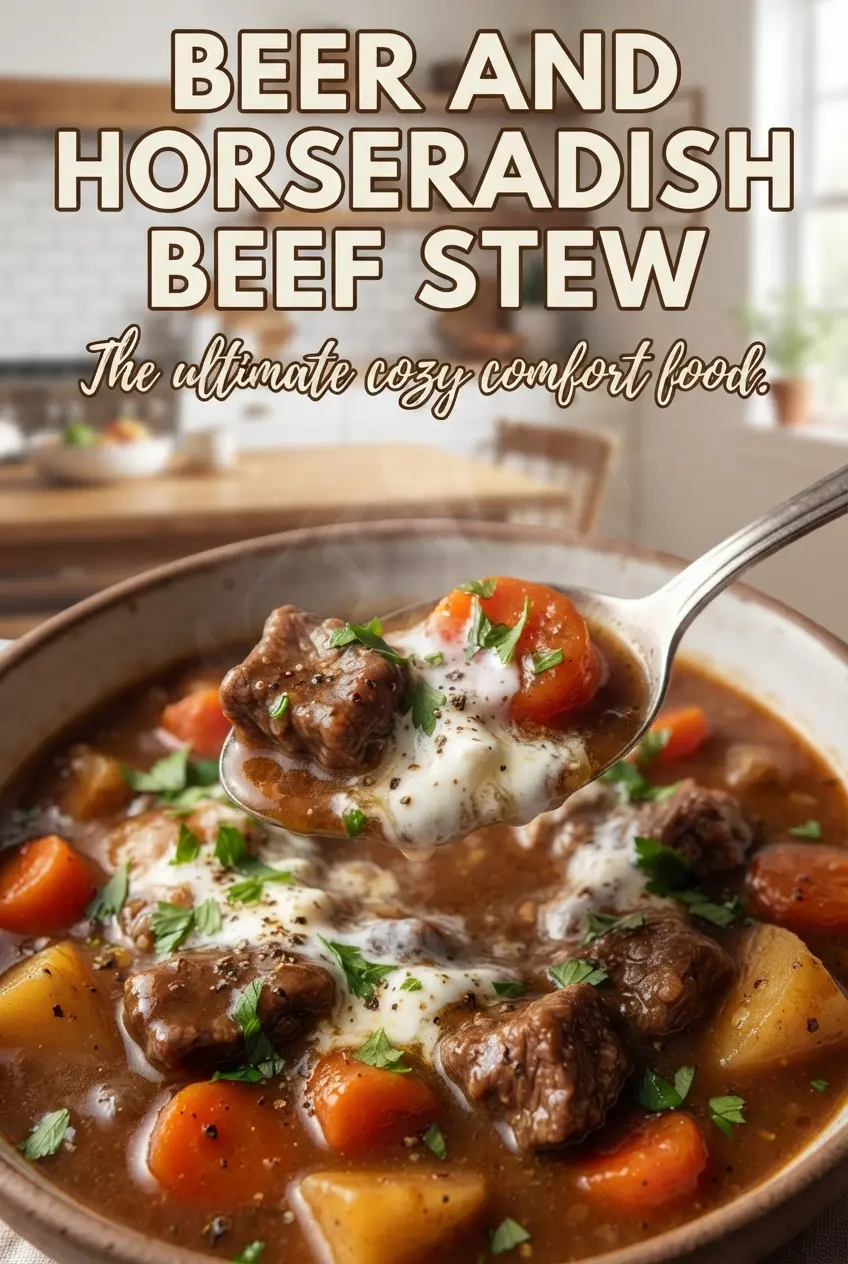
Beer and Horseradish Beef Stew
Ingredients
Equipment
Method
- Season the beef chuck cubes with salt and black pepper, then toss with all-purpose flour until evenly coated. Heat the vegetable oil in a Dutch oven over medium-high heat.
- Brown the beef in batches for about 3-4 minutes per batch, turning as needed, until deeply browned. Transfer browned beef to a plate as you finish each batch.
- Add the chopped large onion to the hot Dutch oven and cook for 5 minutes until softened. Stir in the minced garlic and tomato paste and cook for 1 minute, stirring constantly.
- Pour in the brown ale or amber beer and scrape the bottom of the Dutch oven to release browned bits. Stir in the beef broth, 2 tablespoons prepared horseradish, Worcestershire sauce, brown sugar, and dried thyme.
- Return the browned beef to the pot, cover, and simmer for 1 3/4 hours, until the meat is starting to tender. Keep the surface at a steady gentle simmer and skim foam if needed.
- Add the cubed potatoes and sliced carrots, then cover and simmer for 45-60 minutes until tender. Check occasionally and add a splash of water or broth only if the stew looks too dry.
- Mix the sour cream with the remaining prepared horseradish until smooth. Turn off the heat and ladle the stew into bowls, then top each with a dollop of horseradish sour cream and chopped fresh chives.


