Beef Carbonnade Stew cooks down into the kind of deep, glossy bowl that tastes like it took all day in the best possible way. The beef turns spoon-tender, the onions melt into the sauce, and the Belgian ale gives everything a malty backbone that keeps the stew from tasting heavy. It’s rich without being muddy, and every bite has that slow-cooked, slightly sweet edge that makes a second helping feel inevitable.
The trick is letting the onions go all the way to deep golden before anything else gets rushed. That step builds the sweetness that balances the ale and vinegar later, and it keeps the finished stew from tasting flat. The mustard bread on top looks unusual if you’ve never made carbonnade before, but it does real work here: it thickens the braising liquid, adds sharpness, and helps the sauce turn velvety as it bakes.
Below, I’ve included the small details that matter most, from the beer choice to the best way to keep the beef from drying out during the long braise. If you’ve had carbonnade that tasted thin or one-note before, this version fixes that.
The onions went silky and the sauce thickened up beautifully once the mustard bread broke down. I served it with fries and my husband kept saying it tasted like something from a good bistro.
Save this Belgian beef carbonnade for the night you want deeply braised beef, soft onions, and that mustard-bread sauce.
The Reason the Sauce Turns Rich Instead of Watery
Carbonnade succeeds because it builds flavor in layers before the braise ever starts. The beef gets browned first, which leaves fond on the bottom of the pot. That fond is the base of the sauce, and if you rush past it, the stew tastes generic no matter how long it cooks. The onions need time too. Twenty minutes may sound long, but pale onions won’t give you the deep, round sweetness this dish needs.
The other piece people skip is the mustard bread. It isn’t garnish. It slowly dissolves into the liquid and helps thicken the stew without making it pasty. If your sauce ever turns thin, it’s usually because the bread was cut into the pot too late or the stew didn’t braise long enough for the starch to work.
What the Beer, Mustard, and Onions Are Really Doing Here
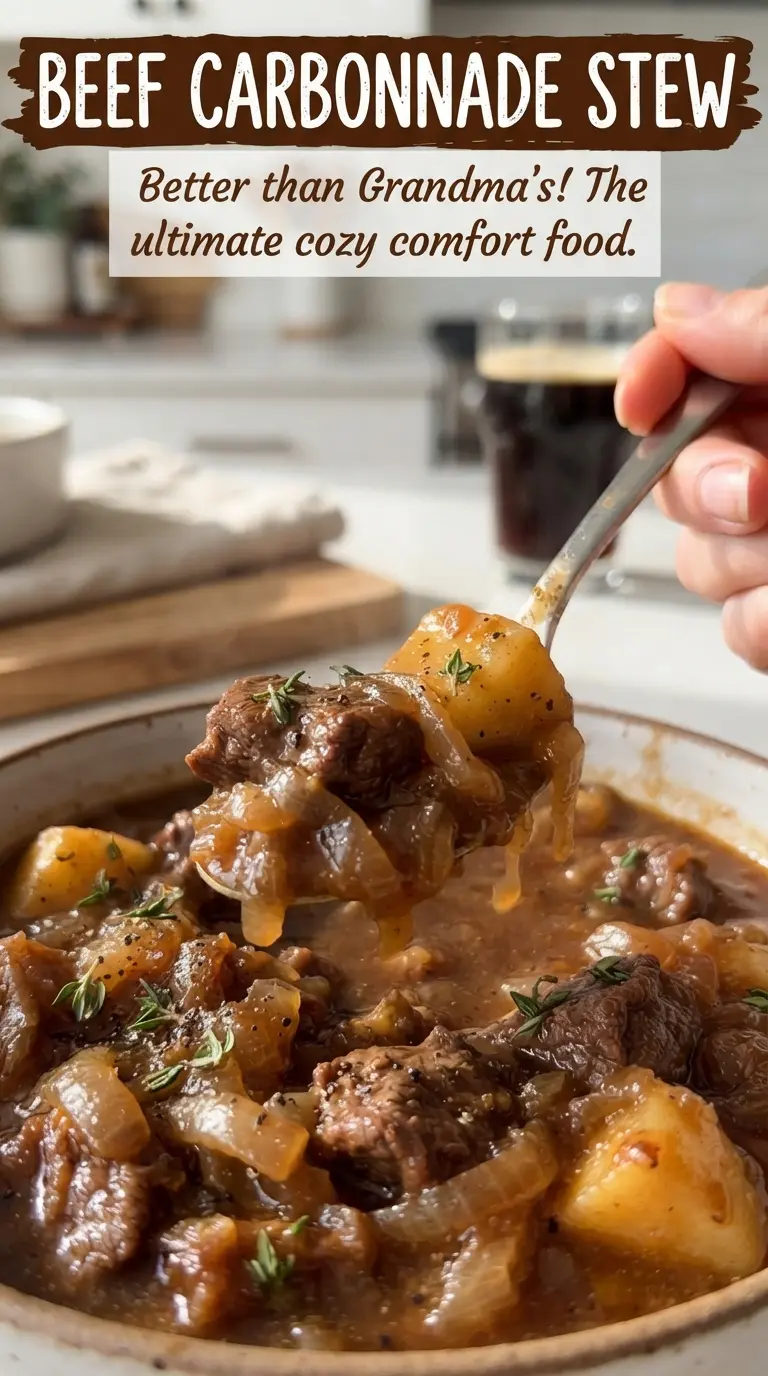
- Belgian brown ale — This is where the stew gets its maltiness and color. A Belgian-style brown ale gives depth without bitter edges. If you need a swap, use another dark, malty beer rather than a hop-forward IPA, which can turn the broth sharp.
- Onions — Four large onions look excessive until they collapse into the sauce. Thin slicing matters because it helps them soften evenly and caramelize instead of steam. Yellow onions are the best default here.
- Dijon mustard — Spread on bread, not stirred straight in, so it melts slowly into the braise and sharpens the finished sauce. Grainy mustard changes the texture; it works, but the stew will be a little rougher around the edges.
- Beef chuck — Chuck is the cut that holds up to a long braise and turns tender instead of stringy. Trim only the obvious hard fat, then cut it into large pieces so it doesn’t dry out during the long oven time.
Building the Braise So the Beef Turns Spoon-Tender
Browning the Beef in Batches
Season the beef before it hits the pan, then brown it in two or three batches so the pieces sear instead of steam. You’re looking for a dark crust and clear browning on the bottom of the pot, not a gray exterior. If the pan looks crowded, pull some meat out. Crowding traps moisture and robs you of the fond that gives the sauce its backbone.
Caramelizing the Onions Slowly
Once the beef is out, add the butter and onions and let them cook until they turn deep golden and almost jammy. Stir often enough that they don’t scorch, but don’t hurry them with high heat. The onions should smell sweet and look glossy before you add the brown sugar and flour. That flour needs a minute or two with the onions so it doesn’t taste raw in the finished stew.
Deglazing, Layering, and Tucking in the Bread
Pour in the ale, broth, and vinegar and scrape every browned bit from the bottom. That’s where the flavor is hiding. Once the liquid is in, add the thyme, bay leaves, and beef, then lay the mustard bread on top mustard-side down. It will look odd, but it needs to sit on the surface so it can soften gradually and dissolve into the braise instead of clumping at the bottom.
Finishing the Oven Braise
Cover the pot tightly and bake until the beef gives easily when pressed with a spoon. Stir once during the bake, after the bread has started to break down, to help everything blend into a smooth sauce. If the stew seems thin at the end, it usually needs a little more uncovered time rather than more flour. By then the texture is already there; it just needs the liquid to settle down.
How to Adapt This Carbonnade Without Losing the Character of the Dish
Gluten-Free Carbonnade
Use a gluten-free beer and swap the flour for a tablespoon of cornstarch mixed with a little cold broth, stirred in after the onions soften. Skip the bread on top and thicken the stew at the end instead. You’ll lose a little of the traditional texture, but the braise will still be dark, savory, and balanced.
Darker, Maltier Flavor
If you want a deeper finish, use a very dark Belgian-style ale or add a teaspoon of molasses with the brown sugar. Don’t overdo it or the stew starts to taste sweet instead of balanced. The goal is a rounded, almost toasty backbone, not dessert.
Make It Ahead
Carbonnade tastes even better the next day because the onions, beer, and mustard settle into one flavor. Cool it completely before refrigerating, then reheat gently so the beef doesn’t tighten up. If the sauce thickens too much overnight, loosen it with a splash of broth.
Storage and Reheating
- Refrigerator: Keeps for 4 days in a covered container. The sauce thickens as it chills.
- Freezer: Freezes well for up to 3 months. Thaw overnight in the refrigerator before reheating.
- Reheating: Warm gently on the stove over low heat, covered, with a splash of broth if needed. Don’t boil it hard or the beef can turn stringy and the sauce can separate.
Answers to the Questions Worth Asking
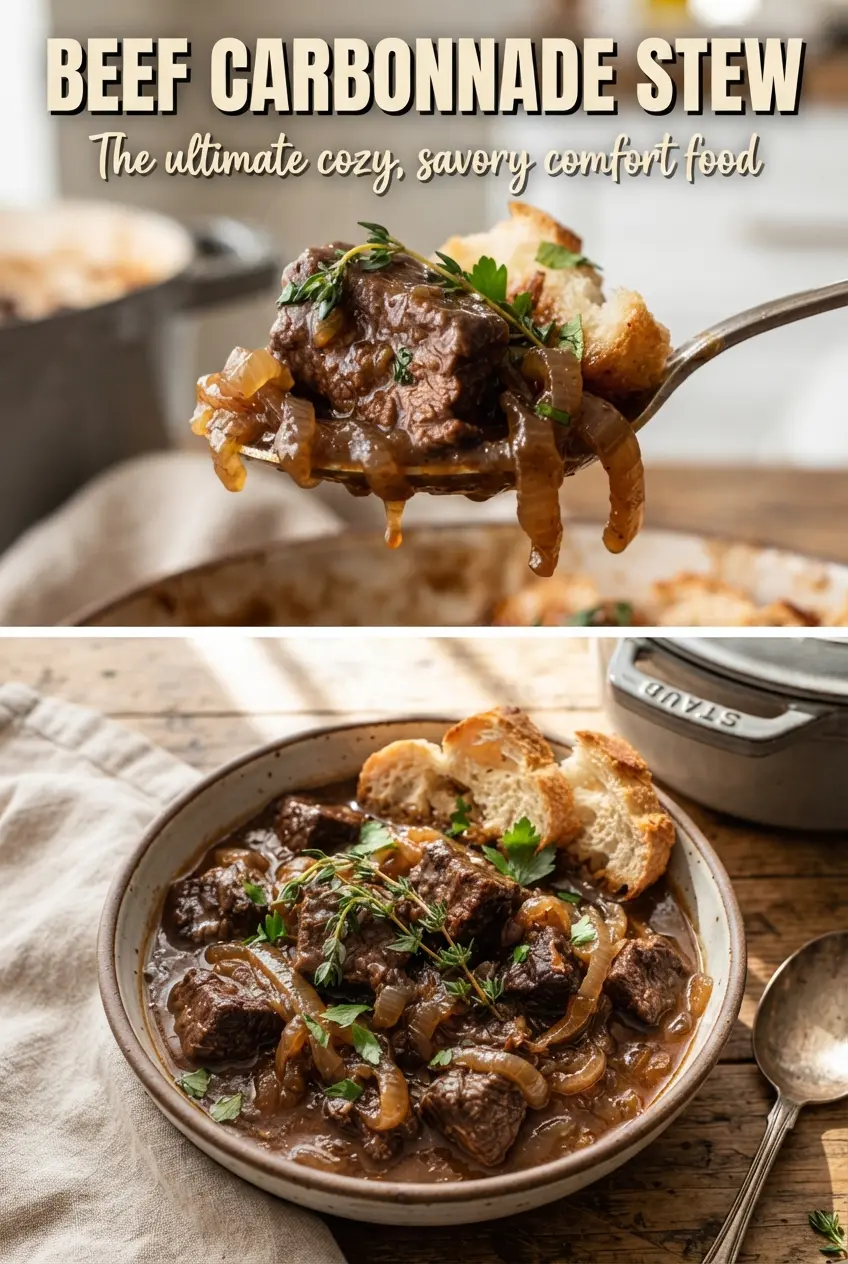
Beef Carbonnade Stew
Ingredients
Equipment
Method
- Preheat oven to 325F. Season beef with salt and black pepper, then brown in batches in 2 tablespoons butter in a Dutch oven.
- Brown the beef until well colored on the outside. Transfer browned beef to a plate while you cook the onions.
- Add the remaining butter and sliced onions to the Dutch oven. Cook for 20 minutes until the onions are deep golden, stirring occasionally for even browning.
- Stir in brown sugar and all-purpose flour. Cook and stir until the mixture looks slightly thickened.
- Pour in Belgian brown ale, beef broth, and apple cider vinegar, scraping the bottom to dissolve the browned bits. Add thyme sprigs, bay leaves, and return the beef to the pot.
- Lay the mustard-spread rustic bread on top with the mustard side down. Ensure the bread sits in the liquid as much as possible for proper dissolving.
- Cover the Dutch oven and bake at 325F for 2 1/2 hours, then stir once when the bread dissolves. Continue baking until the beef is very tender.
- Remove thyme sprigs and bay leaves. Serve hot with fries or mashed potatoes.


