Golden puff pastry, a soft wheel of brie, and a spoonful of jam turn into the kind of appetizer people hover over before dinner even starts. The shell bakes up crisp and deeply browned while the cheese underneath goes molten and rich, with just enough sweetness from the jam to keep every bite balanced. Cut into it at the table and you get that dramatic spill of warm brie that never lasts long.
The part that makes this version work is the balance of moisture and heat. A little jam keeps the brie from tasting flat, but too much will leak and soften the pastry. The pecans add crunch, and the brown sugar helps the top caramelize into a glossy crust. I’ve found that resting it after baking matters just as much as the oven time; if you slice too early, the cheese runs everywhere instead of settling into that perfect spoonable center.
Below you’ll find the small details that keep the pastry crisp, the cheese creamy, and the filling from escaping. There’s also a note on swapping the jam and a few ways to serve it if you want to change the finish without changing the method.
The pastry turned out crisp all the way around, and the brie stayed perfectly gooey after that 10-minute rest. I used fig jam and the pecans on top gave it just enough crunch to keep it from feeling too rich.
Save this baked brie with raspberry jam and puff pastry for the appetizer course that disappears first.
The Trick to Keeping the Brie Inside the Pastry
The biggest failure with baked brie is a pastry shell that splits before the cheese has a chance to soften. That usually happens when the dough is rolled too thin or the seams aren’t sealed well enough. A little rolling is useful because it gives the pastry a wider surface to wrap around the wheel, but stop before it gets fragile. The seam side belongs down on the baking sheet so the weight of the brie helps hold everything in place.
Another thing that matters here is the rest after baking. The cheese inside needs a few minutes to settle or it will pour out like sauce the second you cut it. Those extra minutes are the difference between a neat, scoopable center and a puddle that runs across the tray.
What the Jam, Brie, and Pecans Are Each Doing
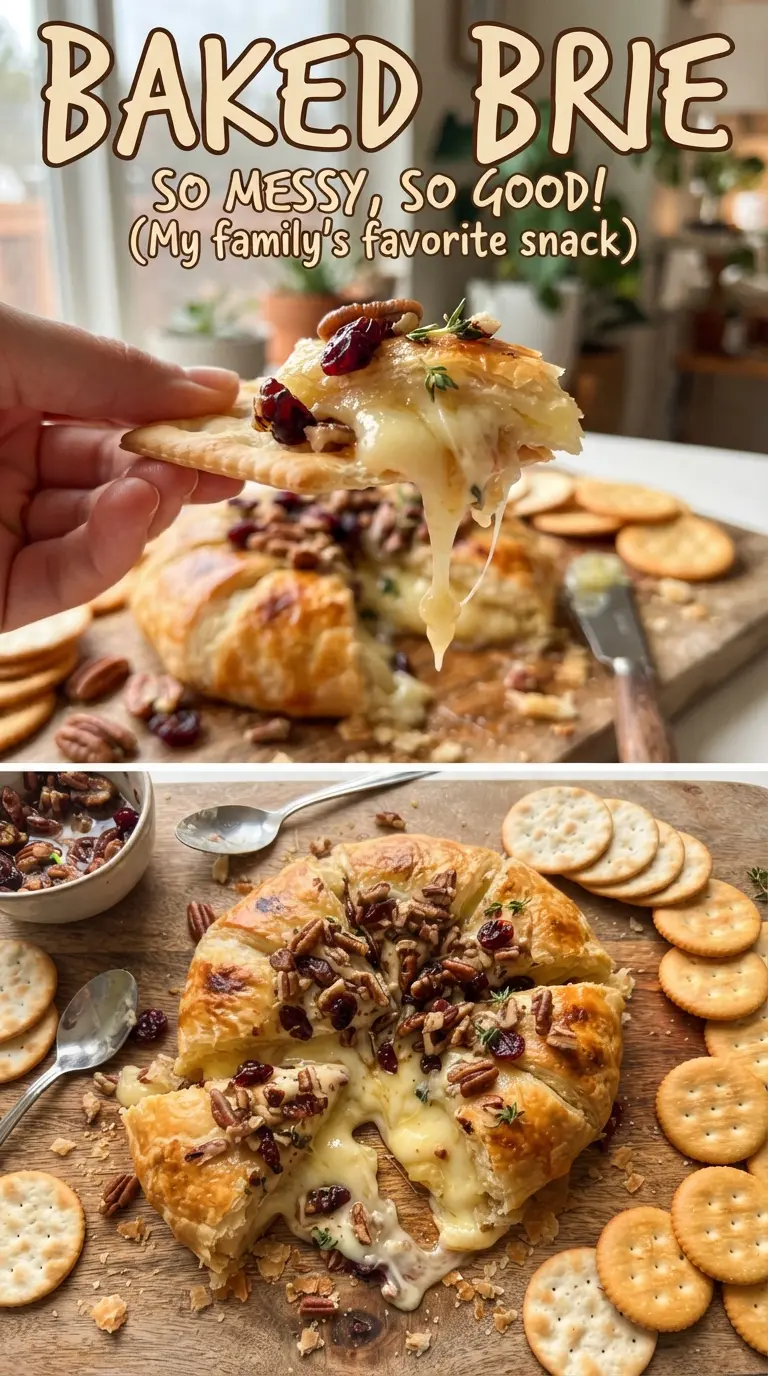
- Puff pastry — This is what gives you the crisp shell and the dramatic lift. Thaw it fully before using so it bends without cracking, and keep it cold once it’s wrapped so the butter layers stay distinct in the oven.
- Brie — A full wheel with the rind on is what makes this appetizer easy. The rind holds the shape while the center melts; if you remove it, the cheese spreads too quickly and leaks out.
- Raspberry or fig jam — The jam adds sweetness and a little acidity, which keeps the brie from tasting heavy. Fig jam gives a deeper, almost caramel note, while raspberry is brighter and more tart.
- Pecans and brown sugar — The pecans bring crunch, and the brown sugar helps the top caramelize. If you skip them, the brie still works, but you lose that contrast that makes each bite more interesting.
- Egg wash — This is what gives the pastry its deep golden color and shine. Brush it on evenly, but don’t let it pool in the seams or it can glue the layers together and block the lift.
Wrapping and Baking the Cheese So It Stays Soft, Not Leaky
Building the Base
Start with parchment on the baking sheet so any escaped jam doesn’t stick. Roll the pastry just enough to smooth the seams, then place the brie in the center. Spread the jam over the top instead of underneath; if it goes on the bottom, it’s more likely to seep into the pastry and make the base soggy.
Sealing the Package
Bring the pastry up and over the brie, trimming any bulky overlap so the package stays neat. Press the seams together firmly, because loose folds open in the oven once the butter starts to melt. Flip it seam-side down so the smooth top bakes into a tidy round instead of unraveling.
Watching for the Right Color
Bake at 400°F until the pastry is deep golden brown, not pale and shiny. Underbaked puff pastry turns soft as it cools, so don’t pull it too early just because the cheese feels ready. You want the exterior crisp enough that it gives a little crack when a knife goes through it.
The Rest That Makes the Center Creamy
Let it sit for 10 minutes before serving. That short pause thickens the cheese just enough to keep it inside the pastry while it’s still molten at the center. Garnish with rosemary right before it goes to the table, then bring out crackers and apple slices for the best mix of creamy, crisp, and fresh.
Three Ways to Change the Finish Without Breaking the Recipe
Swap the Jam Flavor
Raspberry gives the brightest contrast, while fig leans deeper and less tangy. Apricot also works if you want something softer and less assertive. Keep the amount the same so the filling stays inside the pastry instead of turning watery.
Make It Nut-Free
Leave out the pecans and add a little extra brown sugar if you want a sweeter top. The texture will be smoother and less crunchy, but the brie still bakes beautifully. If you want another bit of texture, sprinkle on finely chopped pumpkin seeds instead.
Gluten-Free Version
Use a gluten-free puff pastry that bakes up well on its own, since the method stays the same. The crust may brown a little faster or less evenly, so start checking a few minutes early. Keep the filling amount modest so the pastry has the best chance of holding together.
Storage and Reheating
- Refrigerator: Store leftovers in an airtight container for up to 2 days. The pastry softens after chilling, but the flavor still holds up.
- Freezer: I don’t recommend freezing the baked version; the cheese texture turns grainy and the pastry loses its crispness.
- Reheating: Warm slices in a 325°F oven until the pastry re-crisps and the center loosens again. The mistake is using the microwave, which makes the crust rubbery and the filling split.
Answers to the Questions Worth Asking
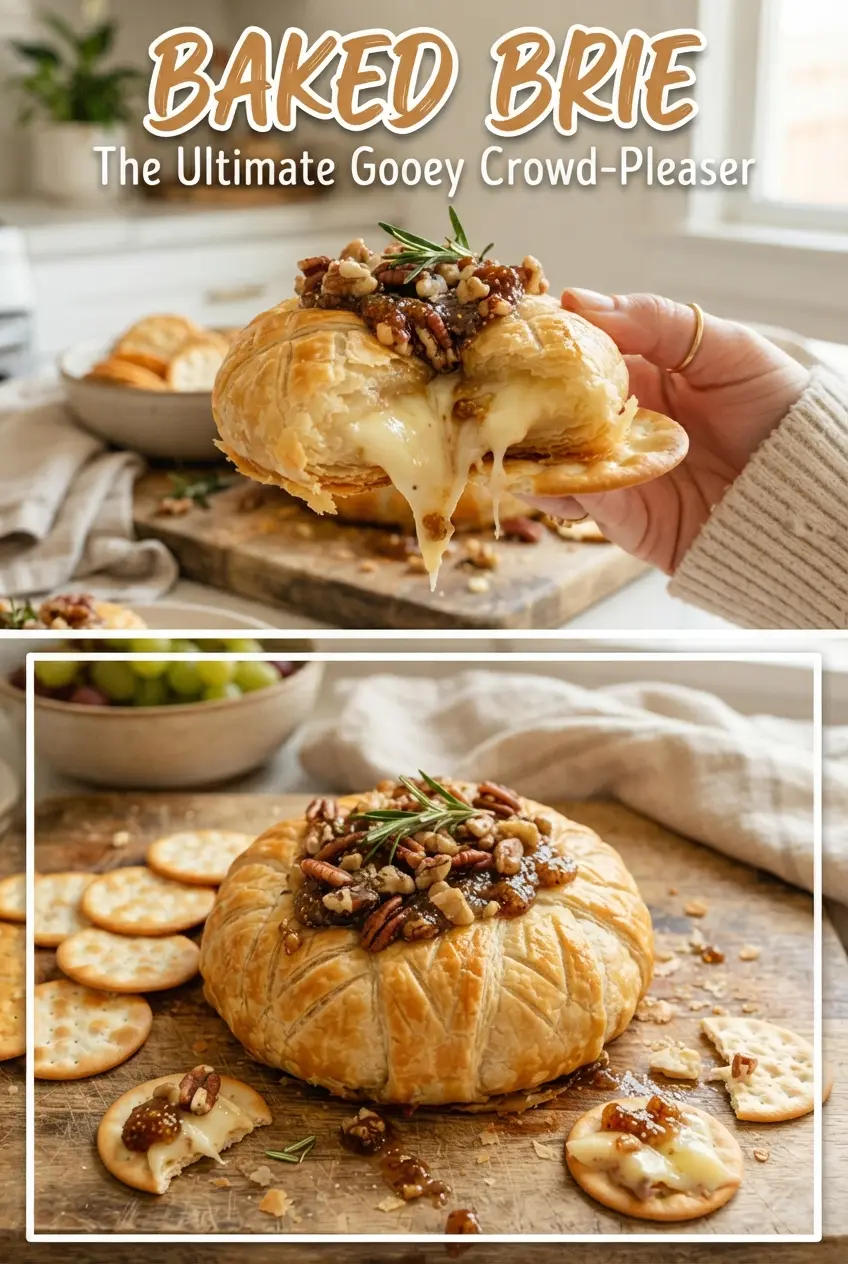
Baked Brie
Ingredients
Equipment
Method
- Preheat the oven to 400F, then line a sheet pan with parchment for easy release.
- Roll the puff pastry slightly and place the brie in the center.
- Spread the jam over the brie, then sprinkle on the chopped pecans and brown sugar so the top is evenly covered.
- Fold the pastry up over the brie, trim any excess, and press the seams to seal.
- Flip the brie seam-side down onto the baking sheet, then brush the pastry with the egg wash for shine.
- Bake at 400F for 22-25 minutes until deep golden brown, with a visibly puffed pastry surface.
- Rest for 10 minutes so the cheese sets slightly, then keep an eye on the pastry remaining crisp.
- Garnish with fresh rosemary and serve with crackers and apple slices for dipping and spreading.


