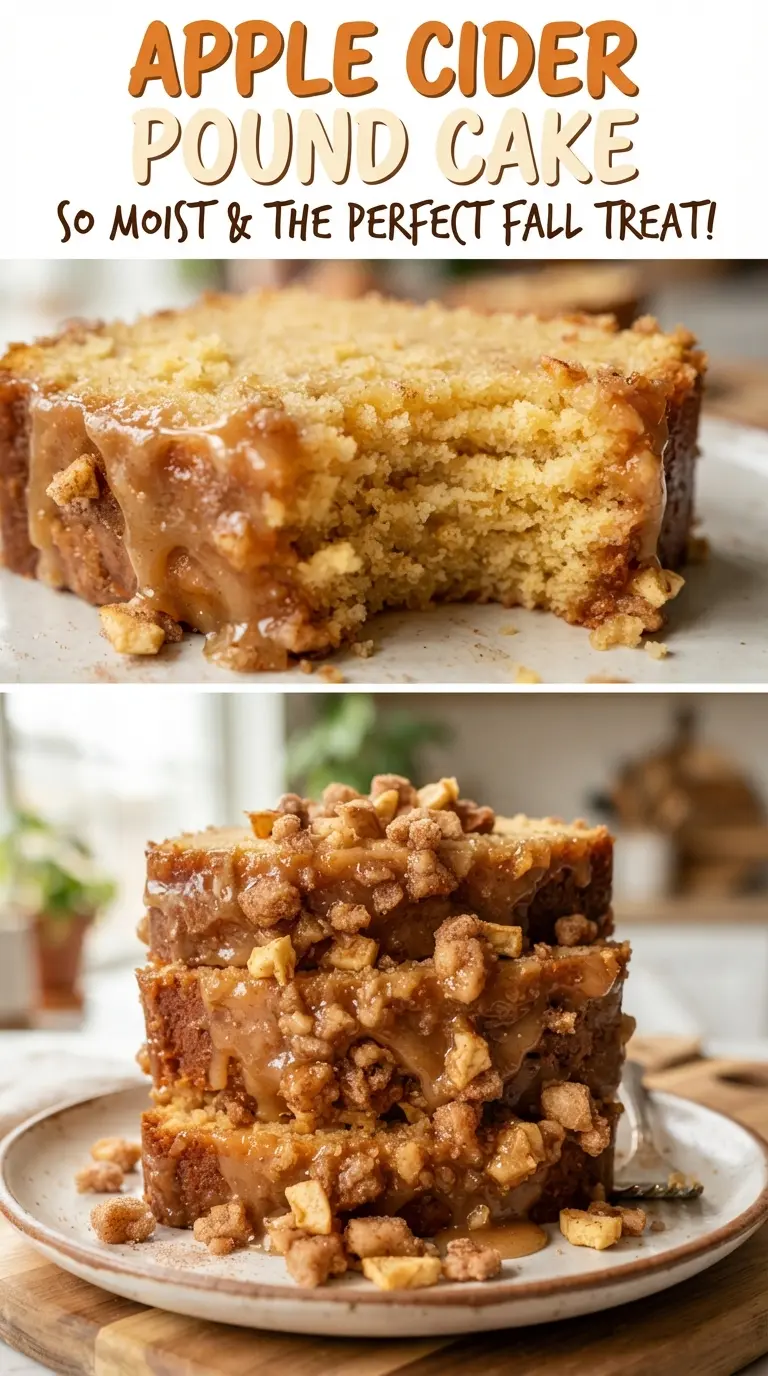
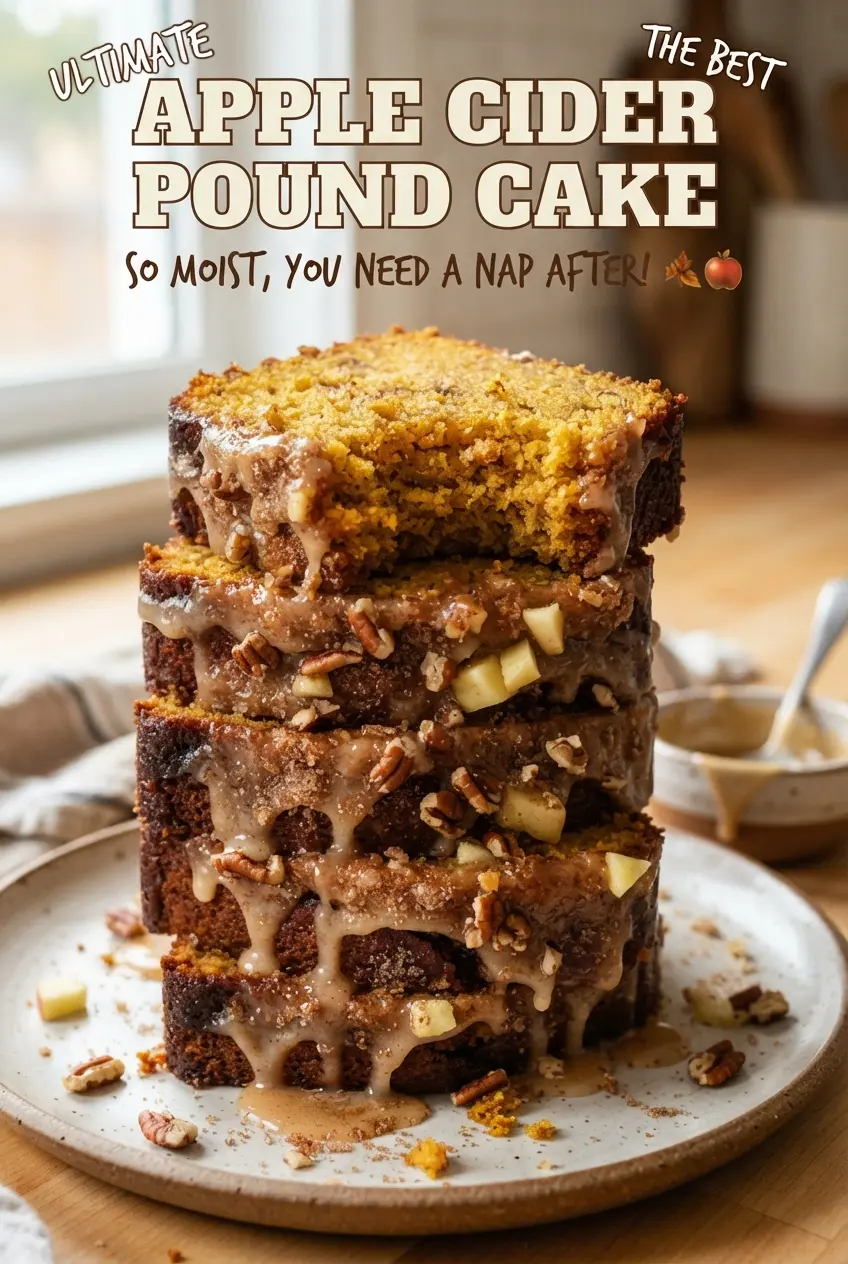
Apple cider pound cake bakes up with a tight, buttery crumb that stays tender for days, and the cider glaze seeps into the ridges of the bundt so every slice gets a little extra sparkle. The flavor lands somewhere between a classic pound cake and a warm bakery-style cider donut, but with a denser, more elegant crumb that slices cleanly instead of crumbling apart.
The part that makes this version worth keeping is the reduced cider. Cooking it down concentrates the apple flavor without watering down the batter, and that step matters more than adding extra spice ever could. Sour cream keeps the crumb plush, while the butter-and-sugar beating time builds the structure that pound cake needs for that fine, even texture.
Below, I’ve included the one step people rush most often, plus a few ways to adjust the cake if you want a stronger spice note or need a smart substitution for the sour cream.
The cider flavor came through beautifully and the crumb was tender without being heavy. My glaze set up just enough to drip down the bundt instead of disappearing into it.
Save this apple cider pound cake for the kind of dessert that slices clean, glazes beautifully, and tastes like spiced cider in cake form.
The Cider Reduction Is What Keeps This Cake from Tasting Flat
Pound cake can handle a lot of butter and sugar, but it needs concentrated flavor or it tastes like a blank canvas with spice sprinkled on top. Reducing the cider before it goes into the batter fixes that. You’re not just adding liquid; you’re adding apple flavor with some backbone, which is what lets the cake taste distinctly like cider instead of vaguely sweet and cinnamon-heavy.
The other thing that matters here is temperature and timing. Butter and sugar need a long beat until they look pale and almost fluffy, because that’s where the cake gets its lift. If you stop early, the crumb turns tight and heavy. The sour cream then steps in to keep it moist without making the batter loose enough to collapse in the oven.
What Each Ingredient Is Actually Doing in This Cake
- Apple cider — Reducing it is nonnegotiable if you want the apple flavor to show up in the finished cake. Fresh cider gives the best result because it has more real apple depth, but any plain cider works once it’s cooked down and cooled completely.
- Sour cream — This is what keeps the crumb tender and fine without making the batter thin. Plain full-fat yogurt can stand in, but the cake will taste a little tangier and the texture won’t be quite as plush.
- Butter and sugar — This is the structure of the cake. Cream them until the mixture turns noticeably lighter in color and fluffy at the edges; that air is part of what keeps a pound cake from baking up like a brick.
- Cinnamon and nutmeg — These should support the cider, not smother it. If you want a stronger bakery-style spice note, add a pinch more cinnamon, but don’t overdo the nutmeg or it takes over fast.
- Flour — All-purpose flour gives the cake enough strength to hold the bundt shape and still slice neatly. Weighing it is best if you have a scale, because too much flour is the fastest way to a dry pound cake.
Building the Batter So the Crumb Stays Fine and Tender
Reducing the Cider First
Start here and let the cider cool all the way before it touches the batter. Warm reduction melts the butter and throws off the emulsion, which can leave the cake dense around the edges. You want the reduced cider thick enough to coat a spoon lightly, then cool to room temperature so it blends in without shock.
Creaming for Lift
Beat the butter and sugar until the mixture looks pale, fluffy, and a little increased in volume. That usually takes longer than people expect, but it pays off in a finer crumb and better rise. If the mixture still looks gritty and yellow, the cake will bake up heavier than it should.
Alternating Without Overmixing
Add the flour mixture and sour cream in turns, beginning and ending with flour. That keeps the batter from breaking and prevents the gluten from tightening too much. Stop mixing as soon as the last streaks disappear; if the batter starts looking stretchy or glossy, you’ve gone too far and the cake can turn chewy.
Baking and Cooling in the Pan
Pour the batter into a well-greased and floured bundt pan and bake until a toothpick comes out clean and the top springs back lightly when touched. Don’t rush the cooling time in the pan; those 15 minutes help the cake set enough to release cleanly. Invert it too early and the center can tear. Invert it too late and the sugar can glue the cake to the pan.
Make It Brighter with Extra Cider Glaze
If you want the apple note to pop more on top, whisk the glaze a little thicker and add it to the cake once it’s fully cool. A thicker glaze sits on the ridges instead of running off, which gives you a cleaner finish and a stronger cider hit in each bite.
Dairy-Free Version
Use a good plant-based butter and plain unsweetened dairy-free yogurt in place of the sour cream. The cake will still bake up tender, but it may be a touch less rich and the crumb a little looser.
Spice-Forward Variation
Add a pinch of cloves or allspice if you want the cake to taste more like a bakery cider cake. Use a light hand. Too much turns the apple flavor muddy and takes away the clean cider finish.
Storage and Reheating
- Refrigerator: Store covered for up to 5 days. The crumb stays moist, but the glaze softens after the first day.
- Freezer: Wrap slices or the whole cake tightly and freeze for up to 2 months. Thaw wrapped at room temperature so condensation doesn’t make the glaze sticky.
- Reheating: Warm individual slices for 10 to 15 seconds in the microwave or a few minutes in a low oven. Heat just enough to take the chill off; long reheating dries out the edges fast.
Answers to the Questions Worth Asking
Apple Cider Pound Cake
Ingredients
Equipment
Method
- Reduce 1 cup apple cider to 1/2 cup over medium heat, stirring occasionally, until thickened and slightly syrupy (about 10–15 minutes). Cool completely before using; the reduced cider should look darker and coat a spoon lightly.
- Preheat the oven to 325F, then grease and flour a 10-inch bundt pan. Make sure the pan is fully coated so the ridges release cleanly.
- Whisk all-purpose flour, baking powder, baking soda, salt, cinnamon, and nutmeg in a bowl until evenly combined. The mixture should be uniform in color with no spice clumps.
- Beat softened unsalted butter and granulated sugar until very light and fluffy, about 5 minutes. Scrape the bowl once or twice; the mixture should look pale and airy.
- Add eggs one at a time, beating briefly after each addition. Stop to scrape; the batter should become smooth after the last egg.
- Mix in vanilla extract and the cooled reduced apple cider. The batter should look glossy and evenly tinted.
- Alternate adding the flour mixture and sour cream to the batter, beginning and ending with flour. Mix just until each addition disappears to keep the crumb tender.
- Pour the batter into the prepared bundt pan and smooth the top. Bake for 70–80 minutes at 325F until a toothpick comes out clean; the cake should be deep golden.
- Cool the cake in the pan for 15 minutes. It should feel set and firm; the glaze later will cling to the cooled surface.
- Invert the cake onto a rack and cool completely. The bundt should release with intact ridges and a dry, matte top.
- Whisk powdered sugar, 3 tablespoons apple cider, and 1/2 teaspoon cinnamon for the glaze until smooth and pourable. Drizzle over the cooled cake so the glaze runs into the ridges in thin ribbons.


