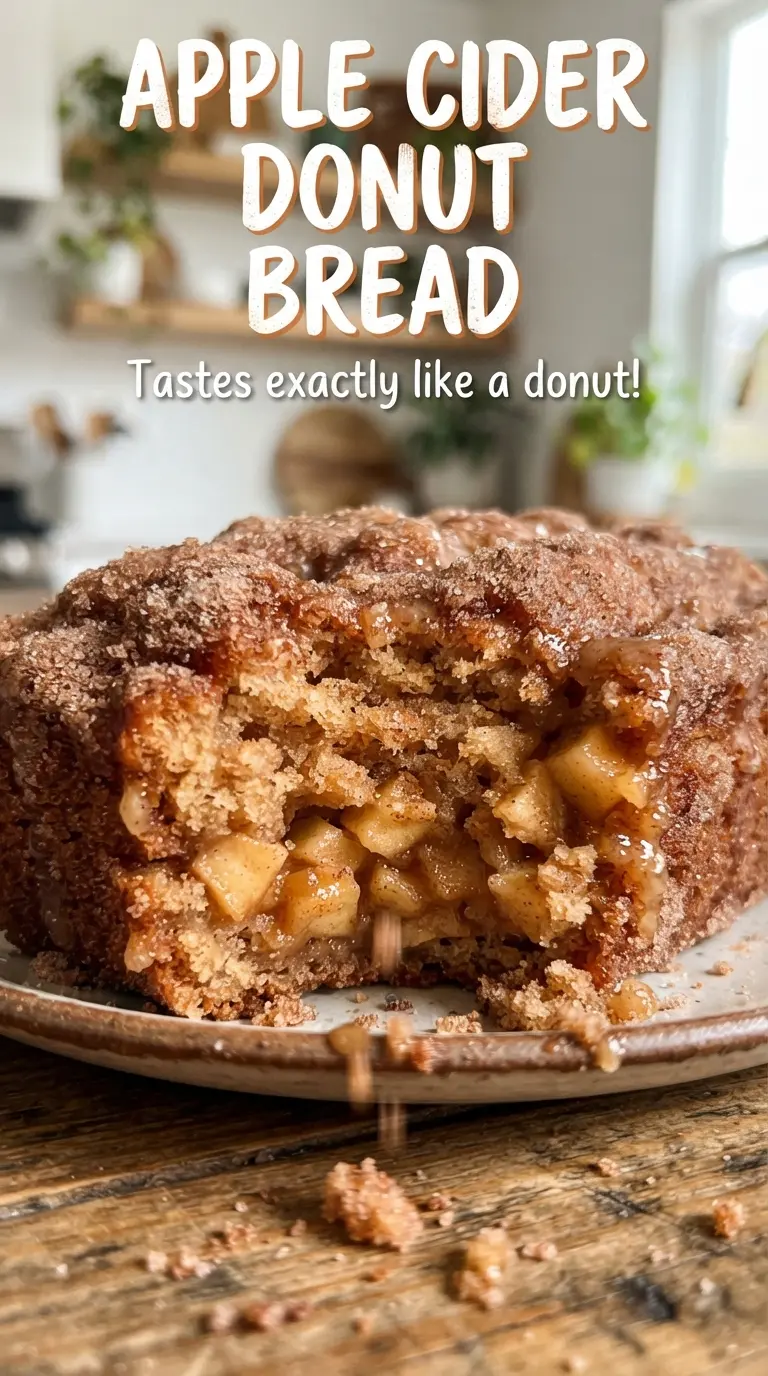
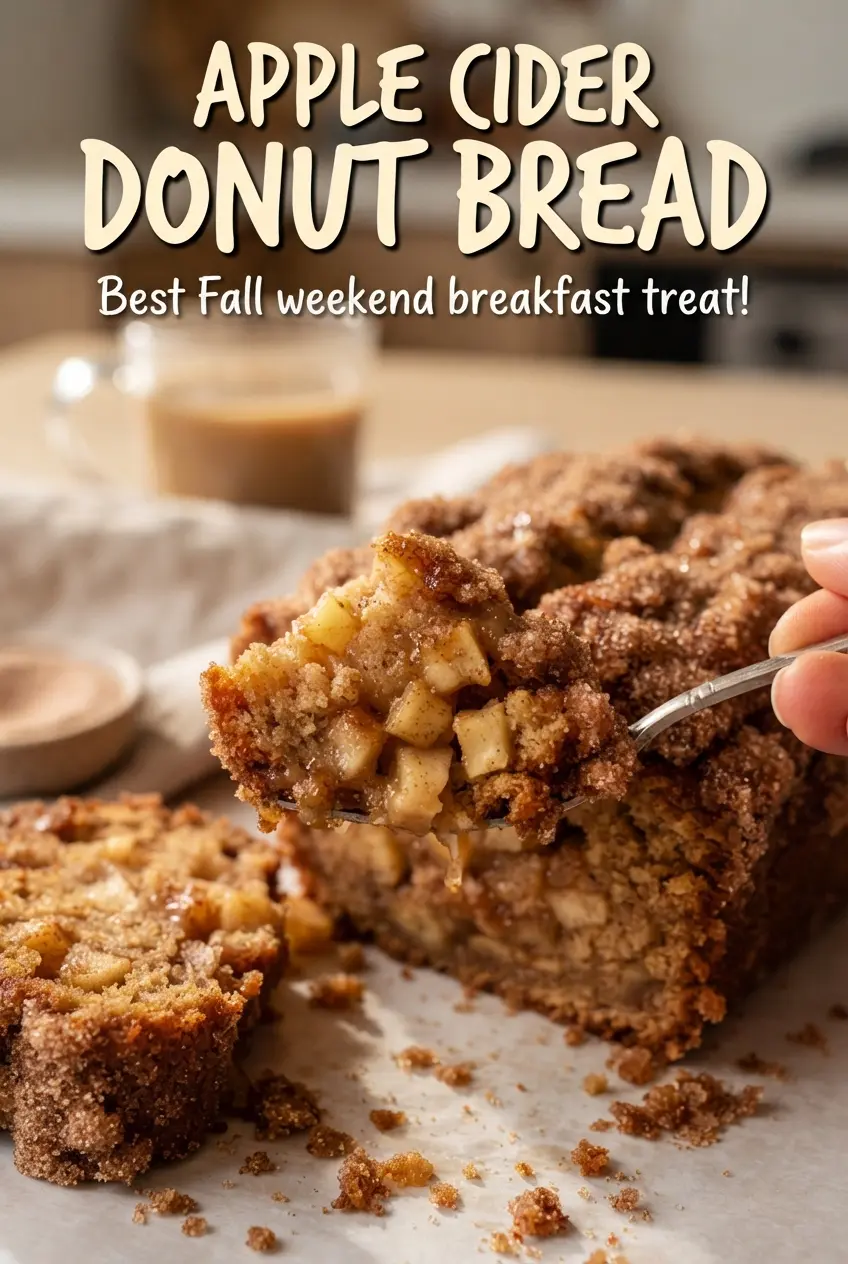
Apple cider donut bread has the same cozy, bakery-style appeal as the classic cake doughnut, but in a loaf you can slice thick and serve any time of day. The top bakes into a crunchy cinnamon sugar crust, while the crumb stays soft, tender, and packed with reduced cider flavor. It’s the kind of loaf that disappears one slice at a time, usually while it’s still warm enough for the butter to melt a little on contact.
What makes this version stand out is the cider reduction. Reducing the apple cider first concentrates the flavor instead of watering down the batter, and it gives the loaf that deep apple note people expect from a true cider bake. Sour cream keeps the crumb moist without making it heavy, and the cinnamon sugar coating goes on while the loaf is still warm so it sticks in a thick, crackly layer.
Below, I’ve included the small details that matter most: how to keep the loaf tender, why the topping goes on after baking, and what to do if you want to swap in a different dairy option without losing the texture.
The cider flavor came through beautifully and the cinnamon sugar crust turned crisp as soon as it cooled a bit. I cut into it after 15 minutes and the middle was still tender, not gummy at all.
Save this apple cider donut bread for the thick cinnamon sugar crust and tender spiced crumb.
The Step That Keeps Apple Cider Donut Bread From Tasting Flat
Most apple cider loaves lean on apple pie spice alone and end up tasting more like sweet spice cake than cider. Reducing the cider is the fix. A full cup and a half shrinks down to half a cup, which concentrates the apple flavor and keeps the batter from turning loose or gummy.
The other place this loaf can go wrong is overmixing. Once the dry ingredients hit the wet ingredients, the batter only needs a few folds. Stirring past that point builds tough gluten and steals the soft, cakey texture that makes this bread feel like a donut in loaf form.
What Each Ingredient Is Doing in This Loaf
- Apple cider — This is the flavor backbone. Reduce it first or the loaf tastes vague and the batter gets too loose. Apple juice won’t give the same depth, though it can work in a pinch if that’s all you have.
- Sour cream — This keeps the crumb moist and tender without thinning the batter. Full-fat plain Greek yogurt works too, but the loaf will be a touch tighter.
- Brown sugar — It adds a deeper molasses note that plays well with cinnamon and nutmeg. White sugar will bake up lighter and a little less rich.
- Butter — Creaming it with the sugar traps air, which helps the loaf rise with a fine, even crumb. Use softened butter, not melted, or you’ll lose that lift.
- Flour, baking powder, and baking soda — The flour gives the loaf structure, while the two leaveners balance the acidity from the sour cream and cider reduction. Measure the flour lightly so the bread doesn’t turn dry.
Building the Batter and Getting the Crust Right
Reducing the Cider
Pour the cider into a small saucepan and simmer it until it drops down to 1/2 cup. You want steady bubbles, not a hard boil, because aggressive heat can scorch the sugars before the liquid has time to concentrate evenly. Let it cool before adding it to the batter or it will soften the butter and change the texture of the loaf.
Creaming the Base
Beat the softened butter and brown sugar until the mixture looks fluffy and lighter in color. That step matters more here than in a quick bread with oil, because it gives the loaf some lift before it even goes into the oven. Add the eggs one at a time, then mix in the sour cream, vanilla, and cooled cider reduction until smooth.
Keeping the Crumb Tender
Fold in the dry ingredients just until the flour disappears. A few streaks are better than a heavy hand. If you keep stirring after that, the loaf tightens up and bakes with a dense, bready center instead of the soft, donut-like crumb you want.
Finishing with the Cinnamon Sugar Shell
Bake until a toothpick comes out clean and the top springs back when lightly touched. Let the loaf rest for 10 minutes, then brush it all over with melted butter and press on the cinnamon sugar while it’s still warm. That warmth helps the coating cling in a thick crust instead of sliding off in patches.
How to Adapt This for Different Kitchens and Different Diets
Dairy-Free Version with the Same Cozy Texture
Use a plant-based butter that bakes well and swap the sour cream for an unsweetened dairy-free yogurt. The loaf will still stay tender, though the crust may set a little less firmly than with real butter.
If You Want a Stronger Spice Profile
Add a pinch of clove or allspice to the dry ingredients. Keep it modest; too much spice buries the cider, and the loaf starts tasting like generic spice cake instead of apple cider bread.
Gluten-Free Adjustment
A good 1:1 gluten-free baking blend can work here, especially one that includes xanthan gum. The loaf may need a few extra minutes in the oven, and the crumb will be a little more delicate when sliced warm.
Storage and Reheating
- Refrigerator: Store covered for 4 days. The crust softens a bit in the fridge, but the flavor stays good.
- Freezer: Freeze the loaf, tightly wrapped, for up to 2 months. For best texture, freeze without the sugar coating and add a fresh butter-and-cinnamon-sugar finish after thawing.
- Reheating: Warm slices in a 300F oven for a few minutes or toast them lightly. Microwave reheating makes the crust sticky instead of crisp, which is the main thing you want to avoid.
Answers to the Questions Worth Asking
Apple Cider Donut Bread
Ingredients
Equipment
Method
- Simmer apple cider over medium-low heat for 15-20 minutes until reduced to 1/2 cup, then cool completely.
- Preheat the oven to 350F and grease and line a 9x5-inch loaf pan.
- Whisk all-purpose flour, baking powder, baking soda, salt, ground cinnamon, and nutmeg until evenly combined.
- Beat softened butter and packed brown sugar until fluffy.
- Beat in large eggs one at a time, then mix in sour cream, vanilla extract, and the reduced apple cider until smooth.
- Fold the dry ingredients into the wet mixture just until combined, then spread the batter into the pan.
- Bake at 350F for 50-55 minutes, until a toothpick inserted into the center comes out clean.
- Cool the loaf for 10 minutes in the pan.
- Brush the warm loaf all over with melted butter.
- Press the loaf into (or sprinkle and press on) the cinnamon sugar made from sugar mixed with cinnamon, so it forms a thick crunchy coating.


