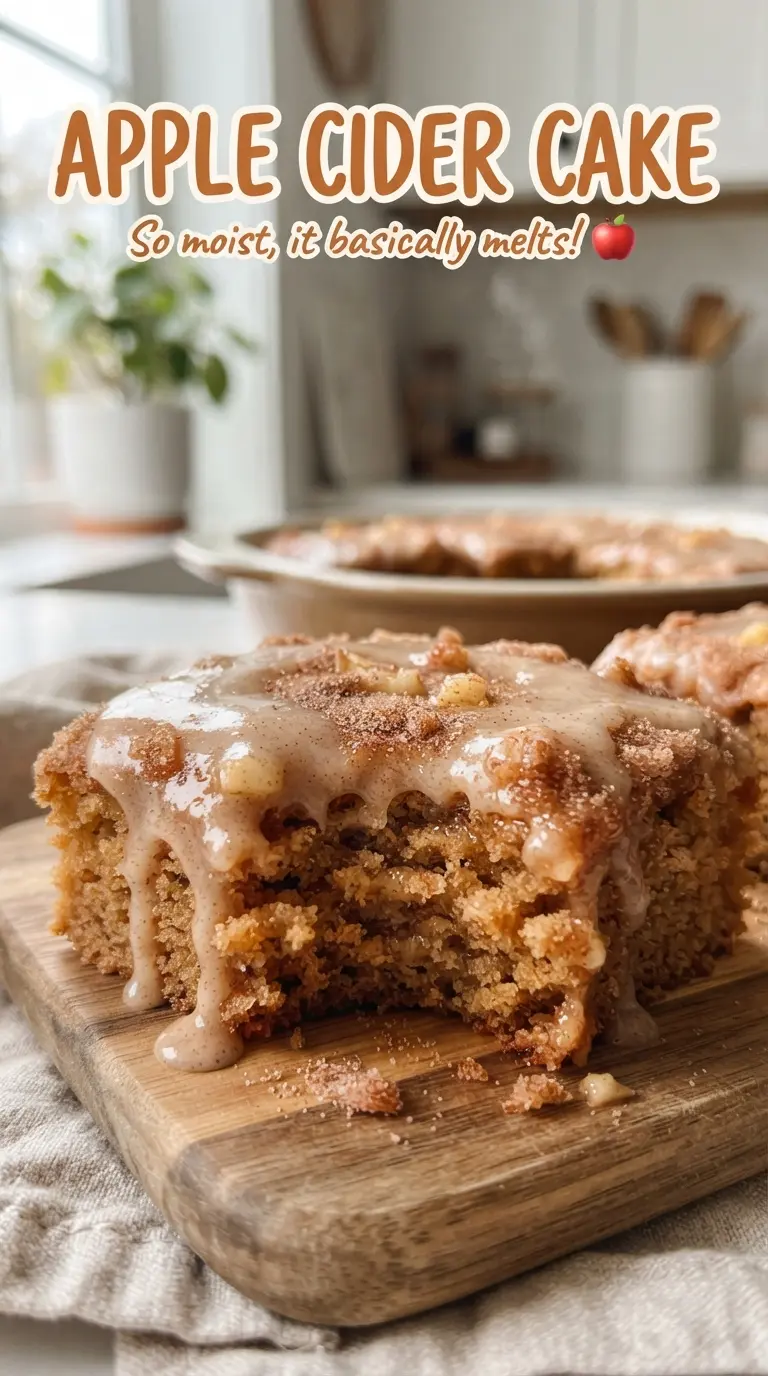
Apple cider cake bakes up with a tender crumb, warm spice, and a deep apple flavor that feels like it belongs in the cake itself, not just on the label. The cider reduction gives the batter more concentration and less water, so the finished layers taste fuller and stay moist without turning gummy. Cream cheese frosting between the layers brings the right tang to keep every bite balanced.
What makes this version work is the way the cider gets cooked down before it ever hits the bowl. That step takes a few extra minutes, but it pays off in flavor and keeps the batter from getting thin. The sour cream helps the cake stay plush, and the mix of cinnamon, nutmeg, and allspice gives it that rounded bakery-style spice without tasting flat or one-note.
Below you’ll find the timing that matters most, a few smart swaps, and the one place people usually rush the process. The cake is straightforward, but the details are what keep the layers soft and the frosting smooth.
The cider flavor came through in the cake instead of getting lost, and the layers stayed soft for two days. Reducing the cider first made a bigger difference than I expected.
Save this apple cider cake for the kind of dessert that needs spiced layers, cream cheese frosting, and a cider caramel drizzle.
The Part That Makes the Apple Flavor Hold Up in the Oven
Most apple cakes lean on fresh fruit alone, which can bake up softly flavored unless the fruit is cooked down or paired with something concentrated. Reducing the cider first is what keeps this cake from tasting like plain spice cake with a whisper of apple. It gives you a stronger flavor base without adding extra liquid that would loosen the batter.
The other mistake is overmixing once the flour goes in. This batter should look smooth, but it doesn’t need a long beating after the dry ingredients are added. Stir just until the flour streaks disappear and the batter thickens evenly, or the crumb can turn tight instead of tender.
- Apple cider — Reduce it to half a cup and cool it completely before mixing it into the batter. Hot cider can melt the butter and throw off the texture.
- Brown sugar — This adds moisture and a deeper caramel note that white sugar can’t match. Light or dark both work, but dark brown sugar gives a richer finish.
- Sour cream — It keeps the cake soft and adds a little tang to balance the frosting. Plain full-fat Greek yogurt works if that’s what you have, though the crumb will be a touch firmer.
- Cream cheese frosting — The tang is what keeps the cake from tasting one-dimensional. If you swap to a buttercream, the cake tastes sweeter and loses some of that contrast.
What Each Ingredient Is Actually Doing in This Recipe
- Primary ingredient (the star) — Quality matters most. Choose the best you can find.
- Cooking medium (oil, butter, or broth) — This carries flavors and prevents dryness.
- Seasonings (salt, pepper, spices, herbs) — Layer flavors so nothing overpowers. Build depth gradually.
- Aromatics (garlic, onion, herbs) — Cook with fat to bloom flavors. Become the foundation.
- Supporting ingredients — Complement the main ingredient without overpowering it.
- Sauce or liquid (if applicable) — Brings flavors together. Balance richness with acid.
- Acid (lemon, vinegar, wine, or other) — Brightens and prevents flat-tasting results.
- Final finish (garnish, glaze, or sauce) — Prevents one-dimensional taste and adds visual appeal.
Building the Batter Without Losing the Tender Crumb
Reducing the Cider
Pour the cider into a small saucepan and simmer it over medium heat until it’s reduced to 1/2 cup. You’ll smell the apple flavor getting deeper before you see much change in volume. Let it cool completely before it goes into the batter, because warm cider can loosen the butter mixture and make the cake bake up denser in the middle.
Whipping Butter and Sugar
Beat the softened butter and brown sugar until the mixture looks pale and fluffy, not just combined. This step traps air, which helps the layers rise with a lighter texture. Add the eggs one at a time so the batter stays smooth; if it looks slightly curdled after an egg goes in, that’s normal and it will come together once the flour and sour cream are added.
Finishing the Batter
Alternate the dry ingredients with the sour cream, starting and ending with the flour mixture. That keeps the batter stable and prevents the sour cream from pooling at the bottom of the bowl. Stop mixing as soon as you no longer see dry flour, then divide the batter evenly between the pans so the layers bake at the same rate.
Baking and Cooling
Bake until the tops spring back lightly and a toothpick comes out clean or with a few moist crumbs. If the centers still jiggle, give the cakes a few more minutes instead of guessing, because an underbaked middle will collapse when you try to frost it. Cool the layers completely before frosting, or the cream cheese frosting will slide and turn soft fast.
Three Ways to Adjust the Cake Without Losing What Makes It Work
Make it gluten-free
Use a cup-for-cup gluten-free flour blend that includes xanthan gum. The cake will still be tender, but it may need an extra minute or two in the oven, and the crumb will be slightly softer when sliced.
Swap the frosting for a less tangy finish
Use vanilla buttercream instead of cream cheese frosting if you want a sweeter, more classic layer cake. The cake still tastes great, but you’ll lose the sharp contrast that makes the cider and spice flavors stand out.
Turn it into cupcakes
Divide the batter into lined muffin tins and start checking around 18 to 20 minutes. Cupcakes give you more frosting-to-cake ratio and bake a little drier if they go too far, so pull them as soon as the centers spring back.
Storage and Reheating
- Refrigerator: Store covered for up to 5 days. The frosting stays best chilled, but the cake layers soften after about a day.
- Freezer: Freeze unfrosted layers tightly wrapped for up to 2 months. Thaw them in the fridge before frosting so condensation doesn’t loosen the icing.
- Reheating: Let chilled slices sit at room temperature for 20 to 30 minutes before serving. Microwaving a frosted slice makes the frosting greasy, so room-temp thawing works better here.
Answers to the Questions Worth Asking
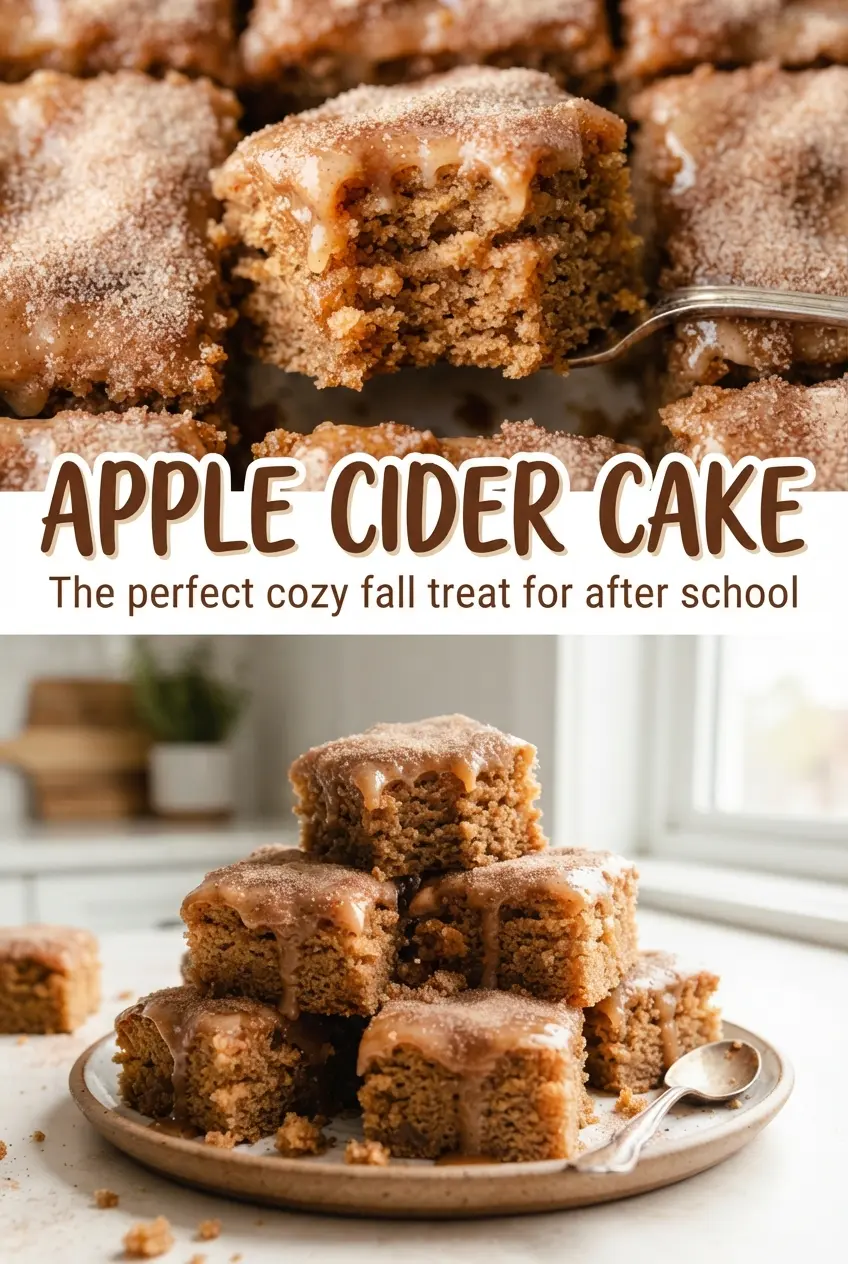
Apple Cider Cake
Ingredients
Equipment
Method
- Reduce the apple cider to 1/2 cup over medium heat, then cool completely so it won’t melt the batter later.
- Preheat the oven to 350F and grease two 9-inch round cake pans for even release.
- Whisk the all-purpose flour, baking powder, baking soda, salt, and spices together until evenly combined.
- Beat the softened unsalted butter and packed brown sugar until very fluffy, then add the eggs one at a time, followed by vanilla extract and the reduced apple cider.
- Alternate adding the flour mixture and sour cream to the batter, mixing just until smooth after each addition.
- Divide the batter between the two pans and bake 35-40 minutes at 350F until a toothpick comes out clean.
- Cool the cakes completely before frosting to keep the layers from sliding or the frosting from melting.
- Frost the cake between layers and over the top with cream cheese frosting made by combining cream cheese, butter, powdered sugar, vanilla, and 2 tbsp cider until spreadable.


