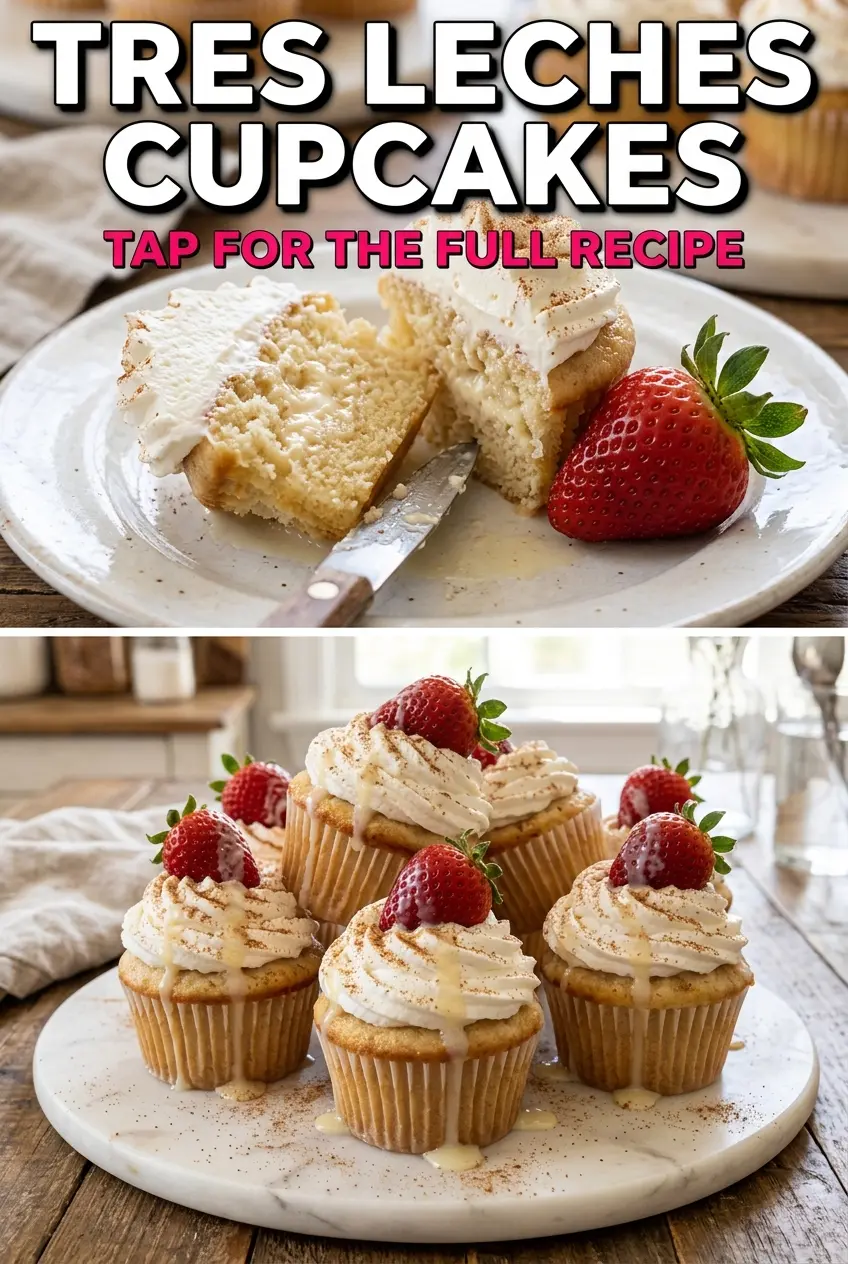
Fluffy tres leches cupcakes disappear fast because they hit the exact sweet spot between cake and pudding: a light vanilla crumb that drinks in the milk mixture without collapsing, then gets finished with a cloud of whipped cream on top. The best part is that every cupcake turns out evenly soaked, so you don’t have to slice and serve from a pan or worry about the first piece being wetter than the last.
The trick is all in the structure. Whipped egg whites give the cupcakes enough lift to handle the three-milk soak, and the warm cakes absorb the liquid much more evenly than cooled ones. The batter stays plain on purpose. That clean vanilla base lets the condensed milk, evaporated milk, and cream do the heavy lifting instead of competing with extra flavors.
Below you’ll find the little details that keep the crumb tender, the soak balanced, and the topping stable enough to pipe cleanly. If tres leches cakes have ever turned gummy or soupy for you, the notes here will help with that.
The cupcakes soaked up the milk mixture perfectly without falling apart, and the whipped cream held its shape even after chilling overnight. My family kept sneaking them straight from the fridge.
Save these tres leches cupcakes for the days when you want a soaked, cloud-topped dessert that chills beautifully and serves neatly.
The Step That Keeps Tres Leches Cupcakes From Turning Soggy
The balance here is delicate: the cupcakes need enough structure to hold a full milk soak, but not so much structure that they turn dry and spongy. That starts with whipped egg whites. They add lift without making the crumb heavy, which is exactly what you want when the cake has to absorb liquid later.
The other thing people get wrong is the soak. Warm cupcakes drink the milk mixture more evenly, while cold cupcakes can resist it and leave puddles on top. Piercing each cupcake several times creates little channels for the milk to move through, and baking just until golden keeps the crumb open instead of tight.
- Eggs, separated — The whites are doing the lifting here. If you beat them to stiff peaks and fold them in gently, the cupcakes stay airy enough to absorb the milk without turning dense. Skip the separation and you’ll lose the texture that makes these cupcakes work.
- Whole milk — This adds richness to the batter itself, but it isn’t a substitute for the soak. Use it at room temperature so it blends smoothly with the yolks and doesn’t seize the batter.
- Sweetened condensed milk — This is the sweetness and body of the soak. There isn’t a clean substitute that gives the same thick, caramel-like milkiness, so this is the ingredient to buy full strength.
- Evaporated milk — It keeps the soak from becoming cloying and gives the mixture a lighter dairy flavor. If you absolutely need a swap, half-and-half is closer than regular milk, but the result will be richer and less classic.
- Heavy cream — Used in both the soak and the topping, it adds softness and roundness. In the soak, it loosens the condensed milk enough to pour evenly; in the topping, it whips into a stable cloud if it stays cold.
- Fresh strawberries — Not required for sweetness, but they cut through the richness and give each cupcake a clean finish. Slice them right before serving so they stay bright and don’t bleed into the cream.
How to Build the Batter and Soak Without Flattening the Cupcakes
Whipping the Yolks and Folding the Flour
Beat the yolks with the sugar until the mixture turns pale and thick enough to ribbon off the whisk. That step dissolves the sugar and gives the cake a finer crumb, which matters because these cupcakes need to hold liquid later. Add the milk and vanilla before the flour so the batter loosens just enough to fold without overmixing. If the flour streaks linger, stop as soon as they disappear; overworked batter gives you tight cupcakes that don’t absorb evenly.
Bringing in the Egg Whites
Whip the whites until stiff peaks stand straight up and don’t slump when you lift the beaters. Then fold them into the batter in two additions, using a broad spatula and a light hand. The batter should look airy and slightly marbled, not perfectly smooth. If you stir aggressively here, the whites deflate and the cupcakes bake up flat, which leaves you with a dense base that can’t hold the milk mixture well.
Baking and Piercing While Warm
Fill the liners about two-thirds full and bake until the tops are just golden and spring back when touched. Overbaking dries out the crumb before the soak even begins, so pull them as soon as they pass the toothpick test. Pierce each cupcake several times right after it comes out of the oven; a toothpick or skewer works best because the holes stay narrow and let the milk flow through instead of sitting on top. That warm-from-the-oven timing is what keeps the soak even.
Soaking and Chilling
Whisk the three milks together until fully smooth, then pour slowly over the cupcakes in stages. Give the liquid a minute to disappear before adding more so each liner has time to absorb it. Refrigerate for at least four hours, and longer if you can, because the flavor settles and the texture turns more cohesive after chilling. If there is visible pooling after a few minutes, the cupcakes probably needed a few more holes or were slightly underbaked.
How to Adapt These Cupcakes for Different Needs
Make-ahead for a party
Bake and soak the cupcakes a full day ahead, then chill them covered. Add the whipped cream and strawberries close to serving time so the topping stays fluffy and the fruit stays fresh. The texture improves after a long chill, which makes this one of the best desserts to prep early.
Dairy-light adjustment
You can swap the whipped topping for a stabilized coconut cream topping if you need a lighter dairy finish, but the classic tres leches soak depends on the condensed and evaporated milk for its signature texture. Replacing those changes the dessert into something else, so this is best for the topping only.
Gluten-free version
A good 1:1 gluten-free baking blend can work here if it contains xanthan gum, but the crumb will be a little more tender and slightly less springy. Mix only until the flour disappears, because gluten-free batters can turn gummy fast when overmixed.
Strawberry-topped finish
If you want a brighter finish, add a thin slice of strawberry on top of each piped swirl and tuck another piece against the side. Keep the fruit dry and cut it just before serving so it doesn’t weep into the cream and blur the topping.
Storage and Reheating
- Refrigerator: Store covered for up to 3 days. The cupcakes stay moist, but the topping is best in the first 24 hours.
- Freezer: Freeze the baked, unsoaked cupcakes only. Wrap tightly and freeze for up to 2 months, then thaw before adding the milk mixture and topping. The soaked cupcakes don’t freeze well because the dairy texture gets grainy.
- Reheating: These are meant to be served cold, not reheated. If the cupcakes are too firm straight from the fridge, let them sit at room temperature for 15 to 20 minutes so the crumb softens and the cream tastes less heavy.
Questions I Get Asked About This Recipe
Tres Leches Cupcakes
Ingredients
Equipment
Method
- Preheat the oven to 350°F and line a muffin tin with cupcake liners. Make sure the oven is fully heated before batter goes in.
- Whisk the all-purpose flour, baking powder, and salt together in a bowl until evenly combined. The mixture should look uniform with no visible clumps.
- Beat the egg yolks with sugar until pale. Keep beating until the mixture looks lighter and slightly thicker.
- Add whole milk and vanilla extract to the yolk mixture, then mix until smooth. The batter base should be glossy and well blended.
- Fold the flour mixture into the yolk batter gently until no dry streaks remain. Stop as soon as it’s combined so the crumb stays fluffy.
- Beat the egg whites until stiff peaks form. You should see peaks that stand straight when you lift the beaters.
- Gently fold the egg whites into the batter until light and airy. The batter should look smooth with a few faint bubbles.
- Fill the cupcake liners 2/3 full. Distribute batter evenly so each cupcake bakes at the same rate.
- Bake at 350°F for 16-18 minutes until golden. A toothpick inserted in the center should come out mostly clean.
- Immediately after removing the cupcakes from the oven, pierce each cupcake several times with a toothpick. This creates openings for the milk mixture to absorb quickly.
- Whisk together sweetened condensed milk, evaporated milk, and heavy cream. The liquid should be smooth and pourable.
- Pour the milk mixture evenly over the warm cupcakes. The tops should soak in while the cups still look plump.
- Cool the cupcakes completely at room temperature. Wait until they’re fully cooled so the soaking sets well.
- Refrigerate the cupcakes for at least 4 hours. The texture will firm up into a moist, tres leches crumb.
- Before serving, beat heavy whipping cream, powdered sugar, and vanilla extract until stiff peaks form. The mixture should hold a peak when lifted.
- Pipe the whipped cream onto the chilled cupcakes. Create swirled, cloud-like mounds on each top.
- Garnish with fresh strawberries. Add them right before serving for bright color and freshness.