Southern potato salad needs to be creamy, lightly tangy, and sturdy enough to hold its shape on a picnic plate without turning watery or gluey. The best versions hit all three at once: tender potatoes, plenty of egg, and a dressing that clings instead of sliding off. When it’s done right, each bite has soft potato, a little crunch from celery and onion, and that unmistakable sweet-savory balance from relish and mustard.
Yukon gold potatoes are the right choice here because they stay buttery without collapsing. I also like to dress the potatoes while they’re still just warm enough to absorb the seasoning, then chill the salad long enough for the flavor to settle in. That resting time matters. If you serve it too early, the dressing tastes separate. After a few hours in the fridge, everything comes together the way Southern potato salad should.
Below, I’ve included the small details that keep the potatoes from getting mushy, plus the one dressing trick that keeps the whole bowl tasting balanced instead of flat. If you’ve ever had a potato salad that was too stiff, too sweet, or oddly bland, this version fixes all three.
The dressing soaked in after a few hours and the potatoes stayed intact instead of turning mushy. The sweet relish and mustard gave it that classic Southern taste my family was looking for.
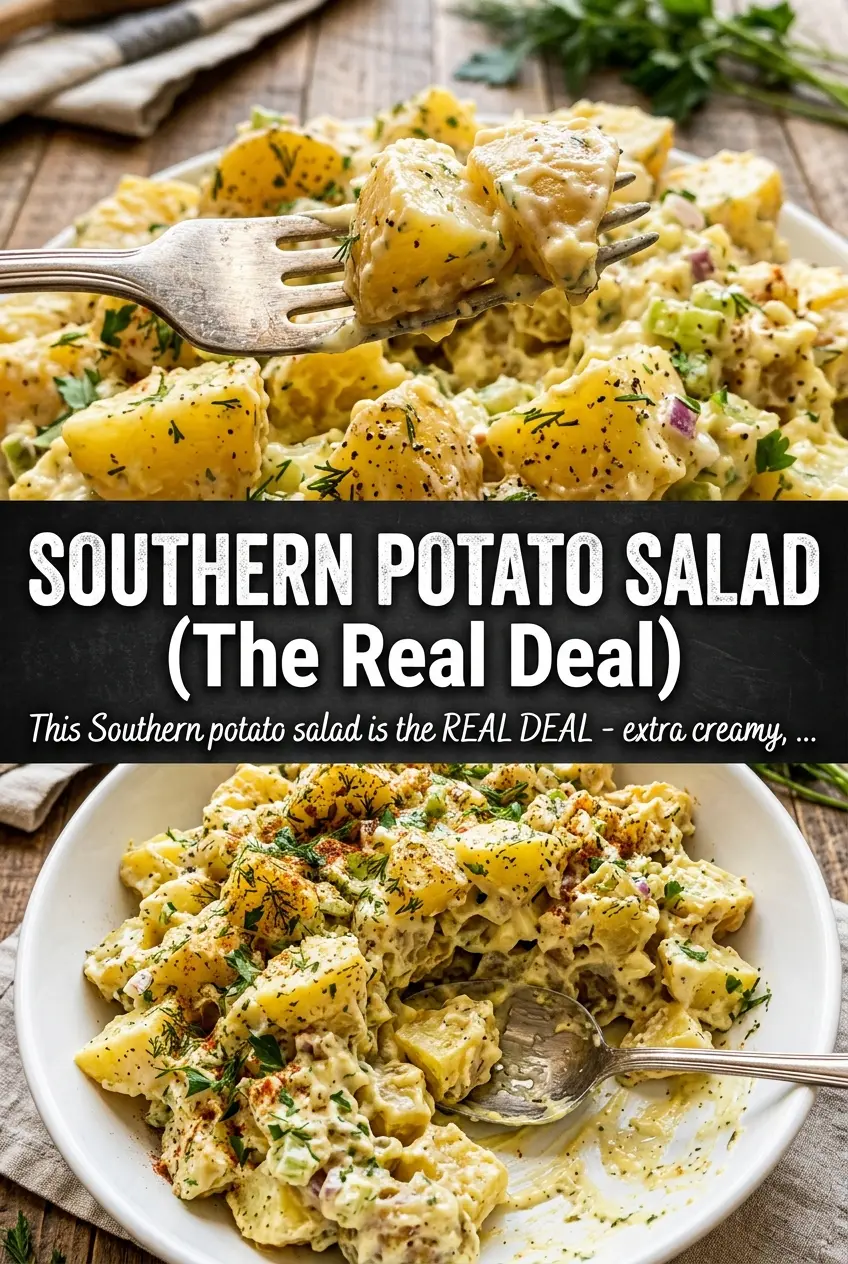
Creamy Southern potato salad with eggs, relish, and paprika is one to keep on hand for picnics, cookouts, and make-ahead sides.
The Reason This Potato Salad Tastes Better After It Sits
The biggest mistake with potato salad is treating it like a toss-and-serve dish. Warm potatoes need time to absorb salt, vinegar, and mustard, which is why the flavor gets deeper after chilling instead of flatter. If you add the dressing only after everything is cold, the potatoes taste coated on the outside and bland in the middle.
Another thing people miss is texture. Yukon gold potatoes are soft and buttery, but they still hold a clean cube if you stop cooking when a fork slips in without resistance. Overcooked potatoes break apart the second you fold in the dressing, and the bowl turns into mash with add-ins. That’s why the drain-and-cool step matters just as much as the seasoning.
- Warm potatoes absorb seasoning best — Tossing them while they’re still a little warm helps the dressing settle into the centers.
- Yukon golds hold their shape — They’re creamy without being dry, which gives you a salad that stays spoonable.
- Chilling changes the texture on purpose — Three hours gives the dressing time to thicken and marry with the potatoes.
- Gentle folding keeps the cubes intact — Stirring hard will smash the potatoes and make the salad heavy.
What Each Ingredient Is Actually Doing in the Bowl
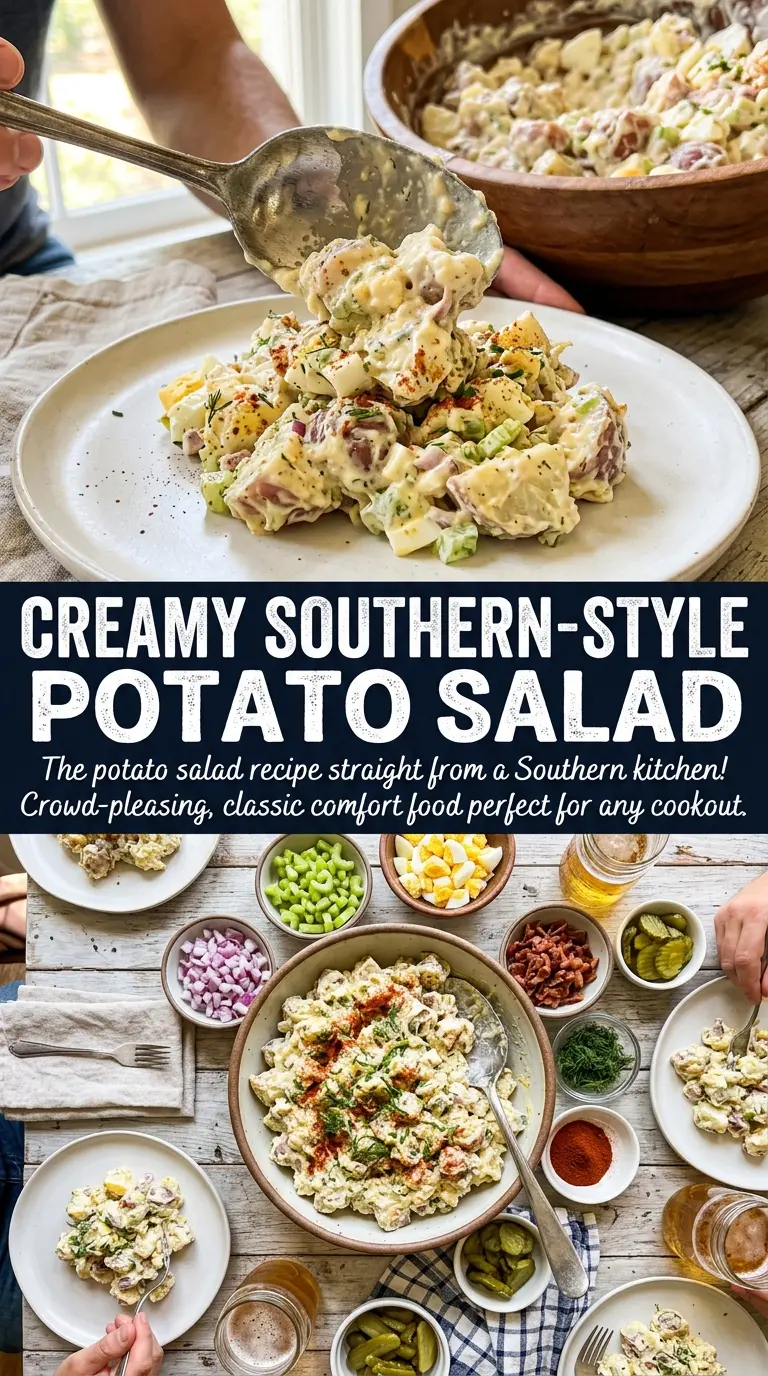
- Yukon gold potatoes — These give you the right balance of creaminess and structure. Russets get too soft, and waxy potatoes can taste a little firm in a salad like this.
- Mayonnaise — This is the base of the dressing, so use one you like the taste of straight from the jar. A lighter spread won’t give the same body.
- Yellow mustard — It adds color, sharpness, and that classic Southern potato salad tang. Dijon works in a pinch, but it tastes different and less familiar in this dish.
- Apple cider vinegar — The vinegar keeps the dressing from tasting heavy and helps wake up the potatoes after chilling. Don’t skip it unless you want the salad to lean flat and sweet.
- Sweet pickle relish — This brings sweetness, crunch, and a little briny lift all at once. Chopped sweet pickles work if that’s what you have; just mince them fine so they distribute evenly.
- Hard-boiled eggs — They make the salad richer and give you that classic Southern texture. Chop them into medium pieces so they stay visible instead of disappearing into the dressing.
- Celery and onion — These are your crunch and bite. Dice them small so they season the salad without overpowering it.
- Sugar — Just enough to round out the vinegar and mustard. It shouldn’t taste sweet, only balanced.
- Celery seed — This adds a specific old-fashioned flavor that makes the salad taste complete. It’s small, but it matters.
Building the Salad So It Stays Creamy, Not Heavy
Cooking the Potatoes to the Right Point
Start the potatoes in well-salted water and cook them until a fork slides in easily but the cubes still look intact at the edges. Drain them as soon as they’re tender. If you let them sit in hot water a few extra minutes, they’ll keep cooking and start to fall apart before the dressing even goes in.
Mixing the Dressing Before It Hits the Bowl
Stir the mayonnaise, mustard, vinegar, sugar, celery seed, salt, and pepper together until the dressing looks smooth and glossy. This is where the flavor balance gets set, so taste it before it goes into the potatoes. If it tastes sharp at this stage, that’s fine; the potatoes will mellow it after chilling.
Folding Without Smashing the Potatoes
Add the potatoes, eggs, celery, onion, and relish to a large bowl, then pour the dressing over the top and fold with a spatula. Stop as soon as the mixture looks evenly coated. If you stir like you’re making mashed potatoes, the salad turns dense and loses the chunky texture that makes it good.
Chilling for the Final Flavor
Cover the bowl and refrigerate it for at least 3 hours, or overnight if you have the time. The salad will thicken as it chills, and the seasoning will settle into the potatoes instead of sitting on top. Right before serving, taste again and add a little salt, pepper, or paprika if it needs a final nudge.
How to Adjust This Southern Potato Salad for Different Needs
For a tangier, more old-school bite
Increase the vinegar by 1 tablespoon and back off the sugar a little. That shifts the salad toward a sharper Southern style without changing the texture. It’s the best move if you like potato salad that tastes bracing instead of sweet.
Dairy-free by nature
This version already works without dairy as long as your mayonnaise is dairy-free, which most standard brands are. You don’t lose anything important here because the creaminess comes from the mayo and eggs, not milk or sour cream.
For a lighter texture
Replace up to half the mayonnaise with plain Greek yogurt if you want a brighter, tangier salad. The tradeoff is a less classic Southern flavor and a dressing that firms up a little more in the fridge, so add it only if you like that sharper finish.
If you need to make it ahead for a crowd
Cook the potatoes and eggs a day ahead, then assemble the salad the next morning so it has enough chill time before serving. Potato salad is one of those dishes that gets better after resting, but only if it starts out fully chilled and covered.
Storage and Reheating
- Refrigerator: Store covered for up to 4 days. The potatoes soften a bit more each day, but the flavor holds well.
- Freezer: I don’t recommend freezing this salad. The mayonnaise can separate and the potatoes turn grainy after thawing.
- Reheating: Serve it cold or let it sit at room temperature for 15 to 20 minutes before eating. Don’t microwave it; the dressing can break and the eggs get rubbery.
Answers to the Questions Worth Asking
Southern Potato Salad
Ingredients
Equipment
Method
- Boil the Yukon gold potatoes in salted water at 100°C (212°F) until fork-tender, about 15 minutes. Drain and spread them out to cool so they don’t steam the salad.
- Combine the cooled potatoes, chopped hard-boiled eggs, finely diced celery, finely diced onion, and sweet pickle relish in a large bowl. Fold gently until the mix is evenly dotted with egg (look for visible yellow and white pieces).
- Mix mayonnaise, yellow mustard, apple cider vinegar, sugar, celery seed, and salt and pepper to taste. Stir until smooth and glossy, with no dry sugar pockets visible.
- Pour the dressing over the potato mixture and fold gently until everything looks creamy and coated. Use a light touch so the potatoes stay chunky.
- Refrigerate the salad for at least 3 hours or overnight to set the flavors. The surface should look thicker and more cohesive when ready to serve.
- Before serving, garnish with paprika so it creates a visible dusting over the creamy potatoes. Serve cold for the best texture.