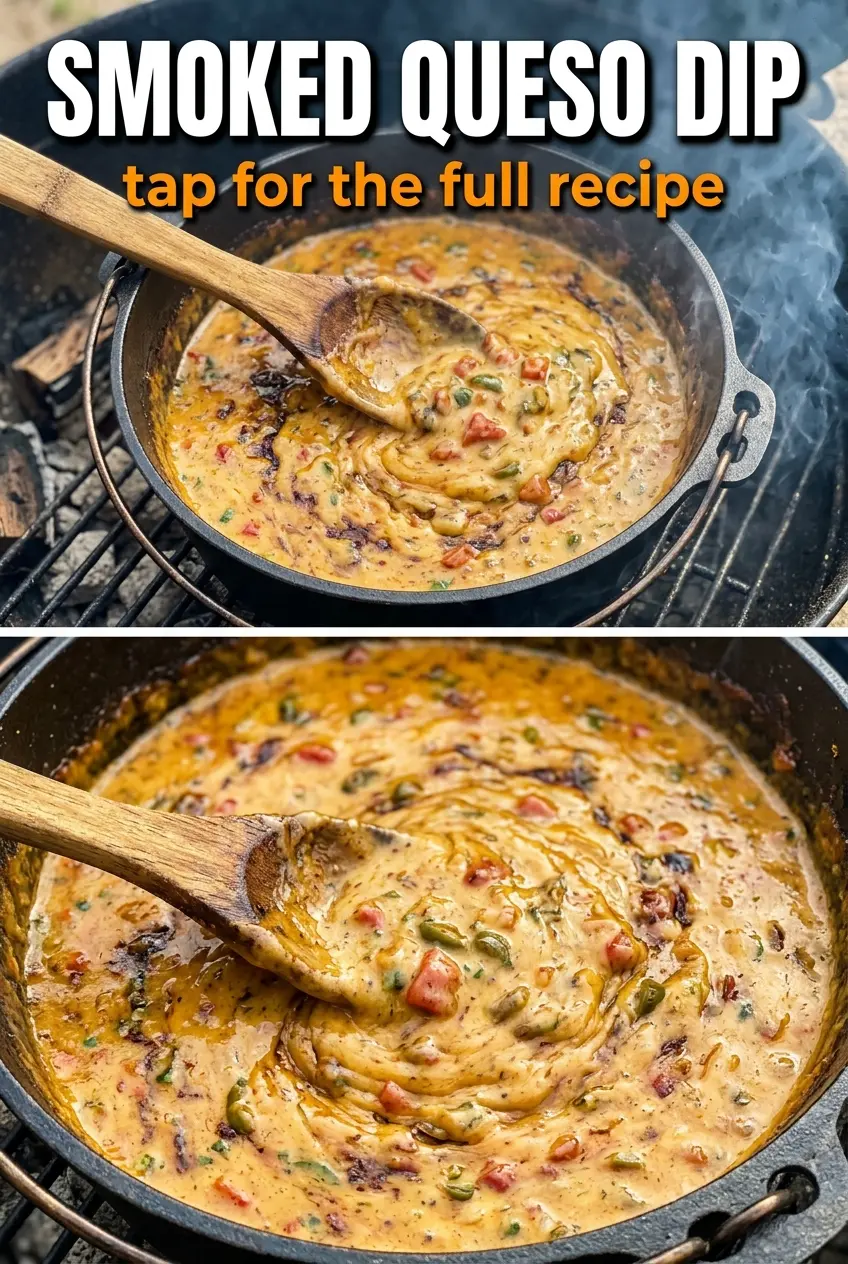
Melted queso with smoky edges and little pockets of chorizo is the kind of dip that disappears fast, especially when it lands in a hot cast iron skillet with chips already circling the rim. The best versions stay glossy and scoopable instead of turning greasy or grainy, and this one does that by using a stretchy white cheese base, a little cream, and just enough butter to help everything come together smoothly.
The real payoff comes from the contrast: roasted poblano for gentle sweetness, jalapeño for a fresh sharp bite, and smoky paprika to echo the char without overpowering the cheese. Cooking the chorizo first matters because you want the fat rendered and the flavor concentrated before it goes into the queso. The skillet keeps the dip hot at the table, which means the texture stays loose and dippable instead of clamping up the second it leaves the stove.
Below you’ll find the part that keeps smoked queso from breaking, plus the ingredient choices that matter most if you want that same silky pull every time.
The queso stayed smooth the whole time we ate it, and the poblano with the chorizo gave it a smoky, savory kick that wasn’t heavy. I made it in my cast iron like you said and the edges got those little browned spots everybody fought over.
Save this smoked queso dip for game day, with its silky cheese base, roasted poblanos, and chorizo tucked into every scoop.
The Part That Keeps Queso Smooth Instead of Greasy
Most queso gets into trouble when the heat is too aggressive or the cheese goes in all at once. White cheeses like Oaxaca and mozzarella melt into a stretchy, scoopable dip, but they still need gentle heat and steady stirring. If the skillet is roaring, the fat separates before the cheese has time to emulsify, and that is how you end up with an oily puddle instead of a creamy dip.
The other key is the order. Butter first gives the cheese something to melt into. Cream loosens the texture without making it thin, and smoked paprika gets a quick bloom in the warm fat so it tastes round instead of dusty. Once the chorizo and poblanos go in, the dip only needs a gentle fold. Stirring hard after that can break up the cheese structure and make the texture uneven.
- Keep the heat at medium, then low. The cheese should melt from the skillet’s residual heat and steady warmth, not from a hard boil.
- Use a cast iron skillet if you have one. It holds heat at the table and helps the queso stay fluid longer.
- Shred the cheese yourself. Pre-shredded cheese often has anti-caking starch that makes the dip thicker and a little less silky.
- Add the mix-ins after the base is smooth. Roasted poblanos and chorizo are there for flavor and texture, not to force the cheese to melt faster.
What the Cheese, Chorizo, and Poblanos Are Each Doing
- White cheese (Oaxaca or mozzarella) — Oaxaca gives you the best stretch and the cleanest melt, but low-moisture mozzarella is a solid backup if that’s what’s available. Both work because they melt into long, glossy strands instead of breaking into a greasy sauce. Avoid aged cheeses here; they do not melt the same way.
- Chorizo — Cook it first so the seasoning blooms in its own fat and the finished dip tastes smoky and savory instead of raw and sandy. Mexican chorizo is the right style here because it crumbles into the queso and seasons the whole skillet.
- Roasted poblano peppers — These bring sweetness and a soft smoky note that bridges the cheese and the chorizo. Fresh diced peppers won’t give the same depth, so roast them first if you can.
- Heavy cream — This keeps the cheese from seizing and helps the dip stay spoonable. Half-and-half works in a pinch, but the sauce will be a little lighter and less rich.
- Smoked paprika — It reinforces the smoked character without adding more heat. A little goes a long way; too much can make the dip taste dry or bitter.
- Jalapeño — Sliced fresh on top, it gives the finished dip a bright pepper bite and a little visual heat. If you want less fire, remove the seeds before slicing.
How to Build the Queso So It Stays Dippable
Melting the Cheese Base
Melt the butter in a cast iron skillet over medium heat, then add the shredded cheese in small handfuls while stirring constantly. The cheese should go from clumpy to glossy and smooth without ever bubbling hard. If it starts to look stringy and oily at the edges, pull the pan off the heat for a few seconds and keep stirring. That pause is usually enough to bring it back together.
Loosening and Seasoning
Stir in the heavy cream and smoked paprika once the cheese has melted. The cream should disappear into the sauce and make it look satin-smooth, not soupy. If the dip feels too thick at this point, add another splash of cream rather than cranking the heat. High heat is what turns a good queso into a broken one.
Folding in the Smoke
Add the roasted poblanos and cooked chorizo last and fold them through gently. You want the filling distributed, not mashed into the cheese base. Then finish with sliced jalapeños and a little salt and pepper. Serve it right away, and keep the skillet on low heat if it’s sitting out for a while so the cheese stays loose enough to scoop.
How to Adapt This for Different Crowds and Different Heat Levels
Make it vegetarian without losing the smoky edge
Leave out the chorizo and add an extra roasted poblano or two, plus a pinch more smoked paprika. You lose the meaty saltiness, so the best replacement is browned mushrooms or a little sautéed onion if you want more body. The texture stays creamy, but the dip becomes lighter and more pepper-forward.
Use mozzarella when Oaxaca is hard to find
Low-moisture mozzarella melts nicely and gives you that pull you want in queso, though it tastes a little milder than Oaxaca. Keep the heat gentle and shred it yourself so it melts cleanly. This swap is about texture first, not bold cheese flavor.
Dial the heat up or down without changing the base
Leave the jalapeño slices on top for a little bite, or swap them for pickled jalapeños if you want more tang and sharper heat. For a milder skillet, use only half a jalapeño and remove the seeds before slicing. The cheese base stays the same either way, so the texture doesn’t change.
Storage and Reheating
- Refrigerator: Store leftovers in an airtight container for up to 3 days. The queso will firm up as it chills.
- Freezer: I don’t recommend freezing this dip. Cheese sauces like this usually separate after thawing and never get back to the same silky texture.
- Reheating: Warm it slowly over low heat on the stove, stirring often and adding a splash of cream if needed. The common mistake is blasting it in the microwave or over high heat, which makes the cheese break and turn greasy.
Answers to the Questions Worth Asking
Smoked Queso Dip
Ingredients
Equipment
Method
- Melt the butter in a cast iron skillet over medium heat, then add the shredded white cheese and stir constantly until completely melted and smooth (about 2–4 minutes). Watch for a glossy, lump-free melt before moving on.
- Stir in the heavy cream and smoked paprika until fully incorporated and the queso looks silky and evenly colored (about 1–2 minutes). The surface should look uniform with no dry cheese streaks.
- Fold in the roasted poblano peppers and cooked chorizo gently to distribute evenly without breaking up the curds (about 5–7 minutes). Keep stirring just enough to keep everything suspended and warm.
- Top the queso with the sliced jalapeño and season with salt and pepper to taste (about 1 minute). You should see bright jalapeño slices floating on the melted surface.
- Keep warm on low heat and serve immediately with warm tortilla chips (about 3–5 minutes). Look for light bubbling at the edges and a steady, melted consistency.