Salsa verde pepper jack chicken lands on the table with the kind of bold, tangy heat that makes plain chicken feel a little underdressed. The sauce turns glossy and savory as it simmers around the chicken, then the pepper jack melts into the top in a way that feels rich without turning heavy. It’s the sort of skillet dinner that tastes like you spent more time on it than you did.
What makes this version work is the order. Searing the chicken first builds flavor in the pan, and the salsa verde loosens with a little broth so it can reduce without turning salty or pasty. Pepper jack melts smoothly here because the heat is gentle at the end; if you crank the burner, the cheese can tighten up before it blankets the chicken.
Below, you’ll find the small details that matter most: how to keep the chicken juicy, when the sauce should simmer rather than boil, and which swaps still give you that bright, cheesy finish.
The sauce thickened just enough to coat the chicken, and the pepper jack melted into the salsa verde instead of getting greasy. I served it with rice, and my husband went back for seconds before I even sat down.
Love that melted pepper jack and tangy salsa verde coating? Save this skillet chicken for a fast dinner that still feels special.
Why the Chicken Stays Juicy Instead of Getting Tough
The mistake with skillet chicken like this is rushing the simmer after the sear. Once the chicken goes back into the sauce, the heat should stay at a gentle simmer, not a hard boil. Boiling tightens the meat fast and can make the outside fibrous before the center is cooked through.
The sear does more than color the chicken. It gives the sauce some browned bits to pick up once the salsa verde and broth go in, which deepens the flavor without needing extra ingredients. If your chicken breasts are very thick, pound them lightly to an even thickness so the thinner end doesn’t dry out while the thickest part finishes.
What the Salsa Verde and Pepper Jack Are Doing Here
- Salsa verde — This is the backbone of the dish, so use a jar you actually like eating by the spoonful. A bright, tomatillo-heavy salsa verde gives you tang and freshness; a very watery one can make the sauce thin and flat.
- Chicken broth — The broth keeps the sauce from reducing too aggressively and helps the salsa verde turn into a proper skillet sauce instead of a sticky glaze. Low-sodium broth is the better buy here because salsa verde already brings salt.
- Pepper jack cheese — This melts into the top and adds gentle heat. Pre-shredded works, but freshly shredded melts smoother because it doesn’t have the anti-caking coating that can make cheese clump a little before it melts.
- Cilantro and lime — These finish the dish with freshness, which matters after the cheese goes on. If you want a slightly different edge, use chopped green onion in place of cilantro, but keep the lime if you can because it wakes up the sauce.
Building the Sauce and Melting the Cheese at the Right Moment
Searing the Chicken First
Heat the oil until it shimmers, then lay the chicken in without crowding the pan. You want a golden crust that releases cleanly when it’s ready; if it sticks, it needs another minute. Don’t move the chicken around while it sears or you’ll lose that color and leave the best flavor in the pan.
Letting the Salsa Verde Simmer
Once the salsa verde, broth, cumin, and garlic powder hit the skillet, bring the mixture to a simmer and let it settle before the chicken goes back in. The sauce should bubble gently around the edges, not boil hard in the center. If it starts looking thin, keep it at a steady simmer; that’s how it concentrates without turning salty.
Finishing Under the Lid
After the chicken is cooked through, sprinkle the pepper jack over the top and cover the skillet for a couple of minutes. The lid traps heat and moisture so the cheese melts evenly across the chicken instead of clumping. Pull the pan off the heat once the cheese is glossy and just starting to slide; that’s the point where it looks best and still tastes fresh.
How to Adapt This Skillet Chicken for Different Nights
Make it dairy-free
Skip the pepper jack and finish with extra cilantro and a squeeze of lime. The dish will be brighter and less rich, but the salsa verde still carries the whole skillet. If you want some creamy contrast, add sliced avocado at the table instead of trying to mimic the cheese.
Use chicken thighs for a richer result
Boneless skinless thighs stay juicier and give you a little more forgiveness if the simmer runs long. They need a few extra minutes to cook through, but they’re harder to dry out and pair well with the sharpness of the salsa verde. The sauce won’t need any other changes.
Make it lower-carb
Serve the chicken with cauliflower rice or shredded lettuce instead of rice or tortillas. The skillet itself is already naturally low in carbs, so this swap mostly changes the plate, not the cooking. Keep the lime and cilantro finish because they give you the freshness that rice normally helps carry.
Stretch it for more servings
Slice the cooked chicken before returning it to the sauce, then spoon the pepper jack over the top. That gives you more surface area for the sauce and makes the dish easier to serve over rice. The flavor stays the same, but it feeds a bigger group without looking sparse.
Storage and Reheating
- Refrigerator: Store leftovers in an airtight container for up to 4 days. The sauce will thicken a little as it chills, which is normal.
- Freezer: It freezes, but the cheese texture is better fresh. If you do freeze it, cool it completely and freeze the chicken and sauce without any extra garnish for up to 2 months.
- Reheating: Warm gently on the stovetop over low heat with a splash of broth or water. High heat can make the chicken dry and can make the cheese separate from the sauce.
Answers to the Questions Worth Asking
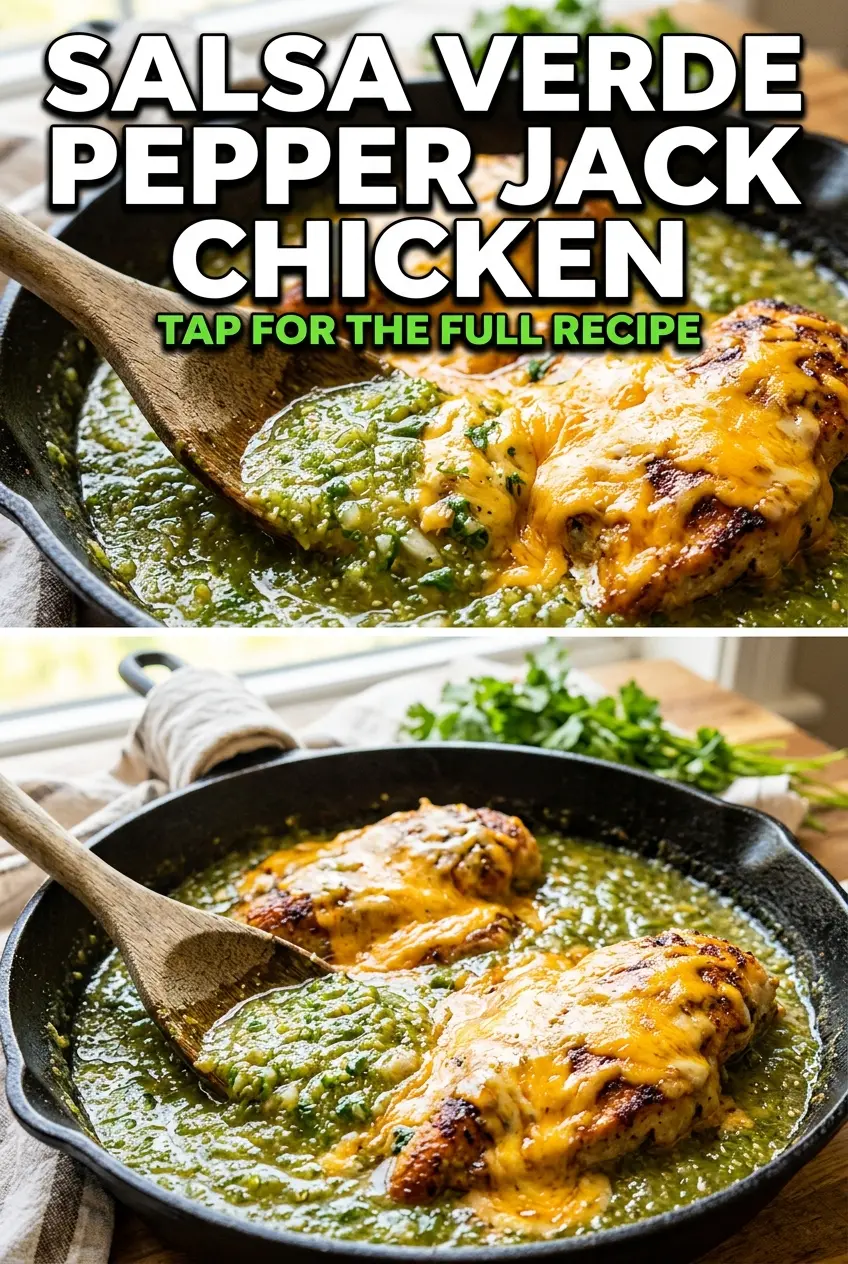
Salsa Verde Pepper Jack Chicken
Ingredients
Equipment
Method
- Season the chicken breasts with salt and pepper. Heat olive oil in a large skillet over medium-high heat until shimmering.
- Sear the chicken for 4 minutes per side until golden. Remove and set aside on a plate.
- In the same skillet, combine salsa verde, chicken broth, cumin, and garlic powder. Bring the mixture to a simmer, with small bubbles forming around the edges.
- Return chicken to the skillet and simmer for 10-12 minutes until cooked through. Cover if needed to maintain a gentle simmer.
- Top each chicken breast with shredded pepper jack cheese and cover with a lid. Cook for 2-3 minutes until the cheese is fully melted and glossy.
- Garnish with cilantro and serve with lime wedges and rice or tortillas. Rest the chicken for 5 minutes before slicing or serving so the juices settle.