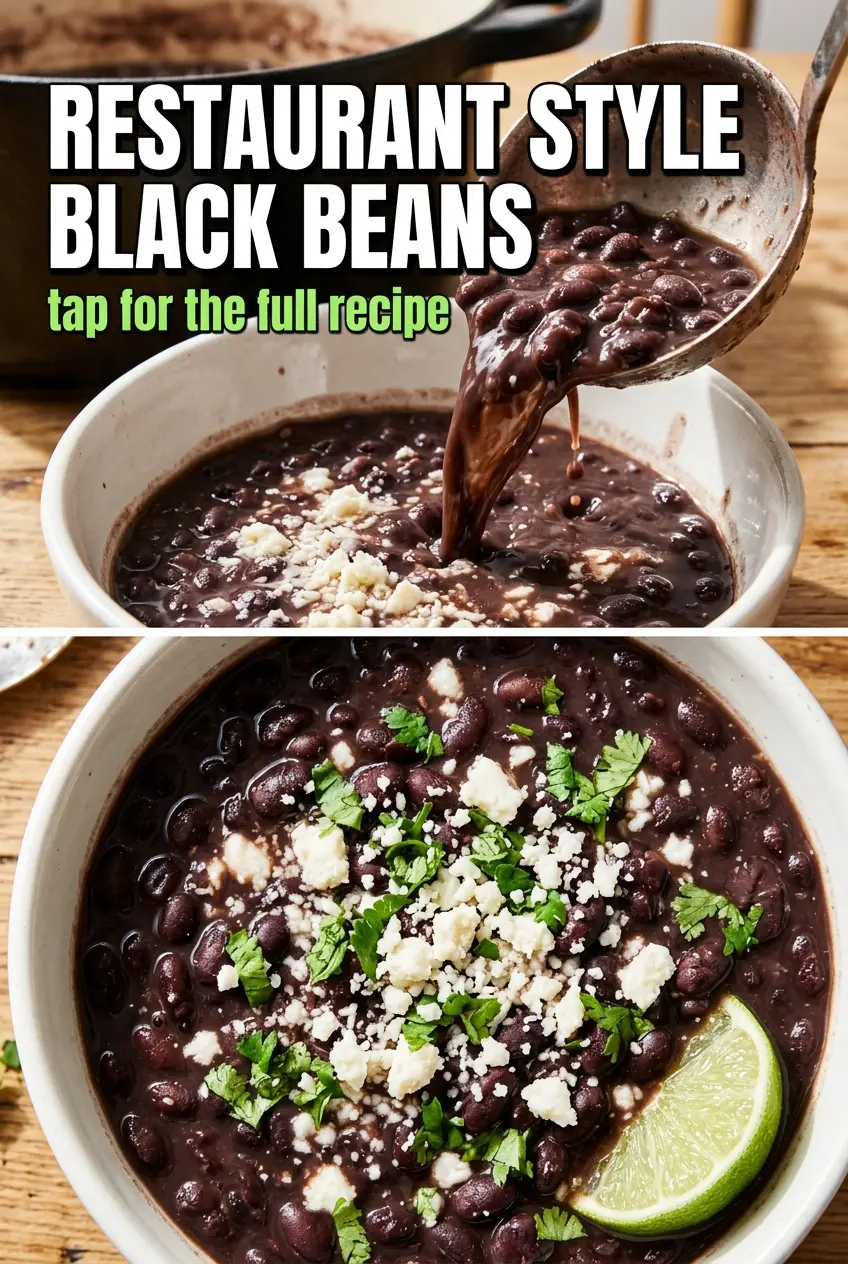
These restaurant-style black beans land with that glossy, spoon-coating texture that makes them much more than a simple side. The beans stay soft but intact, the broth tightens into a savory sauce, and the final hit of lime wakes up everything in the pot. They taste like they simmered all afternoon, even though they come together fast enough for a weeknight.
The trick is building flavor in layers instead of dumping everything in at once. Onion and garlic go into the oil first so the pot starts with a sweet, aromatic base, then the beans simmer uncovered long enough for the broth to reduce and turn silky. A partial mash at the end is what gives you that creamy, restaurant-style finish without making the whole pot into purée.
Below, you’ll find the small details that make the biggest difference: when to mash, how much broth to use, and why the lime goes in at the end instead of early. If you’ve only had black beans that tasted flat or watery, this version fixes both problems.
The beans thickened up exactly the way I wanted, and mashing just a little against the pot made them taste like the ones from our favorite Mexican restaurant. The lime at the end pulled everything together.
Creamy restaurant-style black beans with lime and cilantro deserve a spot in your meal rotation.
The Small Reduction That Keeps These Beans Creamy Instead of Watery
A lot of black bean recipes go wrong because they stop as soon as the beans are hot. Hot beans are not the goal. You want the liquid to reduce until it clings to the beans and leaves a glossy trail on the spoon. Cooking uncovered matters here because it evaporates the excess broth and concentrates the cumin, garlic, and onion into something that tastes built, not assembled.
The other thing that makes a big difference is the mash. If you mash too much, you lose the texture that makes this side dish feel substantial. If you skip it, the beans stay brothy and separate. The sweet spot is about a quarter of the pot pressed against the side so the starch thickens the sauce while the rest of the beans stay whole.
What Each Ingredient Is Actually Doing in the Pot
- Black beans — Canned beans work well here because they soften quickly and give you that creamy center without a long soak. Drain and rinse them, but don’t rinse so aggressively that they turn completely bland; a little bean flavor helps the final sauce taste fuller.
- Olive oil — This is what carries the onion and garlic flavor into the whole dish. Any neutral oil will work, but olive oil gives the beans a rounder, more restaurant-like finish.
- White onion — Quartering the onion lets it soften and perfume the oil without disappearing. If you mince it, it melts too fast and you’ll lose that gentle sweetness that balances the garlic and cumin.
- Garlic — Fresh minced garlic matters here. Jarred garlic can taste flat after simmering, while fresh garlic blooms in the oil and gives the beans that savory backbone.
- Bay leaves and cumin — Bay leaves add quiet depth, and cumin gives the beans their warm, familiar Mexican-style flavor. Don’t skip the bay leaves unless you have to; they don’t taste obvious on their own, but the pot loses a layer without them.
- Broth — Vegetable broth keeps this vegetarian, while chicken broth adds a little more body. Either one works, but use a broth you’d actually drink, because the beans reduce down and the flavor concentrates.
- Lime juice and cilantro — These go in at the end for a reason. Lime added too early dulls as it cooks, and cilantro tastes brighter when it stays fresh against the warm beans.
Building the Flavor Before the Beans Fully Break Down
Softening the Onion in the Oil
Start with the oil, onion, and a medium pan that gives you room to stir. The onion only needs a couple of minutes to turn translucent at the edges and lose its raw bite; if it browns hard, the beans will pick up a sweeter, deeper flavor, which is fine, but it moves the dish away from that clean restaurant-style taste. Add the garlic after the onion has started to soften so it perfumes the oil instead of scorching on contact.
Simmering the Beans Uncovered
Once the beans, broth, bay leaves, cumin, salt, and pepper go in, bring the pot to a steady simmer and leave it uncovered. You want small bubbles breaking the surface, not a hard boil that tears the beans apart. Stir occasionally so the bottom doesn’t catch, and watch the liquid level; if it still looks soupy after 20 minutes, give it a few more minutes uncovered until it thickens.
Mashing for the Right Texture
Turn off the heat before you mash so you can control the texture without overdoing it. Press about a quarter of the beans against the side of the pot with a spoon or masher, then stir them back through the whole beans. If the beans seem too thick after mashing, loosen them with a splash of broth; if they seem thin, keep simmering for a few more minutes until the sauce coats the back of the spoon.
Finishing With Acid and Herbs
Add lime juice after the beans are off the heat and taste again before you stop. Acid makes the seasoning pop, but too much too early can make the beans taste sharp instead of balanced. Stir in the cilantro last so it stays green and fresh, then serve the beans hot while the sauce is still glossy.
Ways to Adjust the Beans Without Losing the Restaurant Feel
Vegetarian or vegan black beans
Use vegetable broth and the beans stay fully plant-based without losing depth. If your broth tastes thin, add an extra pinch of salt and a little more cumin at the end so the finished pot still tastes complete.
Thicker beans for tacos and bowls
Let the beans cook a few extra minutes uncovered, then mash closer to half the pot instead of a quarter. You’ll get a denser, spreadable texture that works better as a taco filling or under rice.
Spicier black beans
Add a pinch of crushed red pepper or a diced jalapeño with the onion. The heat builds in the oil and carries through the whole dish, but don’t add hot sauce too early or the acidity can overshadow the cumin and garlic.
Making them ahead for the week
These beans hold up well for meal prep because the sauce thickens as they sit. Add a splash of broth or water when reheating if they tighten up in the fridge, then finish with fresh cilantro and a squeeze of lime so they taste newly made.
Storage and Reheating
- Refrigerator: Store in an airtight container for up to 5 days. The beans will thicken as they chill, which is normal.
- Freezer: They freeze well for up to 3 months. Cool completely first and leave a little room at the top of the container because the beans will expand as they freeze.
- Reheating: Warm gently on the stovetop over medium-low heat with a splash of broth or water. The most common mistake is blasting them on high heat, which dries the beans out before the center is hot.
Questions I Get Asked About This Recipe
Restaurant Style Black Beans
Ingredients
Equipment
Method
- Heat the olive oil in a large pot over medium heat. Add the quartered onion and cook for 2 minutes, stirring occasionally, until it softens and looks glossy.
- Add the minced garlic and cook for 1 minute until fragrant, stirring to prevent browning.
- Add the drained black beans, bay leaves, cumin, black pepper, salt, and broth to the pot. Bring to a simmer and cook uncovered for 20 minutes, stirring occasionally, until thick and saucy.
- Mash about 1/4 of the beans against the side of the pot to create a creamy consistency while keeping some beans whole. Continue stirring so the sauce looks smooth and glossy with visible bean pieces.
- Taste and adjust seasonings with lime juice. Remove bay leaves, stir in the chopped cilantro, and serve hot.