Sticky, glossy raspberry glazed pork chops bring a bright, savory-sweet finish to the table without feeling fussy. The glaze clings to the meat in a deep ruby coat, and the balance of tart berries, balsamic, and Dijon keeps every bite from tipping into candy-sweet territory. Bone-in chops hold onto their juices better than thin cuts, so you get a proper sear on the outside and a tender center underneath all that shine.
The trick is building the glaze in the same skillet after the pork comes out. Those browned bits left behind from searing are the backbone of the sauce, and a quick simmer with jam, vinegar, mustard, broth, garlic, and rosemary turns them into something with real depth. If you rush that reduction, the sauce will stay thin and slide off the chops instead of coating them.
Below you’ll find the exact timing that keeps the pork juicy, plus a few smart swaps for when you want to adjust the sweetness, make it dairy-free by default, or use what you already have in the pantry.
The glaze turned thick and shiny right when you said it would, and the raspberry flavor stayed bright instead of cooked-out. My husband kept going back for “just one more bite” until the skillet was empty.
Raspberry glazed pork chops with that sticky ruby finish are worth pinning for the nights when you want a fast skillet dinner that looks special on the plate.
The Sear That Keeps the Pork Juicy Before the Glaze Goes On
Bone-in pork chops can go from perfect to dry fast if they spend too long in the skillet, so the sear matters more than a long cook time. Medium-high heat gives you a deep golden crust in about 4 to 5 minutes per side, but the chops should still feel a little springy in the center when they come out. If the pan is too cool, the meat releases liquid and steams instead of browning, which leaves you with pale chops and a weaker sauce later.
Set the chops aside after searing. They finish in the glaze at the end, and that short second cook is enough to warm them through without squeezing out their juices.
What Each Ingredient Is Actually Doing in the Glaze

- Raspberry jam — This is the body of the glaze and the source of that glossy, clingy texture. A good jam gives you fruit flavor and enough sugar to reduce into a lacquer; preserves with too many chunky seeds can still work, but the sauce won’t look as smooth.
- Balsamic vinegar — This is what keeps the sauce from tasting flat. It cuts the sweetness and gives the glaze a deeper, almost caramelized edge that pairs well with pork.
- Dijon mustard — Dijon adds sharpness and a little emulsifying power, which helps the glaze hold together instead of tasting like warmed jam. Yellow mustard won’t give the same depth.
- Fresh rosemary — Rosemary gives the glaze a piney, savory note that makes the fruit taste intentional instead of dessert-like. Fresh is worth using here; dried rosemary can go in a pinch, but use less because it reads louder and rougher.
- Chicken broth — The broth loosens the jam just enough to simmer cleanly and pick up the browned bits from the pan. Water works in a pinch, but the sauce loses some roundness.
- Garlic — Garlic only needs a short sauté before the glaze ingredients go in. If it browns, it turns bitter fast, so 30 seconds is enough to wake it up without burning it.
Building the Ruby Glaze Without Burning the Garlic
Getting the Pork Browned Properly
Pat the chops dry before they hit the pan and season them generously with salt and pepper. Moisture on the surface is what ruins a good crust, and that crust is what gives the glaze something savory to cling to. Lay the chops down and leave them alone until they release easily; if they stick, they need another minute. When they come off the heat, they should be golden at the edges and still juicy inside.
Turning the Pan Drippings Into Sauce
Drop the garlic into the same skillet and stir it just until fragrant, about 30 seconds. Then add the jam, balsamic, Dijon, rosemary, and broth, scraping the bottom of the pan as the mixture starts to bubble. That scraping matters because it pulls up the browned flavor from the pork. If the sauce looks thin at first, that’s normal; it should simmer down to a syrupy glaze after 3 to 4 minutes.
Finishing the Chops in the Glaze
Return the pork chops to the pan and spoon the glaze over the top as they warm through. The sauce should coat the meat in a shiny layer and leave slow trails when you drag a spoon through it. If it gets too thick before the chops are hot, add a splash of broth and stir. Garnish with fresh raspberries and rosemary right before serving so the dish keeps its bright color and the herbs stay fresh.
How to Adapt These Pork Chops for Different Tastes
Use peach jam instead of raspberry
Peach jam gives you a softer, rounder sweetness and a slightly less tart glaze. The method stays the same, but the finished dish will taste gentler and a little less sharp than the raspberry version.
Make it gluten-free without changing the texture
This recipe is naturally gluten-free as written as long as your broth and jam are certified gluten-free. The glaze thickens from reduction, not flour, so you don’t lose anything by keeping it that way.
Use boneless chops if that’s what you have
Boneless chops cook a little faster and dry out more easily, so shave a minute or two off the first sear and watch them closely during the finish. You’ll still get a good result, but bone-in chops stay juicier and give you more margin for error.
Turn up the savory side
Add a pinch of black pepper or a splash more balsamic if you want the glaze less sweet and more balanced. That extra acid makes the raspberry taste brighter and keeps the sauce better suited to a weeknight dinner instead of a candy-like finish.
Storage and Reheating
- Refrigerator: Store leftovers in an airtight container for up to 3 days. The glaze thickens a bit when chilled, but it loosens again as it warms.
- Freezer: The pork chops freeze better than the glaze alone. Wrap tightly and freeze for up to 2 months; thaw overnight in the fridge for the best texture.
- Reheating: Warm gently in a skillet over low heat with a splash of broth, covering the pan so the pork doesn’t dry out. High heat will tighten the meat and can make the glaze stick before the center is hot.
Questions I Get Asked About This Recipe
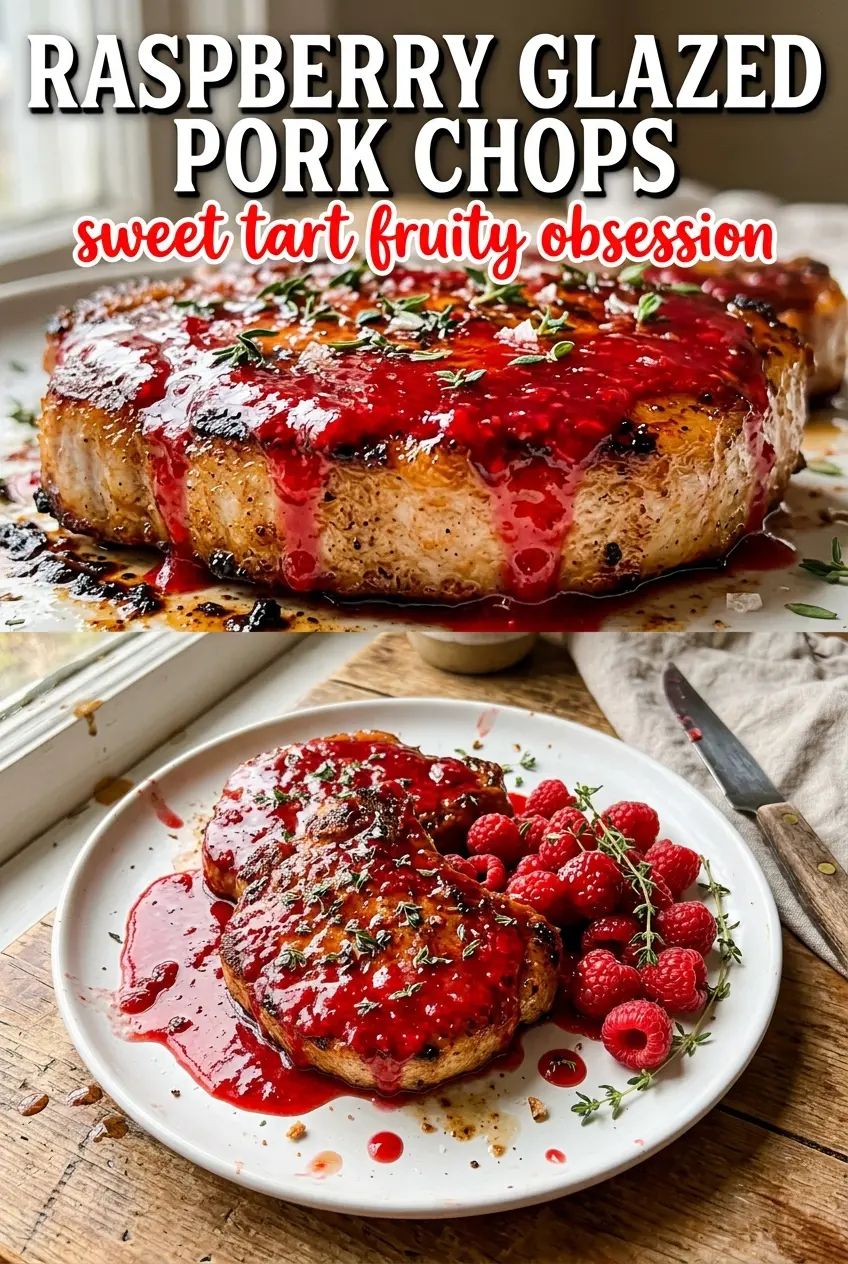
Raspberry Glazed Pork Chops
Ingredients
Equipment
Method
- Season the pork chops with salt and pepper. Pat lightly so the seasoning adheres to the surface.
- Heat the olive oil in a skillet over medium-high heat, then sear the chops 4–5 minutes per side until golden. Set the chops aside once browned.
- In the same pan, sauté the garlic for 30 seconds. Stir so it becomes fragrant without browning.
- Stir in the raspberry jam, balsamic vinegar, Dijon mustard, minced rosemary, and chicken broth. Scrape up any browned bits from the pan for flavor.
- Simmer the sauce for 3–4 minutes until it reduces to a glaze. It should look glossy and slightly thickened.
- Return the pork chops to the pan and coat them with the raspberry glaze. Spoon sauce over the tops to fully cover.
- Cook for 2–3 minutes until the pork chops are heated through. The sauce will cling and look sticky on the surface.
- Garnish with fresh raspberries and rosemary, then serve. Add the raspberries right before plating for the best color.