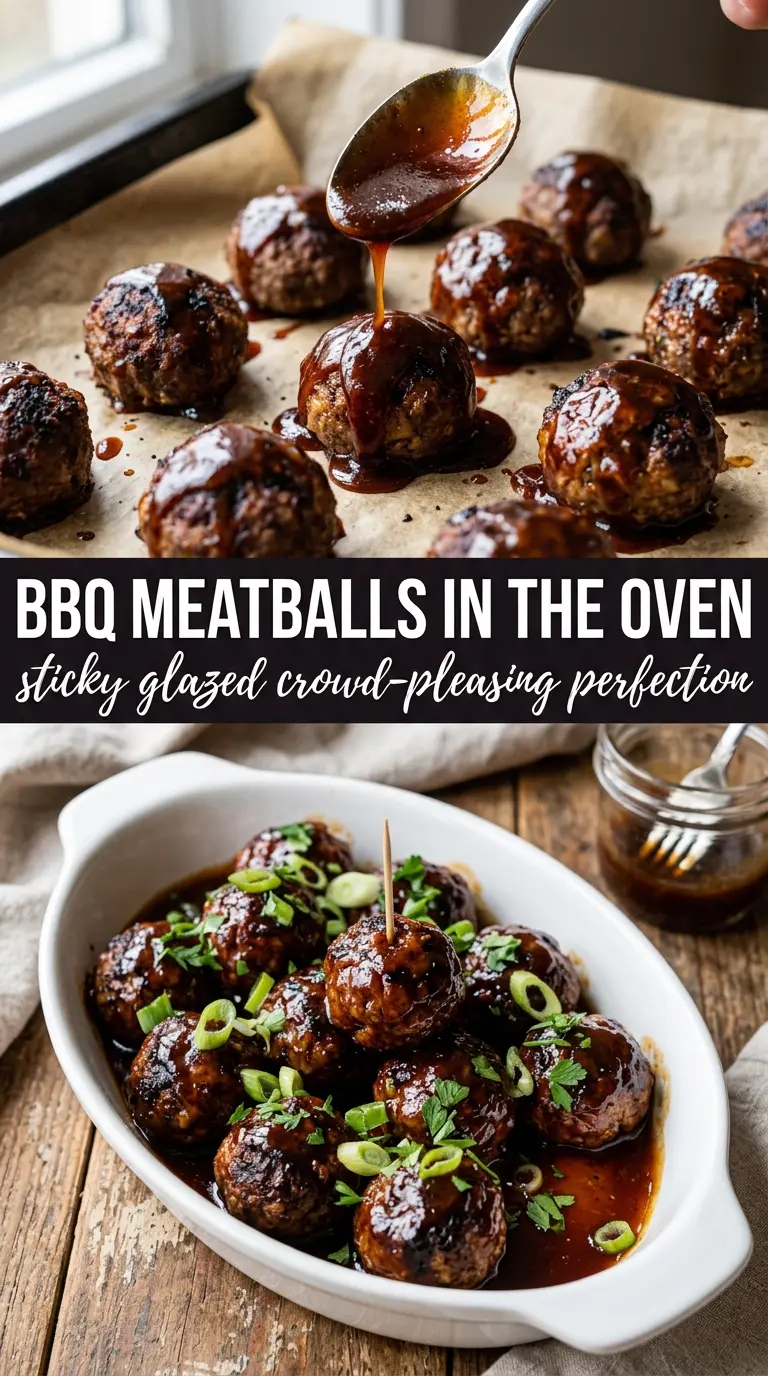
Sticky, caramelized BBQ meatballs come out of the oven with a dark glaze that clings to every bite and a tender center that stays juicy instead of turning dense. The oven does the work here, which means you get that browned exterior without standing over a skillet in batches, and the quick glaze at the end turns a good meatball into the kind people reach for before you’ve even set the platter down.
The key is mixing the beef just until the ingredients come together. Overworking ground beef is the fastest way to end up with tight, springy meatballs, and these should be soft enough to stay tender under the sticky BBQ coating. The second trick is brushing the glaze on after the meatballs are mostly cooked, not before, so the sugars in the sauce caramelize instead of burning.
Below, you’ll find the small details that keep the texture right, plus a few ways to adapt these for game day, weeknight dinner, or a party tray that disappears fast.
The glaze thickened up beautifully in the oven, and the meatballs stayed really tender even after the second bake. I served them with toothpicks for a party, and the pan was empty before dinner was over.
Save these oven baked BBQ meatballs for a sticky, smoky crowd-pleaser that bakes tender and finishes with a caramelized glaze.
The Trick to Keeping Baked Meatballs Tender Before the Glaze Goes On
Most baked meatballs turn dry for one reason: they spend too long in the oven before the sauce ever touches them. The first bake here is just enough to set the outside and cook them through, which gives you structure without squeezing every bit of moisture out of the beef. That second brush of BBQ glaze is what seals in the final layer of flavor, and it works best when the meatballs already have a little color.
The other thing worth watching is size. A 1.5-inch meatball cooks evenly at 400°F and gives you a good ratio of browned exterior to soft center. If you make them larger, the outside can overcook before the middle is done; smaller, and they’ll dry out faster during the glaze step.
What Each Ingredient Is Actually Doing in These BBQ Meatballs
- Ground beef — Use 80/20 if you can. That little bit of fat keeps the meatballs juicy through both bakes and gives the glaze something rich to cling to. Leaner beef works, but the texture will be firmer and the meatballs won’t taste as plush.
- Breadcrumbs and milk — This is the binder that keeps the meatballs tender. The milk hydrates the crumbs so they act like a cushion inside the beef instead of tightening everything up. If you need a gluten-free option, use gluten-free breadcrumbs and keep the ratio the same.
- Eggs — They hold the mixture together so the meatballs don’t crumble when you brush on the glaze. Two eggs is enough for this batch, and going beyond that can make the texture a little spongy.
- Worcestershire, garlic, smoked paprika, and onion powder — These build the savory base before the BBQ sauce ever enters the picture. Smoked paprika matters here because it echoes the smoke in the glaze and makes the finished meatballs taste deeper, not just sweeter.
- BBQ sauce, honey, and apple cider vinegar — This is the sticky finish. The honey helps the glaze lacquer and caramelize, while the vinegar keeps it from tasting flat or cloying. If your BBQ sauce is already very sweet, pull the honey back slightly.
Browning First, Glazing Last: The Oven Timing That Makes the Difference
Mix the meat just until it comes together
Combine the beef, breadcrumbs, milk, eggs, garlic, Worcestershire, smoked paprika, onion powder, salt, and pepper with your hands or a fork until the mixture holds together. Stop as soon as you no longer see dry pockets. If you keep kneading after that point, the meatballs turn dense and bouncy instead of tender.
Shape for even baking
Roll the mixture into 1.5-inch balls and place them on a parchment-lined baking sheet with a little space between each one. Crowding traps steam and keeps them pale on the bottom, which means less browning and a softer exterior. A cookie scoop helps keep the size consistent, which is the easiest way to avoid overcooked stragglers.
Let the first bake set the crust
Bake at 400°F for about 15 minutes, until the meatballs are browned and cooked through. They should feel firm when touched, but not hard, and the bottoms should have a light crust. If they’re still pale and soft after 15 minutes, give them a couple more minutes before glazing.
Brush on the glaze and finish hot
Stir the BBQ sauce, honey, apple cider vinegar, and smoked paprika together, then brush it generously over each meatball. Return them to the oven for about 5 minutes, just until the glaze looks shiny, sticky, and slightly darkened at the edges. That short finish is where the caramelization happens; if you leave them too long, the sugars can scorch and turn bitter.
Make Them Spicier Without Losing the Sticky Glaze
Add a pinch of cayenne to the meat mixture or a splash of hot sauce to the glaze. The heat reads best in the background, because the BBQ sauce still needs to stay front and center. Start small; once the glaze reduces, the spice intensifies a little.
Gluten-Free BBQ Meatballs
Swap in gluten-free breadcrumbs and check your BBQ sauce and Worcestershire sauce labels. The texture stays nearly the same if the crumbs are fine and evenly moistened. Don’t use too much extra liquid, or the meatballs can spread on the pan.
Dairy-Free Version
Replace the milk with an unsweetened plain non-dairy milk. The meatballs will still bind and stay tender, though the flavor will be a touch less rich than the original. Choose a neutral milk, not anything flavored or sweetened.
Party Tray Double Batch
This recipe scales cleanly for a crowd. Use two sheet pans so the meatballs bake in a single layer, and glaze them while they’re still hot so the coating sets evenly. If you pile them into a serving dish too early, the glaze softens and slides off the bottom layer.
Storage and Reheating
- Refrigerator: Store in an airtight container for up to 4 days. The glaze thickens as it chills, which helps the meatballs stay coated.
- Freezer: These freeze well. Cool completely, then freeze on a tray before transferring to a bag or container for up to 3 months. Freeze with the glaze on for the best flavor.
- Reheating: Warm in a covered baking dish at 325°F until hot, or microwave in short bursts with a splash of water or extra BBQ sauce. High heat dries the beef and can turn the glaze sticky in the wrong way.
Questions I Get Asked About This Recipe
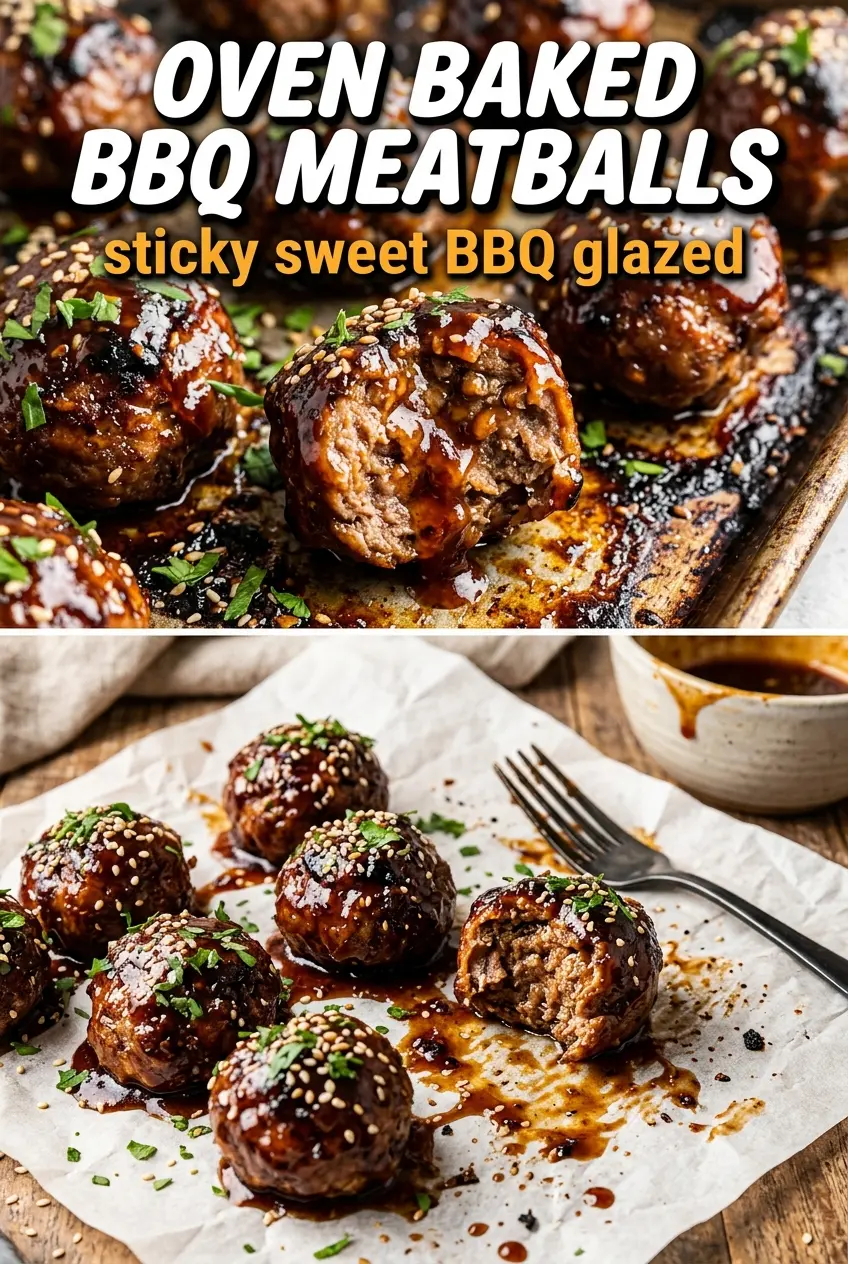
Oven Baked BBQ Meatballs
Ingredients
Equipment
Method
- Preheat the oven to 400°F and line a baking sheet with parchment. You want the sheet ready before the meatballs go in.
- Combine ground beef, breadcrumbs, eggs, whole milk, garlic, Worcestershire sauce, smoked paprika, onion powder, salt, and pepper until just mixed. Stop as soon as the mixture looks cohesive so the meatballs stay tender.
- Roll the mixture into 1.5-inch balls and place them on the baking sheet. Leave a little space between each one so the edges brown evenly.
- Bake for 15 minutes until browned and cooked through. The centers should no longer look pink when you check one.
- Mix BBQ sauce, honey, apple cider vinegar, and smoked paprika to make the glaze. Stir until the honey is fully incorporated.
- Brush the glaze generously over each meatball and return to the oven. Bake for 5 more minutes until the glaze caramelizes and looks dark and shiny.
- Serve the meatballs with extra BBQ sauce and garnish with sesame seeds and green onions. Let them sit 2 minutes so the glaze sets slightly before serving.