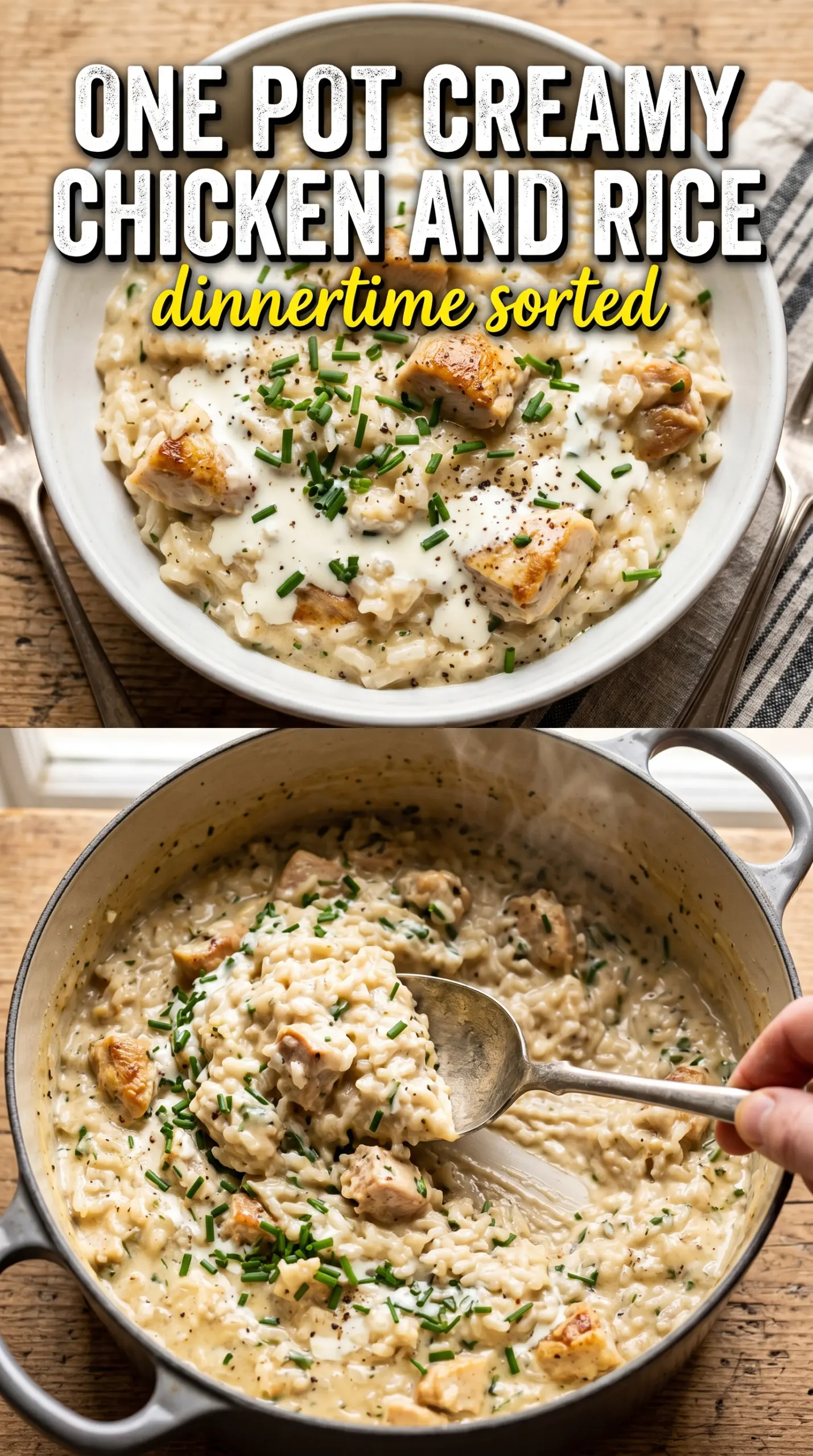
Golden chicken thighs tucked over glossy, creamy rice make this one-pot dinner feel like you worked a lot harder than you did. The rice soaks up every bit of the pan drippings, broth, and Parmesan, so each spoonful comes out rich without turning heavy or gluey. The chicken stays on top where the skin can stay crisp during the first sear, then finish gently over the rice instead of drying out in the oven.
The trick is treating the rice like the main event, not a side dish. Toasting it for a couple of minutes before adding the liquid gives the grains a little backbone, which helps them hold their shape once the cream and broth go in. Cooking the chicken in the same pot leaves behind the browned bits that carry the whole dish.
Below, you’ll find the small timing details that keep the rice fluffy, the easiest swaps if you need to adjust for what’s in the fridge, and the one move that keeps the sauce silky from start to finish.
The rice came out perfectly creamy without getting mushy, and the chicken skin stayed crisp enough that my husband kept stealing the thighs off the top before I plated it.
Pin this creamy chicken and rice for nights when you want a one-pot dinner with crisp seared chicken, fluffy rice, and a pan sauce that tastes like it simmered all afternoon.
The Sear That Keeps the Chicken Juicy While the Rice Cooks
The biggest mistake with one-pot chicken and rice is rushing the chicken and starting the grains too soon. If the thighs don’t get a deep golden sear, you miss out on flavor, and if the pot is crowded or the heat is too low, the skin goes pale and soft instead of crisping. That first 7 to 8 minutes skin-side down does more than brown the surface; it builds the base of the whole dish.
Once the chicken comes out, those browned bits on the bottom stay in the pot. That’s the part people often scrub away, but here they’re the reason the rice tastes like it was cooked in a proper sauce instead of just broth. Keep the heat at medium when searing, then drop it back once the rice goes in so the dairy doesn’t split and the bottom doesn’t scorch.
What Each Ingredient Is Actually Doing in This Dish
- Bone-in, skin-on chicken thighs — These give you the best balance of flavor and forgiveness. The bones help keep the meat juicy, and the skin renders enough fat to season the rice as it cooks. Boneless thighs will work, but you’ll lose some of that rich, roasted taste.
- Long-grain white rice — This is the rice I’d keep exactly as written. It cooks up fluffy and separate instead of turning sticky, which matters once cream and Parmesan are added. Short-grain rice will make the dish thicker and softer, and it can go past creamy into dense.
- Heavy cream — This is what gives the rice its silky finish. Half-and-half can work in a pinch, but the sauce will be lighter and a little less stable. Add it with the broth, then keep the heat gentle so it stays smooth.
- Parmesan cheese — Parmesan adds salt, body, and a savory edge that keeps the dish from tasting flat. Grate it finely so it melts into the liquid instead of clumping. Pre-shredded cheese can work, but it melts less cleanly.
- Onion and garlic — These build the base after the chicken sear. Cooking them in the same pot softens their bite and picks up the drippings left behind. Don’t skip the garlic minute; raw garlic can stay sharp under the rice.
How to Keep the Rice Creamy, Not Heavy
Build the Flavor Before the Liquid Goes In
Start by seasoning the chicken well on both sides. The salt, pepper, garlic powder, smoked paprika, and Italian seasoning should look like an even, dusty coat, not a few random pinches on the surface. Sear skin-side down first and leave it alone until the skin releases easily and the color is deep gold. If it sticks, it needs another minute.
Toast the Rice in the Pot Drippings
After the onion softens, stir in the rice and let it toast for about 2 minutes. The grains should look glossy and lightly coated in fat. This step helps them keep their shape during the simmer, and it keeps the finished dish from tasting flat. If the rice starts to brown hard, the heat is too high.
Simmer Covered and Leave It Alone
Once the broth, cream, Parmesan, and thyme go in, stir until the cheese melts and the liquid looks smooth. Nestle the chicken back on top, cover tightly, and cook over low heat. Lift the lid only once near the end to check the rice; every time steam escapes, the grains cook more unevenly. If the pot is still wet when the rice is done, keep it covered off the heat for a few minutes and let the grains finish absorbing the liquid.
Rest Before You Fluff
That 5-minute rest matters. It lets the rice settle and the sauce thicken without turning gummy. Fluff gently from the edges so you don’t tear up the grains underneath the chicken. Then spoon the rice into bowls and place a thigh on top with the parsley scattered over everything.
How to Adapt This for a Few Different Kitchens
Dairy-Free Version
Swap the heavy cream for full-fat canned coconut milk and leave out the Parmesan. The dish will still be creamy, but it will taste a little less savory and a little more mellow, so add a touch more salt at the end. The coconut flavor stays subtle once the thyme, garlic, and chicken drippings are in the pot.
Boneless Chicken Thighs or Breasts
Boneless thighs will cook faster and still stay juicy, but they won’t give you quite the same depth in the sauce. If you use chicken breasts, reduce the covered cooking time and start checking early so they don’t dry out. The rice still needs the full time, so keep the heat low and let the chicken finish gently on top.
Extra Veggies Without Ruining the Texture
Stir in a handful of peas, chopped spinach, or thin-sliced mushrooms near the end of cooking. Add watery vegetables too early and they’ll loosen the sauce and make the rice soggy. Spinach should go in after the heat is off so it just wilts into the rice.
Storage and Reheating
- Refrigerator: Store leftovers in an airtight container for up to 4 days. The rice will firm up as it chills, which is normal.
- Freezer: It freezes, but the rice softens a bit after thawing. Freeze in portions for up to 2 months and thaw overnight in the fridge.
- Reheating: Warm it covered on the stove or in the microwave with a splash of broth or water. The common mistake is blasting it dry, which makes the rice stiff before the center is hot.
Answers to the Questions Worth Asking

One Pot Creamy Chicken and Rice
Ingredients
Equipment
Method
- Season the chicken thighs with salt, pepper, garlic powder, smoked paprika, and Italian seasoning. Pat to adhere so the spices don’t wash off during searing.
- Heat olive oil in a Dutch oven over medium-high heat, then add chicken skin-side down and cook 7-8 minutes until deeply golden. Leave undisturbed so the skin crisps and releases easily.
- Flip the thighs and sear for 3 minutes more until browned. Transfer the chicken to a plate.
- Cook the diced onion in the same Dutch oven for 3 minutes, stirring, until softened. Scrape up any browned bits for extra flavor.
- Add the minced garlic and cook 1 minute, stirring, until fragrant. Do not brown the garlic.
- Add the uncooked long-grain white rice and toast for 2 minutes. Stir so the rice grains heat through and smell nutty.
- Pour in the chicken broth and heavy cream, then stir in Parmesan cheese and dried thyme. Whisk until the cheese melts and the sauce looks glossy.
- Bring the mixture to a simmer. Keep it at a steady bubble before covering.
- Nestle the chicken thighs skin-side up into the rice, then cover tightly with a lid. Cook over low heat for 22-25 minutes until the rice is cooked and the chicken reaches 165°F.
- Rest the dish covered for 5 minutes. This lets the rice finish absorbing the creamy sauce.
- Fluff the rice gently with a fork, keeping the thighs on top. Stir minimally so the sauce stays creamy and the chicken remains intact.
- Garnish with fresh parsley and serve. Add cracked pepper if desired for extra bite.