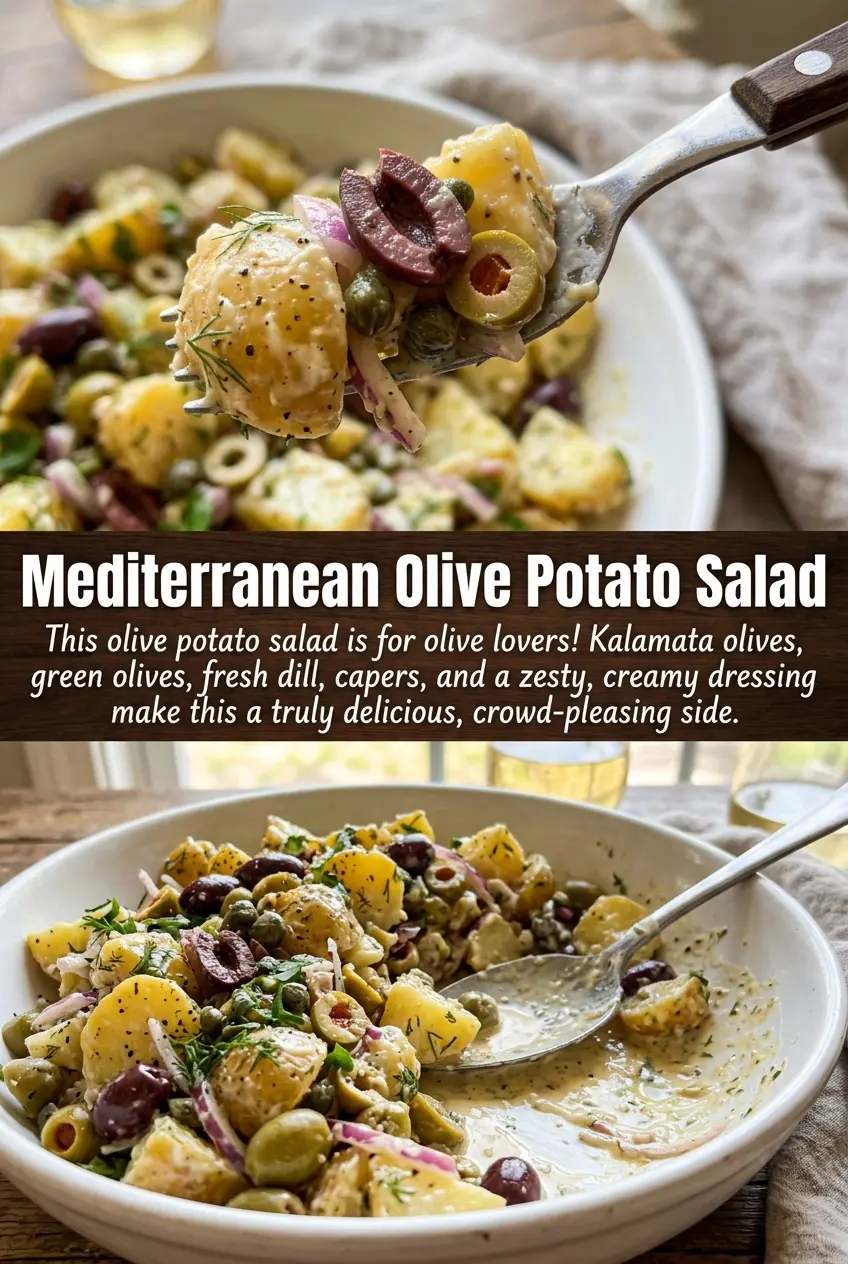
Olive potato salad lands somewhere between bright Mediterranean mezze and the kind of potato salad that disappears first at a cookout. The potatoes stay tender but not mushy, the olives bring a briny punch, and the feta melts just enough around the edges to coat everything in a salty, creamy way. It tastes clean and bold at the same time, which is exactly why it works so well with grilled meat, roasted vegetables, or a simple pile of bread and tomatoes.
The trick is letting the potatoes cool enough to hold their shape before you toss them with the dressing. Warm potatoes soak up lemon, vinegar, and oregano better than cold ones, but if they’re steaming hot, the feta breaks down and the olives lose their definition. A short chill in the fridge gives the salad time to come together without turning heavy. The result is a salad with real texture: soft potatoes, crisp onion, firm olives, and that salty finish from the cheese.
Below, I’ve added the exact cues I use to keep the potatoes intact, plus a few smart swaps if you need to adjust for what’s in your kitchen. The dressing is simple, but the timing matters, and that’s what makes this version worth making again.
The potatoes held their shape after chilling, and the lemon-oregano dressing soaked in without making the feta go pasty. I loved the mix of Kalamata and green olives for that briny bite.
Save this olive potato salad for the days when you want a bright, briny side dish with feta, lemon, and zero mayo.
The Reason the Dressing Goes on Warm Potatoes, Not Cold Ones
Most potato salads taste flat because the potatoes never get a chance to absorb anything before they chill. Here, the dressing works best when it hits potatoes that are still slightly warm and fully drained. That’s when the lemon juice and vinegar can season the inside of the cubes instead of sitting on the surface. If the potatoes are dripping wet, the dressing gets diluted and the whole bowl turns muddy.
The other thing that matters is gentleness. Red potatoes hold together well, but once they’re cooked, they can still break apart if you stir with a heavy hand. Toss from the bottom with a wide spoon or spatula, and stop as soon as everything is coated. You want visible pieces of olive and feta, not a mashed salad.
What Each Ingredient Is Actually Doing in This Salad

- Red potatoes — Their waxy texture stays intact after boiling, which is exactly what you want in a salad that gets tossed and chilled. Yukon Golds also work if that’s what you have, but starchy potatoes like russets can fall apart and make the dressing cloudy.
- Mixed olives — Kalamata gives you deep, winey saltiness, while green olives bring a sharper bite. Using both keeps the salad from tasting one-note, and pitted olives are worth buying because slicing around pits ruins the shape of the potatoes.
- Feta — This adds salt, creaminess, and little pockets of richness. Buy a block if you can and crumble it yourself; the pre-crumbled kind is drier and doesn’t melt into the potatoes as nicely.
- Red onion — Thin slices add crunch and a little heat. If yours tastes aggressive, soak it in cold water for 10 minutes, then drain well so it doesn’t overpower the dressing.
- Olive oil, lemon juice, and red wine vinegar — This is the backbone of the salad. The oil rounds out the acid, while the lemon and vinegar keep the flavor bright; don’t replace both with one or the other or the dressing will taste either dull or sharp.
- Dried oregano and parsley — Oregano gives the salad that Greek-style backbone, and parsley wakes everything up at the end. Fresh parsley should go in after tossing so it stays green and doesn’t disappear into the dressing.
Getting the Texture Right from Pot to Bowl
Boil Until the Centers Are Tender, Not Falling Apart
Start the potatoes in cold salted water and bring them up together so they cook evenly. Once the cubes are just tender when pierced with a knife, drain them right away and let the steam escape. If you keep boiling until they feel soft in the pot, they’ll break down later when you dress them and toss the bowl. A clean edge on each cube is what gives this salad its best texture.
Mix the Dressing Before It Touches the Potatoes
Whisk the olive oil, lemon juice, vinegar, oregano, salt, and pepper in a separate bowl until the mixture looks fully combined and a little cloudy. That step matters because the seasoning gets distributed evenly instead of landing in one salty patch. If the dressing tastes too sharp at this stage, it’ll still taste too sharp on the potatoes, so adjust it before pouring. The potatoes will soften the acid a little as they sit.
Let the Chill Finish the Job
After tossing everything together, cover the bowl and refrigerate it for at least 2 hours. This is when the salad settles in and the flavors stop tasting separate. If you serve it immediately, the dressing will taste brighter but thinner, and the onion will be more aggressive. A proper chill makes the feta, olives, and herbs taste like they belong in the same bowl.
How to Adapt This for a Few Different Tables
Dairy-Free Version That Still Tastes Complete
Leave out the feta and add an extra handful of olives plus a little more parsley. You lose the creamy, salty pockets, so finish with a pinch more salt and a drizzle of good olive oil to keep the salad from tasting bare.
Add Chickpeas for a More Filling Side Dish
Toss in a drained can of chickpeas with the potatoes for extra body and a little protein. They soak up the lemon-oregano dressing nicely, and the salad turns into something closer to lunch without losing the Mediterranean feel.
Make It Ahead Without Losing the Brightness
This salad is even better after a full chill, but the parsley is best added near the end. If you’re making it a day ahead, hold back a small spoonful of dressing and the herbs, then stir them in right before serving to freshen everything back up.
Swap the Potatoes for a Different Shape
Baby potatoes work well if you want a more rustic look, and you can halve or quarter them instead of cubing. Keep the pieces similar in size so they cook evenly; uneven chunks give you a mix of mushy and underdone potatoes.
Storage and Reheating
- Refrigerator: Store covered for up to 4 days. The potatoes will firm up a little as they chill, and the herbs will soften, but the flavor holds well.
- Freezer: I don’t recommend freezing this salad. The potatoes turn grainy after thawing, and the feta loses its texture.
- Reheating: Serve it cold or let it sit at room temperature for 20 to 30 minutes before serving. If the salad tastes flat after chilling, brighten it with a small squeeze of lemon and a pinch of salt instead of heating it.
Answers to the Questions Worth Asking
Olive Potato Salad
Ingredients
Equipment
Method
- Bring a large pot of salted water to a boil over high heat, then add the cubed red potatoes and boil until tender, 10–15 minutes, until a knife slides in easily.
- Drain the potatoes and spread them out to cool for 10 minutes so the salad won’t steam after dressing.
- In a large bowl, combine the cooled potatoes, pitted halved mixed olives, crumbled feta cheese, and thinly sliced red onion.
- Whisk olive oil, lemon juice, red wine vinegar, dried oregano, salt, and pepper until the dressing looks evenly combined and slightly glossy.
- Pour the dressing over the potato mixture and toss gently until everything is coated, avoiding heavy breaking of the potatoes.
- Add chopped fresh parsley and toss once more so the herbs stay bright and green.
- Refrigerate the salad for 2 hours before serving so the flavors meld; serve cold or slightly chilled.