Monterey Chicken Spaghetti bakes up into a creamy, bubbling casserole with a golden cheese crust and just enough bite from the green pepper and onion to keep every forkful interesting. The spaghetti stays coated in a rich sauce instead of turning dry, and the bacon works where it should: salty, smoky, and crisp against the soft noodles and tender chicken.
What makes this version work is the balance in the sauce. The soup, sour cream, and broth whisk together before they ever meet the pasta, so you get a smooth base that coats evenly instead of clumping in the dish. Breaking the spaghetti in half also matters more than people think here — it makes the casserole easier to mix, easier to serve, and less likely to turn into a tangled mess when you scoop it out.
Below, I’m walking through the part that keeps the sauce creamy in the oven, the ingredient swaps that still give you the right texture, and the exact timing that keeps the cheese from overbaking before the center is hot.
The sauce stayed creamy all the way through baking and the bacon stayed crisp on top. I made it on a Tuesday night and my kids actually asked for the leftovers the next day.
Pin this Monterey Chicken Spaghetti for a creamy baked pasta with bacon, peppers, and a golden Monterey Jack topping.
The Part That Keeps This Pasta Casserole Creamy Instead of Dry
Most baked spaghetti casseroles go dry for one simple reason: the pasta keeps absorbing liquid after it comes out of the oven, and the sauce wasn’t built loose enough to handle that. This dish gets ahead of that by using a sauce that starts with soup, sour cream, and broth, which gives you enough body to cling to the noodles without tightening into glue. The casserole should still look a little loose when it goes into the oven. That’s what you want.
The other thing that matters is the cheese. If you dump all of it into the filling, the sauce turns heavy and the top loses that browned, stretchy finish. Keep half for the top so the center stays creamy and the surface bakes into the kind of crust that breaks open when the spoon hits it.
- Cooked chicken — Rotisserie chicken is the fastest option and works beautifully here because it stays tender in the oven. Leftover roasted chicken is just as good.
- Spaghetti — Breaking it in half makes the casserole easier to mix and serve. Long strands left whole tend to clump and drag the sauce around instead of layering it through the dish.
- Cream of chicken and cream of mushroom soups — These give the casserole its base thickness and that familiar savory backbone. You can swap one for another condensed cream soup if needed, but the flavor will shift.
- Sour cream — This is what keeps the sauce from tasting flat. Full-fat sour cream gives the best texture, but plain Greek yogurt works in a pinch if you want a little tang and don’t mind a slightly sharper finish.
- Bacon, green chile, bell pepper, and onion — These are not filler. Bacon adds salt and crunch, the chile gives warmth without heat overload, and the pepper and onion keep the whole dish from feeling heavy.
- Monterey Jack and cheddar blend — Monterey Jack melts smoothly, cheddar brings sharper flavor, and the blend gives you both stretch and color. Pre-shredded cheese works, but freshly shredded melts cleaner and browns better.
What Each Ingredient Is Actually Doing in This Monterey Chicken
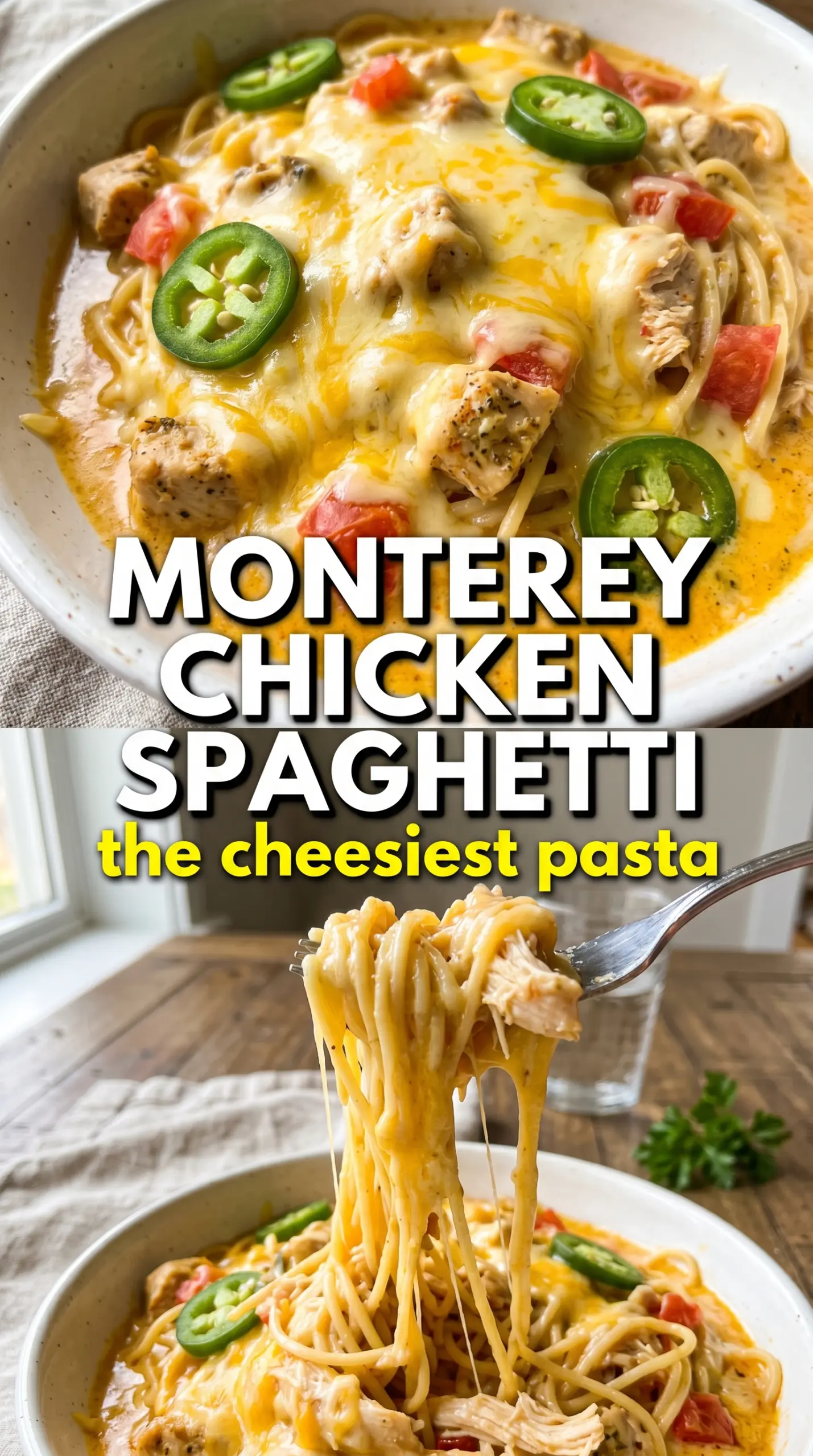
- Chicken (the protein foundation) — Even pieces cook uniformly. Thin slices or cubes work better for pasta dishes.
- Spaghetti or pasta (the vehicle) — Cook to al dente and toss gently so it doesn’t break. Reserve water for sauce adjustment.
- Cream or sauce (the richness base) — This brings everything together and carries flavors. Don’t let it boil or it can break.
- Monterey Jack cheese (the binding richness) — This is what defines the dish. It melts smoothly and adds creaminess without being grainy.
- Bacon (the salt and smoke) — Cook until crispy then crumble. This adds richness that prevents the dish from tasting one-dimensional.
- Garlic (the aromatic depth) — Minced and cooked with oil, it becomes sweet and mellow. This builds the sauce flavor foundation.
- Vegetables (bell peppers, onions, tomatoes) — These add texture and nutrition. Cook until soft so they become part of the sauce.
- Final toss (the emulsification) — Toss gently so every piece gets coated. If too thick, loosen with pasta water gradually.
Building the Casserole So the Center Heats Through Before the Top Overbrowns
Whisk the Sauce Until It’s Completely Smooth
Start by whisking the soups, broth, sour cream, and garlic powder until the mixture looks fully combined and glossy. If you see streaks of sour cream or little pockets of soup, keep whisking; those lumps show up as uneven bites after baking. The sauce should pour easily, almost like a loose cream sauce, because it still has to coat a full pan of pasta and chicken.
Coat the Pasta Before It Goes Into the Dish
Fold the chicken, spaghetti, bacon, peppers, onion, and chiles into the sauce until every strand looks covered. Don’t layer the pasta and sauce separately in the pan or the bottom half dries out while the top gets too wet. Season at this stage, not after baking, so the salt has a chance to settle into the whole casserole instead of sitting on the top crust.
Bake Until the Edges Bubble and the Middle Is Hot
Spread the mixture into a greased 9×13 dish and top it with the remaining cheese. Bake until the cheese is melted, spotted gold, and the sauce is bubbling around the edges. If the top browns before the center is hot, tent the dish loosely with foil for the last part of baking so the cheese doesn’t overdo while the casserole finishes heating through.
Let It Sit Before Scooping
The casserole needs a short rest after it comes out of the oven. That pause gives the sauce time to settle back around the noodles, so the first scoop holds together instead of sliding into a puddle. A few minutes is enough; longer than that and the cheese crust starts to lose its edge.
How to Make This Bake Fit What’s in Your Kitchen
Make It Gluten-Free
Use a gluten-free spaghetti and check that your condensed soups are labeled gluten-free. The texture stays close to the original as long as you don’t overcook the pasta before baking, because gluten-free noodles soften faster in the oven.
Swap in Turkey Bacon or Skip the Bacon Altogether
Turkey bacon works if you want a lighter casserole, but it won’t give the same crisp, smoky punch. If you leave it out entirely, add a pinch of smoked paprika and a little extra salt so the sauce doesn’t taste flat.
Use Leftover Ham or Turkey Instead of Chicken
Any cooked, shredded poultry works here, and diced ham is excellent if you want a saltier, more savory version. Just keep the same total amount so the casserole doesn’t turn dry or overloaded.
Make It a Little Richer
If you want a tighter, more decadent bake, stir in an extra half cup of cheese before it goes into the dish. The tradeoff is a heavier casserole and a slightly less saucy finish, which is fine if you like a firmer scoop.
Storage and Reheating
- Refrigerator: Store covered for up to 4 days. The pasta will absorb more sauce as it sits, so the leftovers get a little thicker.
- Freezer: It freezes well. Cool completely, wrap tightly, and freeze in portions or as a full casserole for up to 2 months. Thaw overnight in the fridge before reheating.
- Reheating: Reheat covered in a 325°F oven with a splash of broth if it looks dry. The common mistake is blasting it uncovered in the microwave, which tightens the sauce and makes the noodles go chewy.
Answers to the Questions Worth Asking
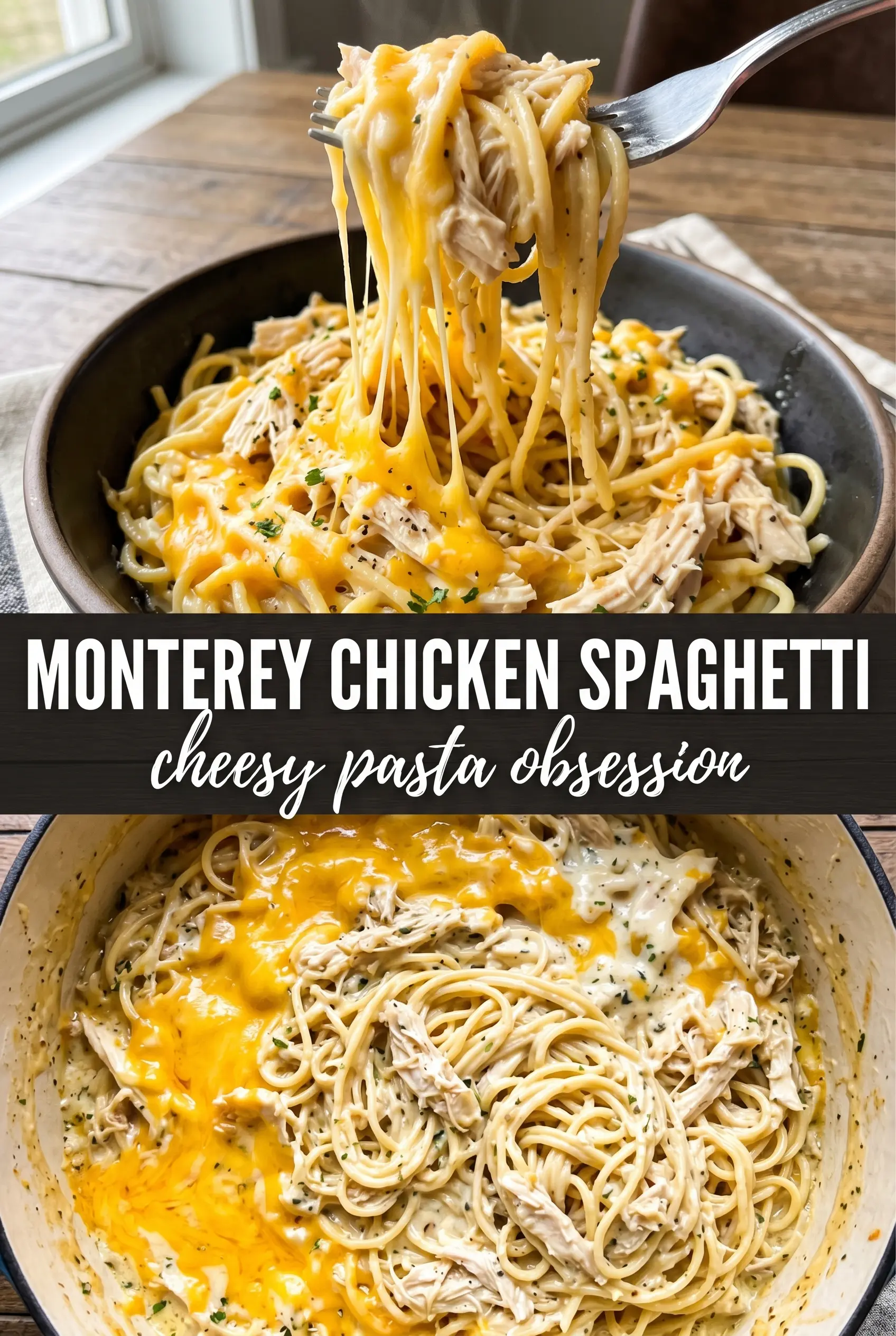
Monterey Chicken Spaghetti
Ingredients
Equipment
Method
- Preheat oven to 350°F and grease a 9x13 baking dish. Set it aside so the casserole can go in right after mixing.
- Whisk together cream of chicken soup, cream of mushroom soup, chicken broth, sour cream, and garlic powder until smooth. The mixture should look uniform with no visible streaks.
- Combine cooked spaghetti, shredded chicken, soup mixture, green chiles, bacon, bell pepper, and onion; toss to coat. Season with salt and pepper as you mix so everything is evenly covered.
- Spread the mixture into the prepared 9x13 baking dish. Level the top so it bakes evenly.
- Top with half of the shredded Monterey Jack and cheddar cheese blend. Keep the remaining cheese ready for a final layer if needed.
- Bake at 350°F for 25-30 minutes until bubbly and cheese is golden. Watch for active bubbling around the edges and melted, browned spots on top.
- Garnish with fresh parsley right before serving. The bright green topping adds contrast to the golden cheese crust.