Mexican chorizo rice comes out bold, fluffy, and deeply savory, with every grain coated in the kind of seasoned drippings that make a side dish taste like the main event. The rice stays light instead of greasy, the tomatoes keep it lively, and the finish of cilantro and lime cuts through the richness so the whole pot tastes balanced, not heavy.
What makes this version work is the order. The chorizo cooks first so its paprika, garlic, and fat have time to season the pot, then the rice gets toasted before any liquid goes in. That quick toast adds a nutty edge and helps the grains hold their shape instead of turning soft or sticky. The tomatoes go in with their juices, which gives the rice color and a little acidity, while the broth carries the seasoning all the way through.
Below, I’ve included the one step that keeps the texture right, plus a few swaps for when you need to stretch it, lighten it up, or work with what’s already in the pantry.
The rice stayed fluffy and the chorizo drippings gave it that deep red color and smoky taste I was hoping for. I added the lime at the end like suggested, and it brightened everything up without making it sour.
Save this one-pan Mexican chorizo rice for the nights when you want a smoky, satisfying side with almost no cleanup.
The Trick to Keeping Chorizo Rice Fluffy Instead of Heavy
Chorizo is flavorful, but it can push a rice dish into greasy territory if you don’t handle the drippings with a little control. This recipe keeps the chorizo in the pan for the flavor, then uses just enough olive oil to soften the onion and toast the rice without flooding the pot. That balance matters. Too much fat and the grains stay slick; too little and you lose the rich base that makes the dish taste like itself.
The other place people run into trouble is the simmer. Once the liquid goes in, the heat needs to stay at a gentle bubble. If it boils hard, the liquid cooks off unevenly and the bottom can catch before the rice finishes. The lid should stay on, the heat should stay low, and the rice should rest after cooking so the steam can finish the texture instead of leaving the center a little firm.
- Chorizo — This is the backbone of the dish. It seasons the pot, gives the rice its color, and adds enough fat to carry the spices. Fresh Mexican chorizo works here, not the dry cured kind.
- Long-grain white rice — Long grain stays separate and fluffy after simmering. Short grain gets stickier, and brown rice needs a different liquid ratio and a longer cook time.
- Diced tomatoes — The juice adds acidity and moisture, which keeps the rice from tasting flat. Fire-roasted tomatoes work if you want a deeper, smokier edge.
- Chicken broth — Use broth, not plain water, if you want the rice to taste seasoned all the way through. Low-sodium broth is the safest choice if your chorizo is salty.
Building the Pot in the Right Order
Brown the Chorizo First
Cook the chorizo until it’s fully browned and no longer looks raw in the center, breaking it up as it cooks. You want little crisped edges and a good amount of seasoned drippings left behind. If the pan looks dry, that’s when the olive oil comes in, not before. Drain off excess grease only if there’s an obvious puddle; a thin coating is part of the flavor.
Toast the Rice Before the Liquid Goes In
Once the onion is soft and the garlic smells sweet, stir in the rice and keep it moving for 2 to 3 minutes. The grains should turn glossy and take on a faint nutty smell. This step helps them stay distinct after simmering. If you skip it, the rice still cooks, but the final texture is more likely to clump.
Simmer Covered Until the Steam Does the Work
Add the broth, tomatoes, and spices, then bring everything to a simmer before you cover the pot. Once it’s covered, lower the heat and leave it alone for 15 minutes. Lifting the lid early lets steam escape, which is the fastest way to end up with undercooked rice and uneven liquid on the bottom. When the rice is done, the surface should look tender and the liquid should be absorbed.
Finish With Lime and Cilantro After Fluffing
Fluff the rice first, then stir the chorizo back in along with the cilantro and lime juice. Adding the herbs and citrus at the end keeps them bright. If the lime goes in too early, the acid fades and the cilantro gets muted. Let the pot rest for 5 minutes before serving so the grains settle and the flavor evens out.
How to Adapt This for a Different Kitchen or a Different Pantry
Make It Gluten-Free Without Changing the Texture
This dish is naturally gluten-free as long as your broth and chorizo are certified gluten-free. That matters because some packaged broths and sausages use thickeners or fillers that can sneak in gluten. The rice texture stays the same, so this is an easy swap, not a compromise.
Use Spanish Chorizo Only if You Cook the Fat Down First
Spanish chorizo is firmer and already cured, so it won’t melt into the rice the way fresh Mexican chorizo does. If that’s what you have, dice it small and render it first, then add a little extra oil only if the pan needs it. The result will be saltier and a little smokier, with less sauce clinging to the grains.
Turn It Into a Full Dinner With Beans or Vegetables
Stir in a drained can of black beans or corn during the last few minutes of cooking if you want more body in the pot. Bell pepper can go in with the onion for a softer finish. Those additions stretch the recipe without changing the way the rice cooks, and they play nicely with the cumin and lime.
Cut the Heat Without Losing the Chorizo Flavor
Use mild chorizo if you can find it, and reduce the chili powder by half. You’ll still get the paprika-heavy depth from the sausage, but the final dish will read more savory than spicy. That’s the better move if you’re serving it alongside a saucy main dish or feeding people who like less heat.
Storage and Reheating
- Refrigerator: Store for up to 4 days in an airtight container. The rice firms up as it chills, but the flavor gets even better by day two.
- Freezer: Freezes well for up to 2 months. Portion it into containers so it thaws evenly, and press a piece of parchment directly on the surface if you want to reduce freezer burn.
- Reheating: Reheat covered on the stove or in the microwave with a splash of broth or water. The biggest mistake is blasting it dry, which makes the grains tough instead of fluffy.
Answers to the Questions Worth Asking
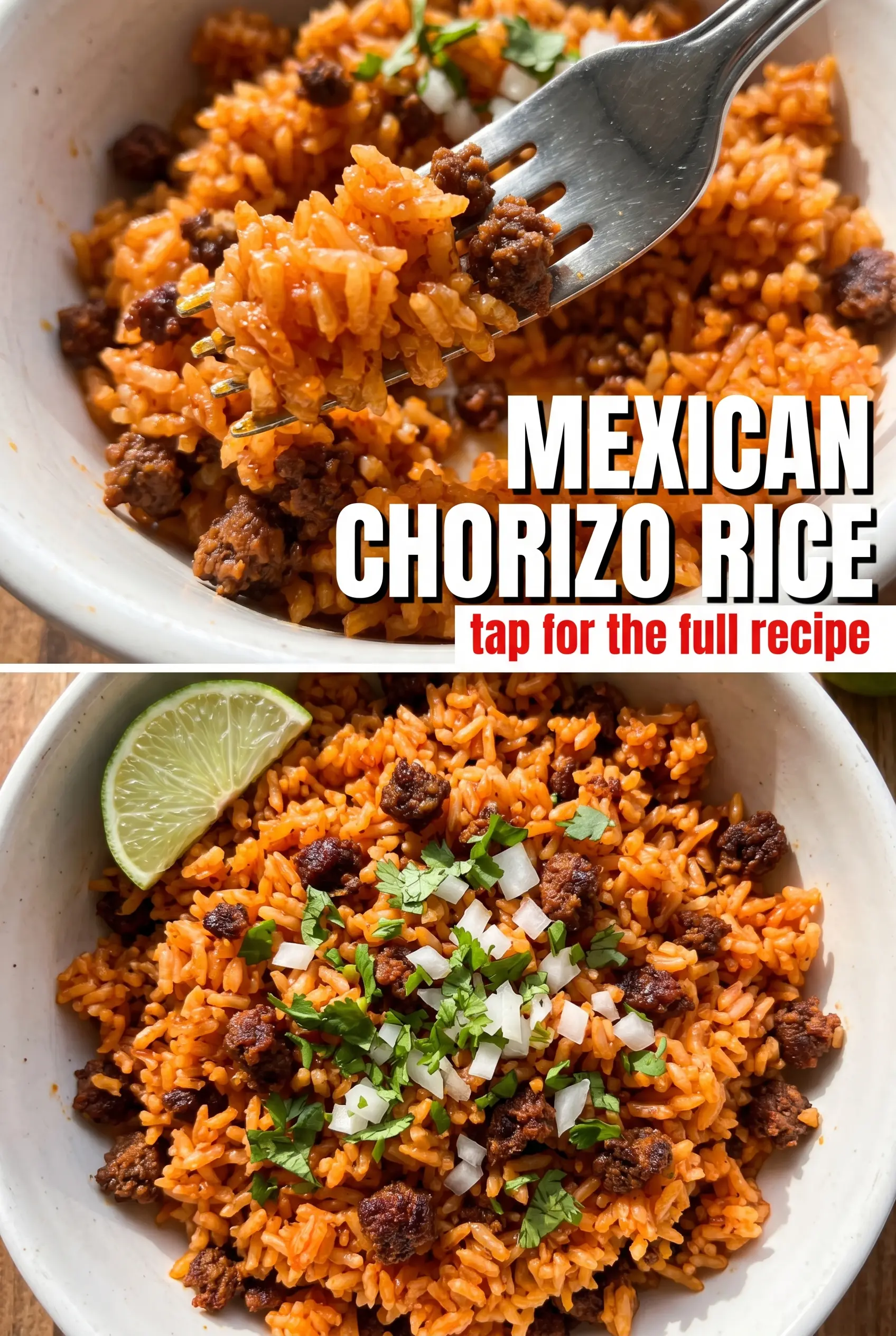
Mexican Chorizo Rice
Ingredients
Equipment
Method
- Crumble the chorizo into a Dutch oven and cook over medium heat until browned, about 5 minutes; use a spatula to keep it moving so it browns evenly and leaves golden drippings in the pot.
- Remove the browned chorizo with a slotted spoon and set aside, leaving the drippings in the pot as the base for the rice.
- Add olive oil to the pot and sauté the diced onion over medium heat until softened, about 3 minutes, until the onion looks translucent at the edges.
- Add the minced garlic and cook for 1 minute, stirring, just until fragrant without browning.
- Stir in the long-grain white rice and toast for 2–3 minutes over medium heat, stirring frequently, until the grains look lightly opaque and smell nutty.
- Pour in the chicken broth, diced tomatoes with their juice, cumin, chili powder, and salt, then stir to combine so the spices are evenly dispersed.
- Bring to a simmer, cover, and cook at a steady simmer for 15 minutes, until the liquid is absorbed and the rice is tender.
- Fluff the rice with a fork, then stir in the cooked chorizo, chopped cilantro, and lime juice so the top looks speckled and glossy.
- Let the rice rest, covered or loosely covered, for 5 minutes before serving so the grains settle and steam through.