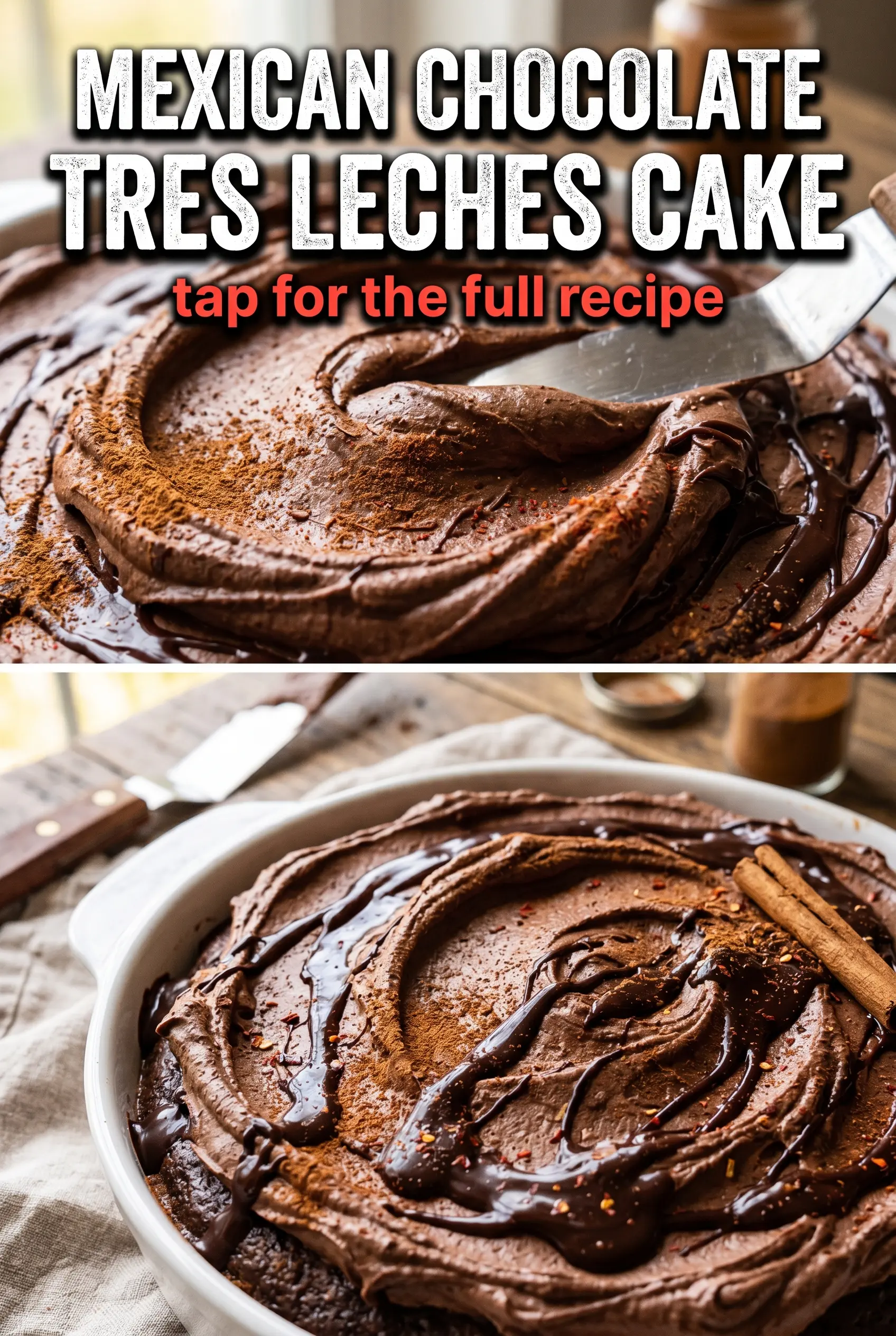
Mexican Chocolate Tres Leches Cake lands somewhere between a celebration cake and a spoon dessert, with a chocolate crumb that drinks up every drop of the milk soak without turning muddy or heavy. The top stays light under the whipped cream, the center turns plush and almost custard-like, and the cinnamon on top gives each bite a warm finish that keeps it from tasting flat.
The key is building enough structure in the chocolate cake before the soak goes on. Beating the yolks with the sugar until they turn pale gives the cake body, and folding in the whipped whites at the end keeps it airy enough to take on the tres leches mixture instead of collapsing into a dense slab. The coffee or Mexican hot chocolate deepens the cocoa and makes the chocolate taste fuller, not sweeter.
Below, you’ll find the one place people usually go wrong with tres leches cakes, plus a couple of swaps that still give you that soaked, sliceable texture. The cinnamon cream topping matters here too, and a little care with the soaking step makes the difference between a cake that holds clean slices and one that turns into pudding.
The cake soaked up the milk mixture evenly and stayed sliceable after chilling overnight. The cinnamon on the whipped cream tied the chocolate and coffee together perfectly.
Save this Mexican Chocolate Tres Leches Cake for the nights when you want a soaked chocolate cake with cinnamon cream and clean, chilled slices.
The Part Most Tres Leches Cakes Get Wrong: Too Much Soak, Too Soon
The cake needs to be cool before the milk mixture goes on. A warm cake pulls the liquid unevenly, which sounds helpful until the top turns soggy and the middle stays dry. Once it has cooled, pierce it all over with a fork or skewer so the soak can move through the crumb instead of sitting on top.
Pour the milk mixture slowly and give it time. This cake does best when you add the liquid in a few passes, letting it settle between pours. If you dump everything on at once, the surface floods before the sponge can absorb it, and you end up with a wet layer on the bottom instead of a fully soaked cake.
What Each Ingredient Is Doing in the Chocolate Soak
- Unsweetened cocoa powder — This gives the cake its deep chocolate base without adding extra fat, which keeps the crumb light enough to absorb the tres leches mixture. Natural cocoa works well here; Dutch-process cocoa will taste a little darker and smoother, which is fine if that’s what you have.
- Egg yolks and whipped egg whites — The yolks build richness and help the batter stay tender, while the whipped whites give the cake its lift. That separation is what keeps the finished cake from eating like a brownie. Don’t skip the folding step, or you’ll knock out the air and lose the delicate texture that makes tres leches work.
- Sweetened condensed milk and evaporated milk — These are the backbone of the soak. Condensed milk brings sweetness and body, while evaporated milk keeps the mixture pourable and creamy instead of thick and sticky. There isn’t a substitute that gives quite the same effect, but if you need a lighter version, you can replace part of the evaporated milk with whole milk; the soak will be a little looser and less rich.
- Mexican hot chocolate or strong coffee — This is the ingredient that makes the chocolate taste deeper instead of just sweeter. Coffee won’t make the cake taste like coffee; it sharpens the cocoa. Mexican hot chocolate adds cinnamon and spice, which pushes the cake closer to the dessert’s classic flavor.
- Heavy cream — Whipped cream on top isn’t just decoration. It balances the soaked cake and gives each slice a cool, airy finish. Use heavy cream, not whipping cream with a lower fat percentage, if you want the topping to hold its shape after chilling.
Building the Cake So It Stays Tender After the Milk Goes In
Whipping the Yolks and Sugar
Beat the yolks with the sugar until the mixture turns pale and thick enough to ribbon off the whisk. That little bit of aeration gives the cake structure before the whites go in. If the yolks still look grainy, keep beating; under-creamed yolks can leave the cake tighter and less able to absorb the soak evenly.
Folding in the Dry Ingredients and Whites
Add the flour and cocoa mixture in stages, then fold in the whipped egg whites last with a light hand. The batter should look fluffy, not smooth and heavy. If you stir aggressively here, the cake bakes up compact and the milk mixture will sit on top instead of moving through the crumb.
Soaking and Chilling
Pierce the cooled cake all over, then pour the milk mixture evenly over the surface. Use a spoon to guide any puddles toward dry spots. The cake needs at least 2 hours in the refrigerator, but a longer chill gives you cleaner slices and a deeper, more unified flavor. If it still looks soupy after chilling, it was either underbaked or over-saturated; next time, let the cake bake until the center springs back before you start the soak.
Whipping the Topping
Whip the cream with powdered sugar until stiff peaks form, then spread it over the chilled cake in a thick, even layer. Soft peaks will slump into the soak, which makes the top look messy after a few hours. Dust with cinnamon right before serving so it stays bold and fragrant instead of disappearing into the cream.
How to Adjust This Cake for a Different Table
Dairy-Free Version with Coconut Milk
Use a full-fat canned coconut milk in place of the evaporated milk and a dairy-free sweetened condensed milk alternative for the soak. The texture stays creamy, but the coconut flavor will sit alongside the chocolate and cinnamon. Whip a dairy-free topping that holds peaks well, or the finished cake will lose its clean, celebratory look.
Coffee-Forward Chocolate Cake
Use strong brewed coffee instead of Mexican hot chocolate in the soak if you want the chocolate to taste darker and less spiced. This version cuts the sweetness a bit and makes each bite taste more grown-up. It works especially well if you’re serving the cake after a heavy meal.
Gluten-Free Cake Layer
Swap in a 1:1 gluten-free flour blend that includes xanthan gum. The cake will still soak beautifully, but it may be a little more delicate when you slice it, so give it the full chill time before serving. Don’t use almond flour here; it changes the structure too much and won’t give you the same sponge-like crumb.
Storage and Reheating
- Refrigerator: Keep covered and chilled for up to 4 days. The cake gets even more saturated by day two, and the crumb will soften a bit more each day.
- Freezer: Freeze only the unfrosted cake layer if you want to make ahead. The soaked finished cake doesn’t freeze well because the texture turns icy and watery after thawing.
- Reheating: Don’t reheat this cake. Tres leches is meant to be served cold, and warming it breaks the cream topping and loosens the soaked crumb.
Questions I Get Asked About This Recipe
Mexican Chocolate Tres Leches Cake
Ingredients
Equipment
Method
- Whisk together all-purpose flour, unsweetened cocoa powder, baking powder, and salt in a mixing bowl until evenly combined.
- Beat the egg yolks with granulated sugar until pale, about 2 to 3 minutes.
- Add vegetable oil, whole milk, and vanilla extract to the yolk mixture and mix until smooth.
- Fold the flour mixture into the yolk mixture just until no dry streaks remain.
- Beat the egg whites until stiff peaks form, then fold them into the batter gently to keep the air in.
- Pour the batter into a 9x13 baking dish and bake at 350°F for 30 minutes, until a toothpick comes out mostly clean.
- Cool the cake completely on the pan so it can absorb the milk mixture evenly.
- Combine sweetened condensed milk, evaporated milk, and Mexican hot chocolate or strong coffee until smooth.
- Pierce the cooled cake all over with a fork and pour the milk mixture evenly over the top so it seeps into the layers.
- Refrigerate the cake for at least 2 hours to fully soak and set.
- Whip heavy cream with powdered sugar until stiff peaks form.
- Spread the whipped cream over the chilled cake and dust with cinnamon.
- Serve the cake chilled for clean slices and the best soaked texture.