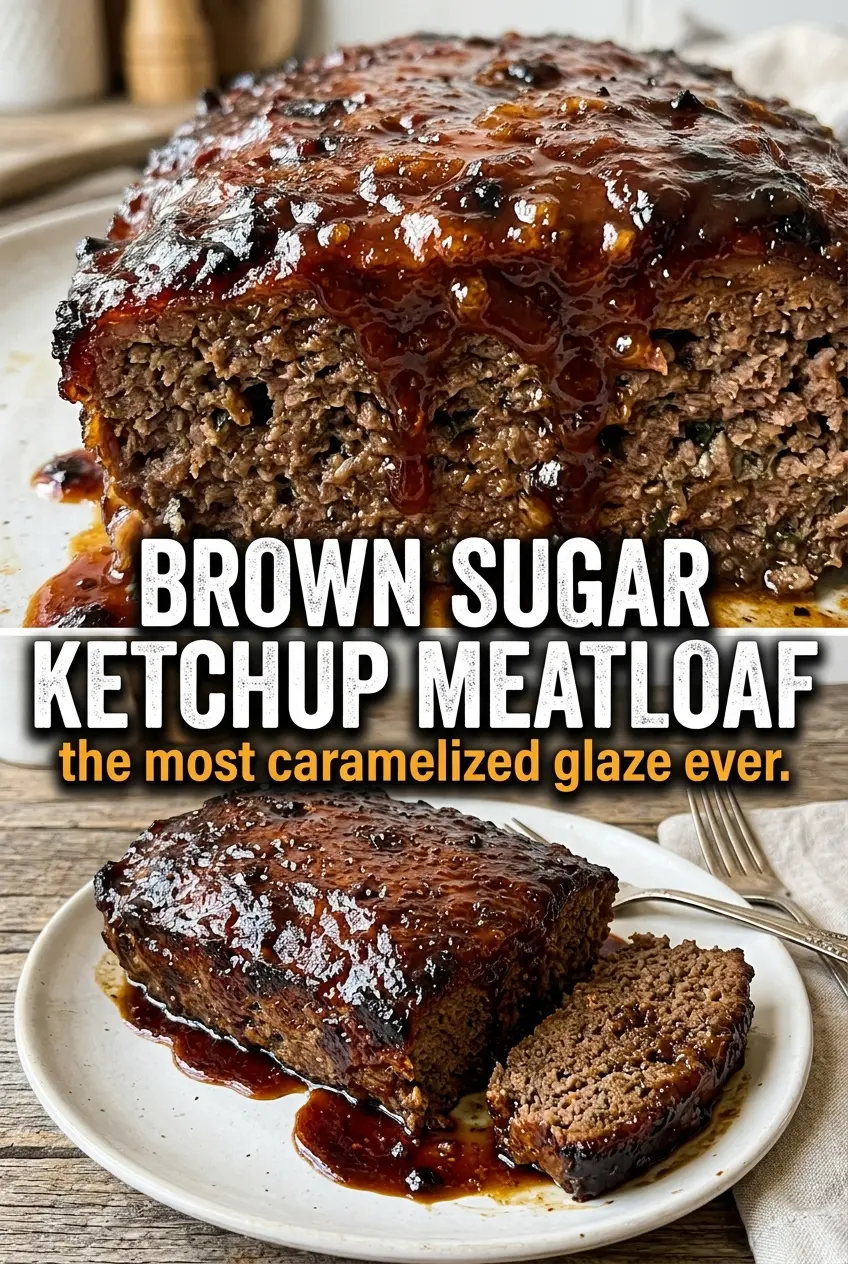
Meatloaf gets a bad rap when it turns dry, dense, or bland, but this version stays tender inside and finishes with a sticky brown sugar ketchup glaze that cracks at the edges and caramelizes into that deep amber top everyone remembers. The loaf slices cleanly after a short rest, yet the center stays juicy enough to hold together without crumbling on the plate.
The difference comes from a few small choices that matter. Soaking the breadcrumbs in milk before mixing gives the loaf moisture from the start, grated onion disappears into the meat so you get flavor without big chunks, and the mixture is handled gently so the texture stays soft instead of tight. The glaze goes on in two stages, which keeps it from burning before the meatloaf is cooked through and gives you that glossy, lacquered finish.
Below, I’ll show you how to keep the loaf tender, when to add the glaze, and what to do if you want to swap the beef or make it ahead. These are the little details that turn a basic meatloaf into the kind people ask for again.
The glaze turned out sticky and caramelized instead of sliding off, and the meatloaf stayed moist all the way through. I used the loaf pan method and it sliced perfectly after resting.
Like this brown sugar ketchup meatloaf? Save it for the nights when you want a classic glazed meatloaf with a sticky, caramelized top.
The Fastest Way to End Up With Dry Meatloaf
The biggest mistake with meatloaf is packing the mixture too tightly. Once ground beef gets worked hard, it turns dense and bouncy instead of tender. That’s why the mixing here stays gentle and brief. You want the ingredients distributed, not mashed into a paste.
The other failure point is the glaze. If it goes on only at the start, the sugar can scorch before the center reaches temperature. Spreading it on in two layers gives you time to build flavor without losing that sticky finish. The first coat helps set the surface. The second coat, added near the end, is what gives you the crackled, burnished top.
- 80/20 ground beef — The fat keeps the loaf juicy and helps carry the Worcestershire and spice. Leaner beef works, but the texture gets drier unless you add more moisture elsewhere.
- Breadcrumbs soaked in milk — This is what keeps the loaf tender. Plain breadcrumbs are the right choice here because they disappear into the mix; panko can work, but the loaf will be a little looser.
- Grated onion — Grating instead of dicing gives you onion flavor without crunchy pieces and also adds moisture. If you only have a knife, mince it very fine and expect a slightly more noticeable texture.
- Worcestershire sauce — It deepens the beefy flavor and keeps the loaf from tasting flat. There isn’t a clean substitute for the same savory edge, but soy sauce works in a pinch if you use a little less salt.
- Brown sugar ketchup glaze — Ketchup brings acidity and body, brown sugar gives the sticky finish, and vinegar keeps the sweetness from turning one-note. The glaze should taste a little sharp before baking; that balance is what turns it into a proper lacquer.
How to Keep the Glaze Thick, Sticky, and Burnished
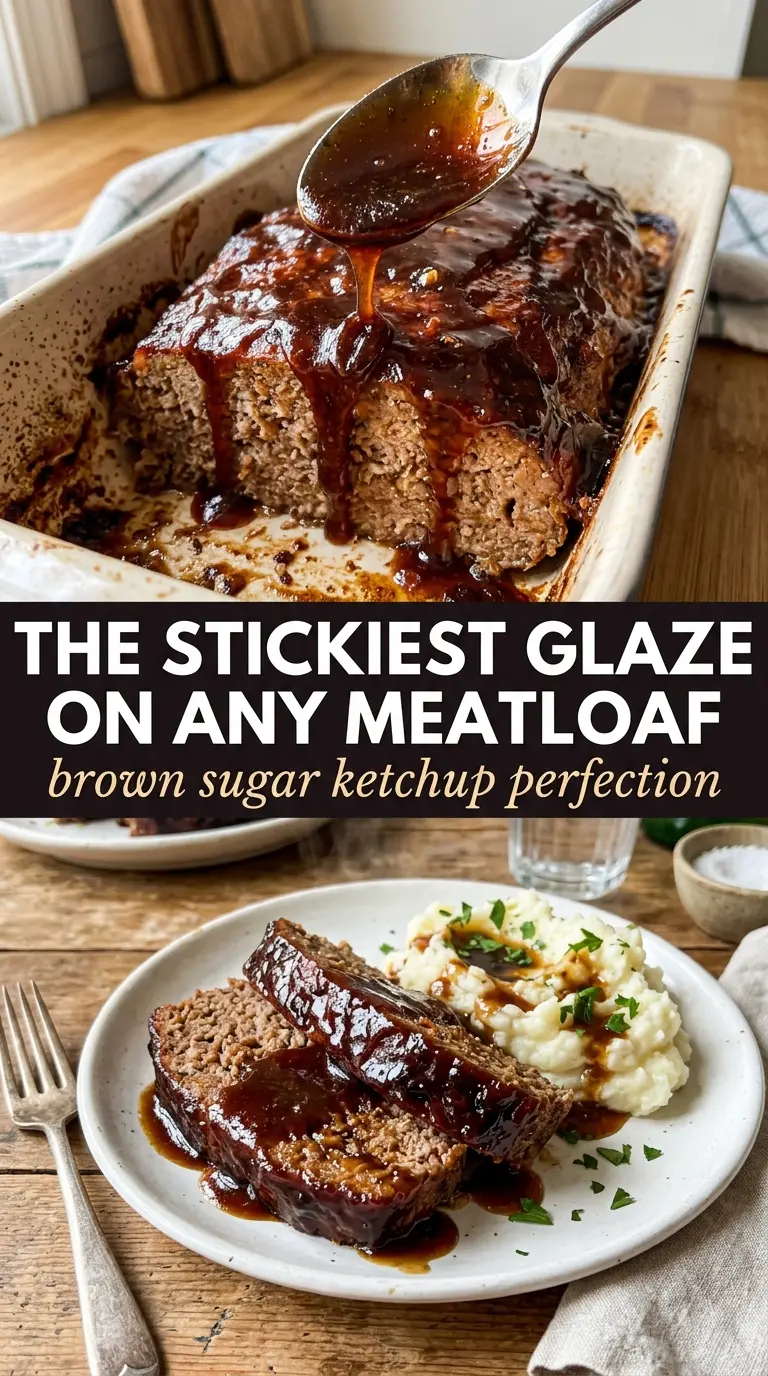
The loaf pan gives this meatloaf its shape and helps it hold onto the glaze, but it also means the meat can sit in its own juices if the mixture is overworked or too wet. That’s why the breadcrumbs get a short soak instead of a long one and why the onion is grated rather than added in chunks. You want enough moisture to keep the crumb tender, not so much that the loaf turns soft and steamy.
- Breadcrumbs and milk — Let them sit just long enough to absorb the liquid. If they look soupy, the loaf can get mushy instead of tender.
- Eggs — They bind the loaf so it slices neatly after resting. Two is enough for this size loaf; adding more can make the texture rubbery.
- Brown sugar — Packed brown sugar gives the glaze its sticky body. Light or dark both work, but dark brown sugar gives a deeper molasses note and a darker finish.
- Apple cider vinegar — This keeps the glaze from tasting like pure candy. If you only have white vinegar, use a little less because it reads sharper and less rounded.
Building the Loaf So It Stays Tender, Not Tight
Soak the Breadcrumbs First
Mix the breadcrumbs with the milk and give them a few minutes to soften before anything else goes in. That little pause helps the breadcrumbs blend into the meat instead of staying dry and gritty. If you rush this part, the loaf can feel uneven after baking, with dry pockets where the crumbs didn’t hydrate fully.
Mix Only Until the Meat Holds Together
Add the beef, eggs, onion, garlic, Worcestershire, herbs, and seasonings, then use your hands to mix just until the ingredients are evenly distributed. Stop as soon as the mixture looks uniform. If you keep going, the meat tightens up and the finished loaf gets springy instead of soft.
Glaze in Two Thin Coats
Press the mixture into the loaf pan and smooth the top so the glaze has an even surface to cling to. Spread on half the glaze before baking, then add the rest once the loaf has had time to cook through. That second layer caramelizes instead of disappearing into the meat, which is what gives you the shiny, sticky top.
Rest Before Slicing
When the center reaches 160°F, pull the pan from the oven and let the meatloaf rest for 10 minutes. This gives the juices time to settle back into the loaf so they don’t run out the moment you cut it. Slice too early and the meatloaf will shed moisture onto the board instead of staying on the plate.
How to Adapt This for a Different Table
Gluten-Free Version
Swap the plain breadcrumbs for a good gluten-free breadcrumb blend or crushed gluten-free crackers. The goal is the same: a soft binder that absorbs the milk and keeps the meatloaf tender. If your mix is very coarse, add an extra tablespoon or two of milk so it hydrates properly.
Dairy-Free Meatloaf
Use unsweetened plain almond milk, oat milk, or another neutral dairy-free milk in place of the whole milk. You’ll still get the same binding and tenderness as long as the breadcrumb mixture has time to soak. The finished loaf tastes the same; just avoid strongly flavored milks that could compete with the glaze.
Using a Different Meat
Ground turkey or a beef-pork blend both work, but they change the texture. Turkey needs extra care because it dries out faster, so don’t overbake it and consider checking the temperature a few minutes early. Pork adds richness and a softer texture, which makes the loaf taste a little less classic but more lush.
Make-Ahead and Leftovers
You can mix and shape the meatloaf up to a day ahead, cover it tightly, and refrigerate it until baking time. The glaze can be whisked together in advance too, which makes dinner easier without changing the texture. Leftovers reheat well, and the flavor gets even better the next day.
Storage and Reheating
- Refrigerator: Store slices in an airtight container for up to 4 days. The glaze stays sticky, though the edges soften a bit.
- Freezer: It freezes well. Wrap individual slices tightly and freeze for up to 3 months so you can reheat only what you need.
- Reheating: Warm slices covered in a 300°F oven with a spoonful of water or broth in the pan so they don’t dry out. The common mistake is blasting them in the microwave too long, which turns the texture firm and makes the glaze tacky in the wrong way.
Questions I Get Asked About This Recipe
Meatloaf with Brown Sugar Ketchup Glaze
Ingredients
Equipment
Method
- Preheat oven to 350°F and grease a 9x5 loaf pan. Lightly coat the pan so the loaf releases cleanly.
- Soak plain breadcrumbs in whole milk for 3 minutes. Stop when the crumbs look evenly hydrated.
- Add ground beef, beaten eggs, soaked breadcrumbs, finely grated onion, minced garlic, Worcestershire sauce, dried thyme, garlic powder, onion powder, salt, and black pepper to a mixing bowl. Combine everything.
- Mix gently until just combined, avoiding overworking. The mixture should look cohesive without turning paste-like.
- Press the mixture into the loaf pan and smooth the top. Aim for an even surface so the glaze bakes uniformly.
- Whisk ketchup, packed brown sugar, apple cider vinegar, Worcestershire sauce, and garlic powder for the glaze. Stir until the sugar dissolves and the glaze looks glossy.
- Spread half the glaze over the meatloaf. You should see a thin, even coat across the top.
- Bake for 50 minutes. The top should begin to set and darken.
- Spread the remaining glaze over the meatloaf. Use a steady layer so it crackles and caramelizes in one continuous top.
- Bake 15–20 more minutes at 350°F until the internal temperature reaches 160°F and the glaze is deeply caramelized. Look for a crackled, amber finish.
- Rest the meatloaf for 10 minutes before slicing. Let it firm up so the glaze stays glossy and the slices hold their shape.